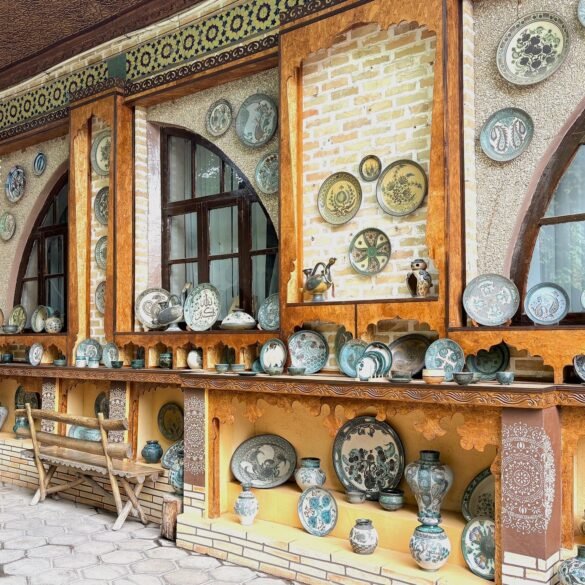

I’ve been talking about doing a pottery retreat for a long time – somewhere I can learn new skills, work with different types of clay and glazing techniques, get some fresh ideas for my craft. It was always “one day” and “wouldn’t it be cool” type of idea. I might have looked up costs and locations a few times, but never seriously considered anything. Until we decided to go to Uzbekistan for an entire month. Suddenly, this wispy daydream of an idea started to form into something real and tangible.
Uzbekistan is globally known for its pottery with centuries-old ceramic traditions, heavily influenced by the ancient Silk Road. There are distinct regional schools, most famous being in Rishton and Gijduvan, which utilize local clay and natural alkaline glazes. As we were planning on spending a few days in Fergana Valley and visiting Rishton anyway, I started looking into pottery retreats in that area.
The Google results page was filled with pictures of gorgeously decorated plates and vases and local masters working on their craft. The most famous ceramic artist of Rishton had a website full of pictures of his large studio and what looked like buses full of tourists coming for four-hour classes to play around with clay. Some TripAdvisor tour agency was selling five-day retreats to his studio for thousands of dollars.
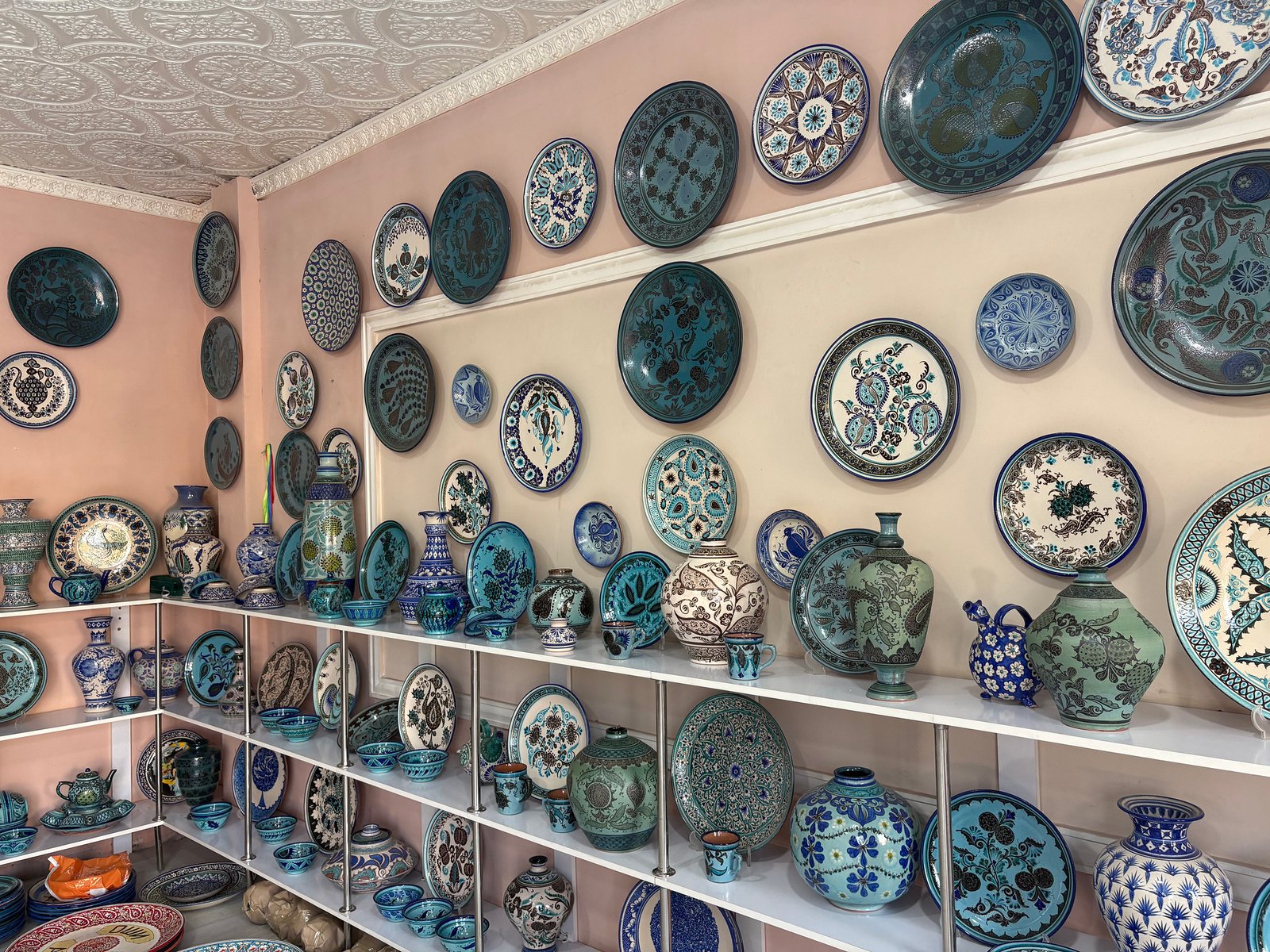
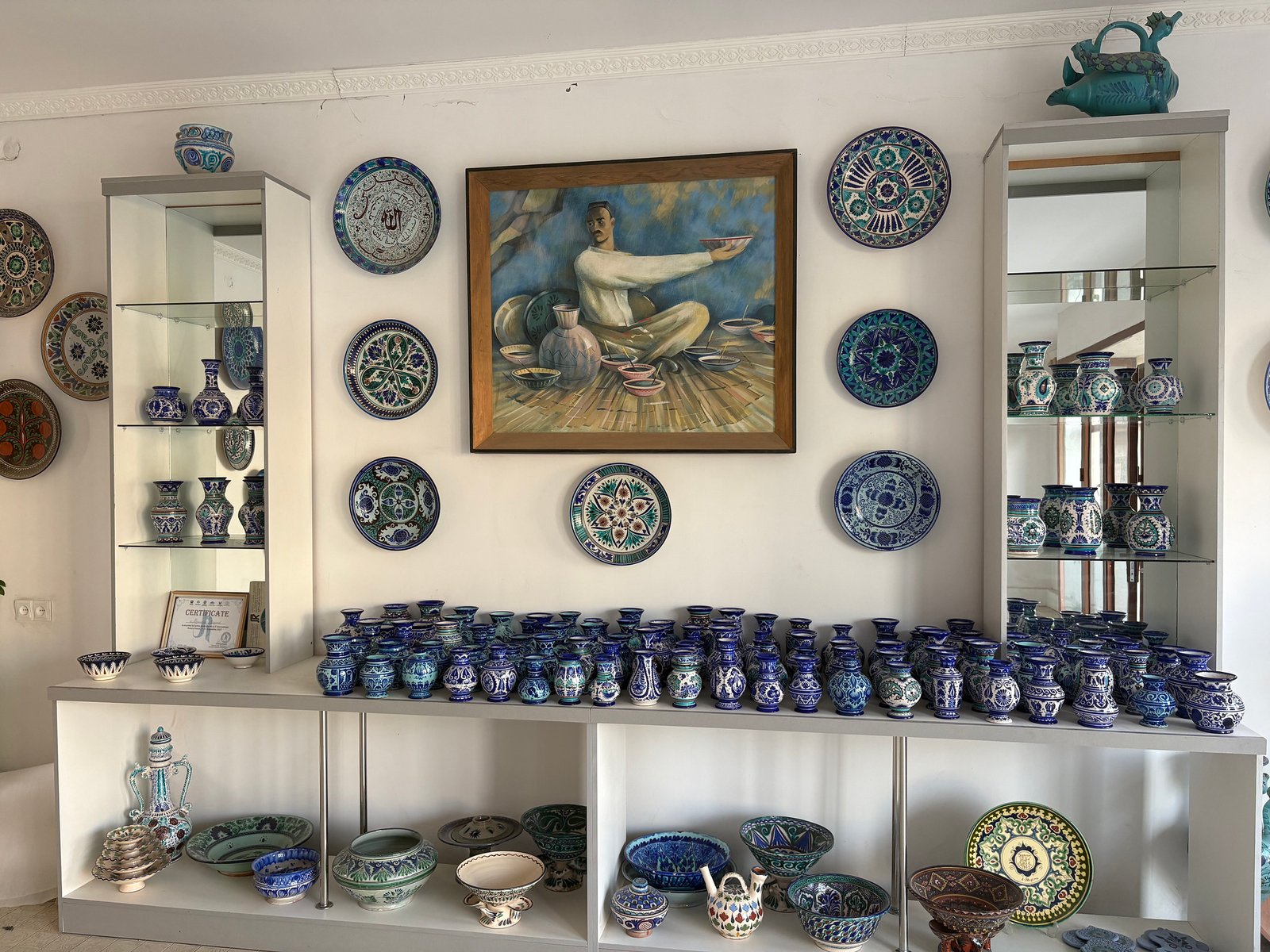
I moved on to the website of the second most famous ceramic artist. I didn’t immediately see any offers of classes or retreats, but what I did see was some of the most beautiful pottery I’ve ever laid my eyes on. Finally, I found a mention of a guesthouse and pottery lessons, no prices, no details of any sort. I decided to give it a shot. I sent an email, in Russian, asking if it was possible to stay at his studio and take pottery lessons for four days, and what the price of this venture would be.
It seemed absurd. Here I am, a barely intermediate student, reaching out to one of Uzbekistan’s most famous ceramic artists, asking for lessons. There was no way this was going to work.
An answer arrived the next day: “You are welcome to come.”
I stared at it, transfixed. We were welcome to come. No mention of the prices or what accommodation we were to expect.
It didn’t matter. We were going.
Victor and I agreed that if this plan fell through, we would just figure out where to stay and take pottery lessons upon arriving in Rishton. For once, we were not going to overthink it. We were experienced travelers, and we weren’t going to let something like a lack of price, pictures, or a reservation put a damper on this adventure.
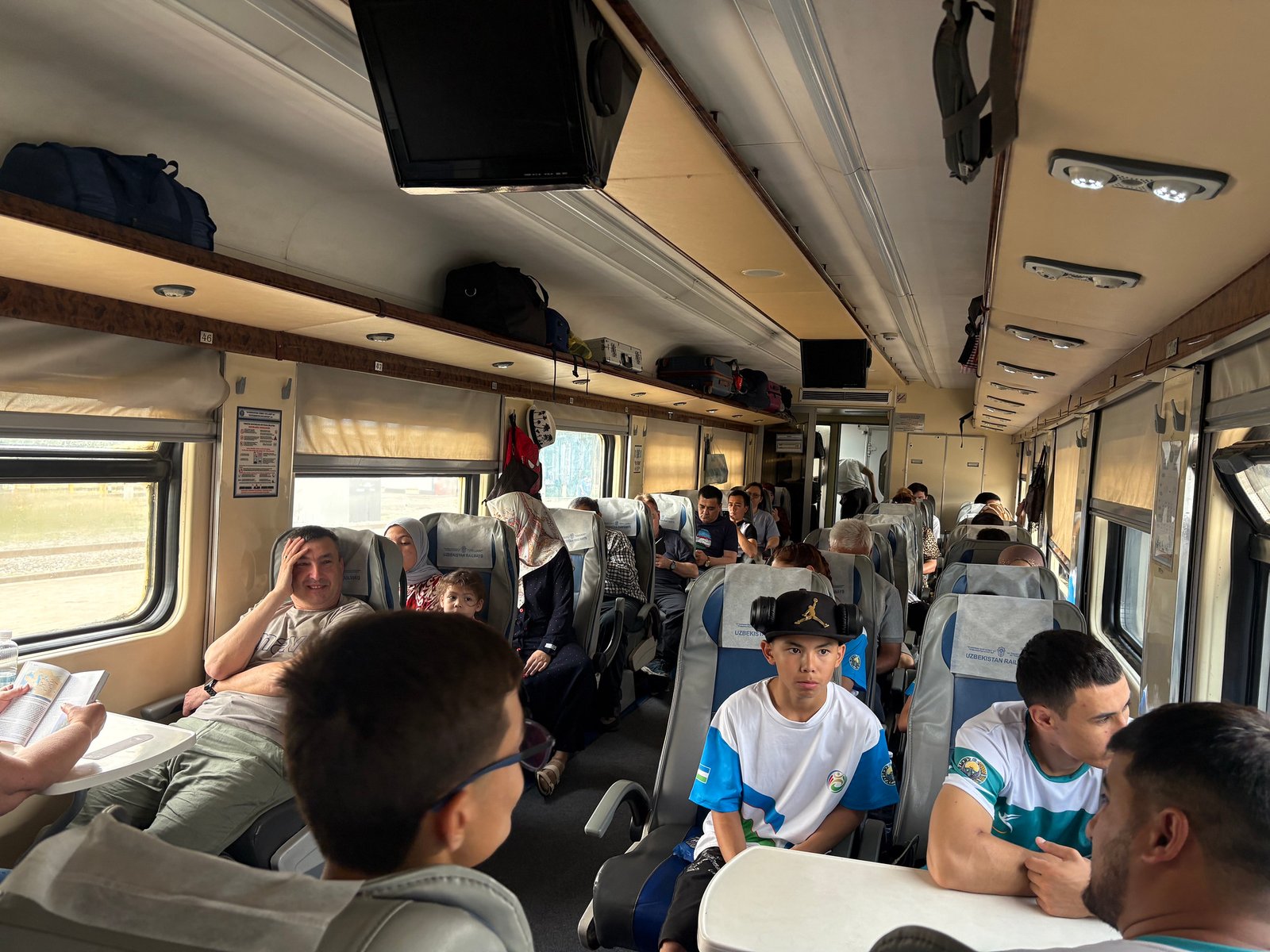
Once we said goodbye to Victor’s mom in Tashkent, we packed our backpacks and set out for Fergana Valley. The Tashkent-to-Kokand train ride was 4.5 hours in a non-air-conditioned carriage, with outdoor and indoor temperatures reaching the high 80s. Open windows gave some reprieve from the heat, but any time the train slowed to a crawl, I could feel the sweat running down my back and my shirt sticking to the seat.
Half of the train carriage was taken up by an Uzbek high school sports team and their coaches, coming back from some competition in Tashkent. For high school kids, they were surprisingly quiet and respectful. The other half was a big group of German tourists, some of whom started out walking around, loud and boisterous, and eventually the heat forced them to melt into their seats, fanning themselves furiously. It seemed like Victor and I were the only ones not part of some larger group.
Finally, in Kokand, we put our backpacks into luggage lockers and explored the city for a few hours. Around 5 pm, we called for a Yandex Go taxi, and we took off for Rishton. As we were approaching our destination, I realized that the address I gave the taxi driver must be wrong. We were on the edge of town, in a very quiet location, just single-family houses lining the street. I asked the driver if he knew where the studio was, and he had no idea. He dropped us off right there, on the side of the road, and took off.
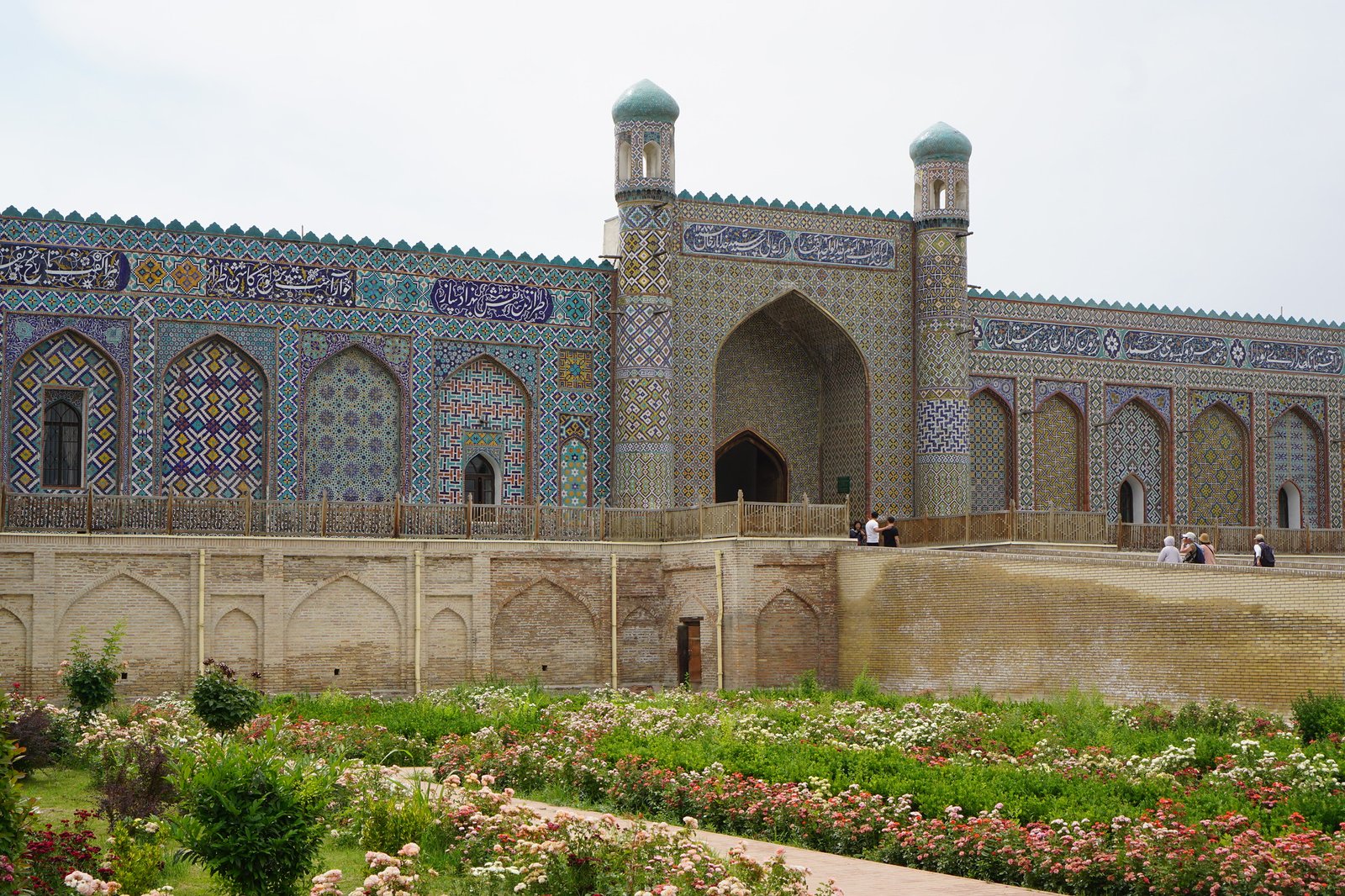
This was not looking promising. We tried using Yandex Go to call another local taxi, but the app didn’t work in this small town. While Victor guarded the backpacks, I took off down the road and eventually came across a small teahouse with a few men sitting around, chatting. I asked them about the studio and while they knew the name of the ceramic artist, they didn’t know where the studio was, but they were sure it wasn’t anywhere close by. One of them offered to call a taxi for me.
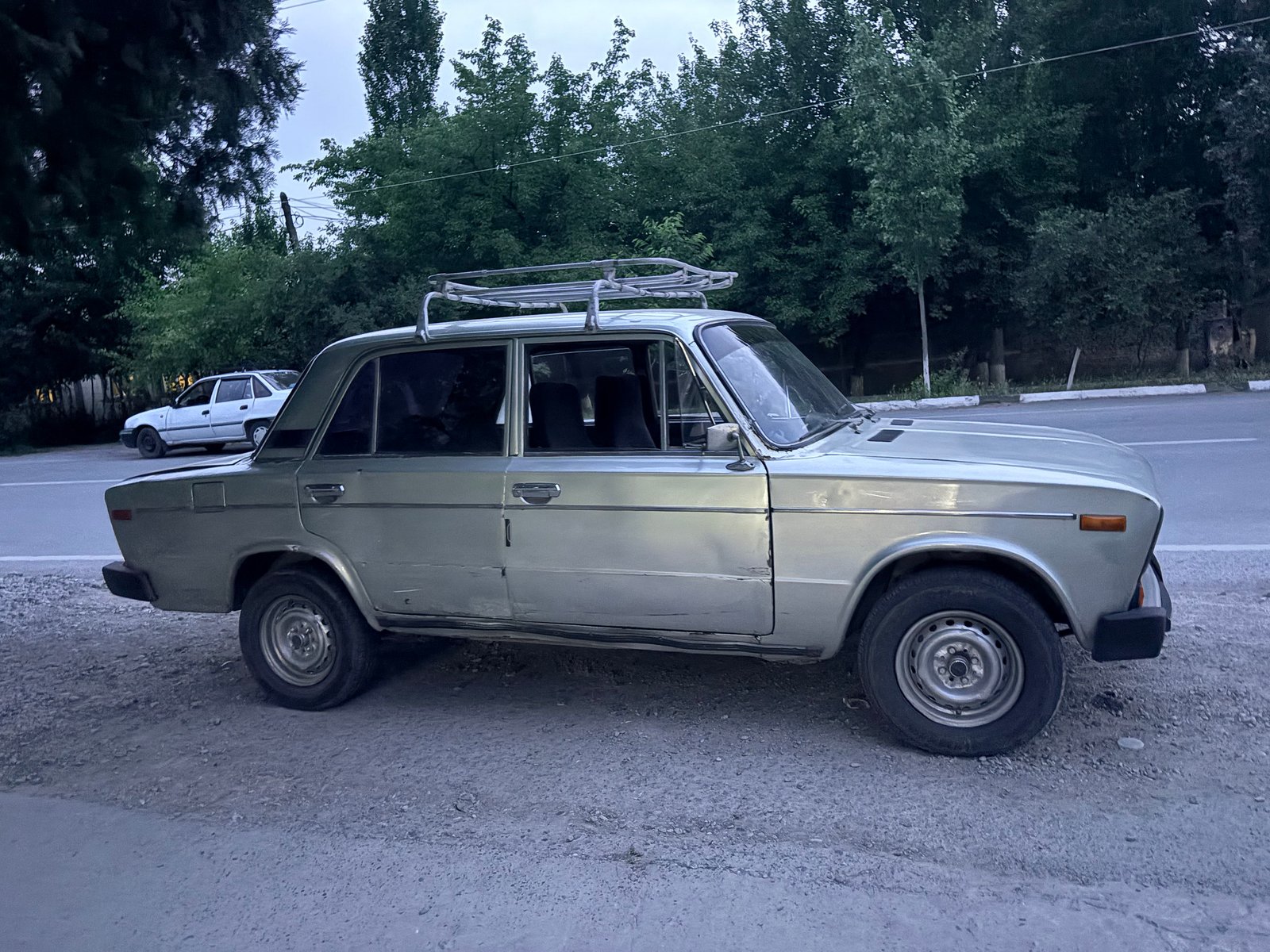
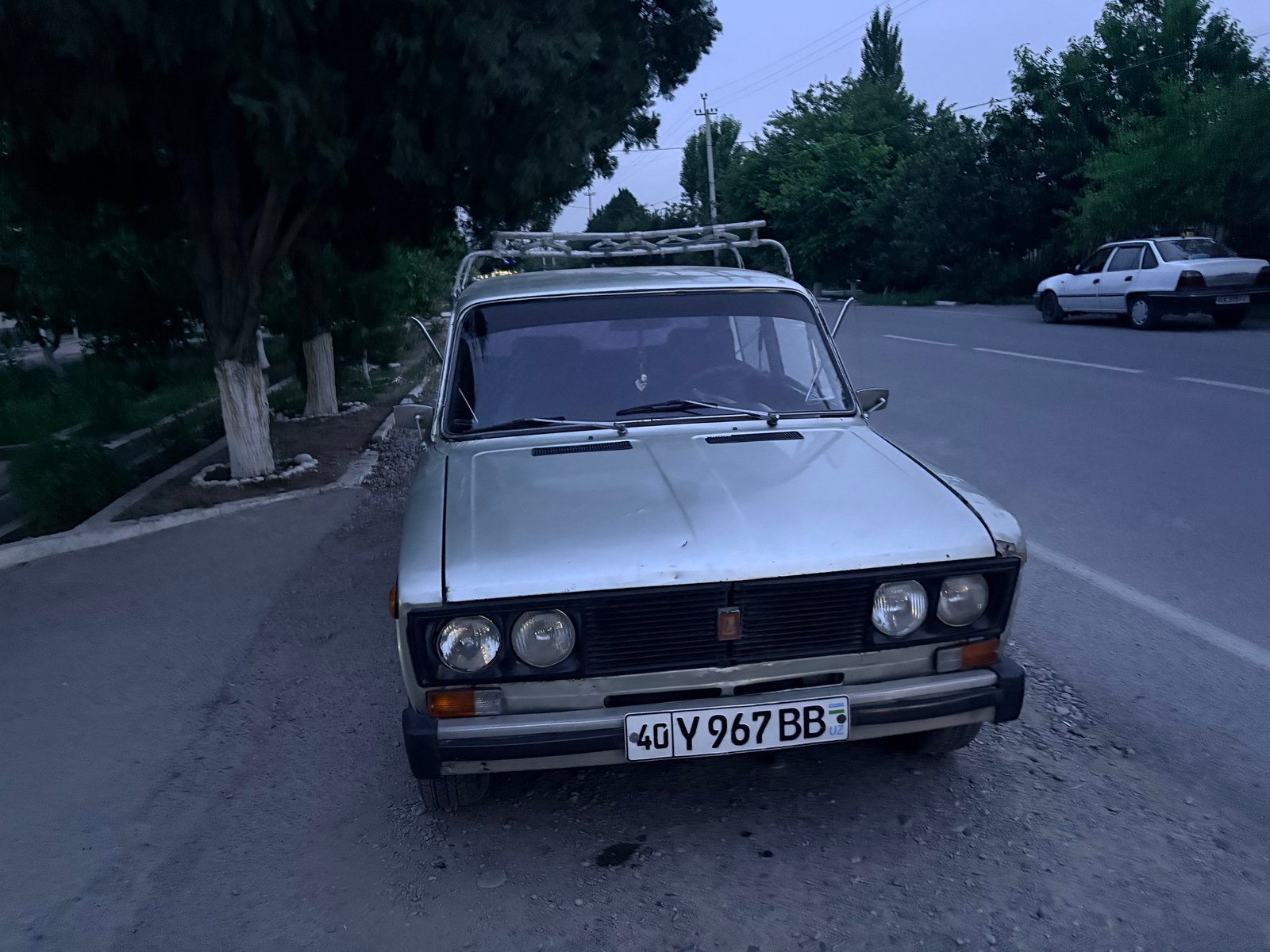
Five minutes later, an ancient Zhiguli came tumbling down the road. For those of you unfamiliar, that’s a Soviet-era car that looks like an icebox on wheels. An old Tajik taxi driver came out and helped us load the backpacks into the small trunk. He also didn’t know where the studio was but was sure he could figure it out. I crawled into the backseat and instantly felt transported back in time, to my childhood, when a neighbor had the same exact car and used to occasionally drive us around.
“How old is this car?” Victor asked.
“1983!” the taxi driver exclaimed proudly.
“Oh, me too…” Victor mumbled.
“Great car!” The driver slapped the wheel, and we took off, the backseat creaking under my weight and the whole car bouncing up and down on every uneven surface. After driving for another 15 minutes and asking for directions at a gas station, we finally arrived at the studio.
“Stay in the car,” I told Victor, “I am going to go and find out if we are actually expected and welcomed. If not, we’ll ask the driver to find us a hotel for the night.”
I walked through the open gate into a small courtyard. It was dark already, and I didn’t see ceramic plates decorating the walls or vases lined up on the floor. I walked towards a small group of men sitting on a tapchan, a traditional raised wooden platform with quilted cushions and a small table in the middle.
“Hello,” I said, my voice crackling with nerves, “I am Julia from Chicago. I am here… for pottery…”
An older man with a distinguished face that I immediately recognized from photographs raised his head and spread his arms out.
“Welcome!” he said.