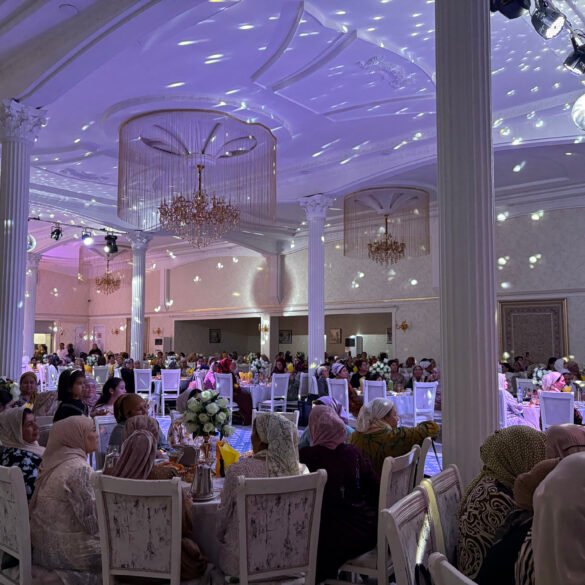

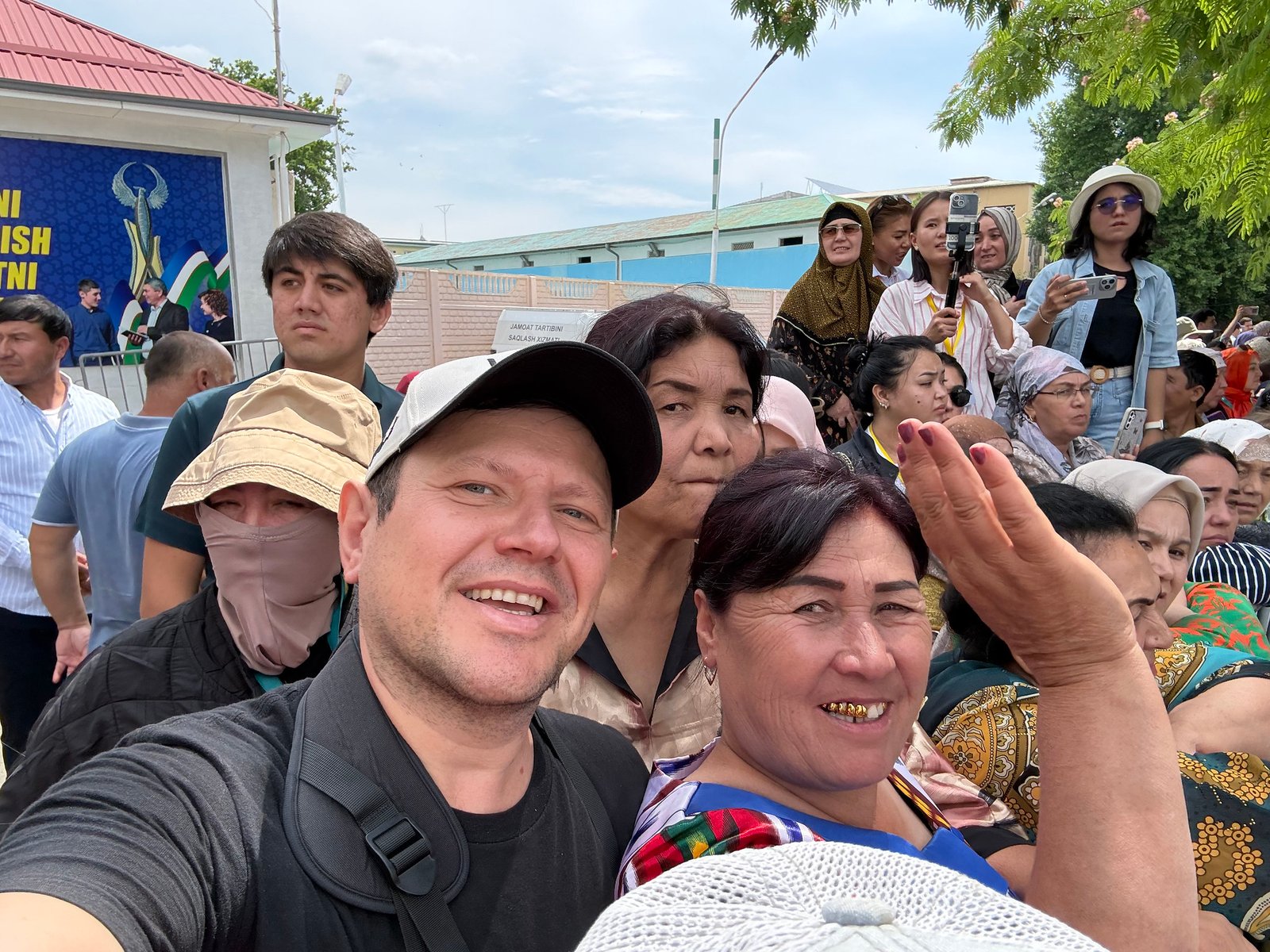
A Tajik woman in a colorful dress was elbowing and pushing me away. I was too close, and she demanded space. She was also bothered by my camera, hissing at me that it kept poking her in the back. But what could I do? We were in the crowd, and other people were pushing me from behind. Everyone wanted a better spot.
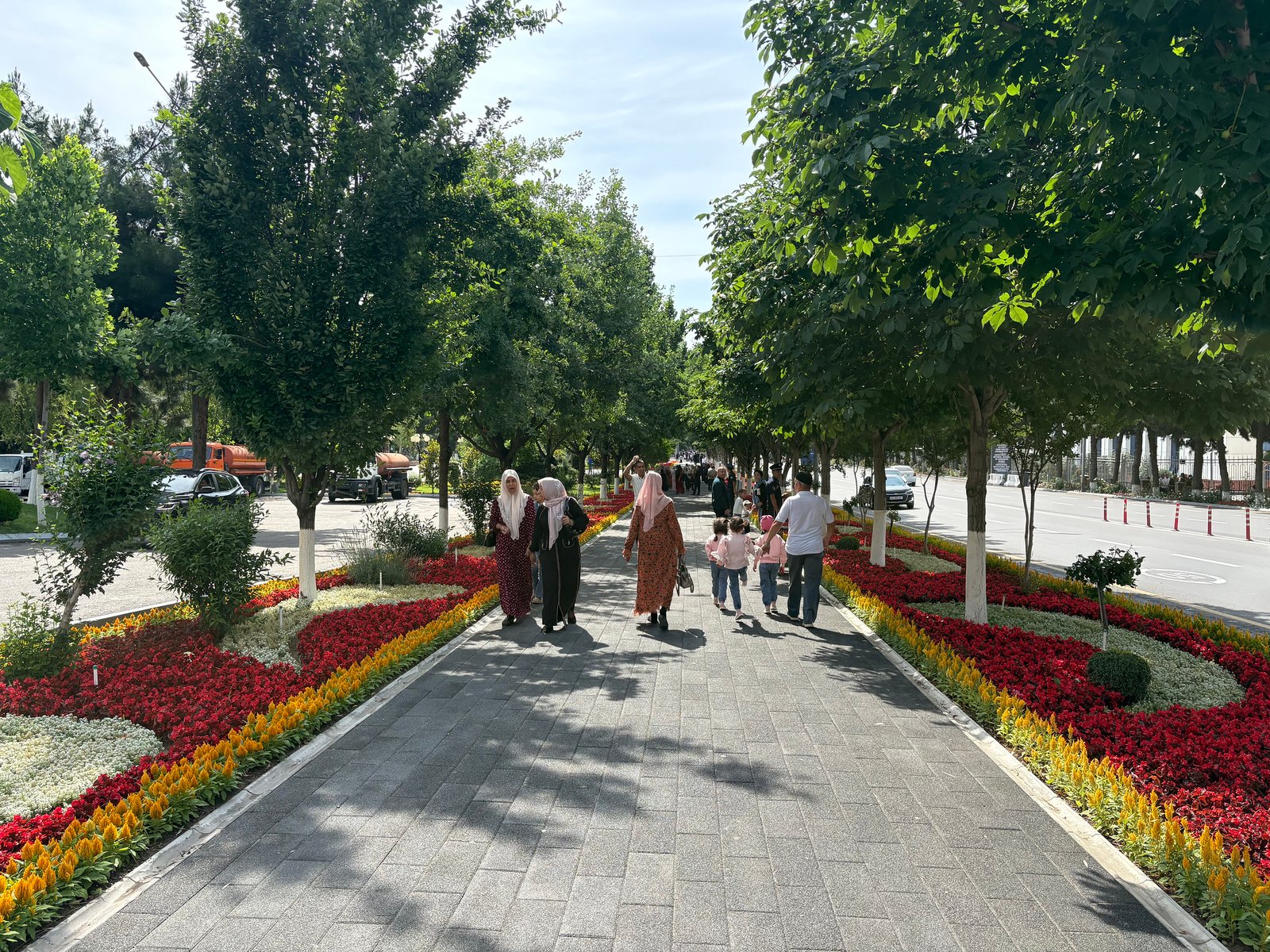
This morning, Namangan was buzzing with anticipation. The main street leading to Babur Park was closed to traffic, and thousands of spectators lined up on both sides preparing for the kickoff of the annual flower festival.
Before the trip, I barely thought of Uzbekistan as a flower destination. Desert landscapes simply did not conjure up images of lush vegetation and flowers. Cotton fields didn’t count.
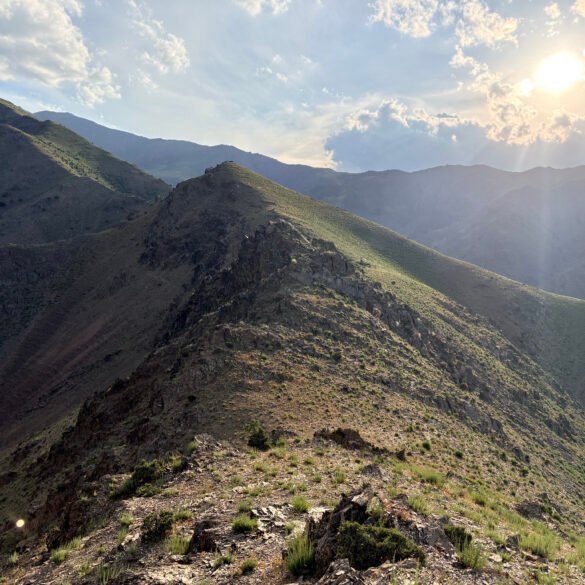
But Uzbekistan is not just desert. On our third day in the country, we found wild tulips on the slopes of the Western Tian Shan mountains near Chimgan. It was thrilling to see these OG tulips and the place where they originated. Flowers in Tashkent’s parks, wild poppies along the roads in Kashkadarya, and aromatic lemon sagewort, chamomile, and daisies in Nuratau Mountains: there were plenty of flowers in Uzbekistan, both wild and domesticated. And then, of course, Fergana Valley—the country’s most fertile region—where almost anything seems to grow. So, it’s not surprising the flower festival takes place there. And the event is not a gimmick that the government recently created to generate tourism. Namangan’s annual flower festival is one of the oldest in the country. This year, the city hosted the 65th edition.
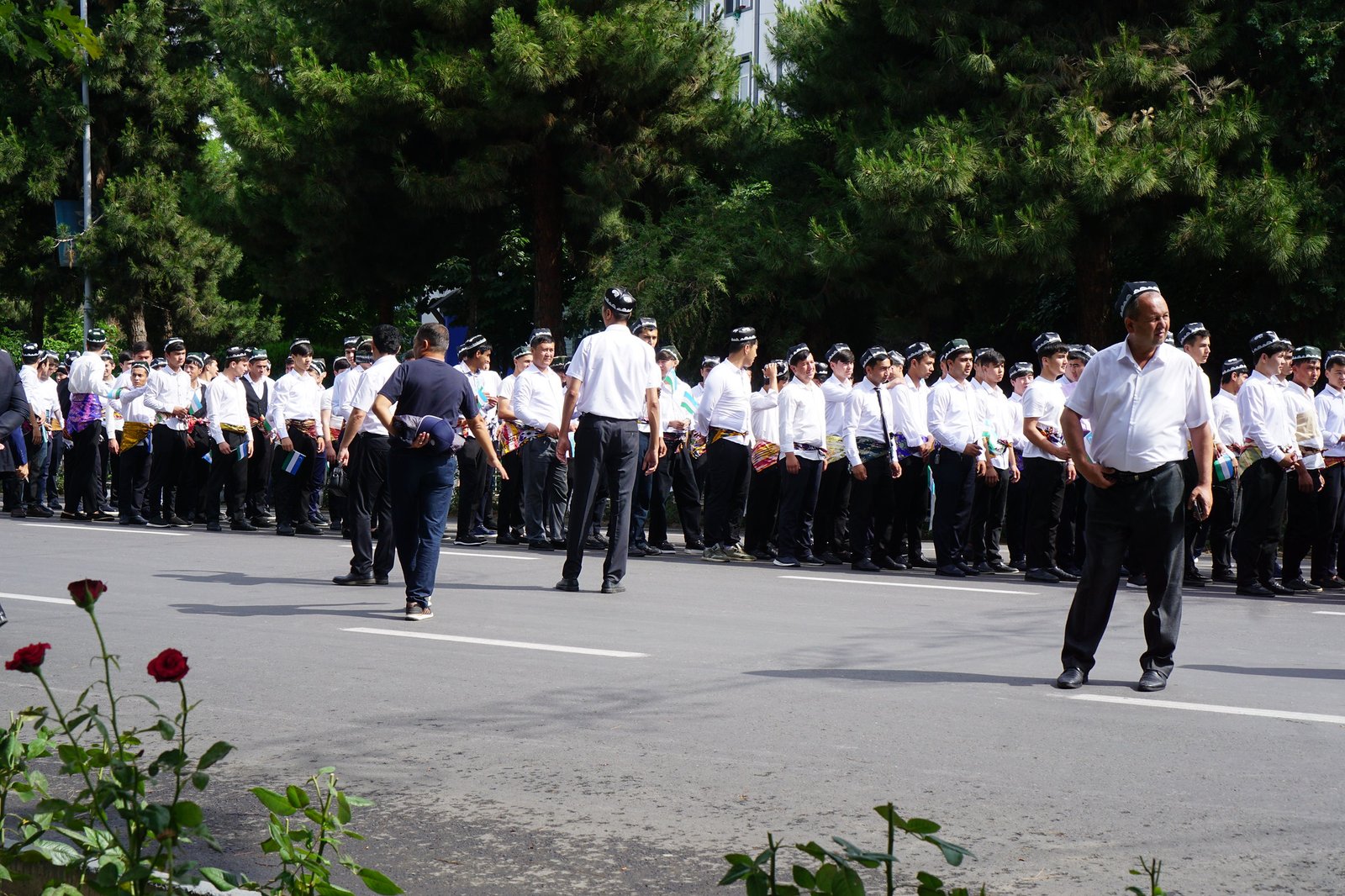
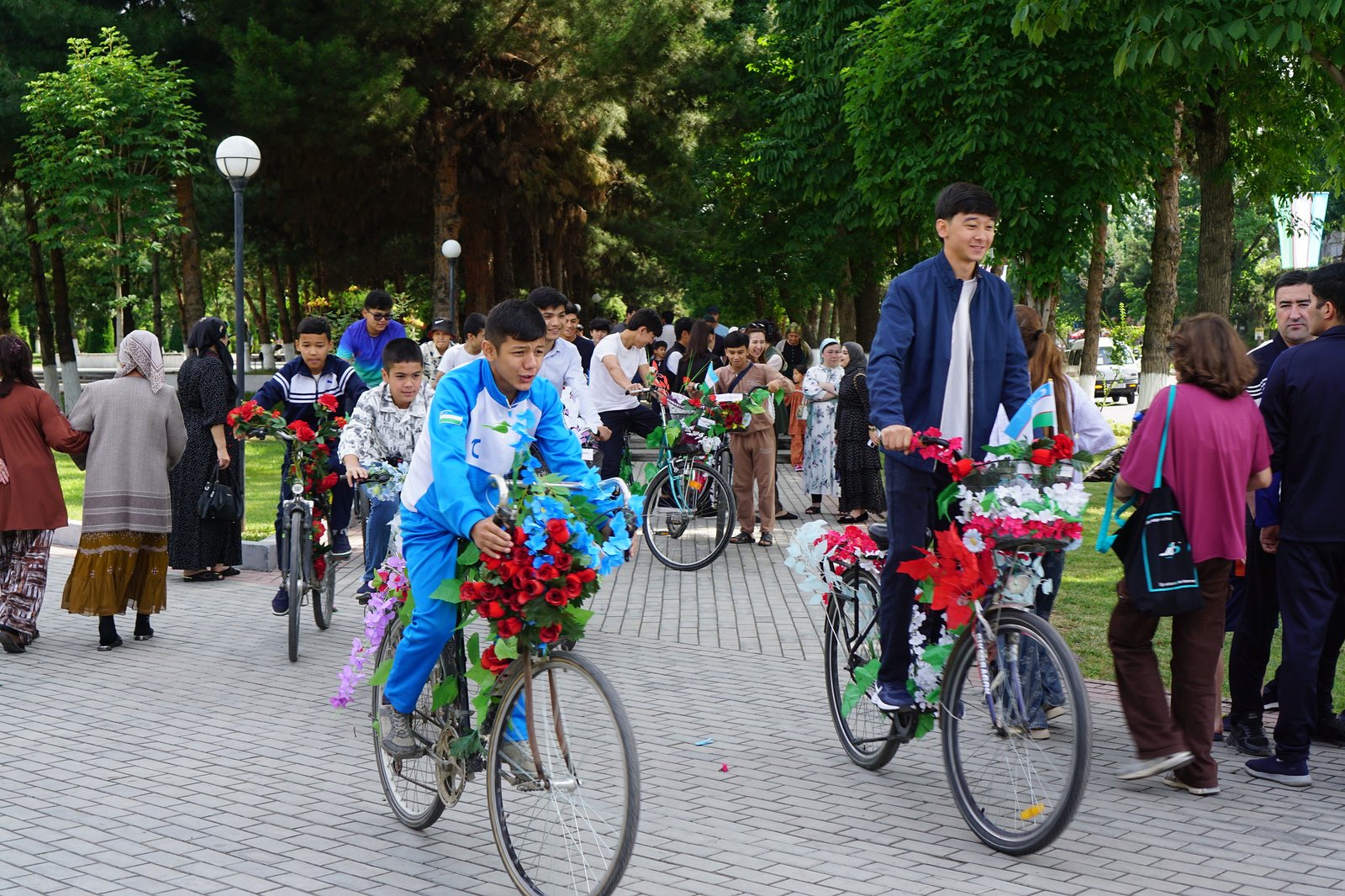
The festivities were scheduled to kick off at 10 a.m. with the parade. The festival website advertised floats, cars, and trucks decorated with flowers travelling from Namangan Airport to Babur Park, where a giant stage was installed to host high-profile guests and dignitaries. As I was settling in my spot in the shade, the members of local organizations, cultural institutions, and sport clubs also prepared to walk the final leg of the parade route.
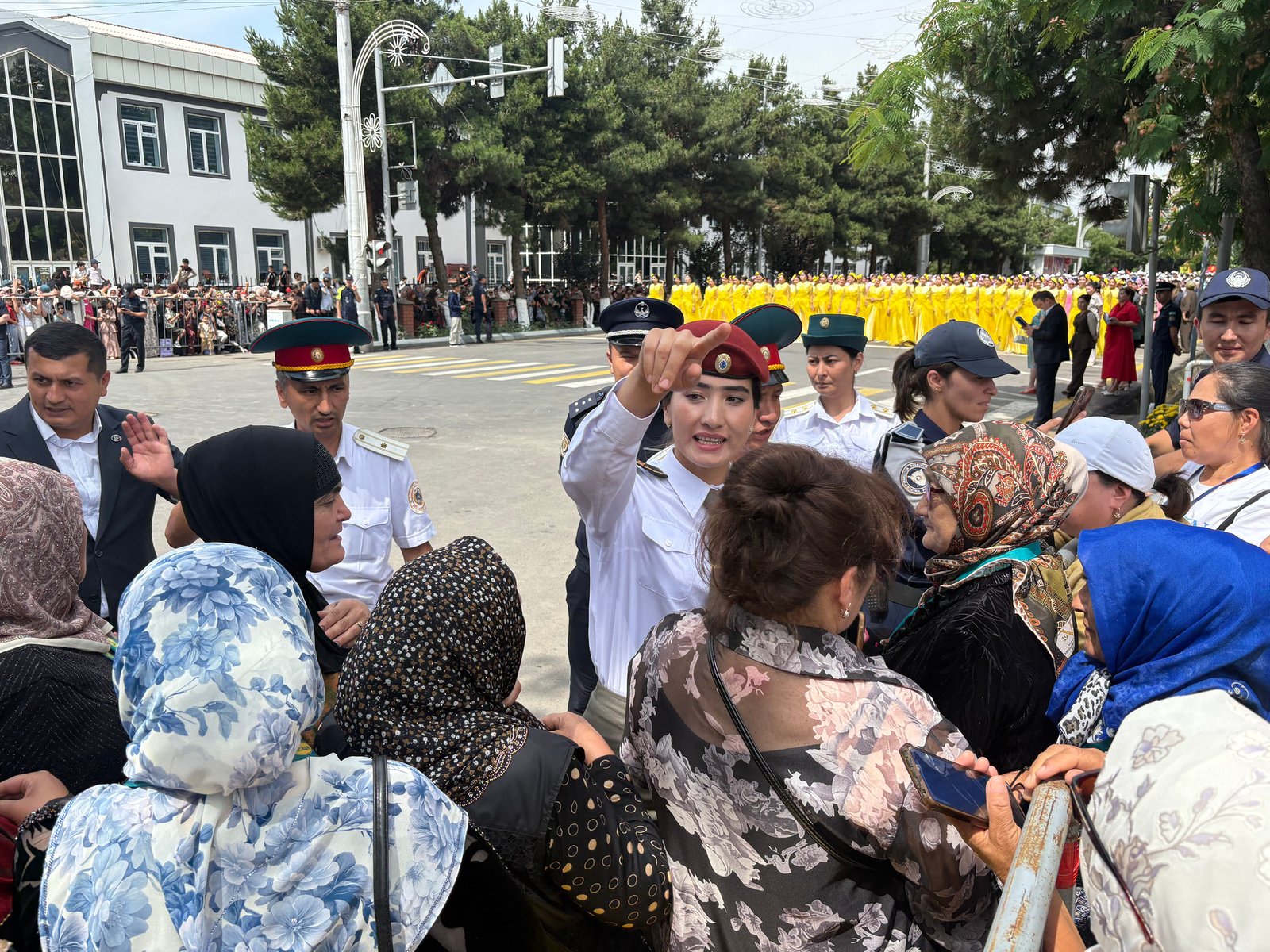
Shortly before the start of the parade, a massive tour bus arrived and unloaded tourists from Kyrgyzstan. Instead of moving behind the cordoned-off area, they decided to stand directly on the parade route, blocking the view for the people behind the barricades.
All hell broke loose.
Everyone started yelling at Kyrgyz tourists and demanding that the local law enforcement intervene. The Tajik woman in the colorful dress even stopped elbowing me and demanded the National Guard move these Kyrgyz intruders to the back to stop blocking her view.
By this point, I thought I’d made peace with the Tajik woman. I was very supportive of her requests to the authorities to get the Kyrgyz tourists out of the way, and she even smiled with her mouth full of golden teeth when I took a selfie.
But once the Kyrgyz tourists were out of sight, she called the National Guard… and pointed at me.
She argued because I had a professional camera, I should have been stationed with the official photographers and not interfere with the regular folks trying to watch the parade. A National Guard officer, who looked a bit like Dua Lipa, listened to her grievances but refused to move me. I wasn’t an accredited member of the press. After her attempt to get me removed failed, the Tajik woman just threw her hands up and left to find a better spot. My camera and I were just too much for her.
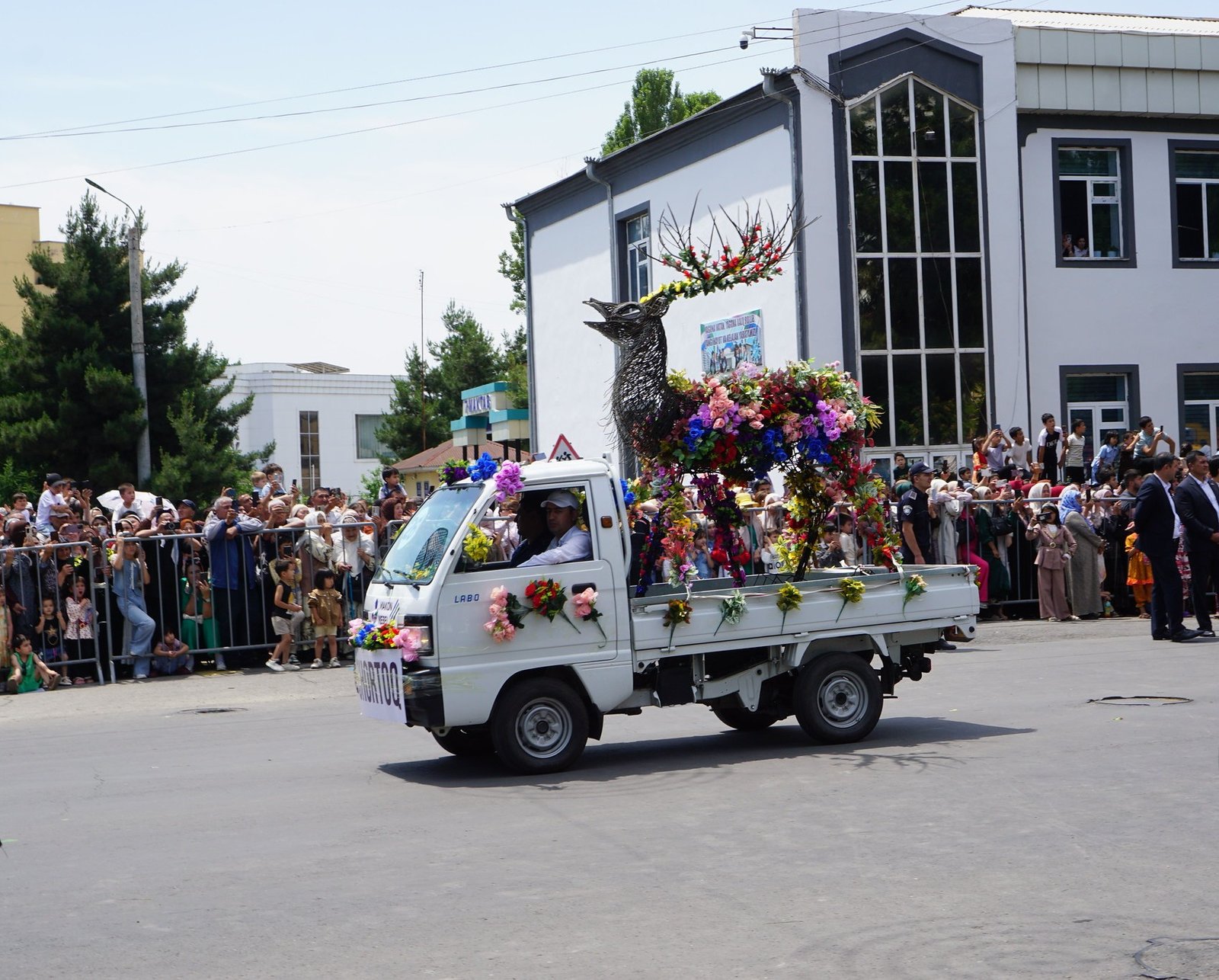
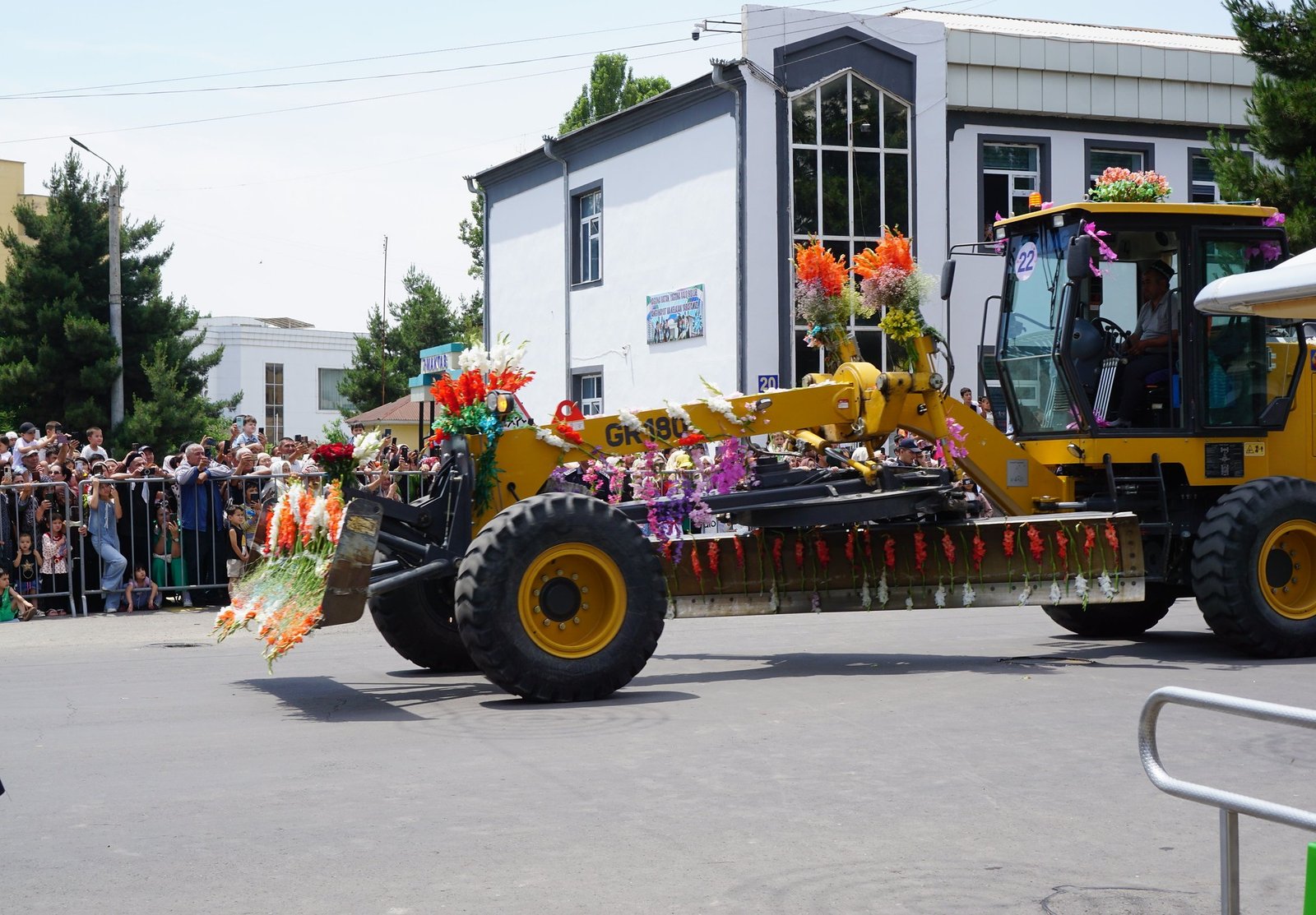
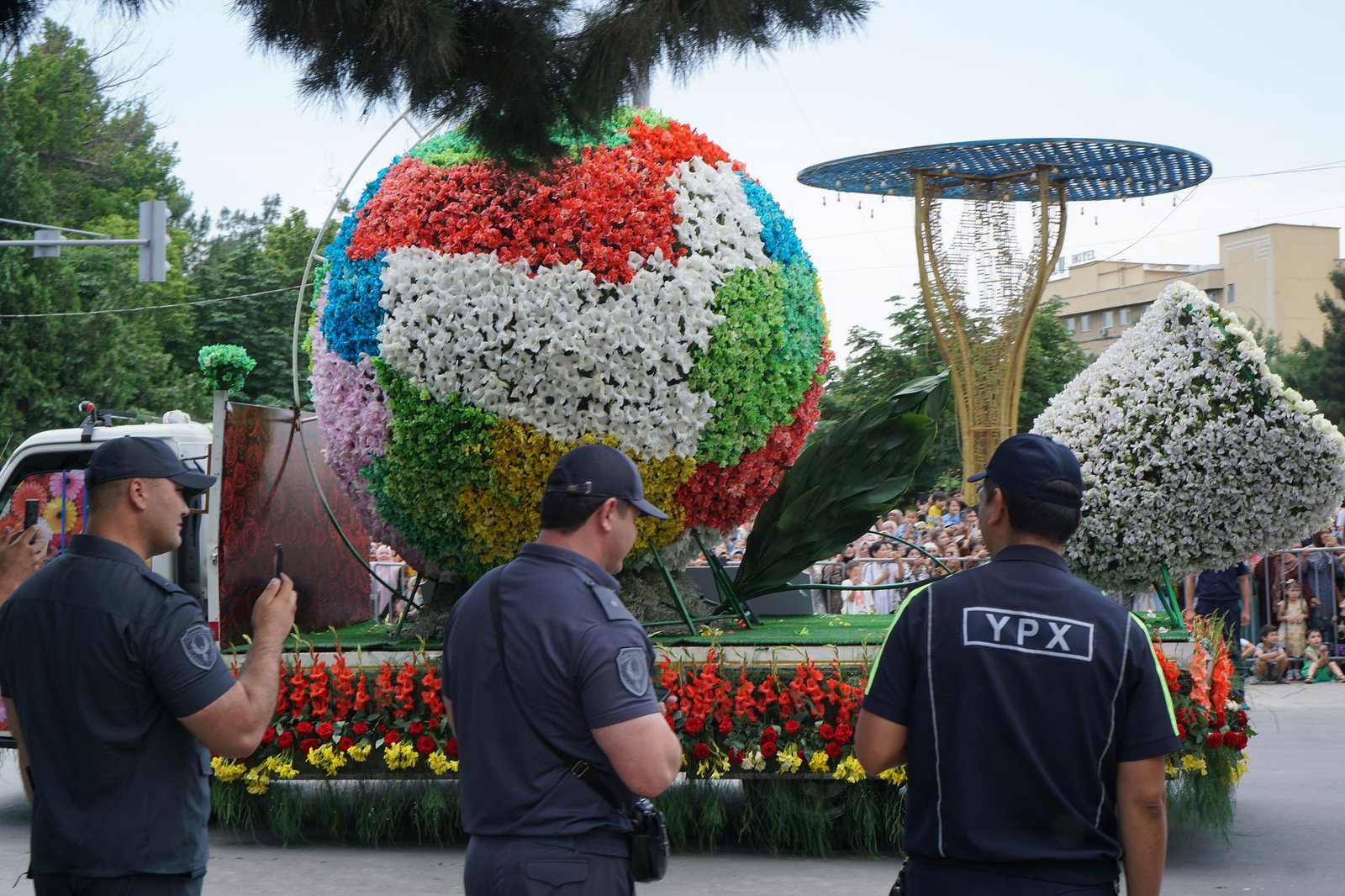
After about two hours of waiting, the parade finally started. Girls in colorful flower-inspired dresses walked at the head of the procession. They were followed by musicians playing traditional Uzbek instruments, people in traditional clothes, and members of various organizations. The people represented a wide array of Uzbek traditions, clubs, and initiatives. And then—the main dish—more than 200 vehicles decorated with freshly cut and artificial flowers drove past us. Some floats, like a model of an airplane or a giant basket of tulips made from fresh flowers, were especially impressive and over the top. According to official estimates, more than 30,000 fresh flowers were used to decorate the vehicles participating in the parade.
But to be frank, the parade was poorly organized.
If I was advising the organizers, I would certainly recommend that the participating vehicles drive at a slower speed. Although the floats and decorated automobiles looked incredible, they sped past before anyone had much time to appreciate them.
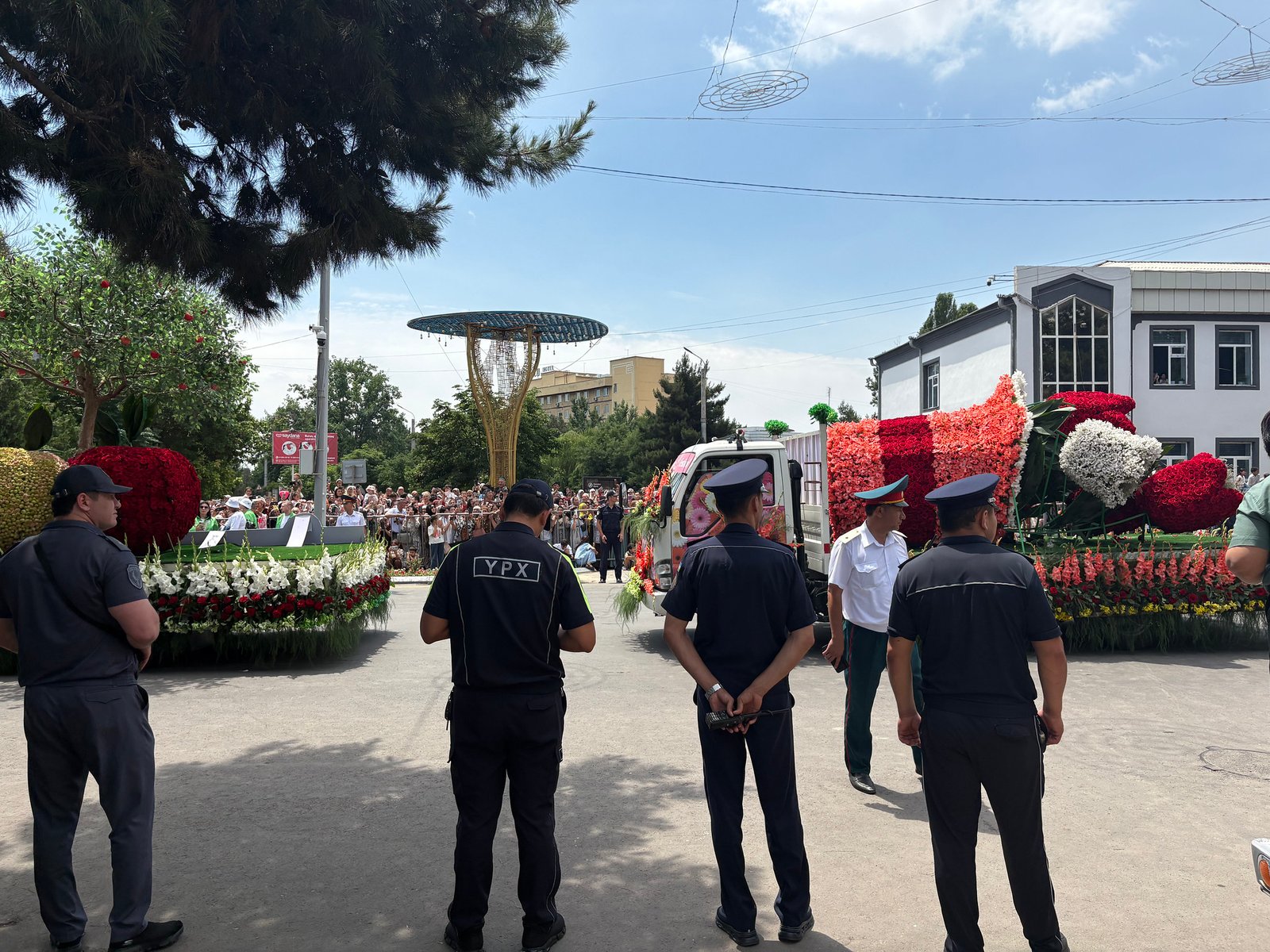
Another problem was the presence of too many law enforcement officers. Were they really needed? They were blocking the view of the parade for most people. I did my best to take pictures and videos, but the view was often blocked by the police officers who themselves recorded the parade on their phones. Was this parade for the people or for the cops?
And finally, the organizers didn’t plan for some basic health measures for the participants. The young girls who opened the parade had to stand in the direct sunlight for almost three hours without water, so it was no surprise that several of them felt sick and needed medical attention.
But the chaotic organizing didn’t ruin the experience for me. If nothing else, the event was great for meeting people.
I chatted with a 55-year-old Azim from Andijan, who was eager to tell me about delicious Andijan plov and his military service in Kazakhstan. A father and son approached me and shook my hand, trying to convince me that I looked like a Russian soccer player who played for Arsenal. There were many other small conversations and chats. After the parade, I stood in the middle of the street taking pictures of the spectators dressed in their best clothes. People didn’t mind, and some even posed for me.
Most people soon headed to the entrance to Babur Park to continue the festivities. When I got there, the park gates were still closed. To kill time, I went across the street to grab a quick lunch at a small café.
Across from the cafe, there was a giant Soviet wall mural and a stand displaying the latest edition of Namangan Pravda. The newspaper stands were popular in Soviet times, and I thought they were things of the past. But apparently you can still find them in Uzbekistan. The front page of the newspaper advertised the opening of the flower festival.
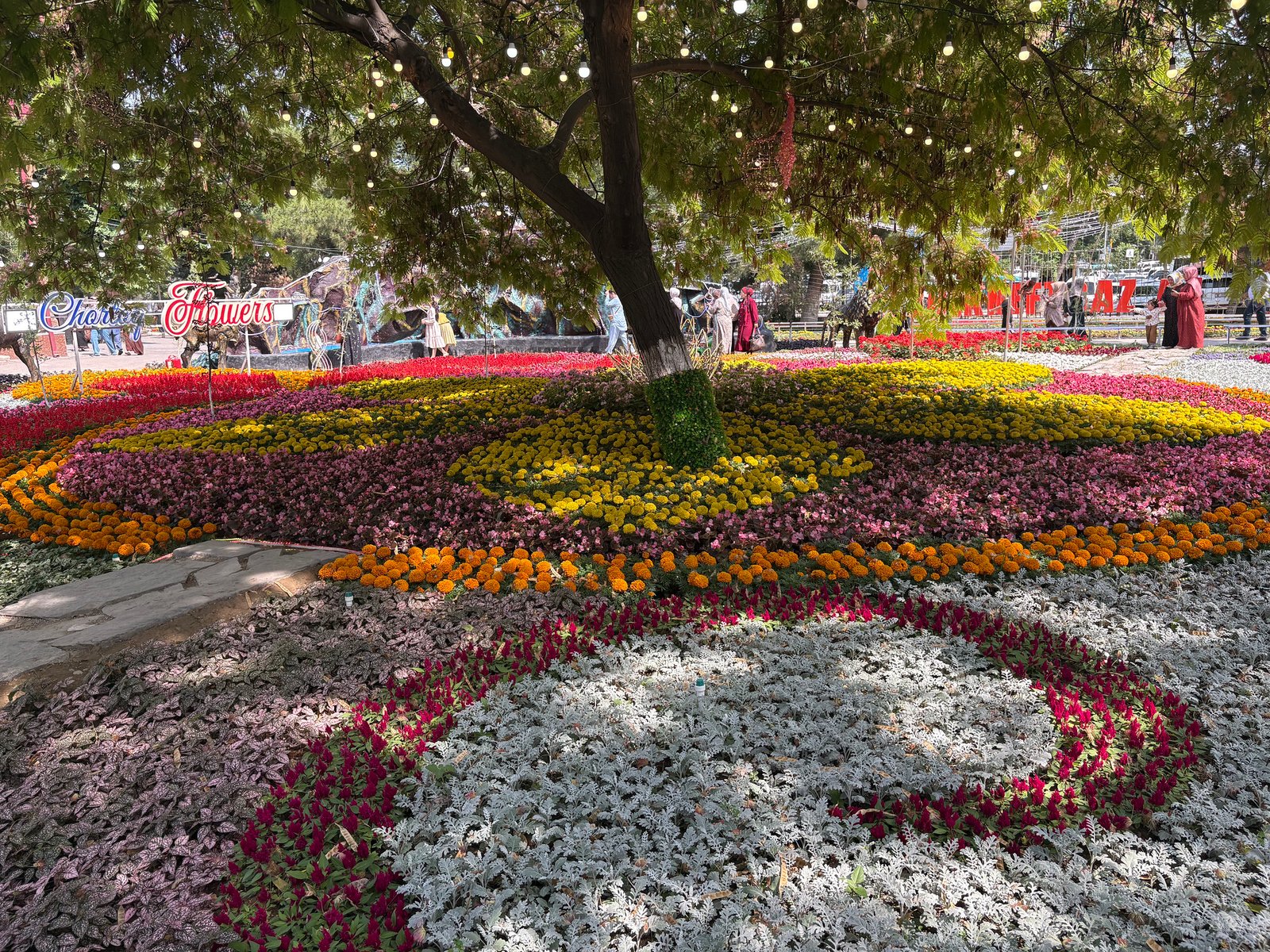
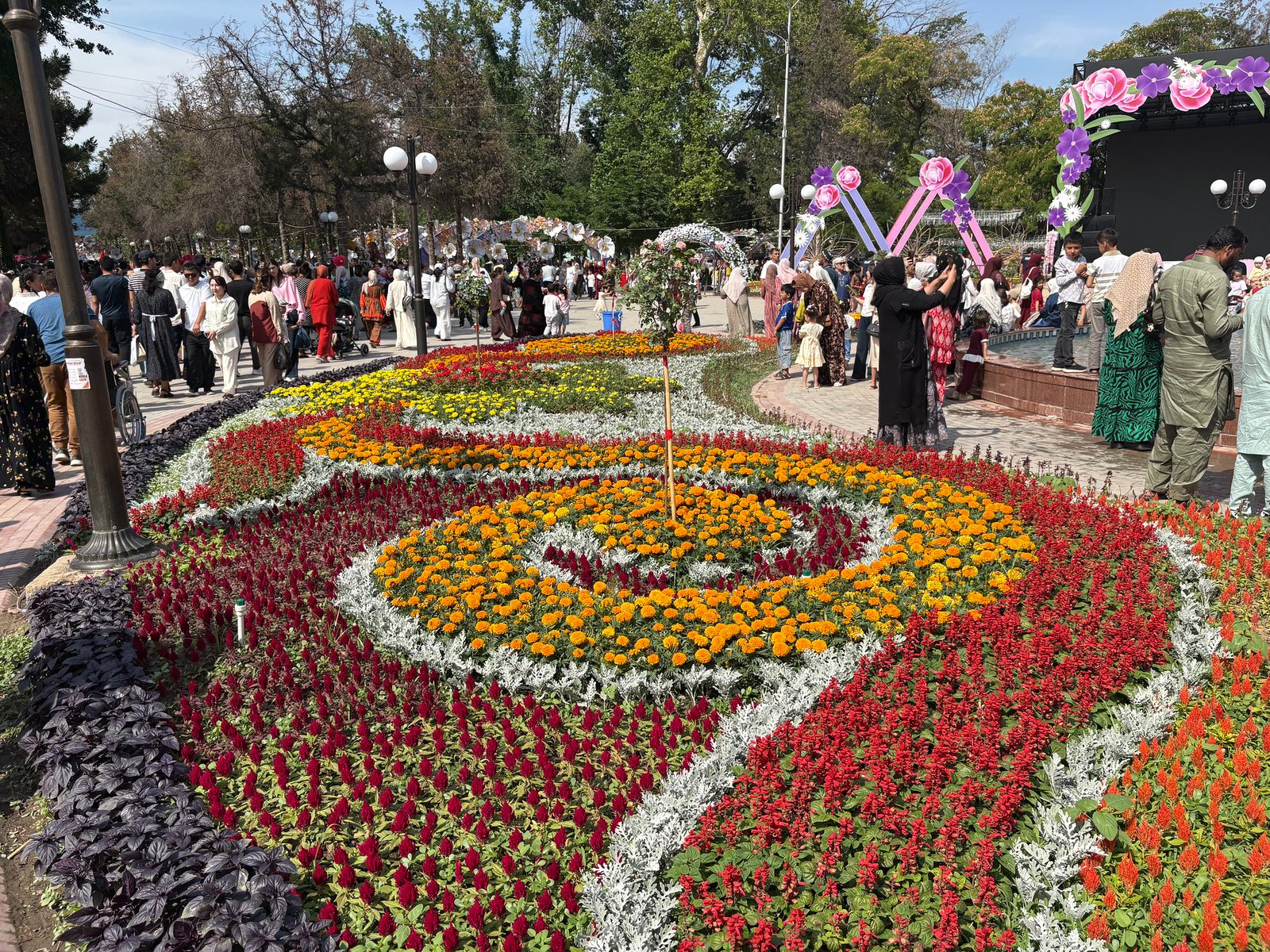
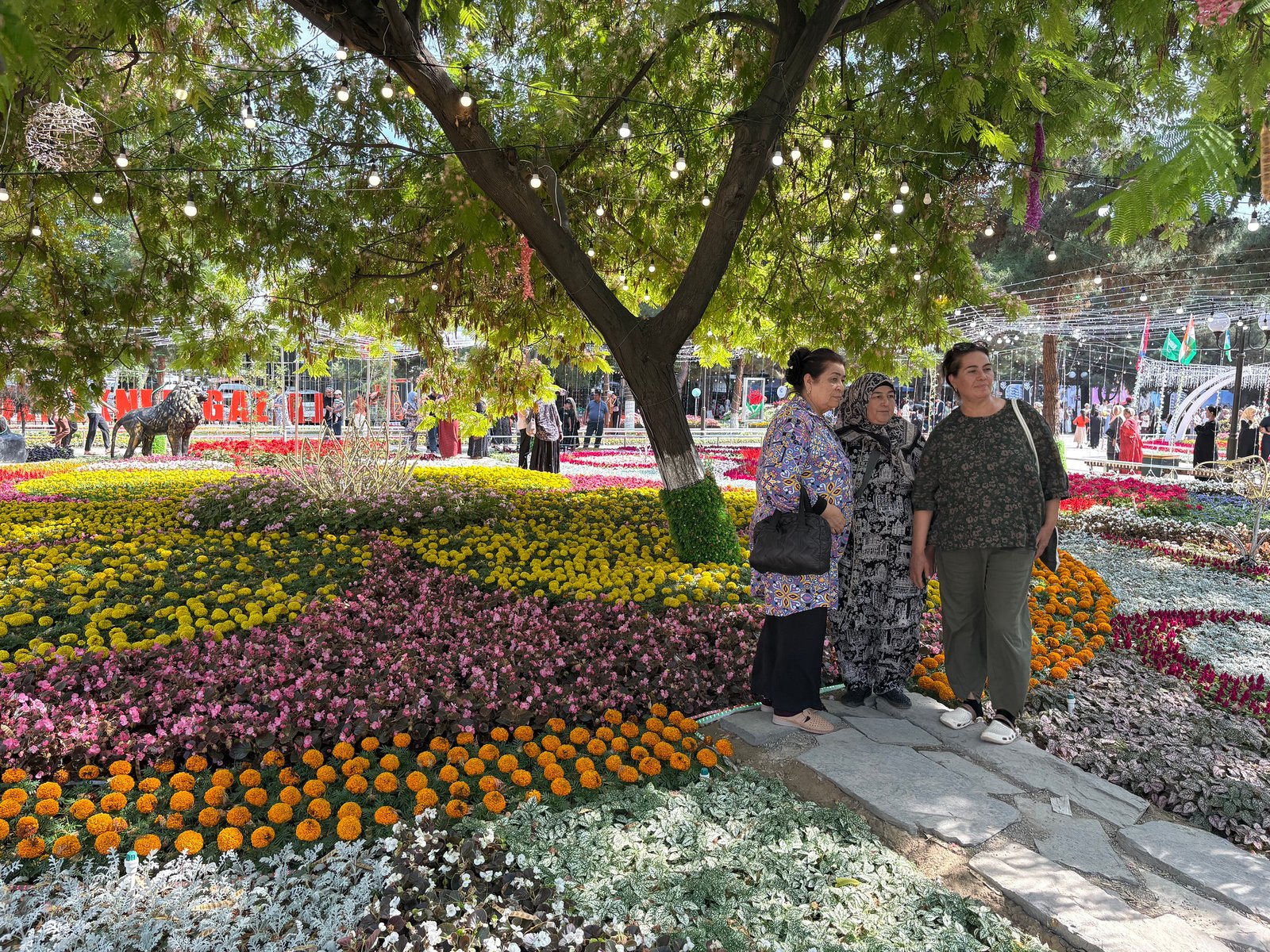
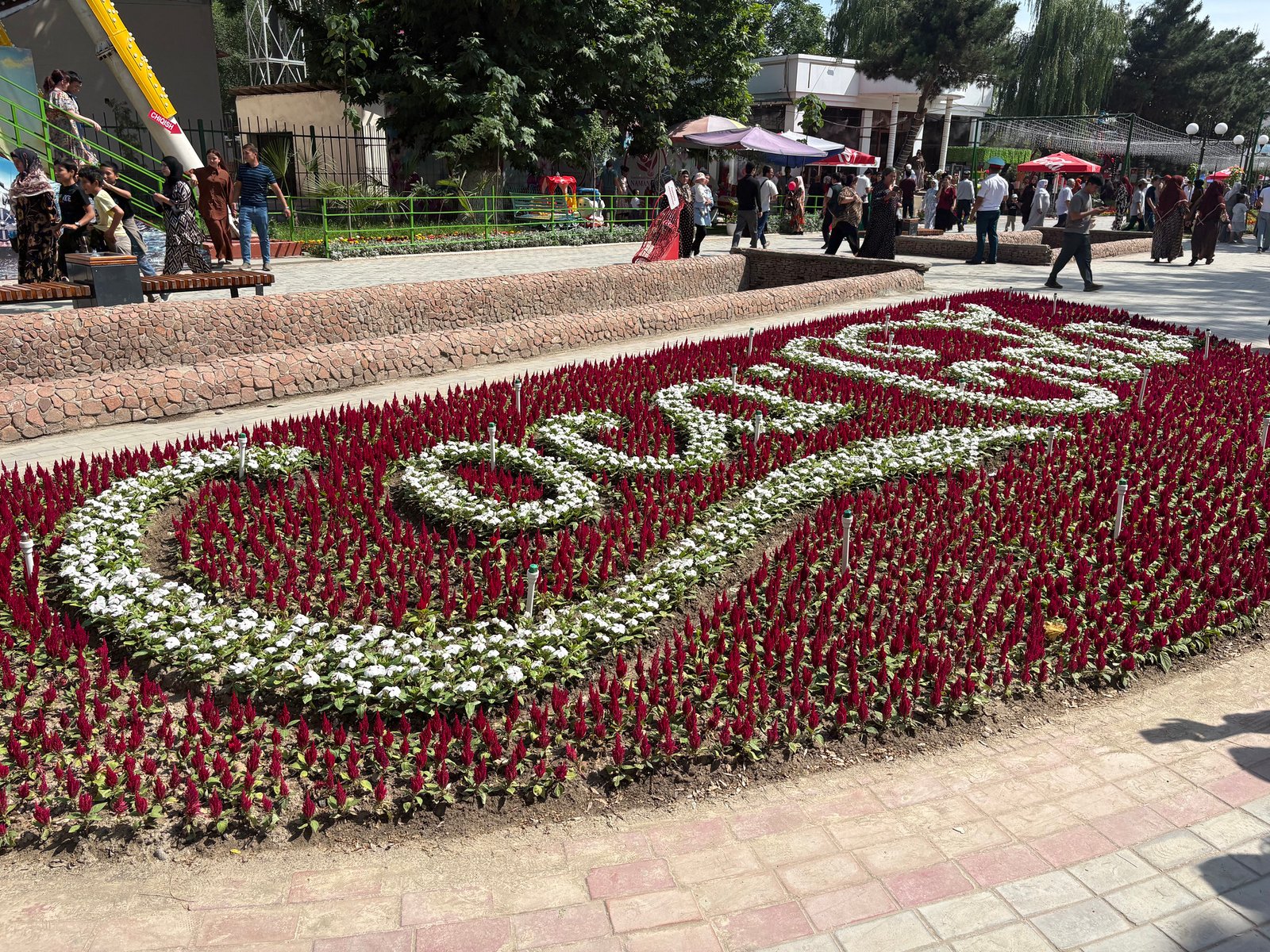
After lunch, the gates of Babur Park were finally open, and the park was bustling with people. The park was enormous, and its main attraction that weekend was colorful flower beds and floral compositions. Most arrangements and designs were sponsored by big businesses and government entities. The flowers used in most of the park’s floral beds were simple — nothing exotic — but the arrangements were quite exquisite. My favorite was a Coca Cola logo arranged with dark red Celosia and white Vinca.
While strolling in the park, it also dawned on me that these flower displays were like detailed patterns on Uzbek pottery. You can’t just plant flowers. You must be creative. You must have an interesting pattern. Otherwise, your flower display is like what a pottery student in Rishton characterized Julia’s plain pottery as a “bowl for pets”.
I could have spent hours in Babur Park admiring flower beds, but it was time to head to Kokand, where Julia and I agreed to meet at the train station. Earlier that afternoon, she wrapped up her one-week pottery retreat in Rishton and said goodbyes to the Master and students at the studio, promising to return the following year. We were leaving the welcoming Fergana Valley and going west for the most adventurous part of our Uzbekistan trip.