
This was a real tongue twister.
Ka-ra-kal-pak-stan.
Ka-ra-kal-pak-stan.
Now say it faster.
Ka-ra-pa-kal… Damn.
After spending nearly a month in the ancient Silk Road cities, the Fergana Valley, and the Nuratau Mountains, we thought we were finally getting a grasp on Uzbekistan’s diversity and complexity. We were starting to understand its geography, food, and people. But then we came to…
How do you say it?
Karakalpakstan.
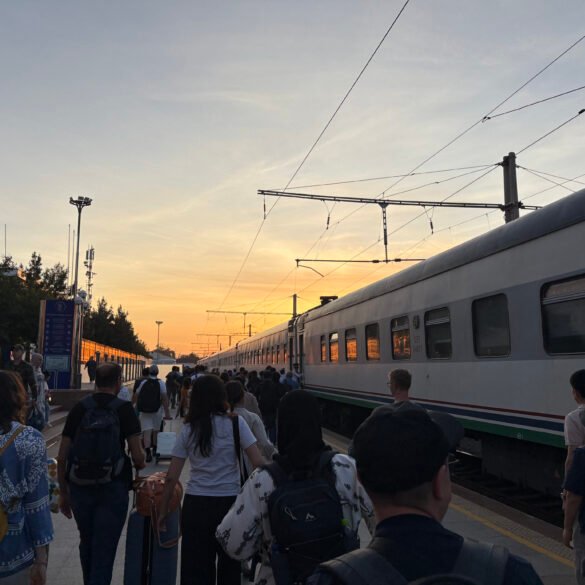
At first glance, Nukus, Karakalpakstan’s capital and largest city, didn’t look any different than other cities in Uzbekistan. Its train station had a uniform appearance of other train stations in the country. In fact, the overnight train to Nukus that we boarded the evening before in Navoi departed from a nearly identical train station. With its broad tree-lined streets, large squares, and typical Soviet blocks, at times, Nukus looked like parts of Fergana or Tashkent. But beyond that, Uzbekistan’s only autonomous region was drastically different from everything that we had encountered in the country.
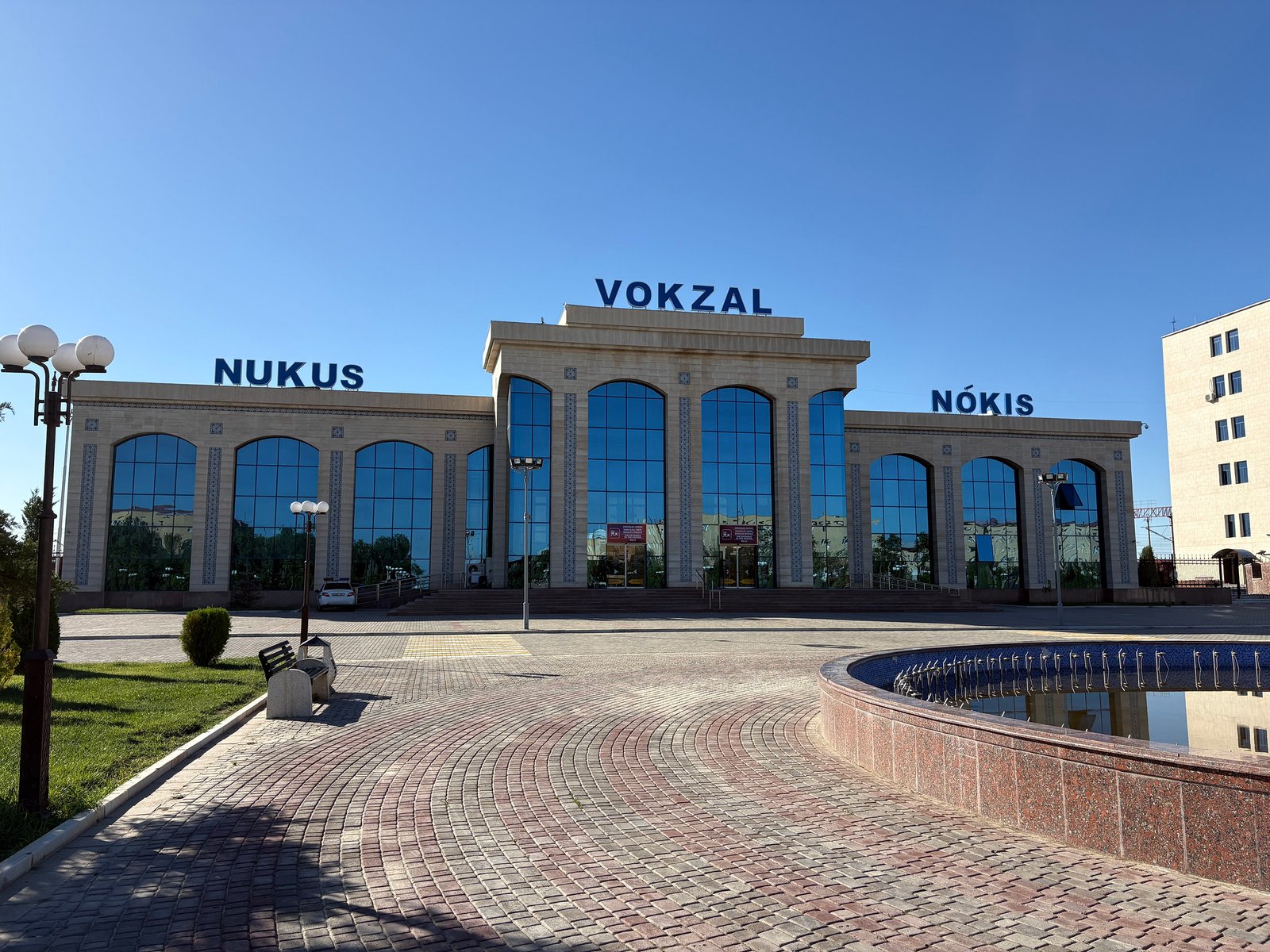
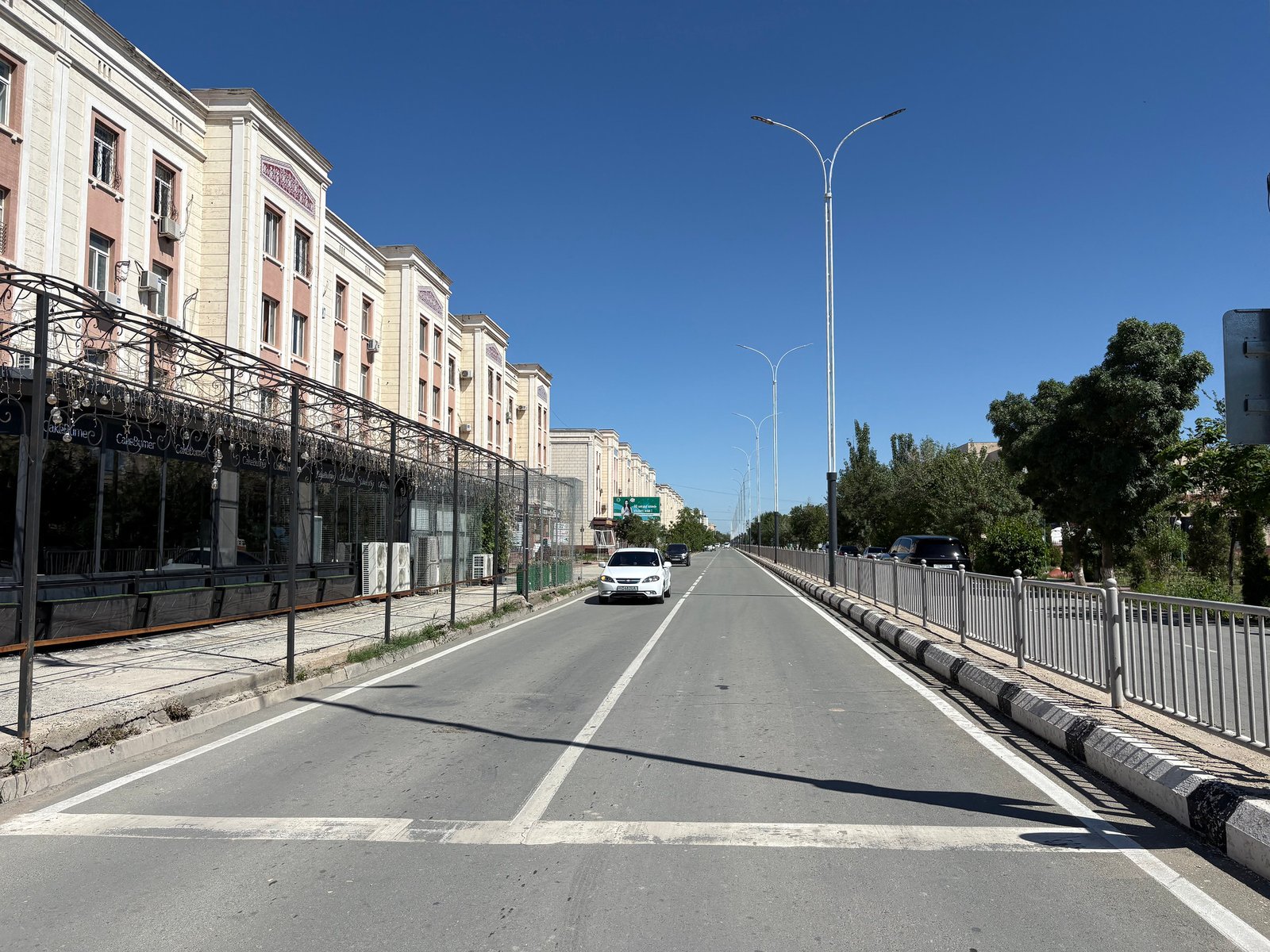
It was not surprising that Karakalpakstan looked and felt different. The region is remote, mostly in the desert, and while being a part of Uzbekistan, it has had a special, autonomous status since Soviet times. When the Soviet Union folded, Karakalpaks didn’t break away—like did some regions in other republics—and eventually chose to stay with Uzbekistan. But the people, Karakalpaks, are not Uzbeks, and they are the first to point it out. The taxi driver who picked us up at the train station observed that Karakalpaks were closer to Kazakhs than Uzbeks in both the physical appearance and the language.
Comparing Nukus to other places in Uzbekistan, it felt more liberal to us. After a week in a conservative Fergana Valley, it took us a while to adjust seeing women wearing mini-skirts and the clothes exposing shoulders, elbows, and knees. This would be a jarring sight in Fergana Valley or even in Bukhara or Samarkand. But not here. In Nukus, the fashion was even more relaxed than in Tashkent.
And the liberal practices extended not only to fashion. Uzbekistan is a predominantly Muslim country, and the consumption of alcohol and other harmful substances is a delicate topic. Yet, in Nukus, we saw many liquor stores with the word “Vodka” written in Russian, and for the first time during our trip, we saw nasvay, a smokeless tobacco product, being openly sold at the central market. When I stopped to ask the seller about it, he just motioned with his hand, annoyed, asking me to just keep moving. He didn’t want my intrusive presence and my camera.
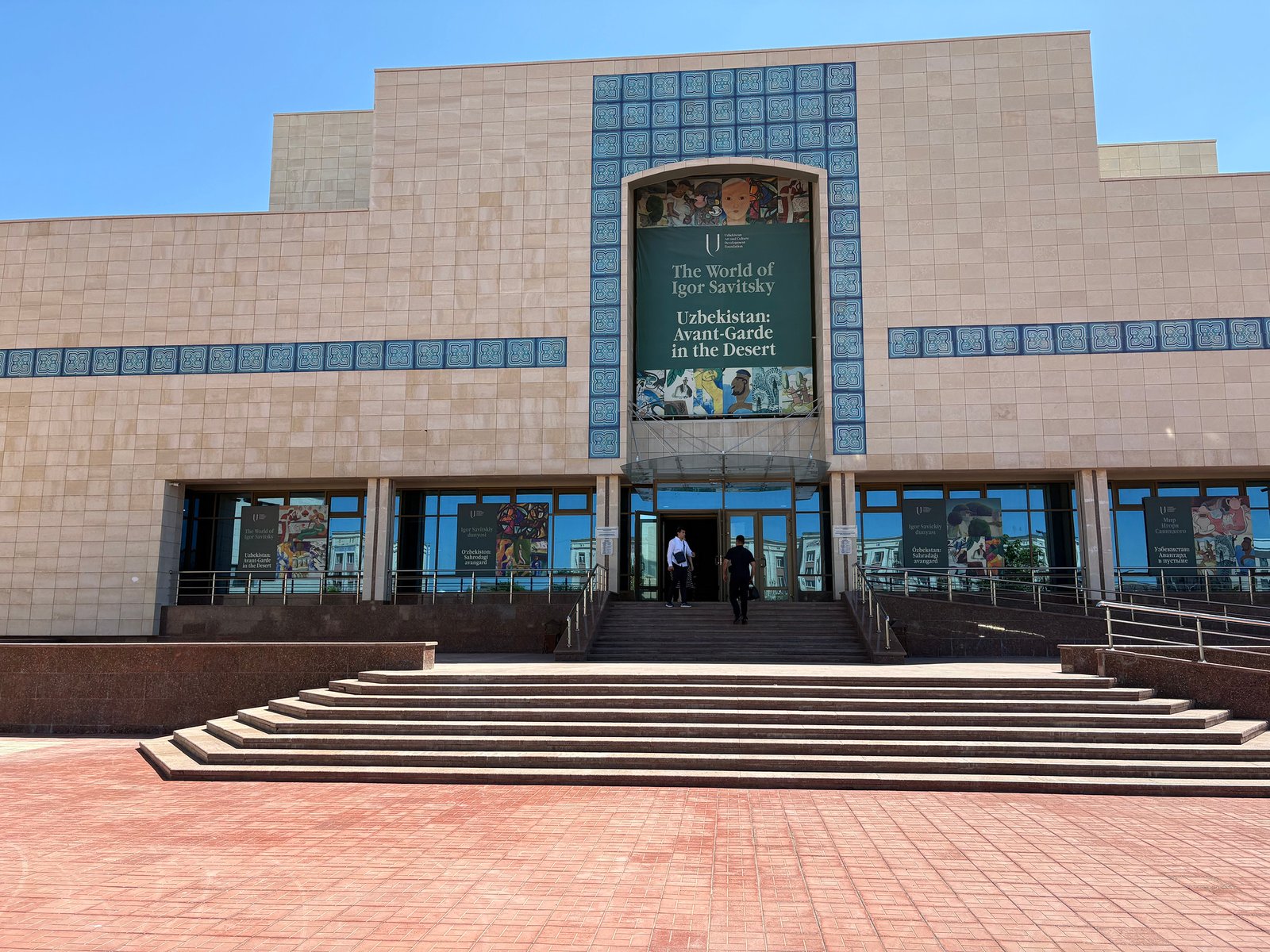
Karakalpakstan was also unique because the last thing one expects to find in a small provincial town in the middle of the desert is… a modern art museum. During the pandemic, I read Erika Fatland’s Sovietiestan, from which I learned about the Savitsky Museum. And after watching The Desert of Forbidden Art, a superb documentary about the museum and its founder, Julia and I agreed that if we ever made it to Uzbekistan, we would visit the remote region and its world-famous museum.
And now we were here.
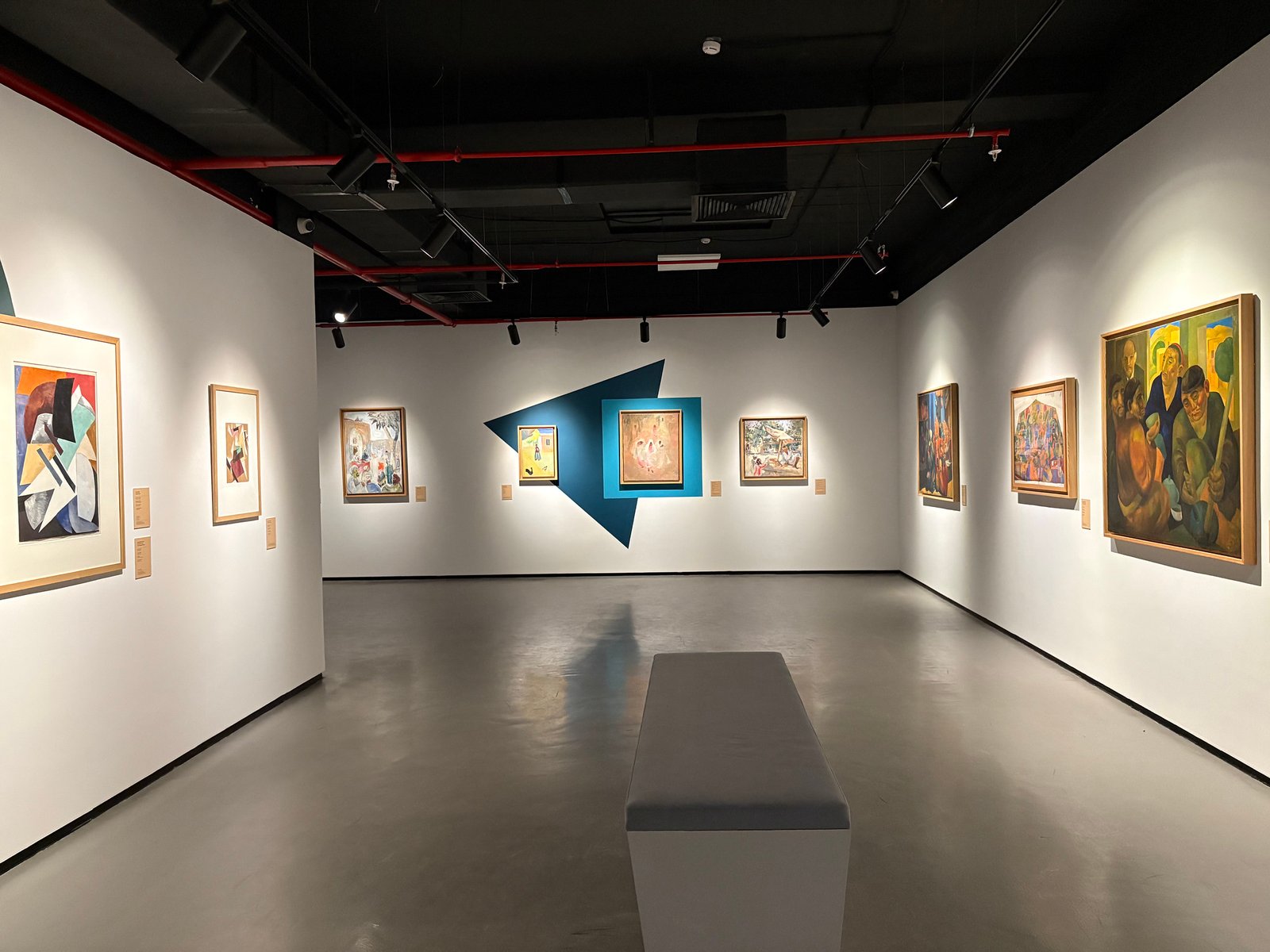
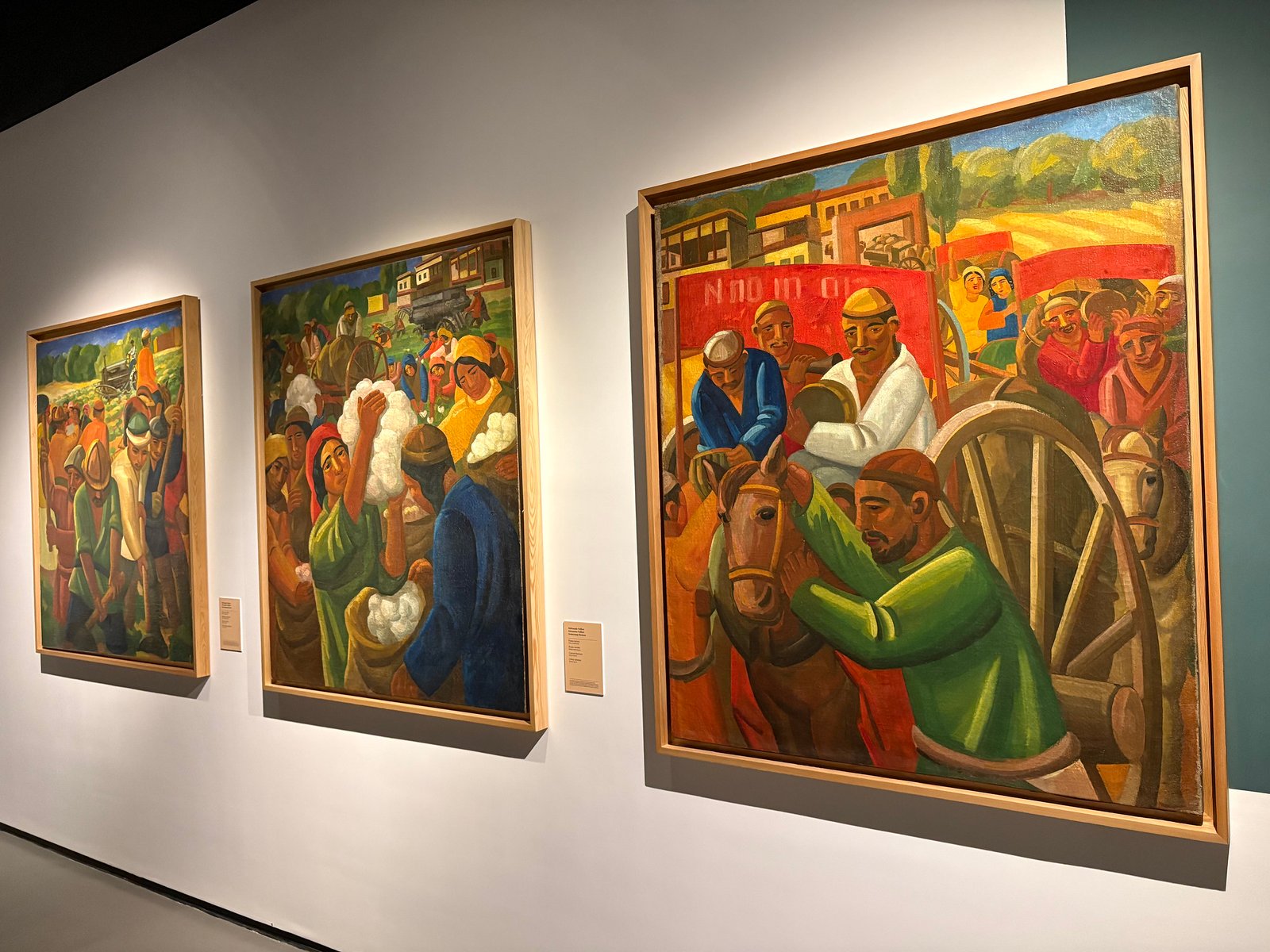
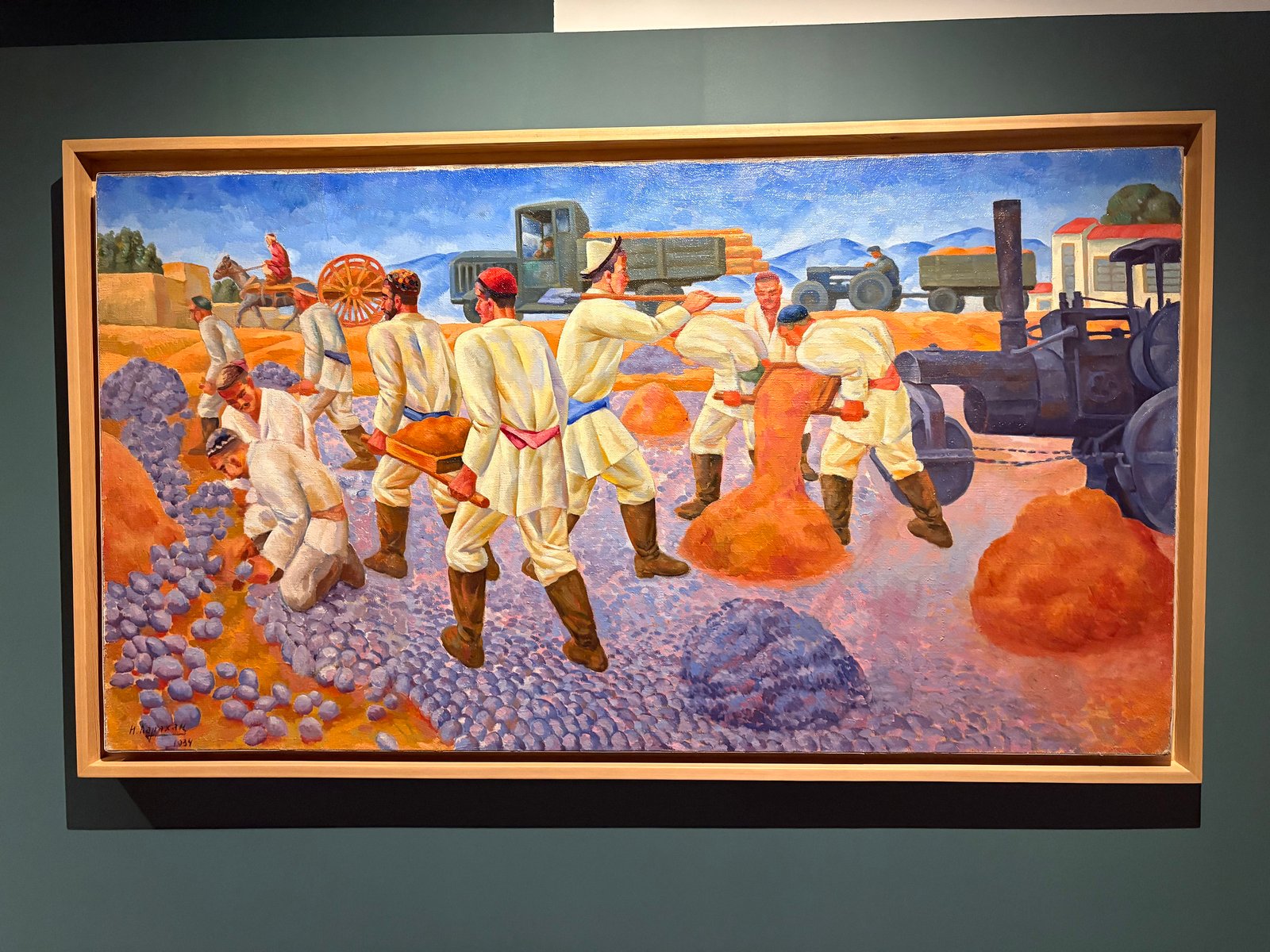
The Savitsky Museum is the reason to visit Karakalpakstan. Founded by Igor Savitsky in 1966, the museum contains the premier collection of avant-garde art. The artists’ colony that existed in Nukus was in part due to the artists’ desire to be as far as possible from Moscow’s strict censorship and experiment with artistic styles. And Savitsky did his best to collect and preserve the art created in this remote corner of the Soviet Union.
The paintings in this airy two-story museum represented nearly all “-isms” of the first half of the XX century: Post-Impressionism, Fauvism, Cubism, and German Expressionism. European avant-garde styles with a sprinkle of Soviet Social Realism and Central Asians motifs, I hardly could get enough of these paintings. I closely examined each painting to often whisper at the end something like: “Matisse colors,” “Van Gogh brushstrokes,” etc. By the end of the day, the bright colors of the canvases visually overstimulated me and made me dizzy, as Picasso’s portrait of Dora Maar did to me years ago in Paris. Yet, this time, we were not in Paris. We were in Karakalpakstan, in the desert.
The next morning, we were dozing on and off in the taxi, riding through the arid landscapes to another site that makes Karakalpakstan even more unique.
Moynaq.
A port city without the sea. The place of a man-made ecological disaster.
After several hours of a bumpy car ride, we finally got to the town entrance with a blue-colored sign in the shape of an oversized fish. Metal scales were wavering in the wind as if signaling that we were near the sea. But something was missing. The sea -- the Aral Sea -- was no longer there.
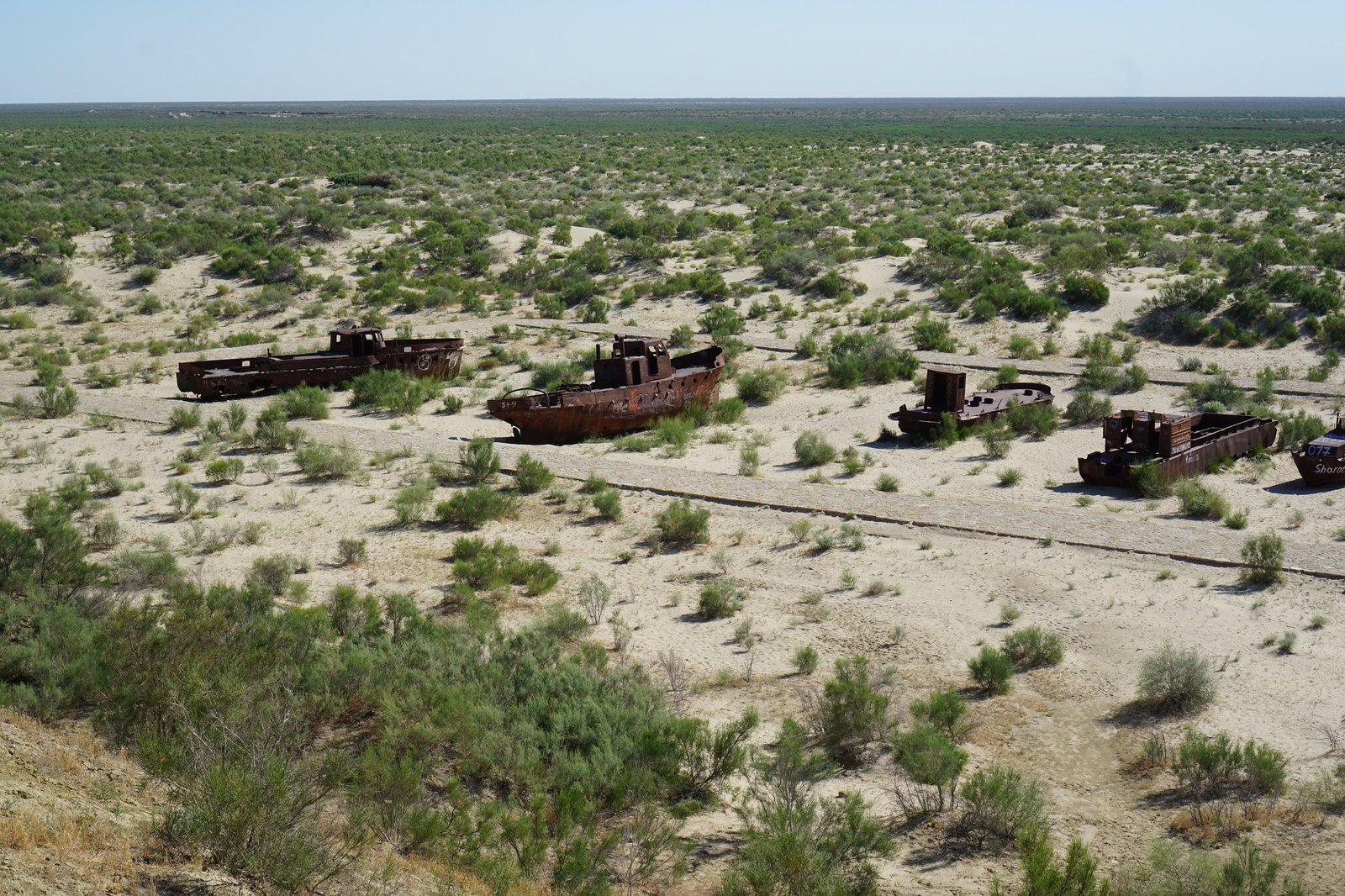
The history of Moynaq is truly heartbreaking. During the 1960s, the town was a bustling seaport with a well-established fish canning industry. But the Soviet insistence on overproducing cotton and large-scale diversion of water for irrigation from the Syr Darya and Amu Darya caused the sea to gradually recede until it dried up. Now, the Moynaq ghost harbor is an eerie tourist attraction.
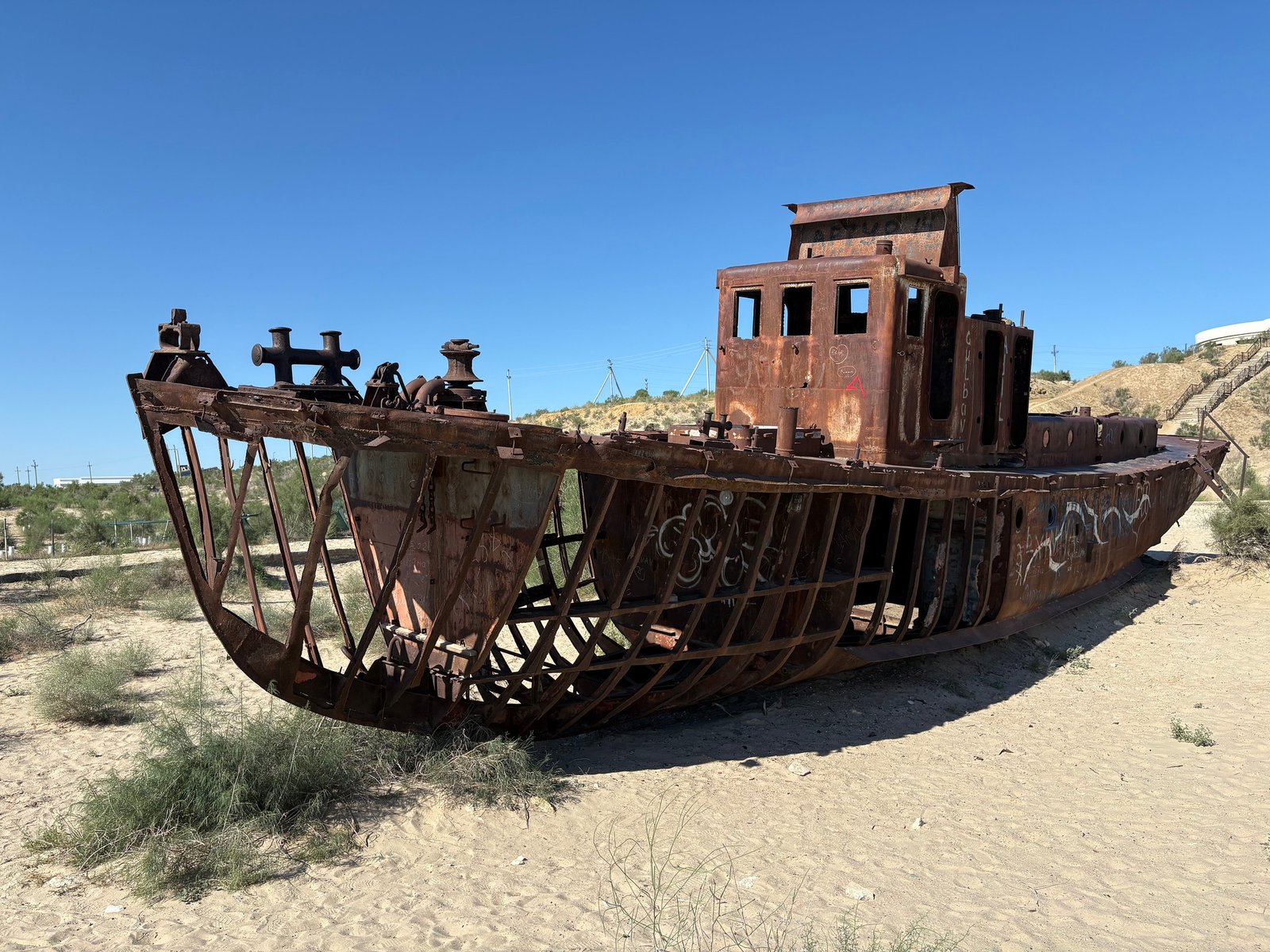
The main attraction here is the ship graveyard. We walked among the rusting hulks and climbed inside the ship skeletons. Where the water used to be is now the desert, with only salt residue on the ground confirming that this used to be the sea. The number of decomposing ships decreases every year with some being sold for scrap. The adjacent Museum of the Aral Sea, through a collection of photographs, exhibits, and a short 10-minute movie, tells the story of what Moynaq and the Aral Sea used to be. The faded-colored cans of fish on display provide further evidence of the vanished sea and the fishing industry.
The visit was poignant and a reason to reflect about disasters caused by people on a three-hour drive back to Nukus. When we returned to the Airbnb, our host told us that he swam in the Aral Sea near Moynaq in 1986 as a 10-year-old.
On the central square of Nukus, right by the Savitsky Museum, two tall flag poles stand next to each other with the flags of Uzbekistan and Karakalpakstan rippling in the air. The flags are nearly identical. The white stripe of Uzbekistan’s flag is yellow in the Karakalpakstan’s version. On the surface, there is not much difference between Uzbekistan and Karakalpakstan. But upon closer look, as we discovered, Karakalpakstan’s people, landscape, and sites tell the story of a very distinct region.