
It was morning, and the studio was empty, except for Khushnud and I.
"Where is everyone?" I asked.
“Eating plov," Khushnud replied casually, as if that explained everything.
It did not.
After a bit more prodding, I learned that every traditional Uzbek wedding begins with plov, a traditional rice and meat dish. At dawn, the groom's family hosts a massive feast for the men, often starting as early as six in the morning. Later, the women and children gather for their own plov. The wedding ceremony with family and close friends follows, after which the groom brings his bride from her parents' home to begin her new life with his family. Finally, in the evening, the entire neighborhood comes together for the wedding banquet, with music, dancing, and enough food to feed a whole village.
We had been invited to the banquet, beginning at five o'clock.
We ate our non-plov breakfast, and I tried to focus on pottery. Before long, the rest of the students returned, and the studio settled back into its familiar rhythm. We worked, welcomed visitors, chatted between projects, and before I knew it, the afternoon had slipped away.
Around four o'clock, I went back to our room, washed the clay from my hair, face, and arms, and put on the dress I had bought for the occasion. After spending a week in clay-stained clothes, it felt strange to be so dressed up.
I stepped into the courtyard feeling unexpectedly self-conscious. I had no idea whether I was dressed appropriately for an Uzbek wedding. Should I cover my hair with a scarf or leave it uncovered?
The apprentices were already waiting, most dressed in black trousers and white long-sleeved shirts. None of them reacted to my appearance. I had learned by then that, in Uzbek culture, it is generally considered inappropriate for men to comment on a woman's looks.
Except for young Edik.
The moment he saw me, he flashed two enthusiastic thumbs up.
"Very pretty!"
I couldn't help laughing. I started to feel a little better.
It was drizzling, so we piled into taxis for the short ride to the restaurant. As soon as we entered the banquet hall, I realized Victor and I were about to spend the whole wedding apart.
The hall was divided down the middle by the dance floor. To the right sat rows of tables filled with women and children. To the left were only men. Victor and my friends from the studio headed toward the men's side, while I was escorted to a table of women I had never met.
I shot Victor a helpless look. He shrugged. There was nothing either of us could do. We were here to learn about the local traditions, not to disrespect them.
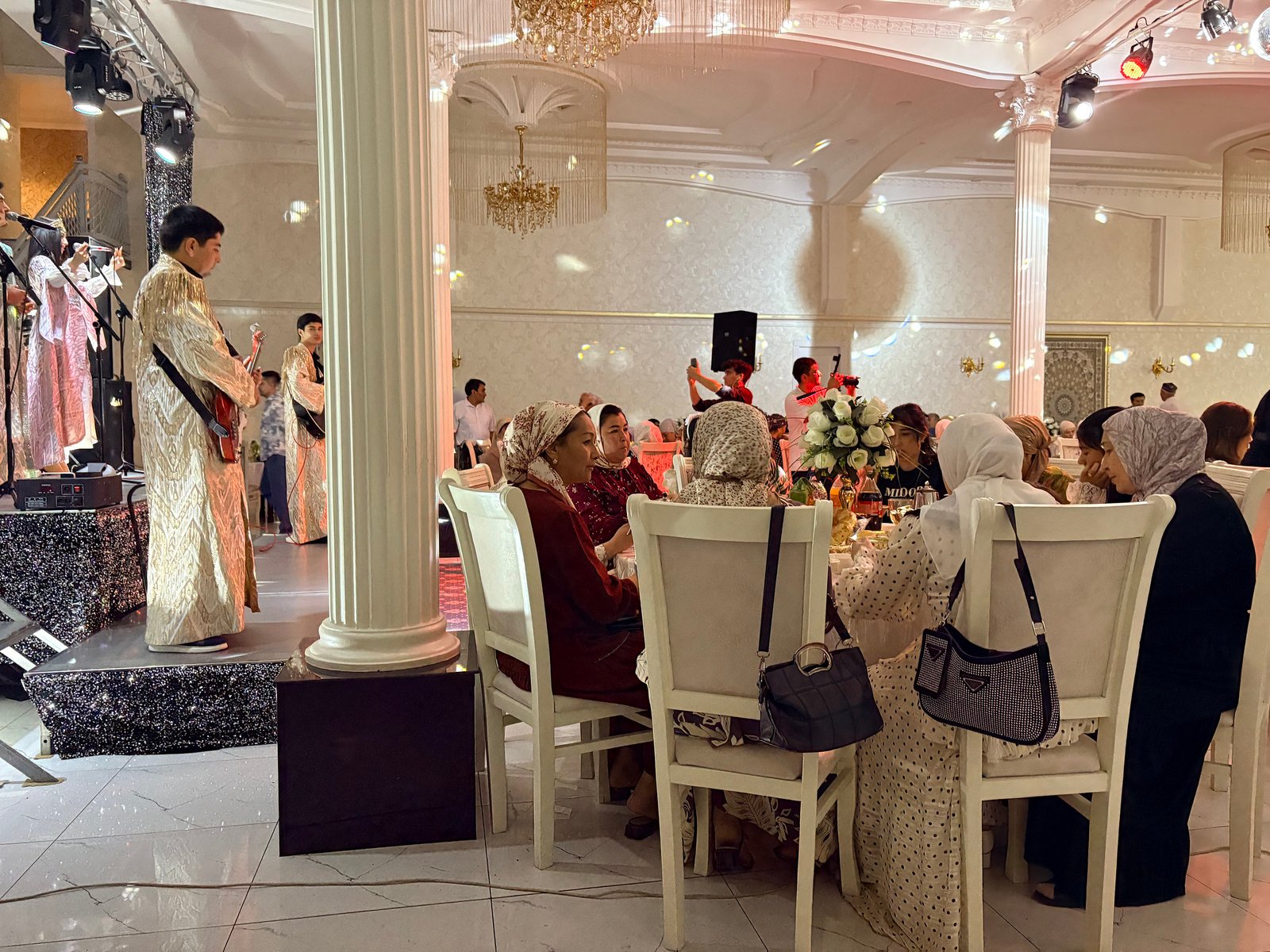
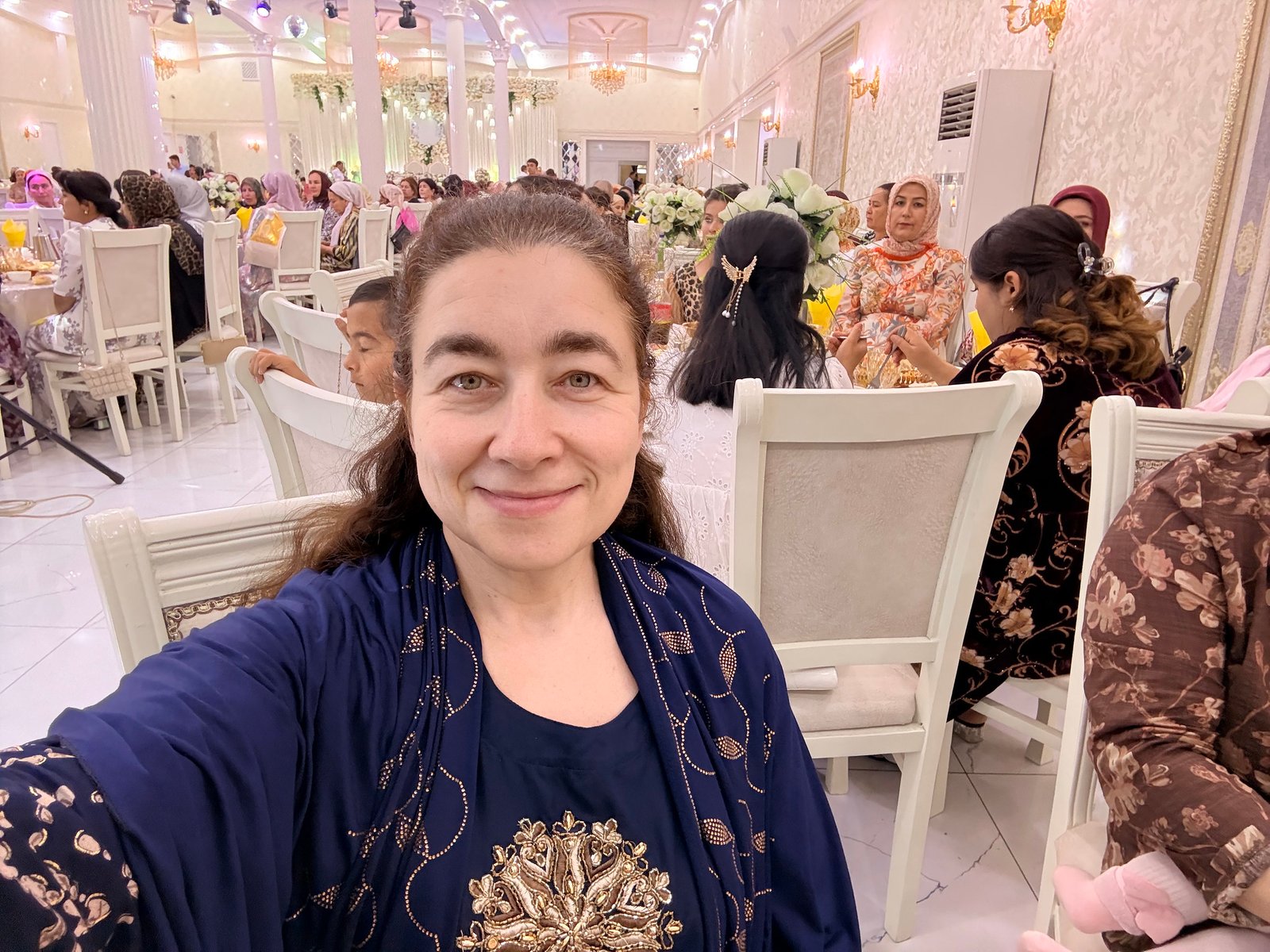
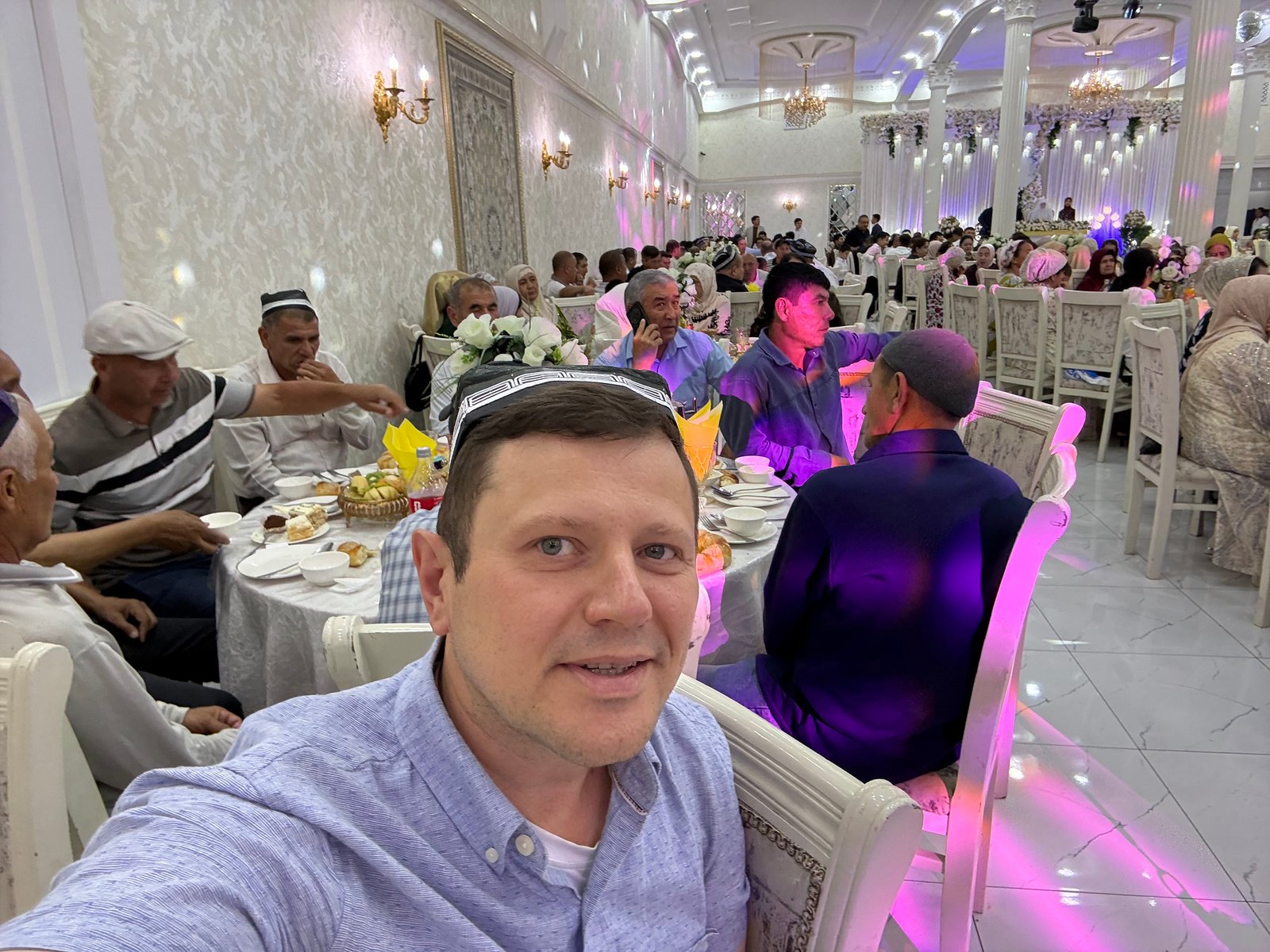
Hamaum walked me to the nearest table and introduced me to the maid of honor and the other women seated there. We exchanged smiles and handshakes. None of them spoke English or Russian. In the end, it hardly mattered. The music was so loud that conversation was nearly impossible anyway. Somehow I ended up at one of the important tables, with bride’s grandmother, aunts, and close friends.
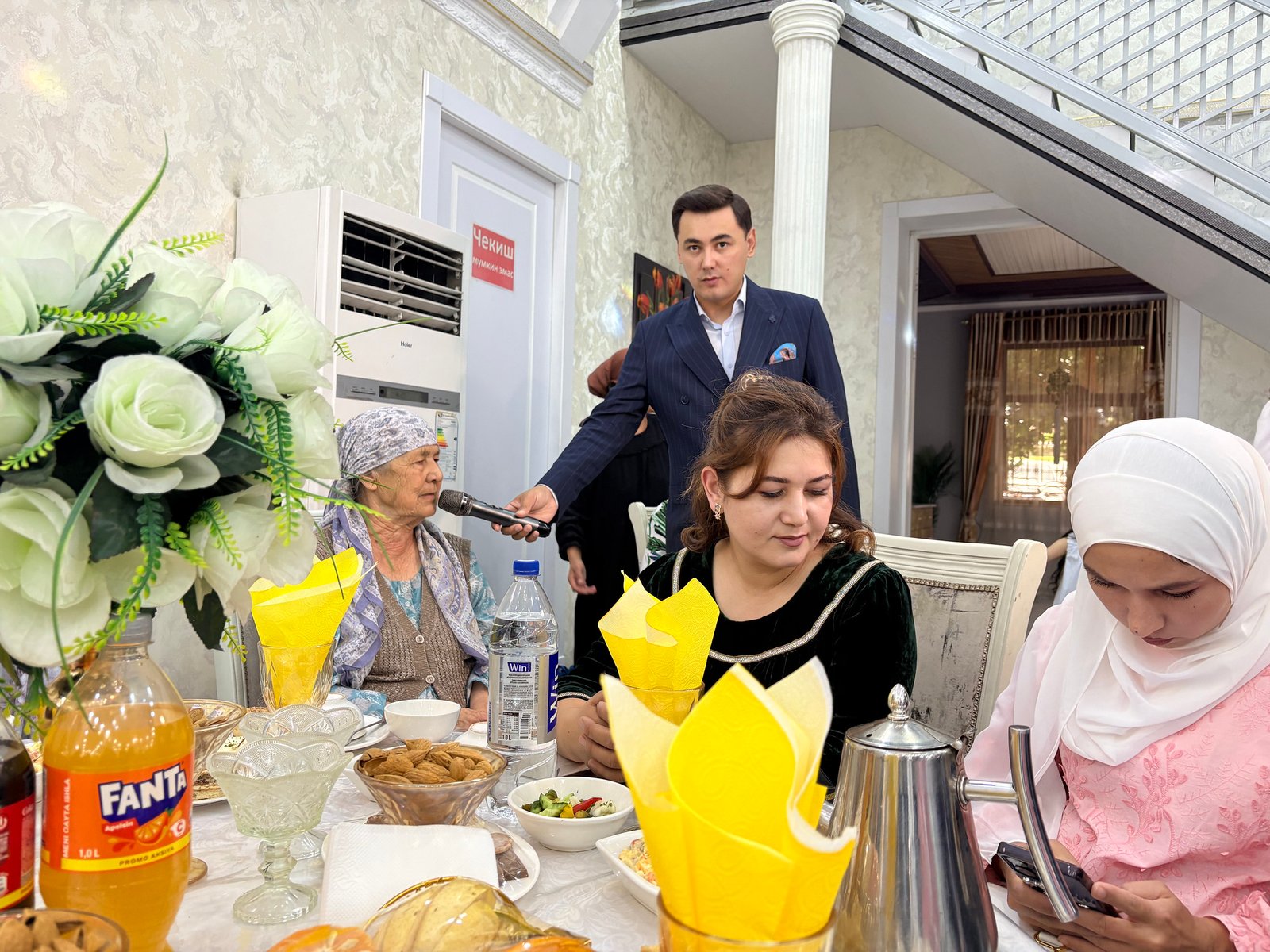
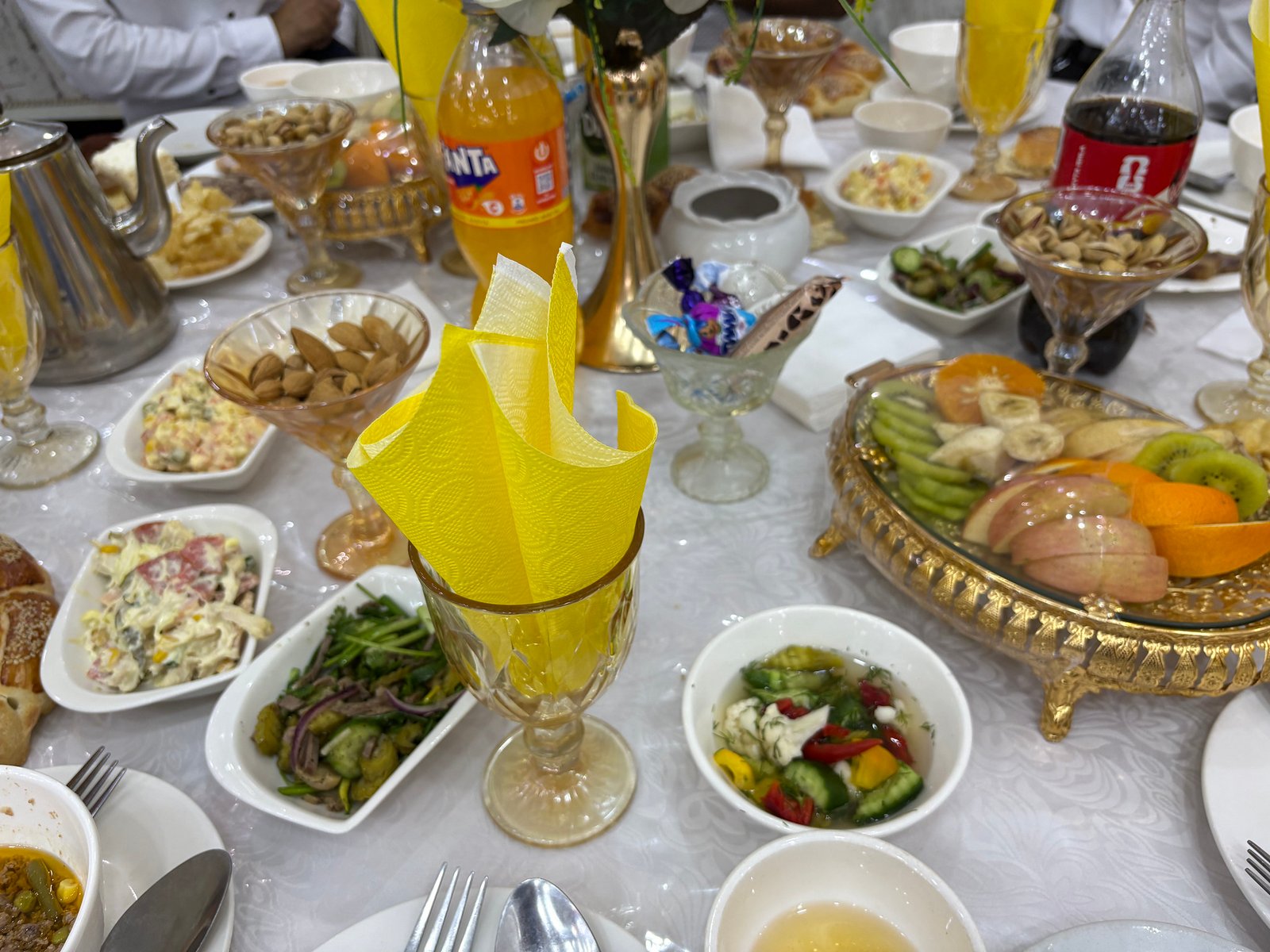
I was relieved to see that some of the women, including the maid of honor, had left their hair uncovered, so I quietly draped the scarf I had brought over the back of my chair. The tables were already overflowing with food: salads, cheeses, sliced meats, fresh bread, appetizers, and, somewhat inexplicably, plates of cake. Everyone immediately began helping themselves and passing dishes around.
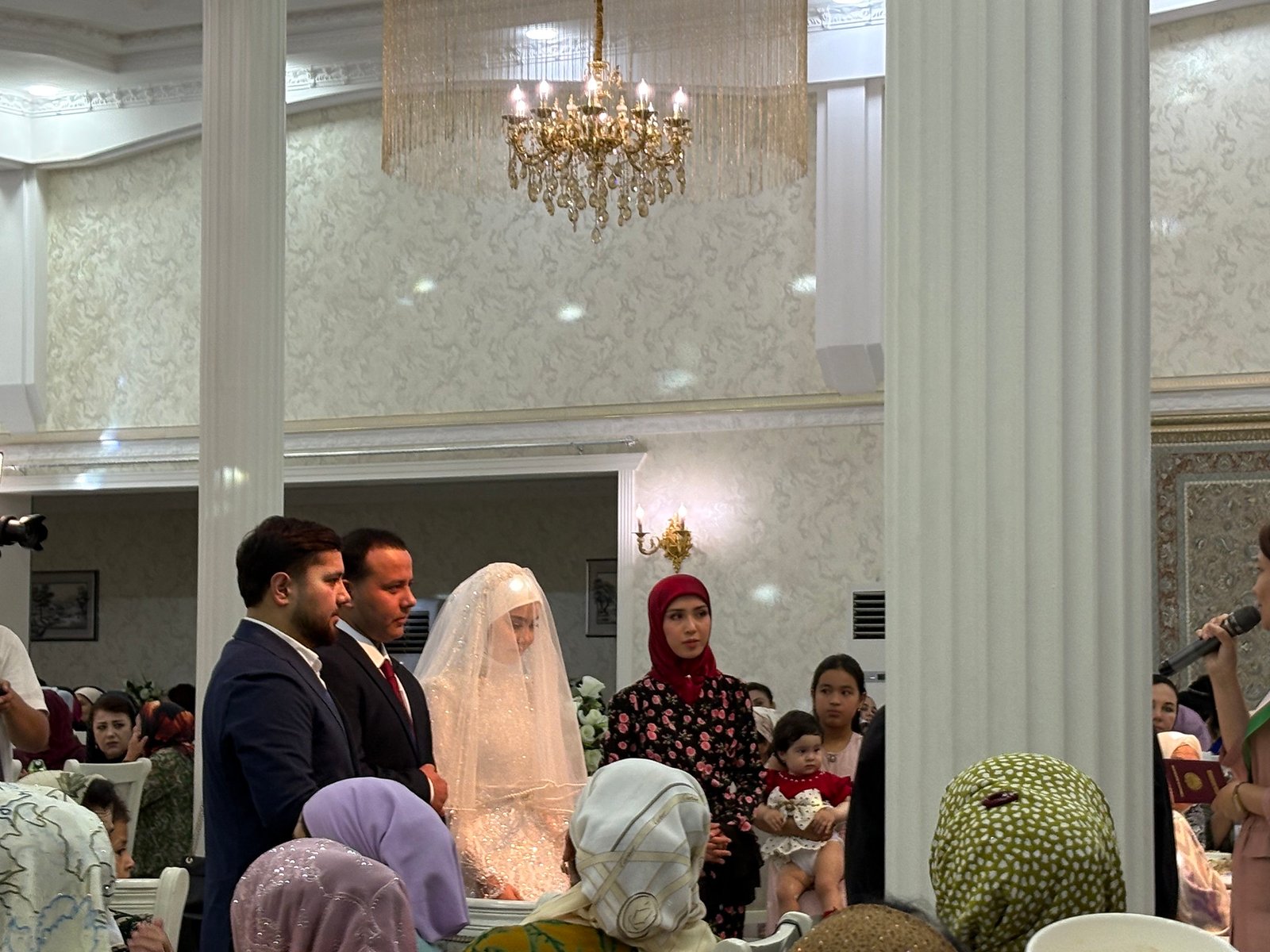
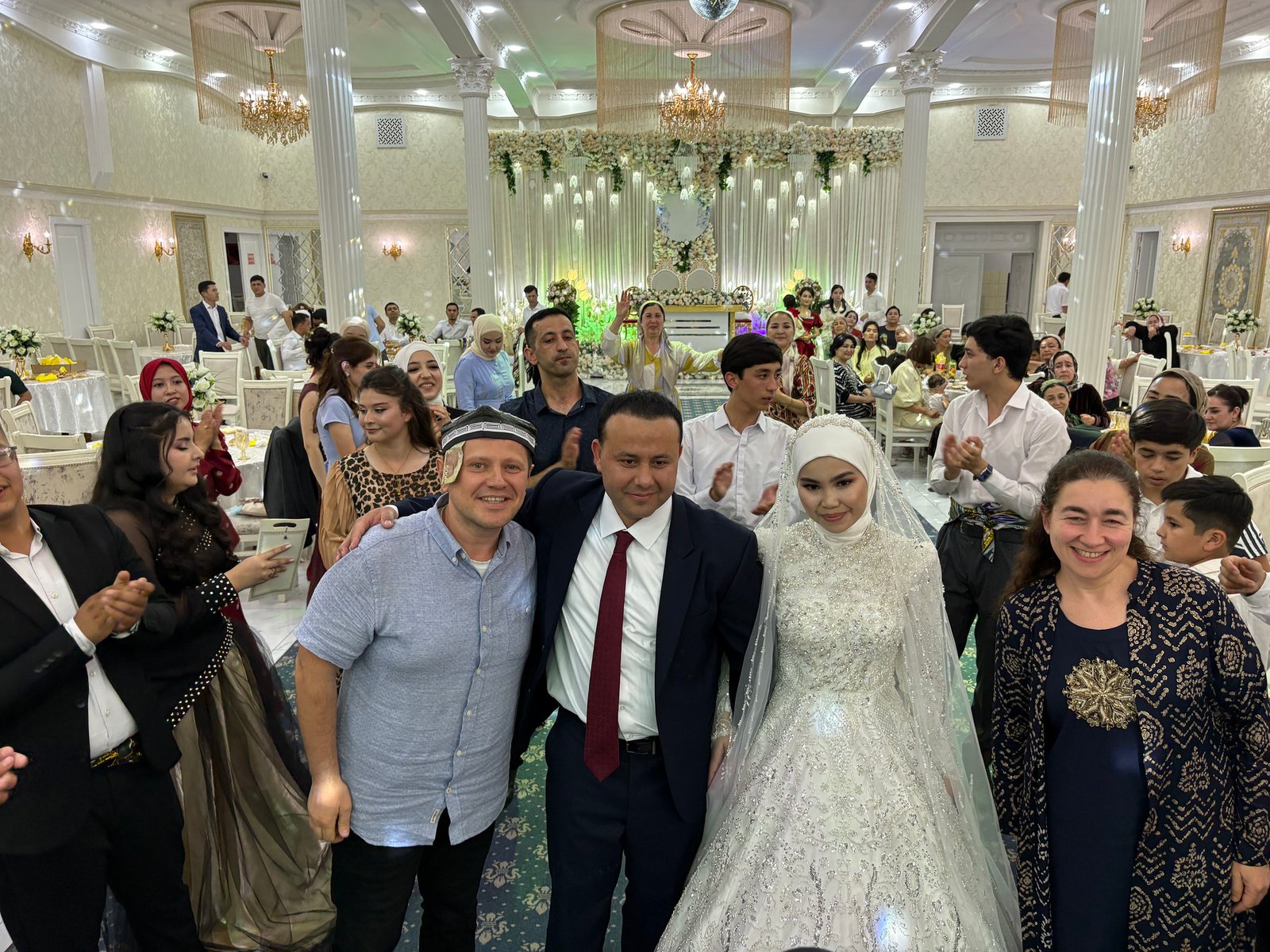
My table was closest to the entrance, giving me a perfect view when the bride and groom finally arrived. The bride looked stunning in an elaborate white gown embroidered with sparkling beads and a white head covering. The groom wore a dark Western-style suit and couldn't stop smiling. They entered beneath a white ceremonial canopy carried above their heads.
When they reached our table, the bride's grandmother stood and offered the couple her blessing before they continued toward the head table at the far end of the hall. They had barely sat down before the grandmother finished her slice of cake, said her goodbyes, and quietly left. She wasn't the only one. Many of the older guests departed within the first hour after paying their respects to the newlyweds. Apparently, the dancing and late-night celebrations belonged to the younger generations. That also explained why dessert had been served before dinner.
The musicians were working non-stop, their speakers cranked up to full volume. There were traditional Uzbek and Tajik songs, modern American songs, Soviet-era Russian songs, an eclectic mix with no rhyme or reason. Every time a song ended, I had absolutely no idea what was going to happen next.
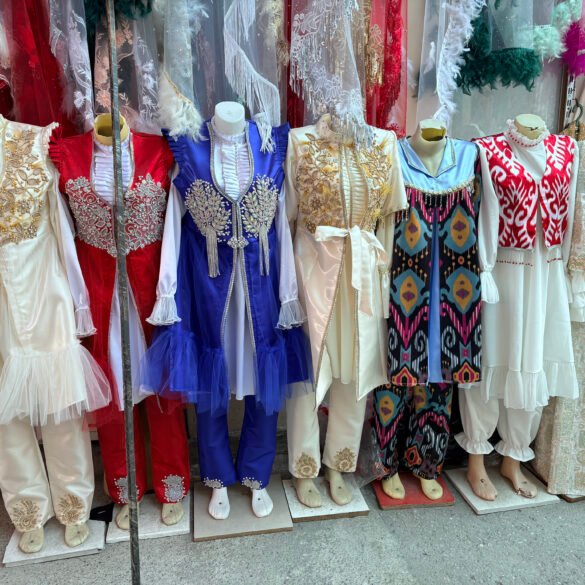
Between songs, women in colorful traditional dresses performed dances while relatives and friends stepped forward to offer toasts. Each speech was followed by guests gifting family members silk and money.
Then, without warning, Hamaum appeared beside my chair.
"The bride and groom would be honored if you gave a toast in English," he said. "I already asked Victor to give one in Russian. I'll come get you when it's your turn."
Before I could respond, he disappeared back to the men's side of the hall. I didn't have time to panic. I pulled out my phone and hurriedly started typing. Realistically, it didn't matter what I said, I doubted more than a handful of people in the room understood English. That somehow didn't make it any less intimidating.
Just then, enormous platters of plov arrived at every table. Plates of fragrant rice topped with beautifully roasted meat were passed from guest to guest. I alternated between writing my speech and taking bites of plov, stealing nervous glances toward Victor's table to see if he was preparing anything. He wasn't. He was completely relaxed, chatting with Khushnud and watching the dancers, as though neither of us had just been volunteered to give a speech at a stranger's wedding.
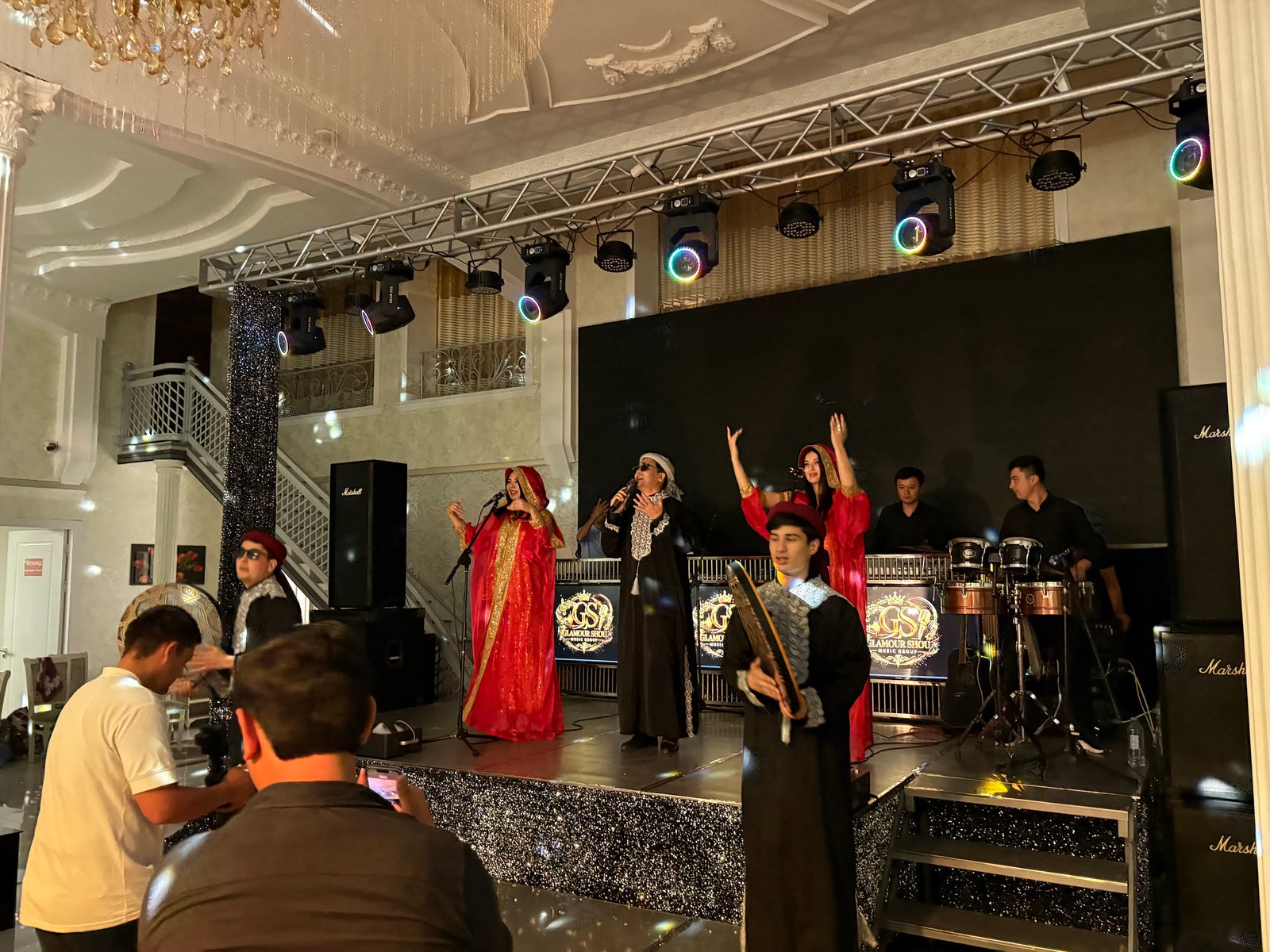
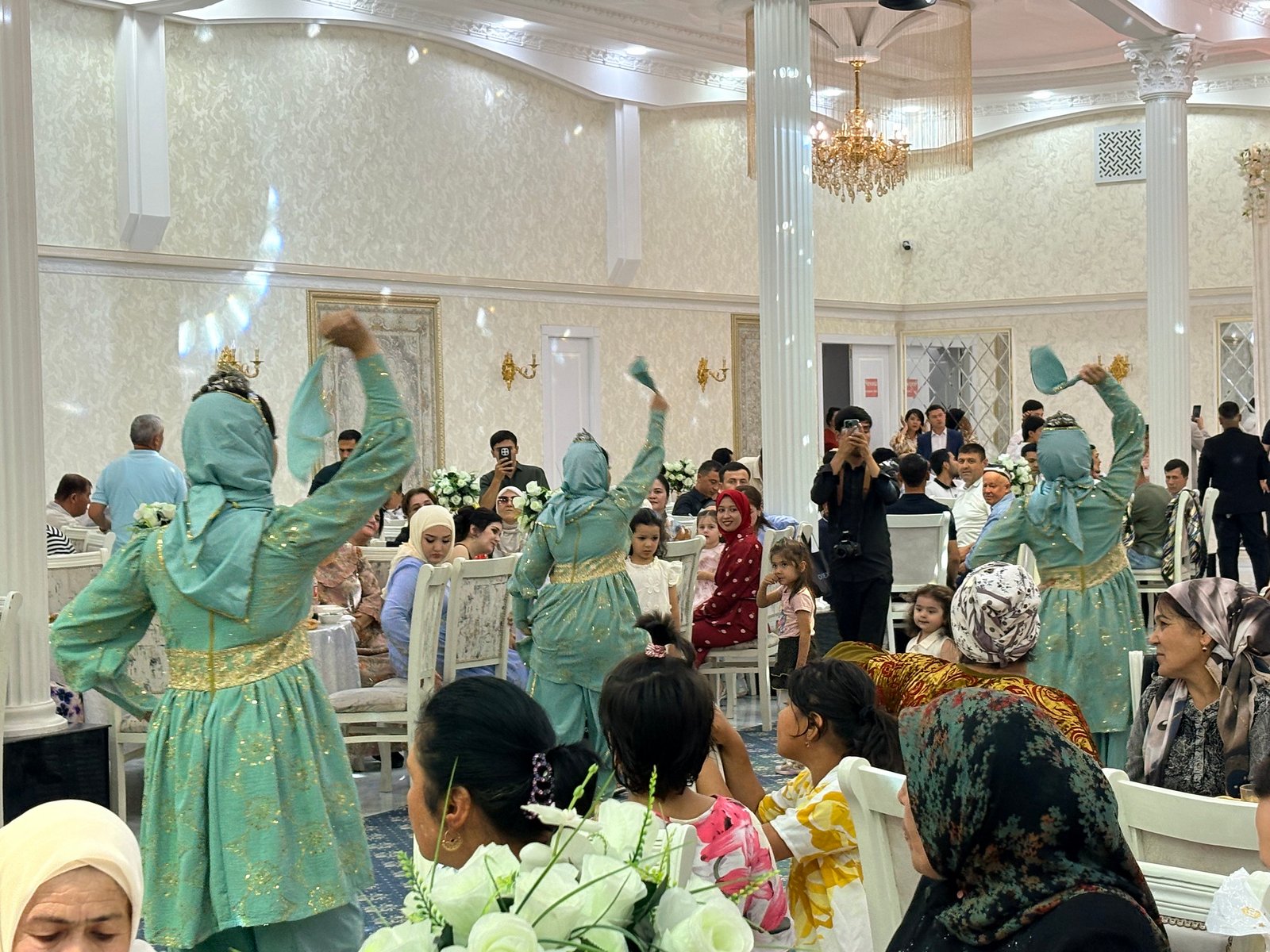
Finally, I saw Hamaum wave me over. I walked onto the dance floor and joined Victor. Someone placed microphones into our hands, and Victor effortlessly launched into an eloquent toast, somehow comparing the beauty of the bride to the beauty of Uzbekistan itself. The crowd applauded.
I realized it was now my turn. I said... something. It was in English and vaguely resembled a wedding toast. I distinctly remember saying "congratulations," "love and happiness," and something about eternity. Someone somewhere clapped.
The musicians immediately launched into another song, and I was relieved beyond words that it was over.
Then someone walked up and shoved money into my hands.
I looked around, confused. I saw the same thing was happening to Victor. Wedding guests were slipping bills into his skullcap and stuffing them into his pockets. Before either of us could figure out what was happening, the photographer whisked us away to pose with the bride and groom.
Every photograph from that evening features me clutching fistfuls of cash while Victor has banknotes sticking out of his skullcap like feathers.
Later, Khushnud explained that the money was meant for the musicians and other entertainers, who traditionally earn much of their income through these tips. We handed everything to him so he could pass it along.
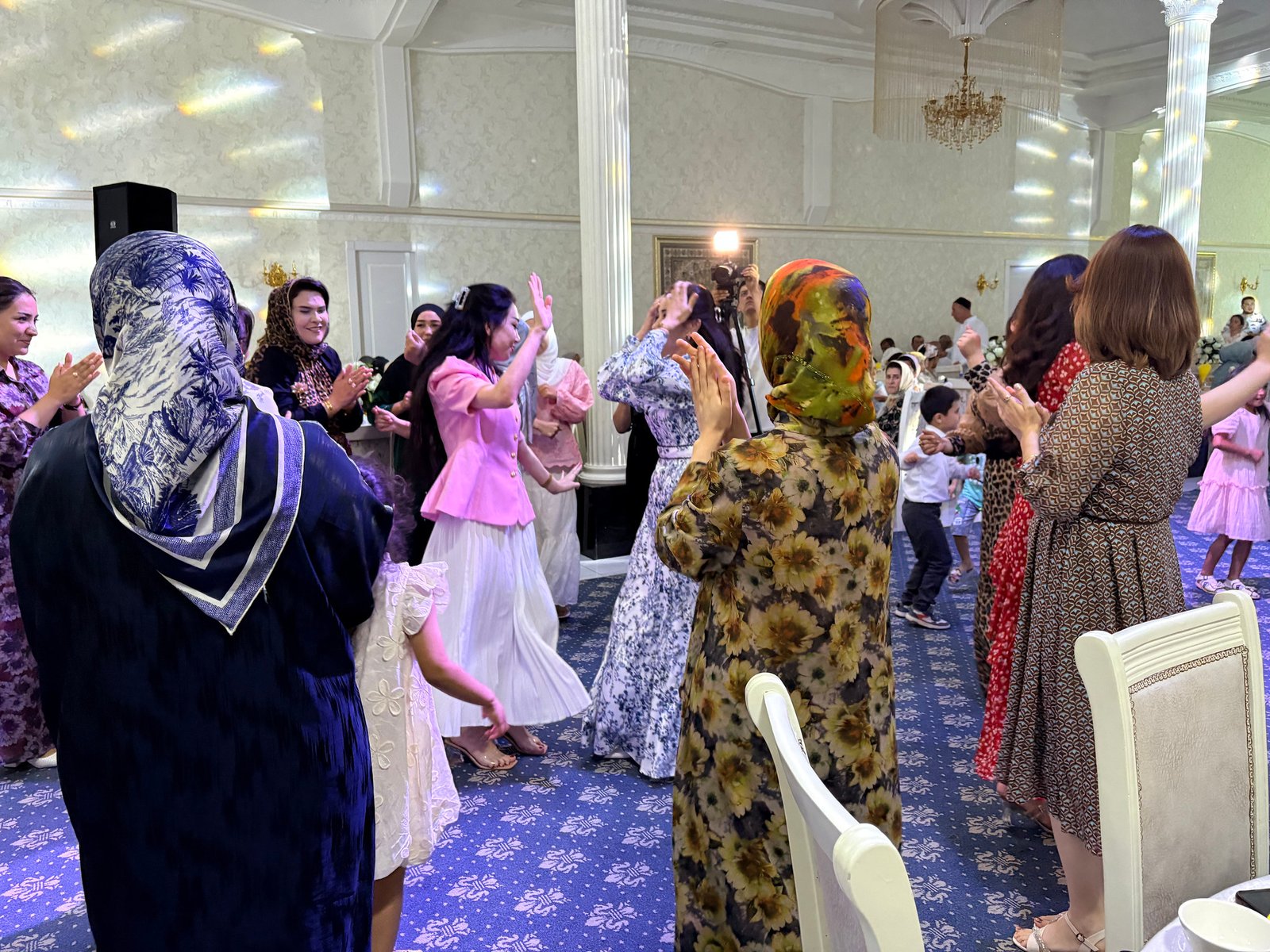
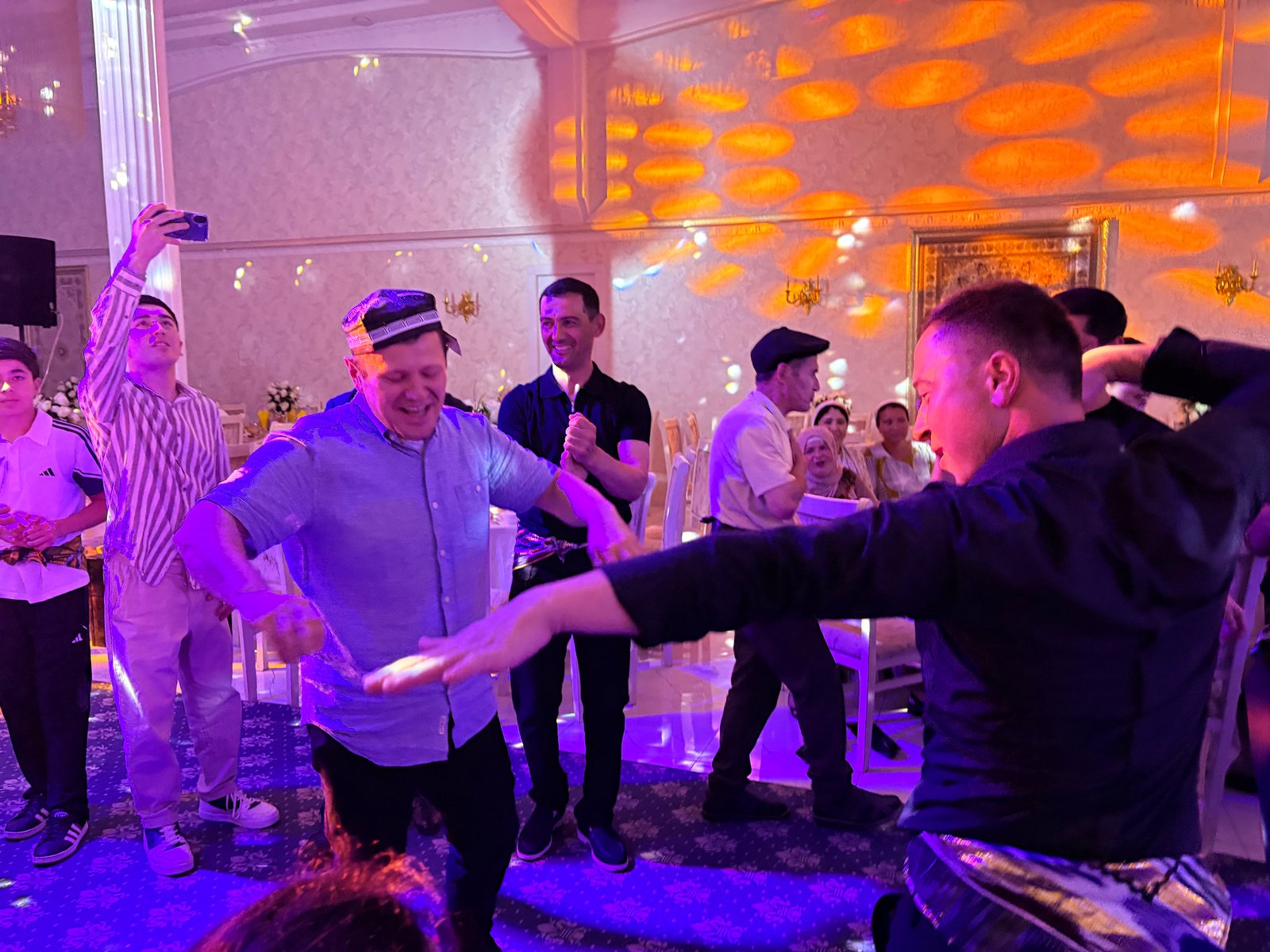
The dancing continued. The women formed one circle, the men another, occasionally merging before separating again. I could have happily stayed on the dance floor all night, but eventually I noticed Khushnud standing quietly off to the side, patiently waiting for us.
"Ready to go?"
Not wanting to keep him any longer, we said our goodbyes to the newlyweds and everyone on the dance floor before stepping outside into the cool evening air. After hours of nonstop music, the silence was almost startling. My ears were still ringing.
Back at the studio, everyone changed out of their wedding clothes. I assumed everyone would turn in early for the night. But, one by one, the students drifted back to their usual places. Khamidulo began mixing glazes for painting. Khushnud rolled up his sleeves and started wedging clay.
No matter what a day had in store - a wedding, a funeral, a tour group, friends stopping by, family sharing a meal, the work in the studio always went on.
I put on my clay-stained clothes and got behind the wheel.