
Food is a big reason why we travel. It’s certainly not the only reason to suffer through an international flight, and we have enjoyed plenty of places that didn’t have a distinct or memorable cuisine, but when the food is good, the day is always made just that much better. And let me tell you, every day in Uzbekistan was a great day, in no small part due to all the delicious food we ate there.
I am not going to pretend there is anything particularly unique about Uzbek food. We’ve had versions of almost everything we enjoyed in Uzbekistan in other countries. The food here has been shaped by Persian, Turkic, Mongol, Chinese, and Russian influences over the centuries, and it was always fun to play the “Wait... where did we eat this before?” game. It’s a fairly straightforward cuisine built around rice, meat, vegetables, noodles, bread, and dairy products, without elaborate spice blends, relying mostly on cumin, coriander, and black pepper. But what it lacks in uniqueness or modernity, it more than makes up for in flavor, freshness, and satisfaction. Even when ordering something with a strange name, every bite felt like comfort food from childhood.
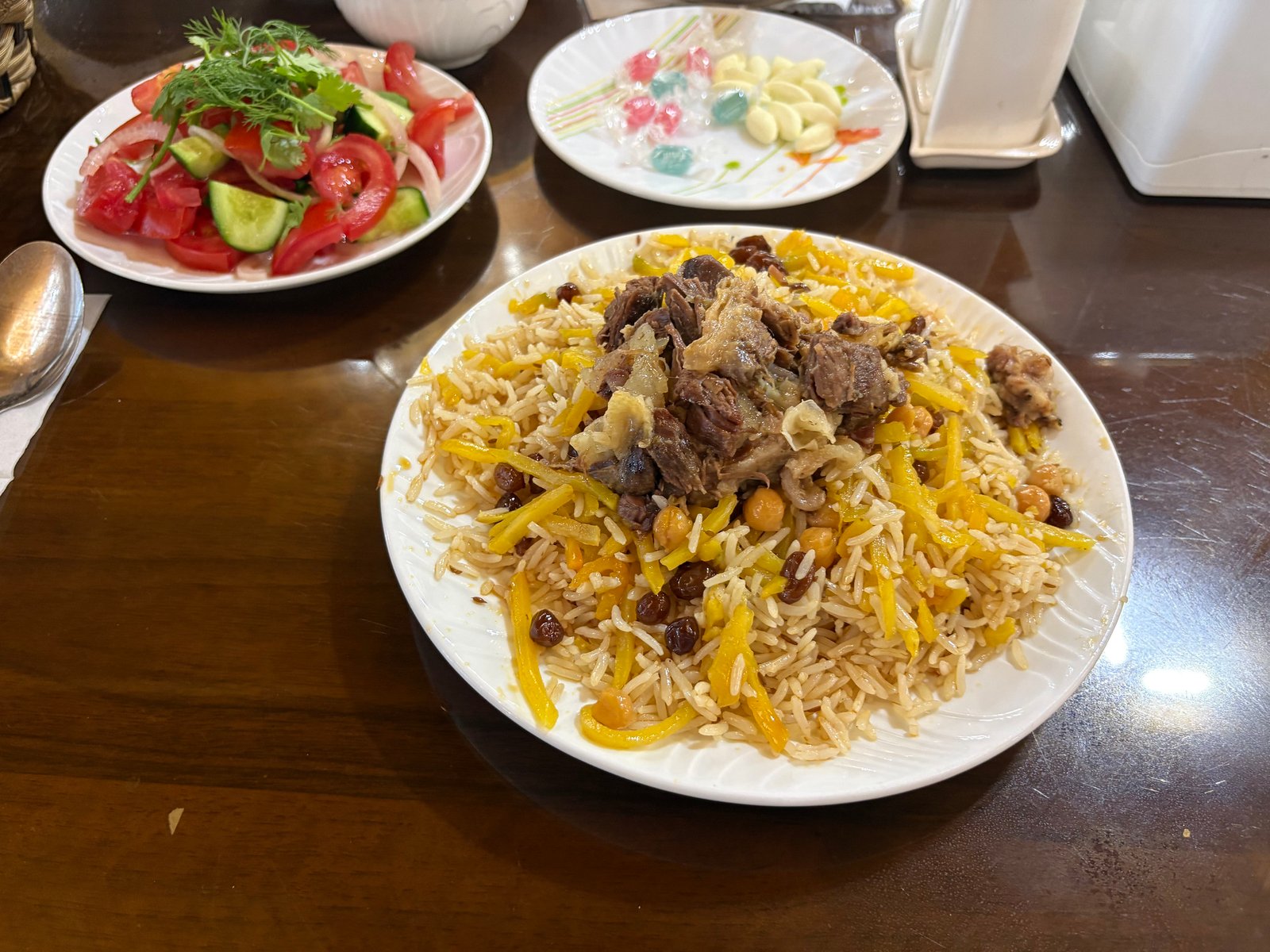
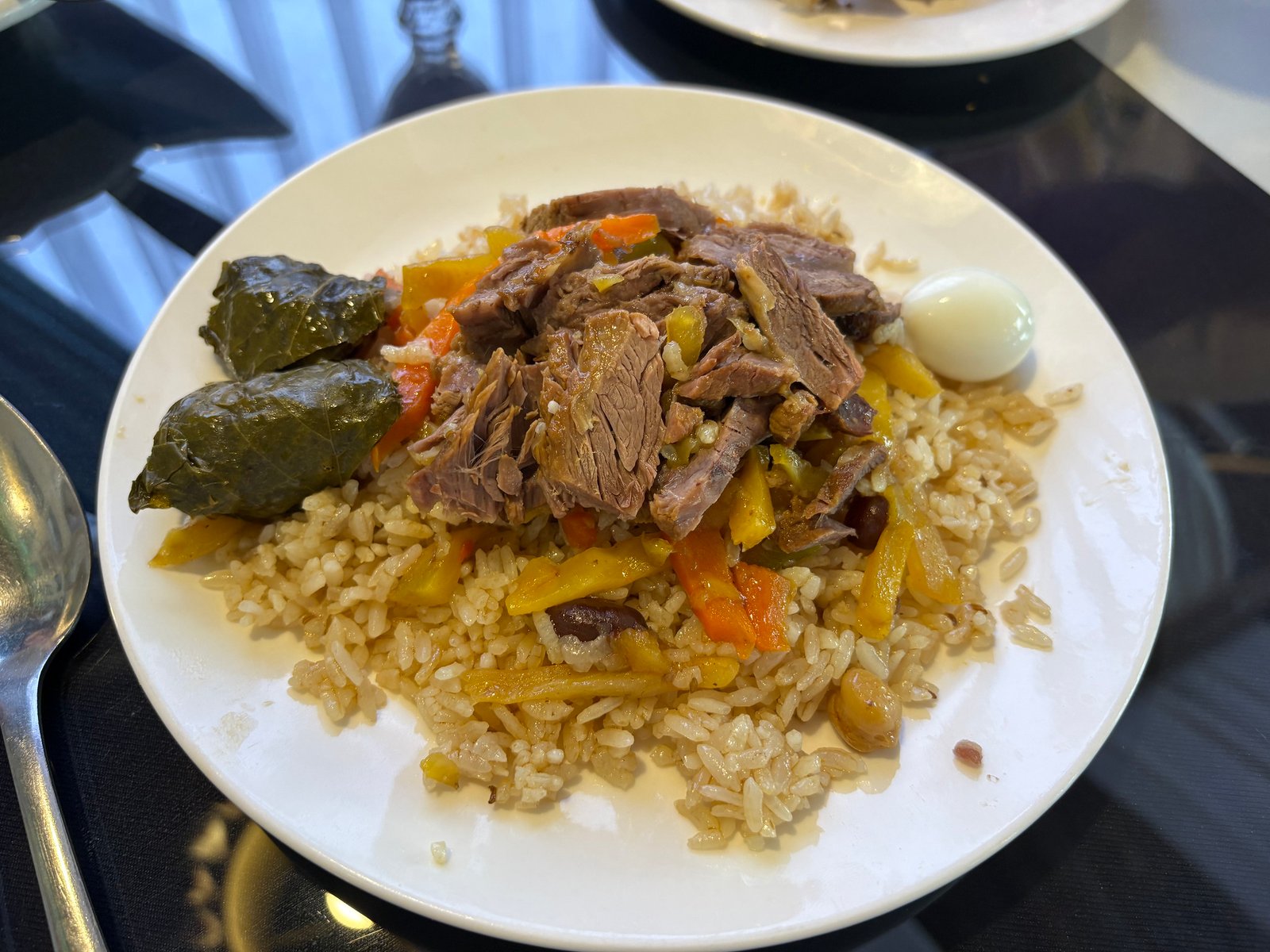
Of course, we have to start with plov (palov, osh), Uzbekistan’s national dish. There are many different kinds of plov throughout the Middle East and Central Asia, but Uzbek plov is one of a kind. One of our Uzbek-born friends in the U.S., who makes delicious plov for get-togethers, always laments, “These carrots are all wrong! They don’t have the right carrots in the U.S.!” I never knew what he meant until I got to Tashkent. The carrots in Uzbekistan are not orange but yellow!
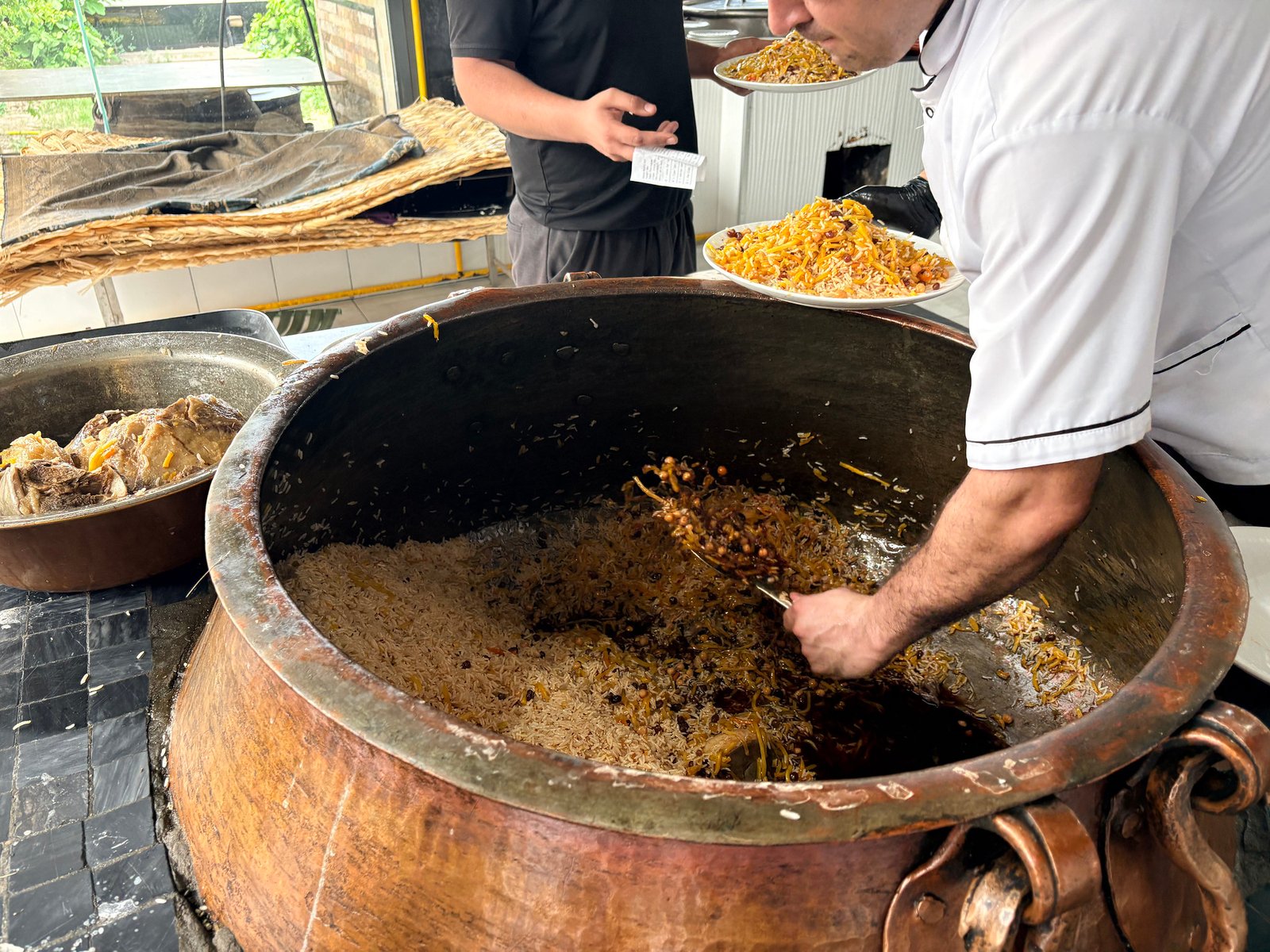
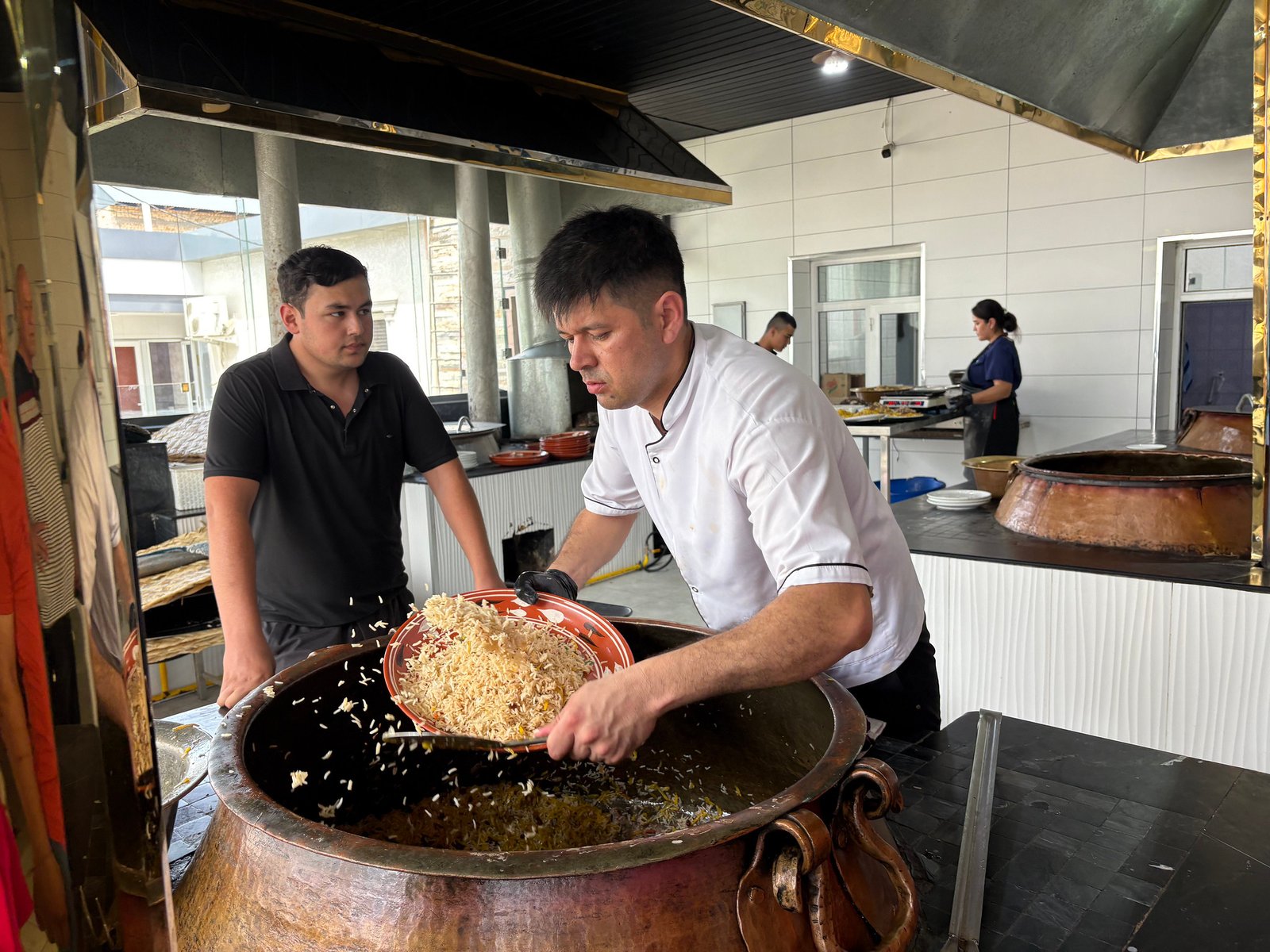
Uzbek plov is cooked with yellow carrots, onions, meat (lamb or beef), oil, and spices. Sometimes there are also chickpeas, raisins, or even quail eggs, but the basics are always there. In Samarkand, they sometimes use dark flaxseed oil to cook plov, which adds a distinct, deep, rich flavor. Plov is always cooked in a kazan, a large cast-iron cauldron. We’ve eaten plov at a wedding and on the street. We’ve seen it prepared in a village, with a propane burner propped under an old kazan in a yard, yellow carrots and onions simmering in oil. We saw gigantic wood-fired kazans at the Bukhara Plov Center, the rice inside being stirred with wooden paddles the size of shovels. It looked like enough food to feed thousands of people. And, in fact, it was. The waiter told us that approximately three tons of plov are made daily to feed about 5,000 people, and the restaurant is open until noon or “until we run out of plov.”
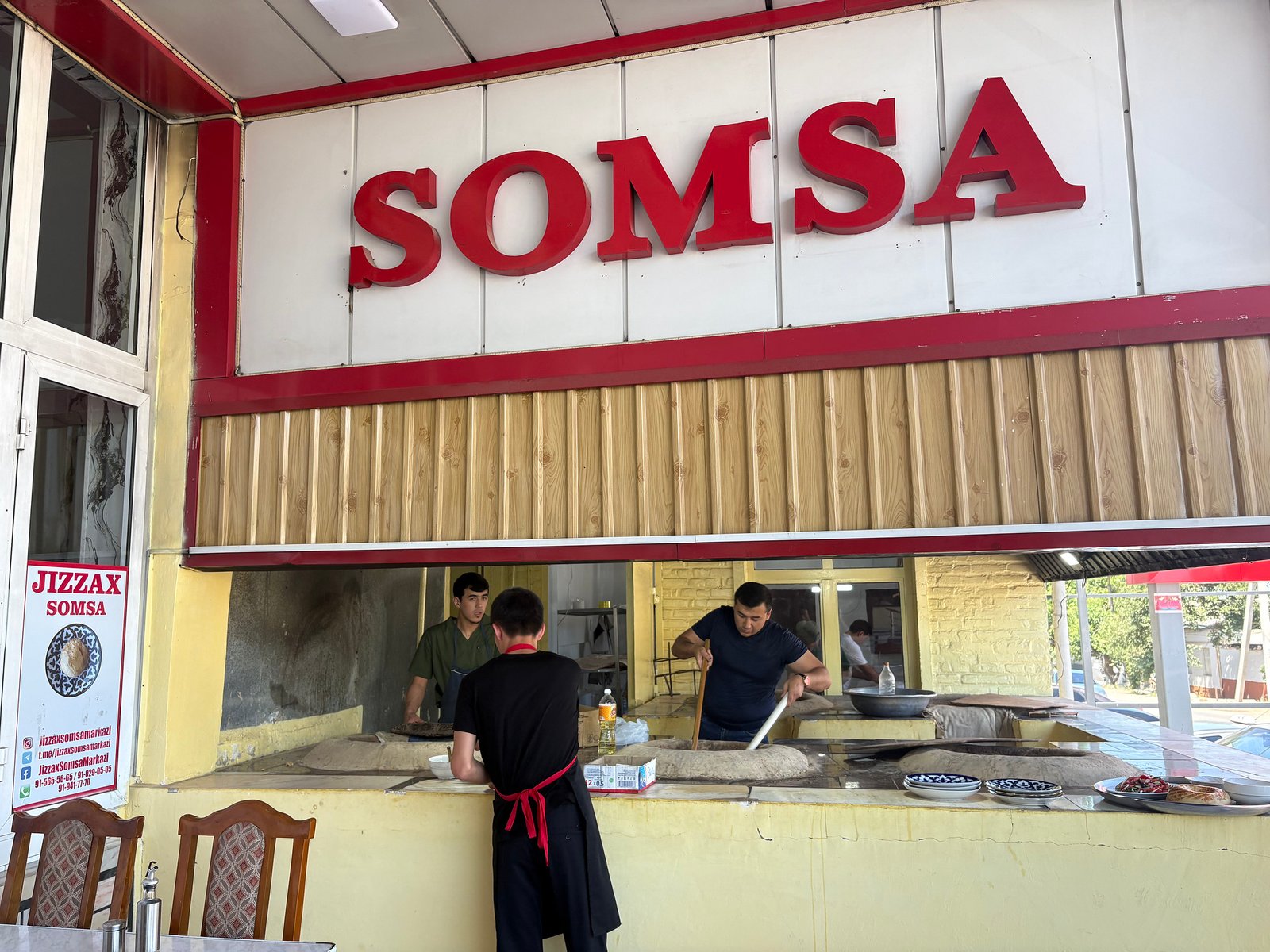
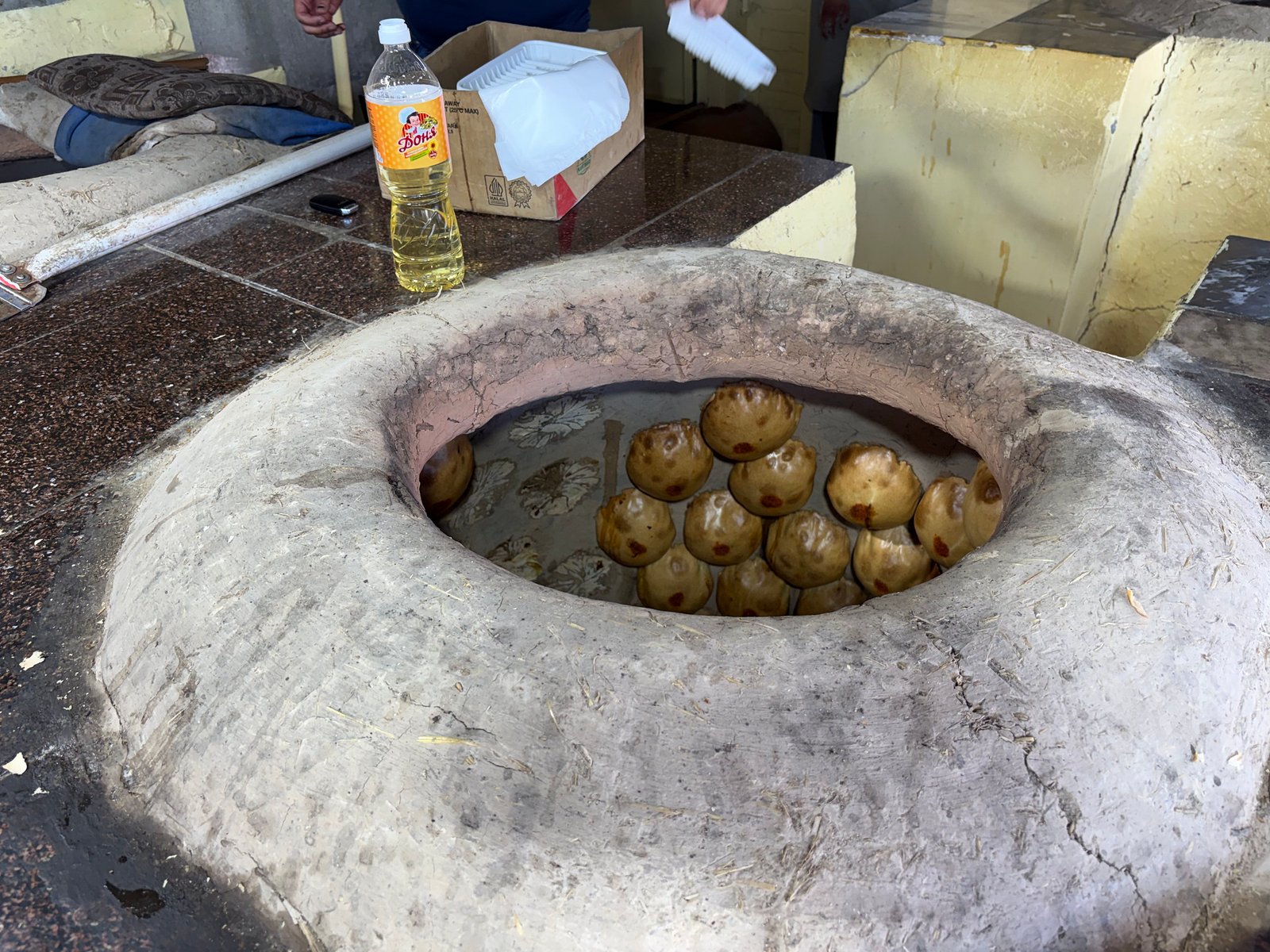
I already wrote about buying a giant samsa in Jizzakh, but it was far from the only samsa we tried in Uzbekistan. It is the most famous pastry of Central Asia, traditionally filled with chopped lamb, onions, and fat, although pumpkin, potatoes, and greens are also popular. We’ve seen them in various shapes—triangular, square, and round—always crispy on the outside and tender and juicy on the inside.
The next best thing to eating a samsa is watching how it’s made. We saw our first Uzbek tandir clay oven on the street, next to a small cafe. A man was slapping raw samsas directly onto the hot interior walls of the tandir, where they hung vertically, the intense heat already starting to char their bottoms. He closed the opening of the oven with a round wooden lid and smiled at us. If we wanted them fresh, we would have to be patient. Soon, the first batch was ready, and he reached into the oven with a long metal scraper and knocked the pastries off the wall while catching them in a long-handled wire basket with his other hand.
If both samsa and tandir sound like Indian samosa and tandoor, that’s not a coincidence. Variations of these pastries and clay ovens are found across a huge swath of Asia, from the Middle East and Central Asia to India and China. Their histories are intertwined through centuries of migration, conquest, trade, and cultural exchange, making it difficult to assign either one a neat point of origin.
Just like bureks, we’ve eaten different variants of samsa in many different countries, like samosas in India, pepper buns in Taiwan, and samsas from Central Asian restaurants in the U.S., and we are always on the lookout for more.
As we are on the topic of the tandir oven, our absolute favorite thing to come out of a hot tandir is traditional Uzbek bread, called non, or lepeshka in Russian. In fact, it was the very first thing we saw in Uzbekistan.
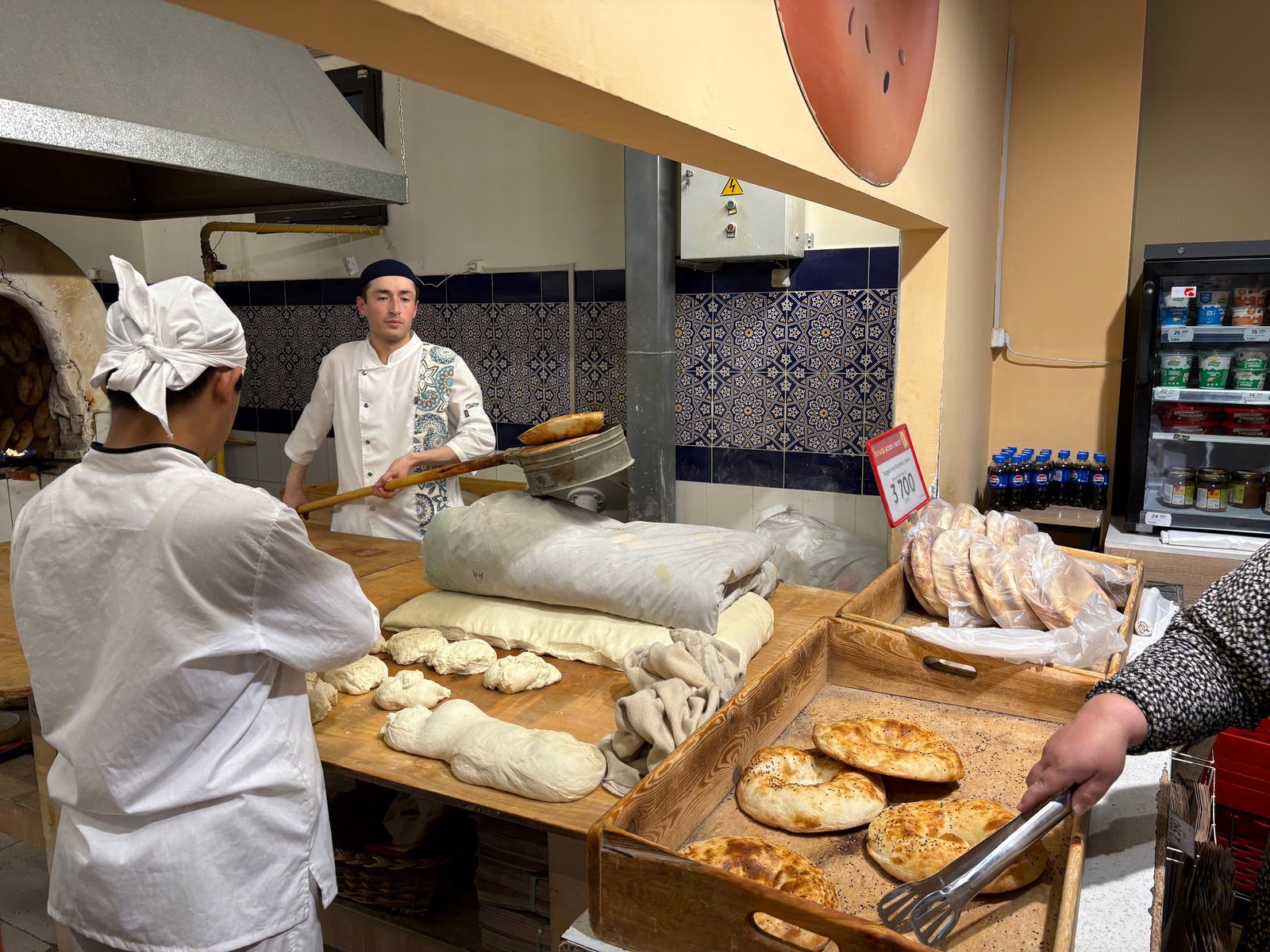
On our very first night in Tashkent, tired from a long flight and jet-lagged, we walked into a grocery store to stock up on some staples and saw a giant tandir oven in the corner, with two men pulling out round loaves of bread on large wooden paddles. We stood there, our mouths agape. Never before or since have I seen bread baked right in a grocery store, just a few feet from the cashier station. While we stood there, the line for fresh bread started to form behind us, so we closed our mouths and started filling our shopping basket with hot, fresh bread. Suddenly, the long flight and sleepless night were worth it.
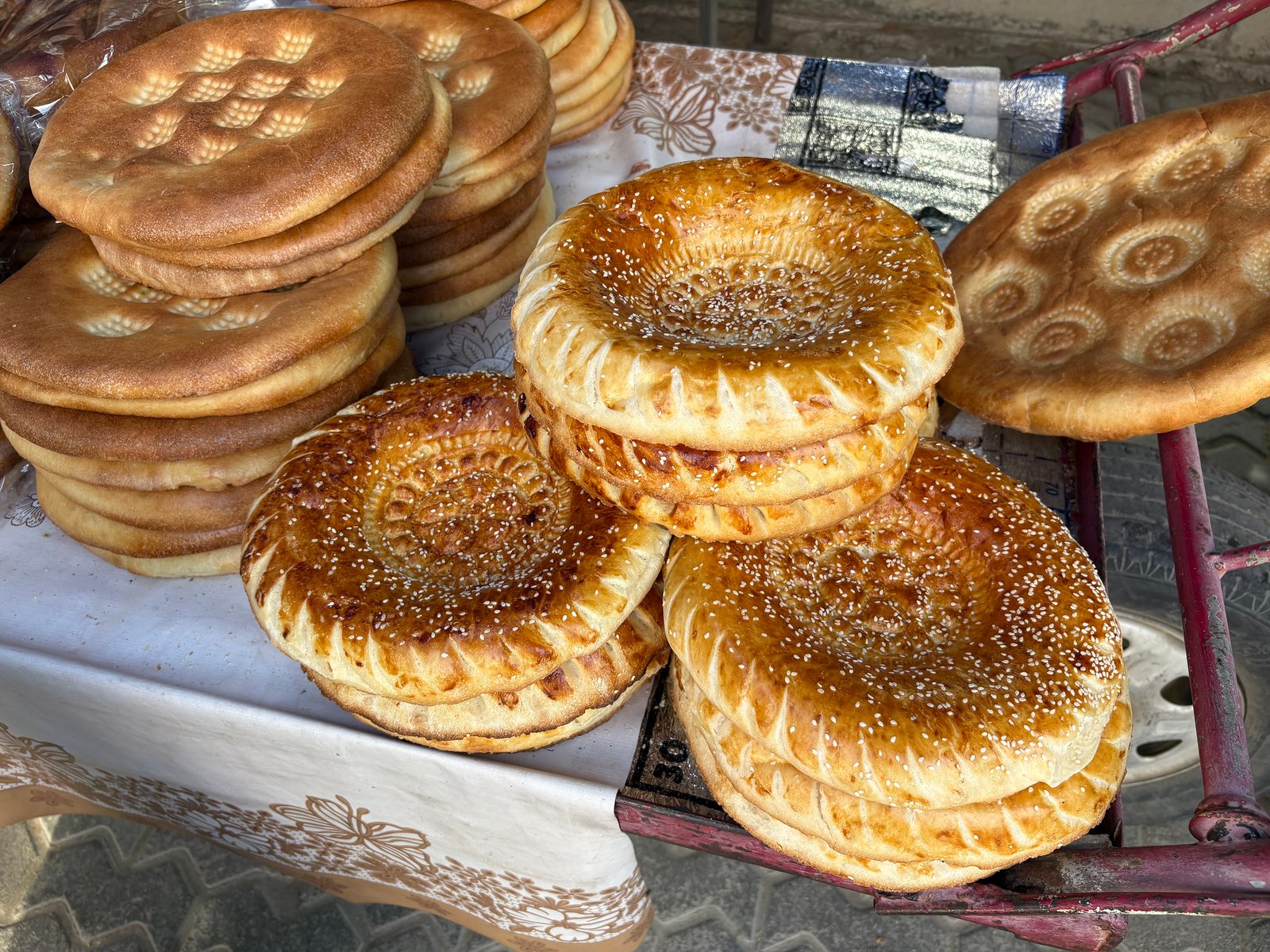
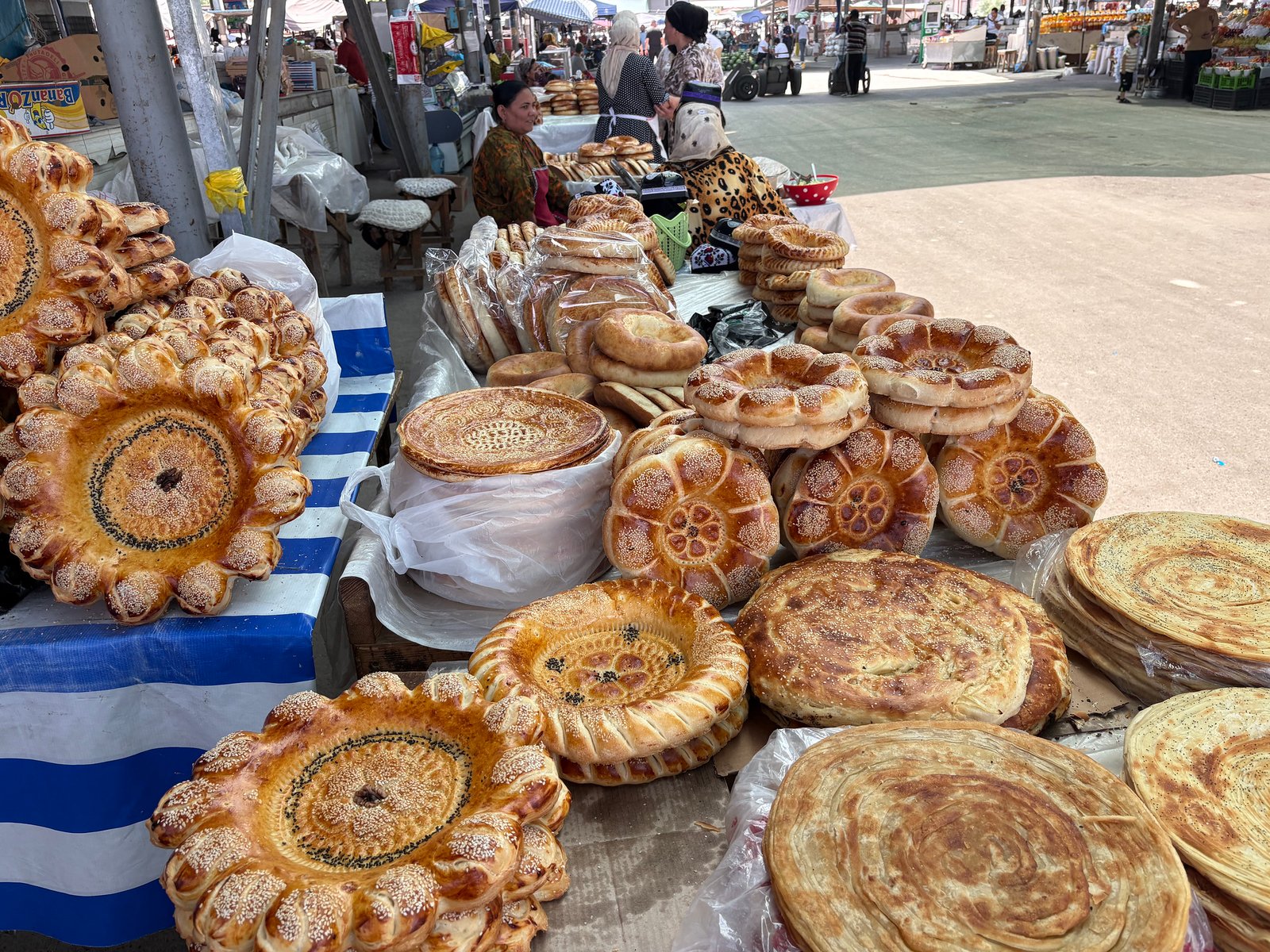
The shape of Uzbek non is unique, something between a regular round loaf and a flatbread. It’s a round wheat bread with a thick, raised outer rim and a flatter center that is usually stamped with a special patterned tool that prevents the center from rising.
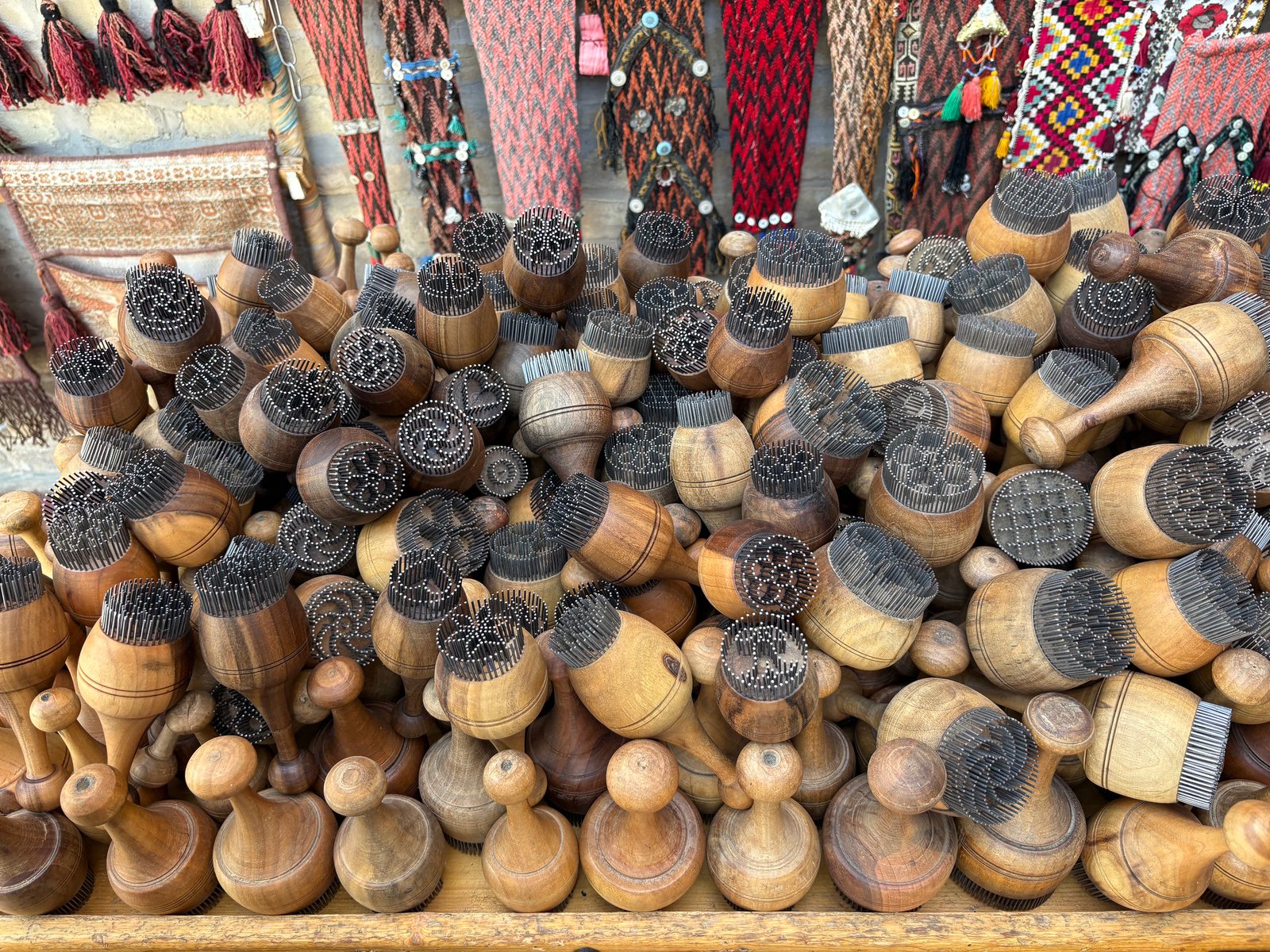
A few days later, in Bukhara, we saw a few young Americans and their guide stop in front of a market vendor. The guide picked up an item—a wooden handle with a rounded base, where dozens of short metal pins were arranged in a pattern.
“What do you think this is?” he asked.
The men frowned, looking it over. “A brush?” one of them ventured. “For a horse or a camel?”
The guide laughed. “It’s a chekich! It’s for stamping our bread.”
The men looked even more confused. I, on the other hand, was ecstatic and immediately started going through all the chekiches to find one with a flower pattern I wanted to buy.
Uzbek non is not just something you eat with a meal. It’s a highly respected cultural symbol, and there are traditions surrounding how it is baked, served, shared, and treated. It’s a symbol of hospitality and should never be cut with a knife, but instead ripped apart by hand, usually by the oldest person at the table. In Rishton, we were told that the stamped center should always be given to a young unmarried person as a “good luck” charm, to help them find a beautiful bride or wonderful groom in the future. Non should never be flipped upside down, thrown on the ground, or thrown away. In home kitchens, stale non is incorporated into other dishes or given to animals. We even saw uneaten non collected in a separate basket at a wedding to be given to the poor later.
It’s not an exaggeration to say that we ate non every day with every meal. For us, it was non-negotiable (Victor insisted that I added this pun to the text). Victor’s mom spent two weeks with us in Uzbekistan, and her first message after going home was, “I miss Uzbek lepeshkas!”
Now that we’ve left Uzbekistan, I am sad to report that “missing lepeshkas” is a common ailment. There appears to be no cure, but at least I have a chekich as a souvenir and a reminder of better days.
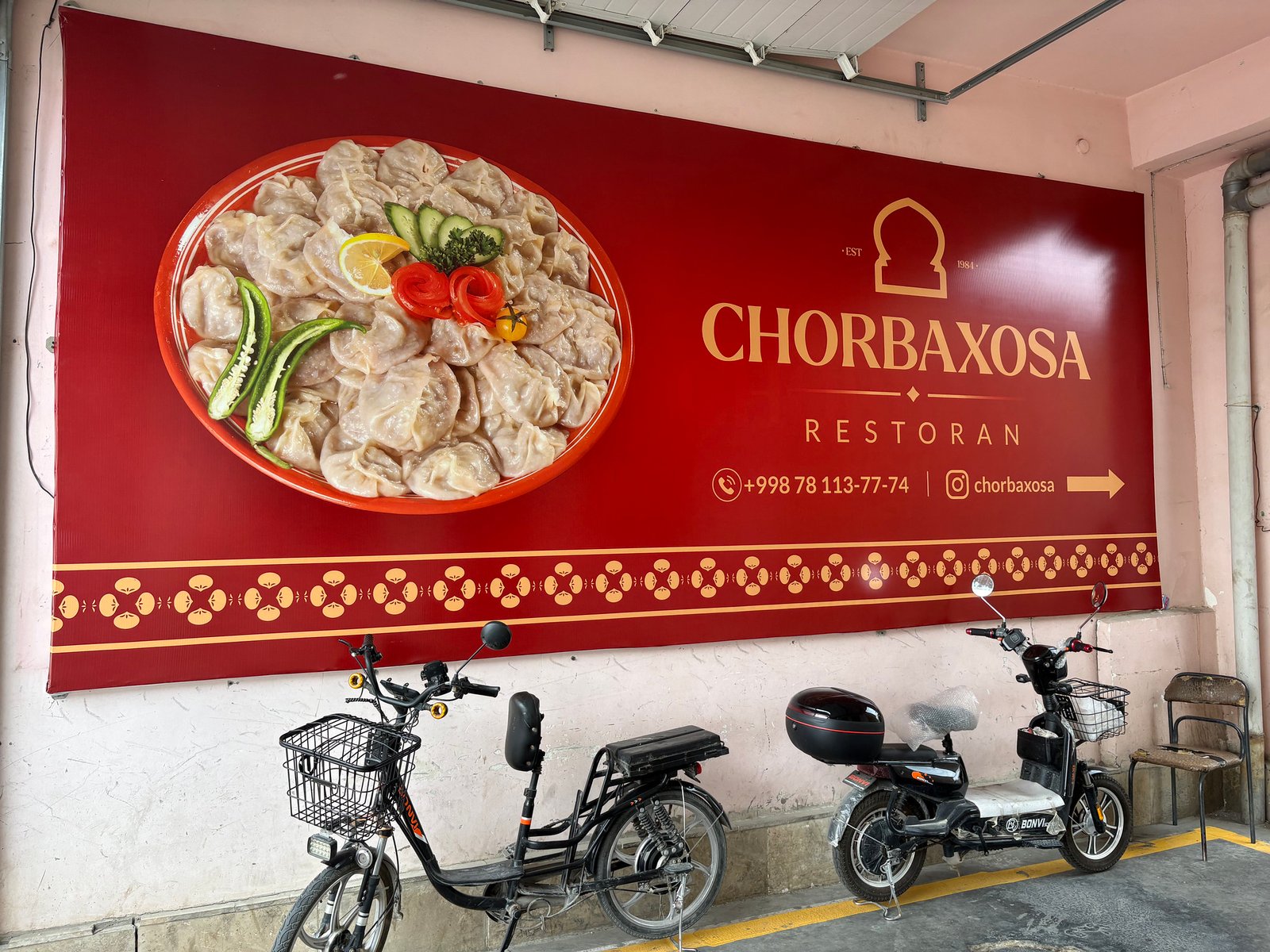
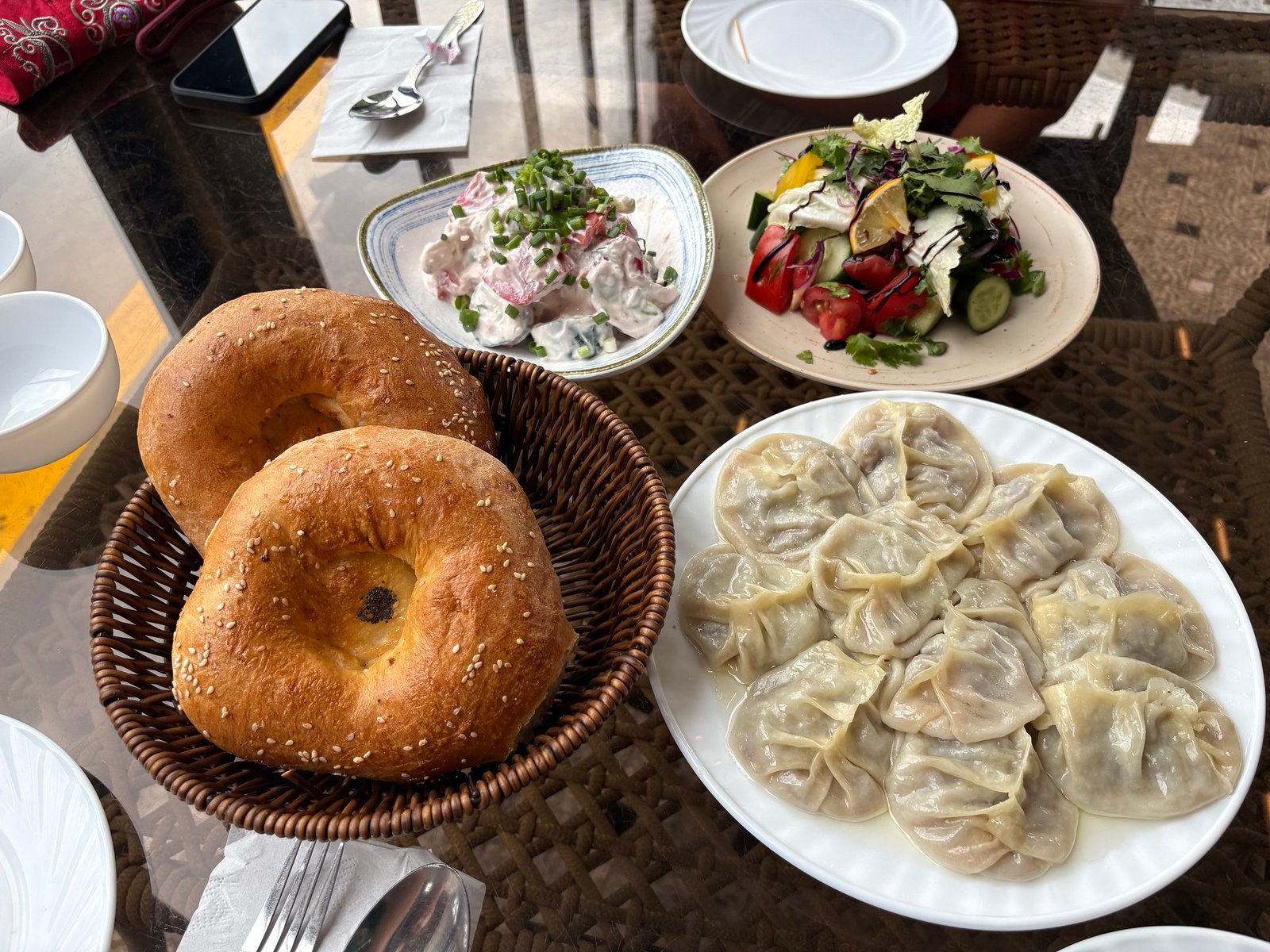
If you had asked me as a child what my favorite food was, the answer would undoubtedly have been “pelmeni.” Russian pelmeni are small meat-filled dumplings, usually boiled and served with butter or sour cream. What’s better than small dumplings? Giant dumplings, of course! Which is why adult me would answer that question with “manty!” Manty are large steamed dumplings, about palm-sized, usually filled with lamb or beef, onions, and lots of juicy fat. Pumpkin and potato versions are also common in Uzbekistan, much to Victor’s delight.
Manti, much like the rest of the delicacies on this list, are not unique to Uzbekistan. They are part of a broad and delicious dumpling tradition stretching all the way from East Asia, across Central Asia, and into Turkey. The Silk Road might as well be renamed the Manty Road. But it goes beyond that, with much of Asia and the former Ottoman world succumbing to the deliciousness of the dumpling. We’ve had manti in Turkey, Uyghur manta in China, khinkali in Georgia, klepe in Bosnia and Herzegovina, buuz at my favorite Mongolian restaurant in Chicago, momo at Nepalese restaurants, mandu from Korean stores, and probably many more I can’t remember now.
I loved Uzbek manti. They were delicate and juicy, usually served with sour cream or tomato sauce. I do have to admit that if I had to choose one manti to rule them all, I would settle on the Georgian version—its thicker dough keeps all the juices inside, making khinkali taste almost like a soup dumpling. But the Uzbek version is a close second.
White we are at it, I do need to mention that Uzbekistan has chuchvara, miniture dumplings, which are indistinguishable from Russian pelmeni. They are boiled, filled with ground meat, and brought me right back to my childhood.
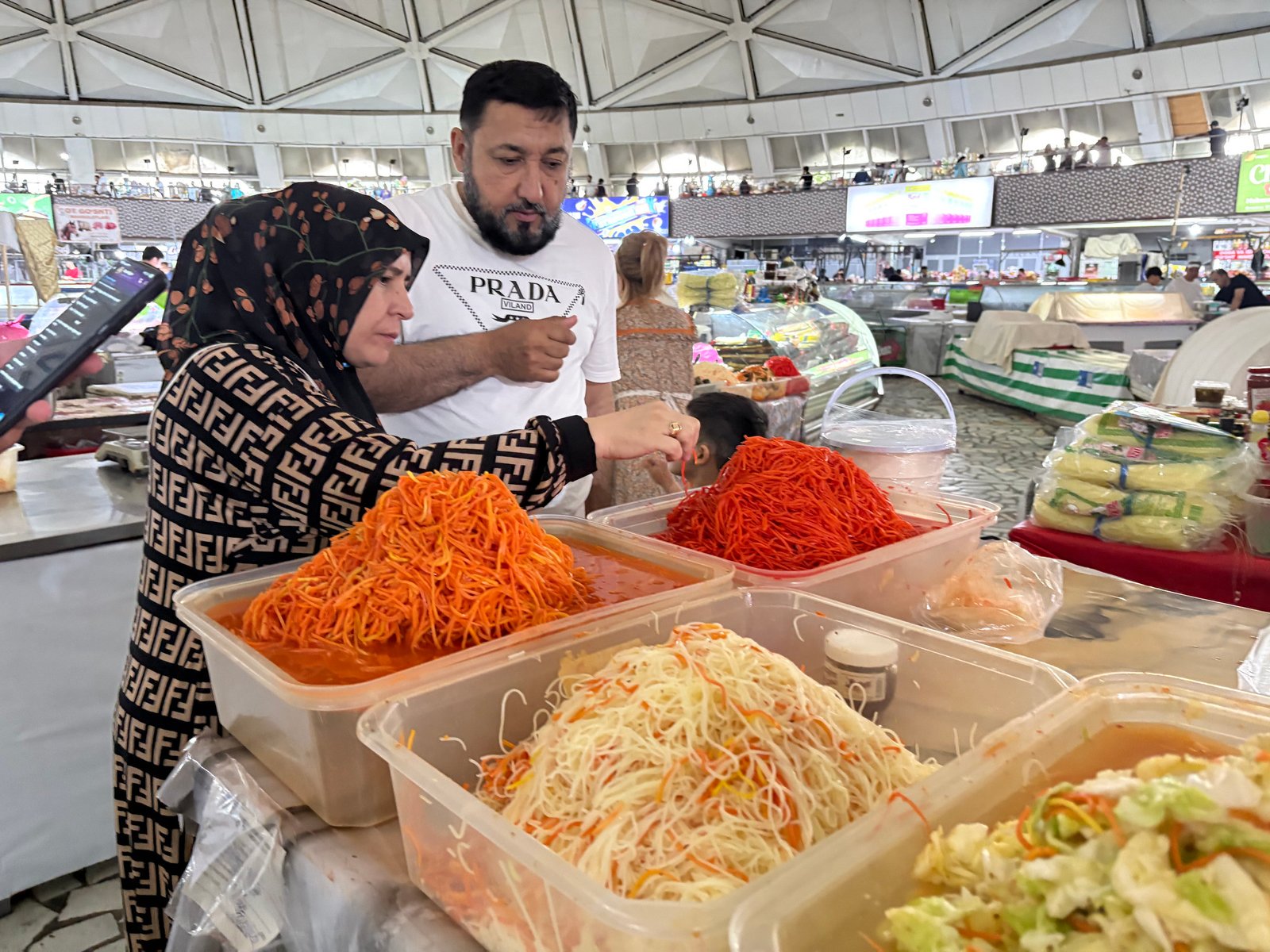
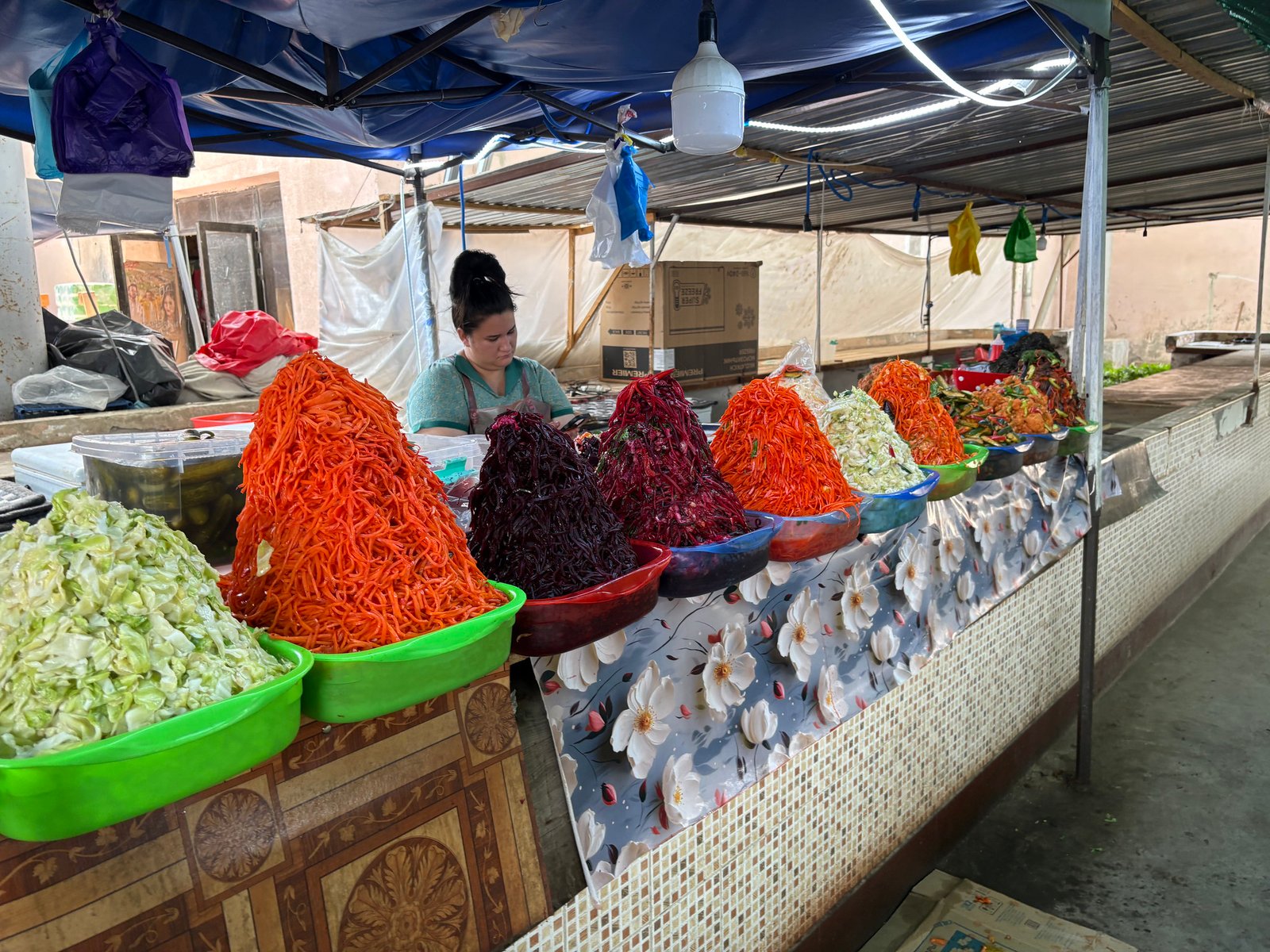
But the dish we ended up eating most often, funny enough, did not come from a restaurant or a cafe. No matter which city we were in, we would head to the nearest market and wander up and down the aisles until we found heaps and mounds of vividly colored salads and pickled vegetables. There was usually pickled eggplant, cucumbers, garlic, radish - plenty to choose from and all delicious - but we were there for morkovcha, otherwise known as “Korean-style carrots.” The bright orange tangle of long, thinly sliced carrots, piled high in enormous bowls, was our absolute favorite.
As the name implies, this dish is not exactly Uzbek, but strangely enough, it’s not exactly Korean either. It was created by Soviet Koreans, known as Koryo-saram, many of whom had settled in the Russian Far East before being forcibly deported to Central Asia under Stalin in 1937. In Uzbekistan and elsewhere in Central Asia, they adapted their traditional dishes to ingredients available locally. Napa cabbage, traditionally used for kimchi, was difficult to come by; carrots, on the other hand, were cheap and plentiful.
Unlike traditional kimchi, the carrots stay raw and pleasantly crunchy, softened only slightly by the dressing. And unlike the yellow carrots commonly used in Uzbek plov, these are the standard orange variety, usually seasoned with garlic, ground coriander, black and red pepper, salt, vinegar, and vegetable oil. We had versions with onion, pickles, and other additions, as every vendor seemingly had their own family recipe, but the result was always crunchy, garlicky, tangy, and delicious. Almost every home-cooked dinner we had in Uzbekistan included fresh non and a bowl of crunchy Korean carrots.
Before you say anything, yes, I know that plenty of Russian delis around Chicagoland sell Korean-style carrots. Believe me when I say: it’s not the same, it’s not even close. Real Korean carrots come crunchy and tangy from gigantic heaps in market tubs, not tiny plastic containers full of limp carrots and disappointment.
I used to laugh at my Uzbek friend lamenting the sorry state of American carrots whenever he made plov, and now I join him in my firm stance - carrots are better in Uzbekistan. This is the hill I will die on.