
I wanted to write about the top 10 dishes we ate in Taiwan and quickly realized that the list was way longer than 10 and each dish deserved its own blog post, and this would quickly spiral into Two Cats Backpack Eats Taiwanese Food for Entirety of the Foreseeable Future Dot Com. After extensive soul searching and trips down memory lane, I picked out only five foods to write about. The auditioning process was complicated and made less sense than Selection Sunday for March Madness. This is not the most popular foods from viral Tik-Toks or the best things we tried, but rather the ones that left the most impact. From the unexpected to macabre to completely unappetizing, these are the foods we still talk about.
Coffin Bread
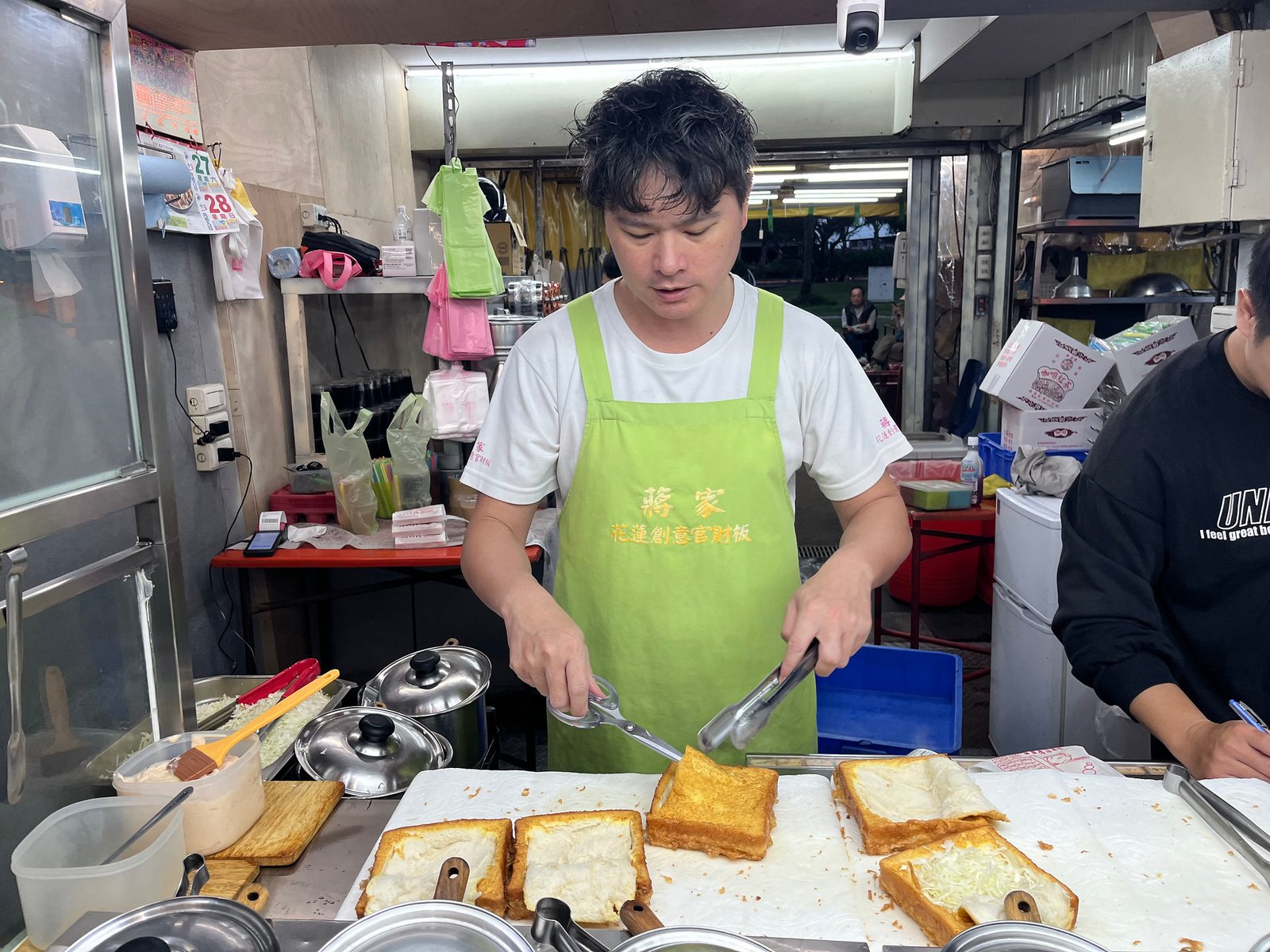
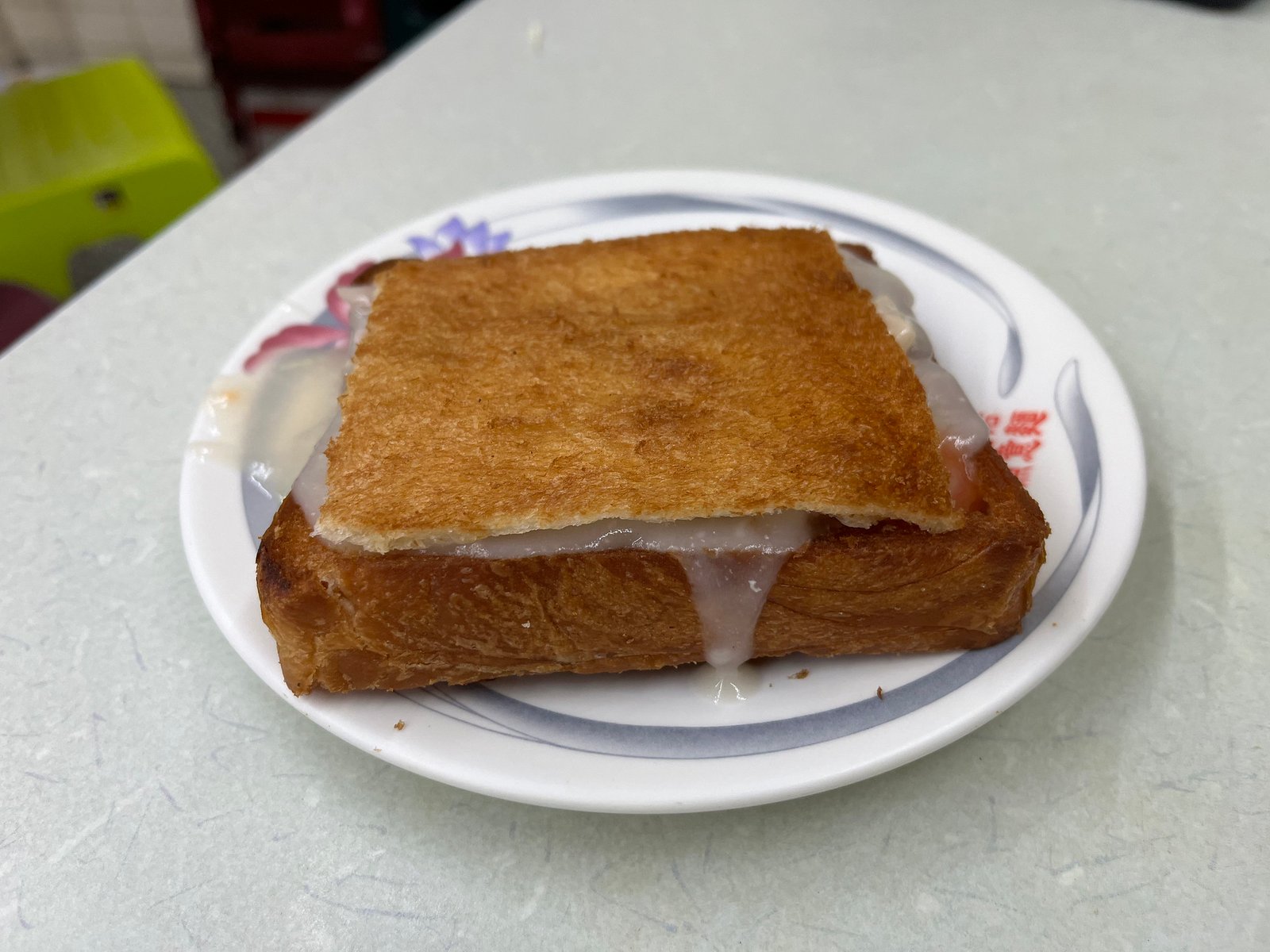
Coffin bread does not exactly sound appetizing. My first instinct was that this is something that is eaten at funerals or memorials, sort of like Mexican Pan de Muerto (bread of the dead), which is made for Day of the Dead. Turns out, the name refers to the shape, not the function. Coffin bread is created by hollowing out a slice of thick deep-fried bread, filling it with creamy chowder, and covering it back with bread “lid”. The taste and how enjoyable it depends completely on the filling. The first time I tried it, it had thick turkey gravy inside which reminded me too much of those frozen Stouffer’s meals I used to eat for lunches in my twenties. Next time we found a pescatarian version in Hualien which had seafood chowder and was creamy, savory, and delicious. A dish to die for, really!
Oyster omelet
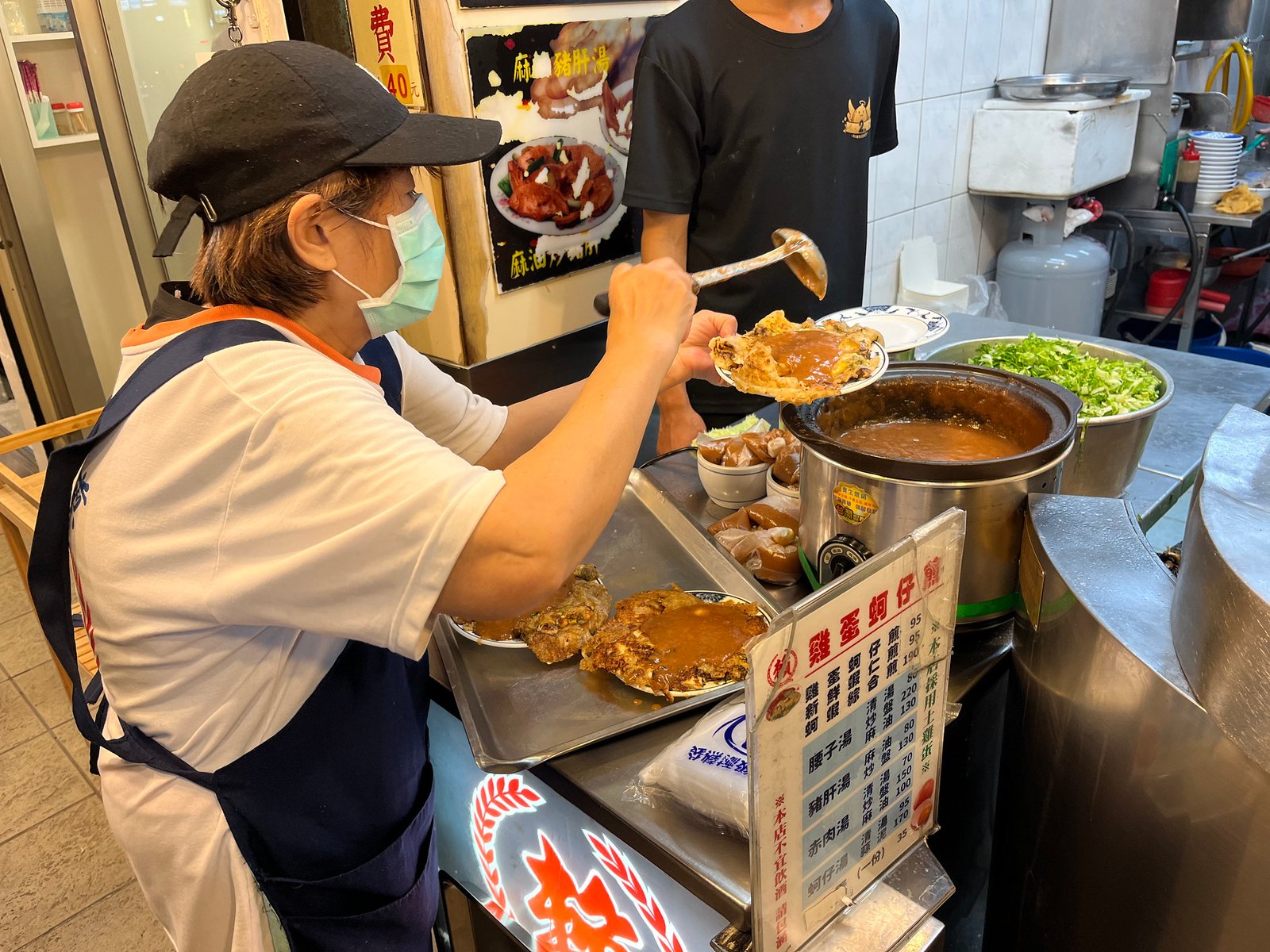
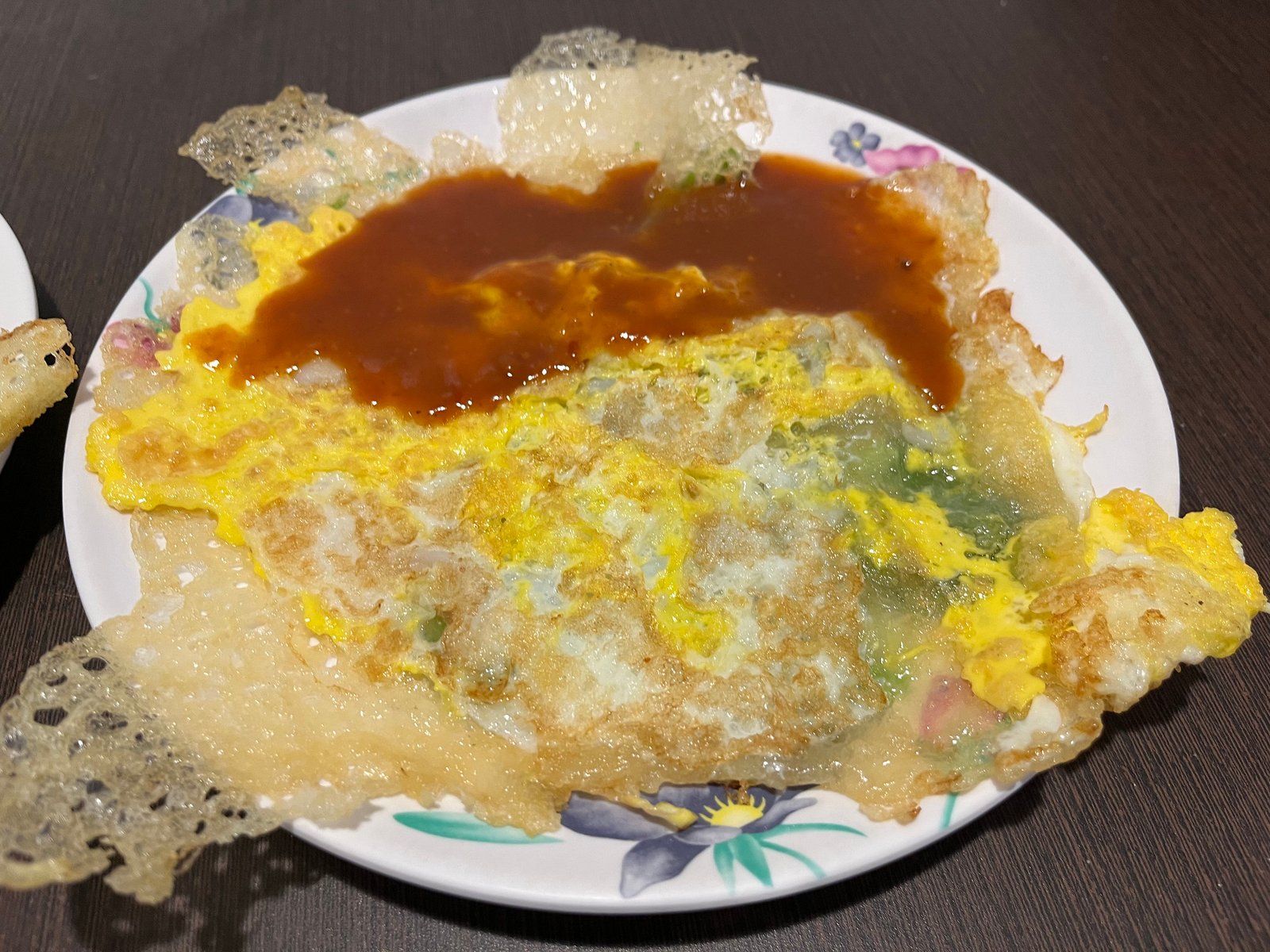
A lot of dishes we tried in Taiwan were familiar to us either from U.S or China or Japan. This was something we have never seen before or since. And not for the lack of looking! Oyster omelet was probably the favorite food we tried, we had it over and over again, and I am willing to fly back to Taiwan just to taste it again. If a combination of oyster and eggs sounds weird to you, welcome to the club. I was trying to imagine the taste before trying it, and couldn’t wrap my head around it. Turns out, it’s not just oysters and eggs, there was also greens, umami sauce, and tapioca starch, which fries up in a thin crepe that is simultaneously crispy and chewy and a little slimy. I am not selling it well right now, I know. But you have to believe me, everything worked so well together. It was a gooey, starchy omelet with briny oysters, aromatic greens, covered with sweet and tangy sauce, and my mouth waters just thinking about it. The last time we ate it was on the very last day in Taipei at Lai Ji Oyster Omelet shop, known exactly for this dish. The line looked long but went surprisingly quickly. Out of all the oyster omelets we tried all over Taiwan, this was honestly the best and a great way to finish our trip.
Stinky Tofu
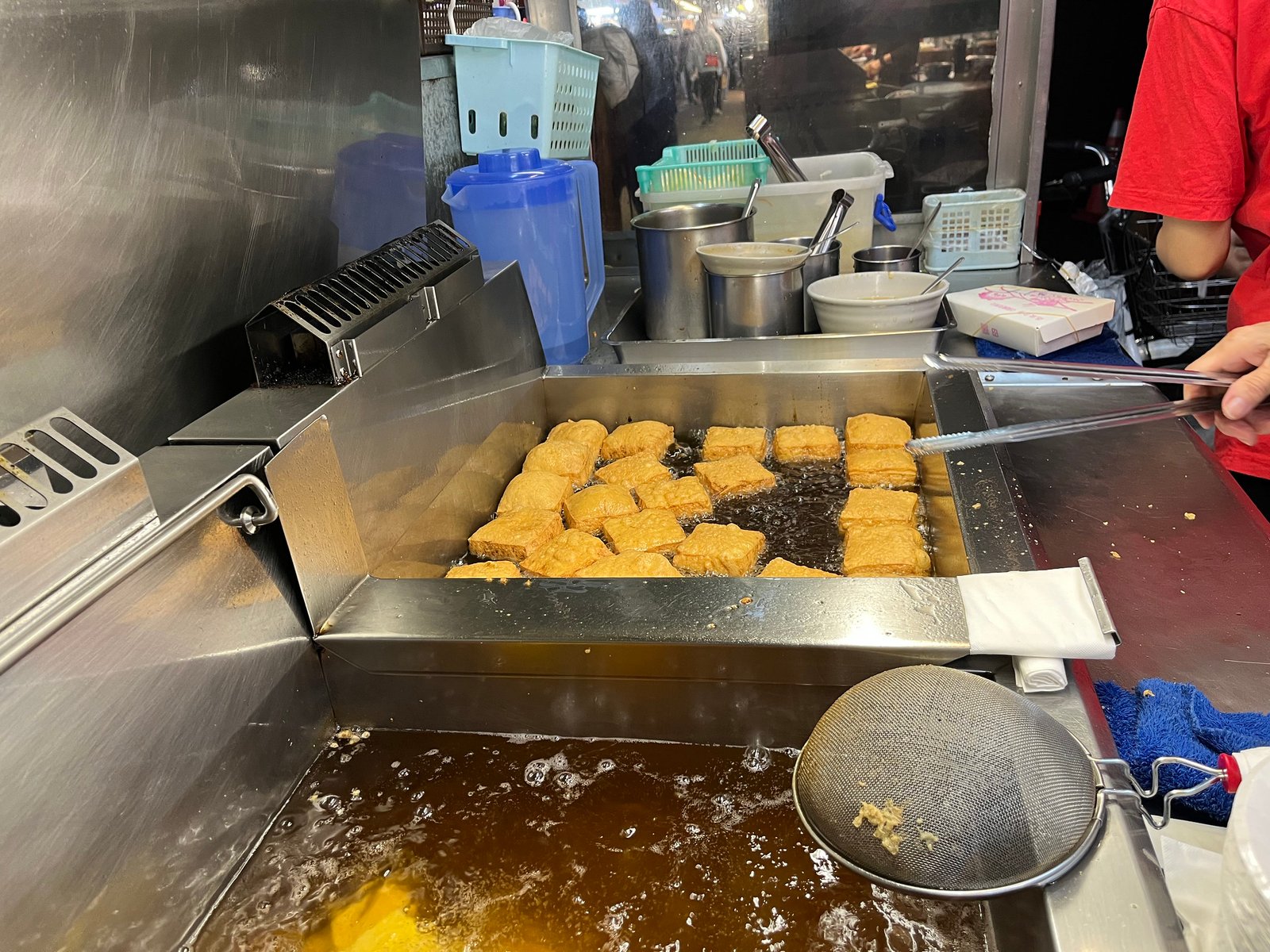
The first time we walked through a night market, Victor kept searching for “stinky tofu” with no luck. We’ve heard about it from various vlogs and were wondering if we would be brave enough to try it. We are mostly adventurous eaters, having consumed grubs and grasshoppers in Mexico, scorpions and bugs in China, brains in Turkiye, but do occasionally draw a line at what we are able to put in our mouths – for example, cute guinea pigs never made it to our plates in Peru. We heard that stinky tofu is so overwhelmingly pungent that most tourists never dare taste it. And so, there we were, closely inspecting every menu and display for a sight of stinky tofu. Turns out – we didn’t need to find it, as it would eventually find us. As we rounded a corner, we were suddenly hit with a smell that can only be described as a fermenting garbage can on fire. We looked around and only saw bubble tea and meat-skewer vendors. It was time to follow our noses. We must have walked an entire block before we finally found the source of the smell and it was, in fact, stinky tofu boiling in a large pot, giving off the most incredibly offensive odors I have ever experienced.
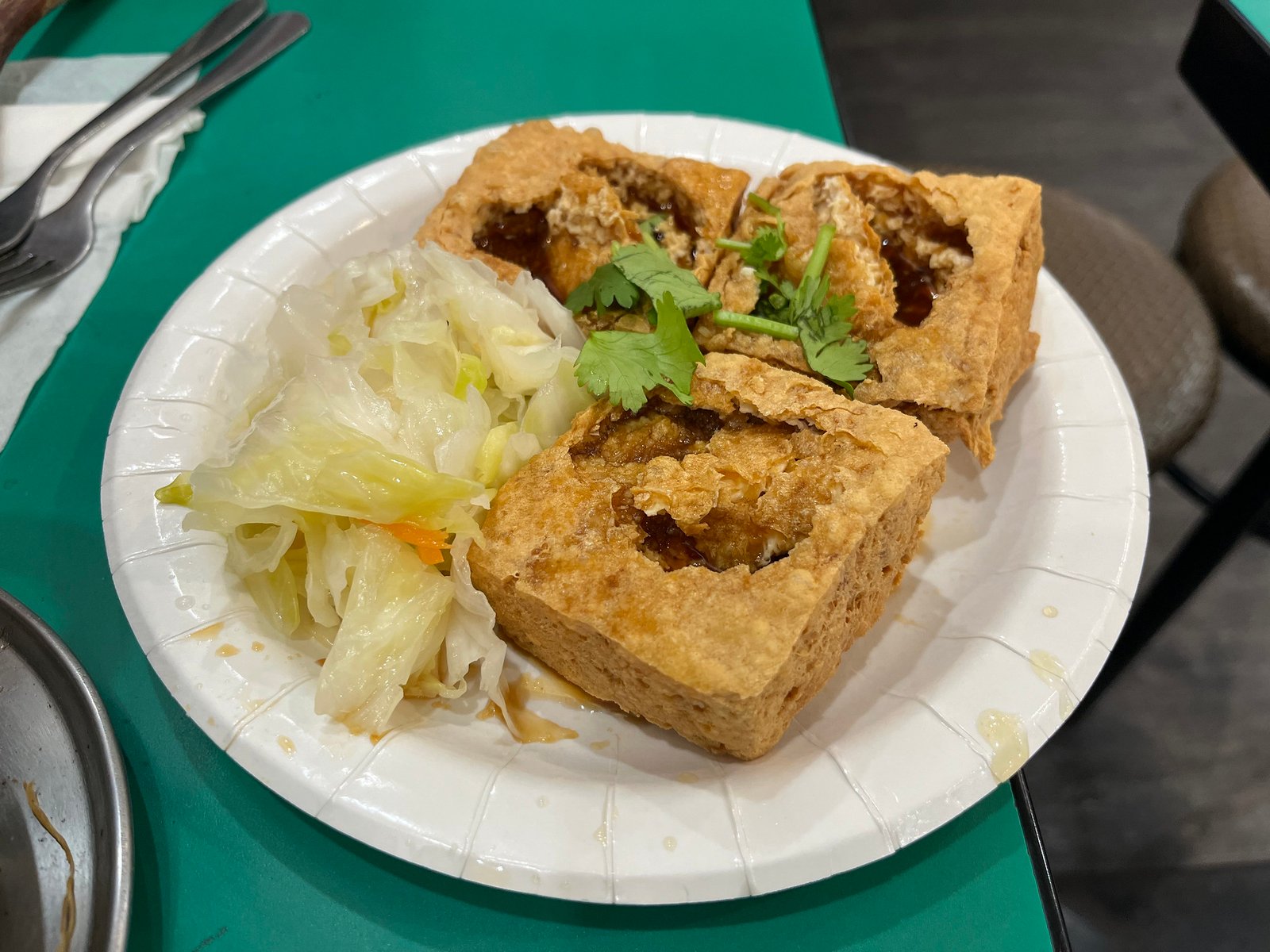
In another country, this smell would have cleared the street. Here, a long line of people queued up at the stall, and another group was gathered nearby, holding little numbered tickets, anxiously waiting for their orders. We glanced at each other and silently got into the line, trying not to breathe too deeply. The menu options were limited to 4 squares of stinky tofu or 8, with or without a cabbage slaw on the side. That’s it. We decided on 4 pieces with the slaw and by the time our serving arrived, we were somewhat nose-blind to the smell.
Tentatively, we took small bites and, surprisingly enough, enjoyed it right away. It was soft and chewy inside, a bit crispy outside, very flavorful, but not overwhelming. The smell did not at all correlate to the taste, which was slightly sour with fermented undertones. Victor usually loves funky cheeses, and I love everything fermented like kimchi and kombucha, so this was right up our alley. The pickled cabbage really helped to cut through the richness and was a nice addition.
Buns
There are a lot of different buns in Taiwan, with every filling imaginable, steamed, baked, or pan-fried. We had tried steamed buns (Mantou) for breakfast, plain, brown sugar, onion, and taro flavored ones and their fluffy, chewy texture and mellow flavors were great with soy milk or coffee for breakfast.
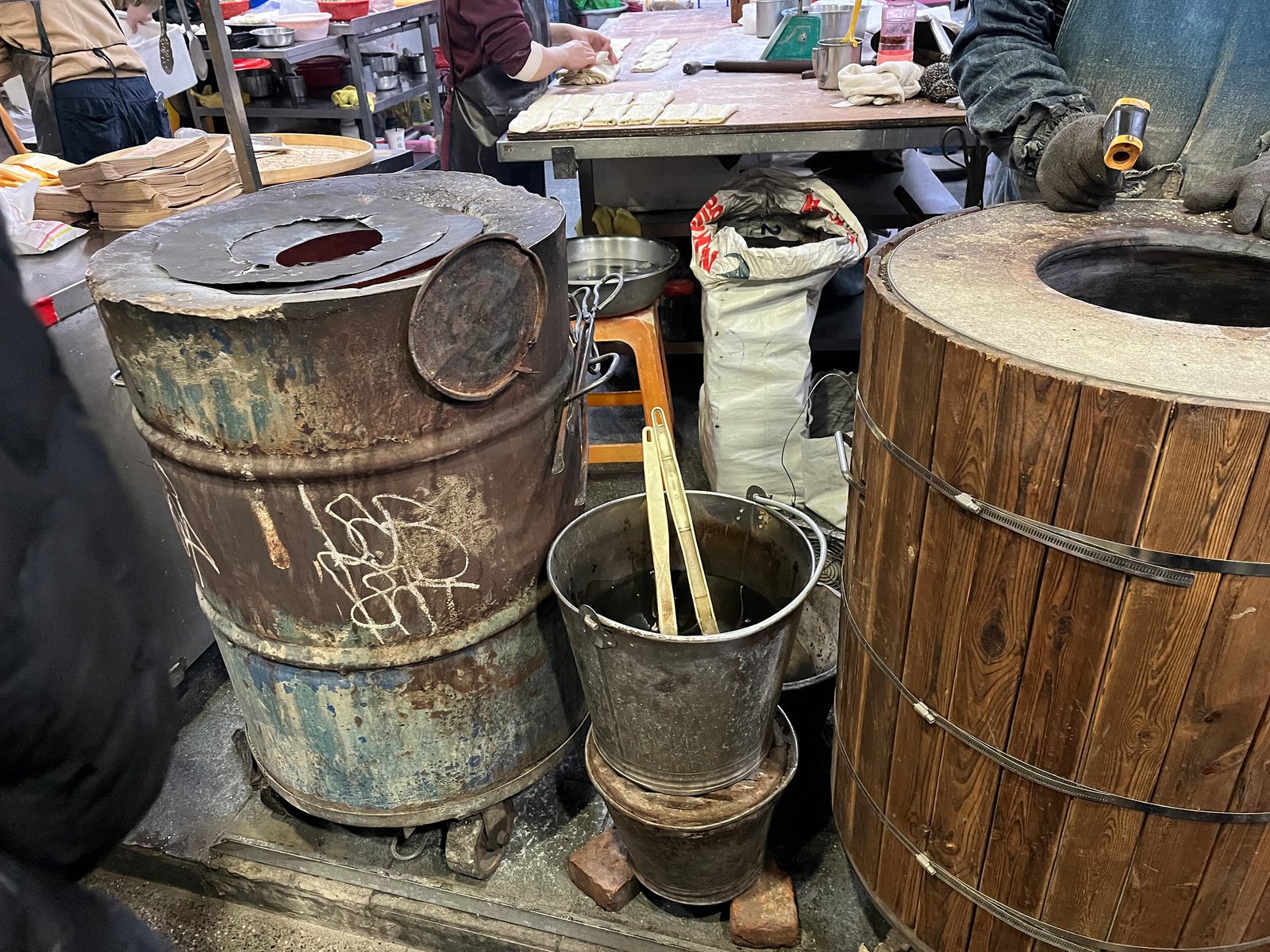
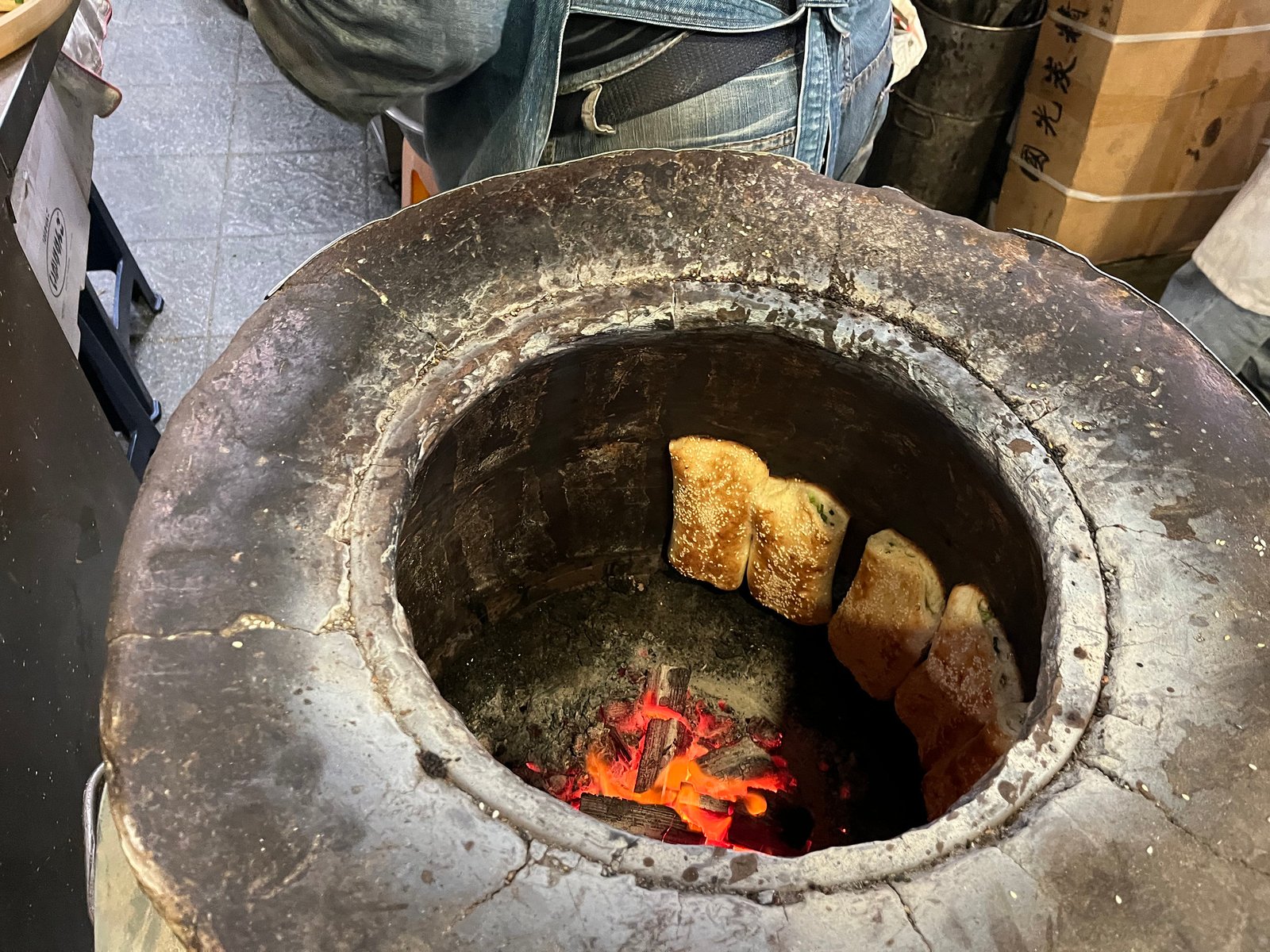
During one of our night market prowls, we found a place serving vegetarian pan-fried buns along with crispy meat pepper ones. The only catch – they were cooked in repurposed oil drum barrels! My first glimpse of watching a cook pull out freshly cooked buns from a dirty-looking industrial-sized metal drum was jarring. After inspecting the whole setup, I realized that these drums were being used as charcoal-fired ovens, sort of like an Indian tandoor. The burning charcoal was on the bottom of the drum, and the buns were stuck directly on the vertical inner walls, allowing them to get golden and crispy.
“We are not seriously eating food out of that?” Victor wondered out loud. We seriously did. I ordered a semi-leavened pork bun with a crispy, golden bottom, juicy meat and green onion filling, sprinkled with sesame seeds on top. Victor indulged in a few with cabbage, glass noodles, and mushroom fillings. They were delicious with a doughy top and a crunchy base, and it made no sense how something this juicy and well-baked came out of such an unsanitary looking contraption.
Sweet potato balls
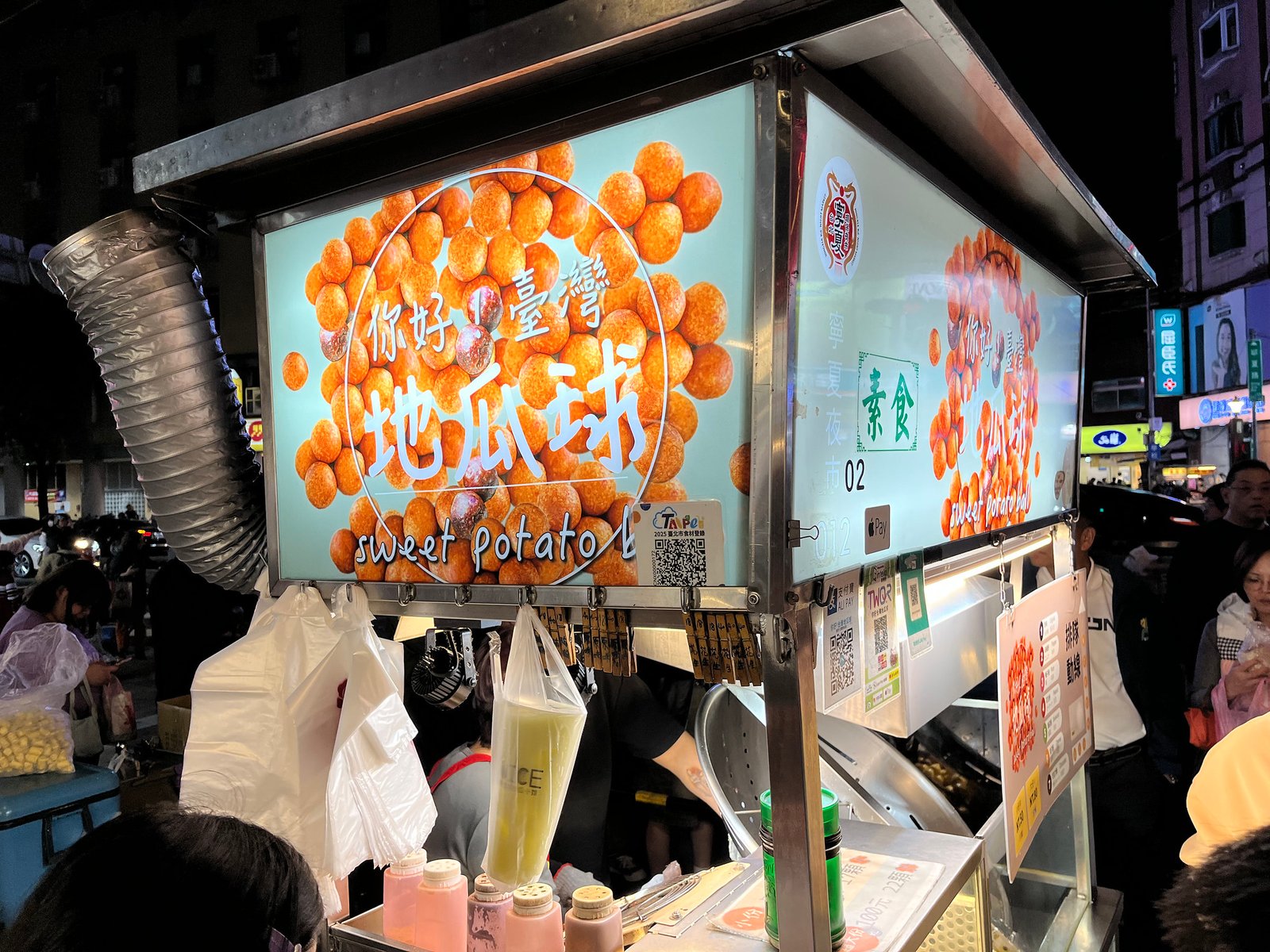
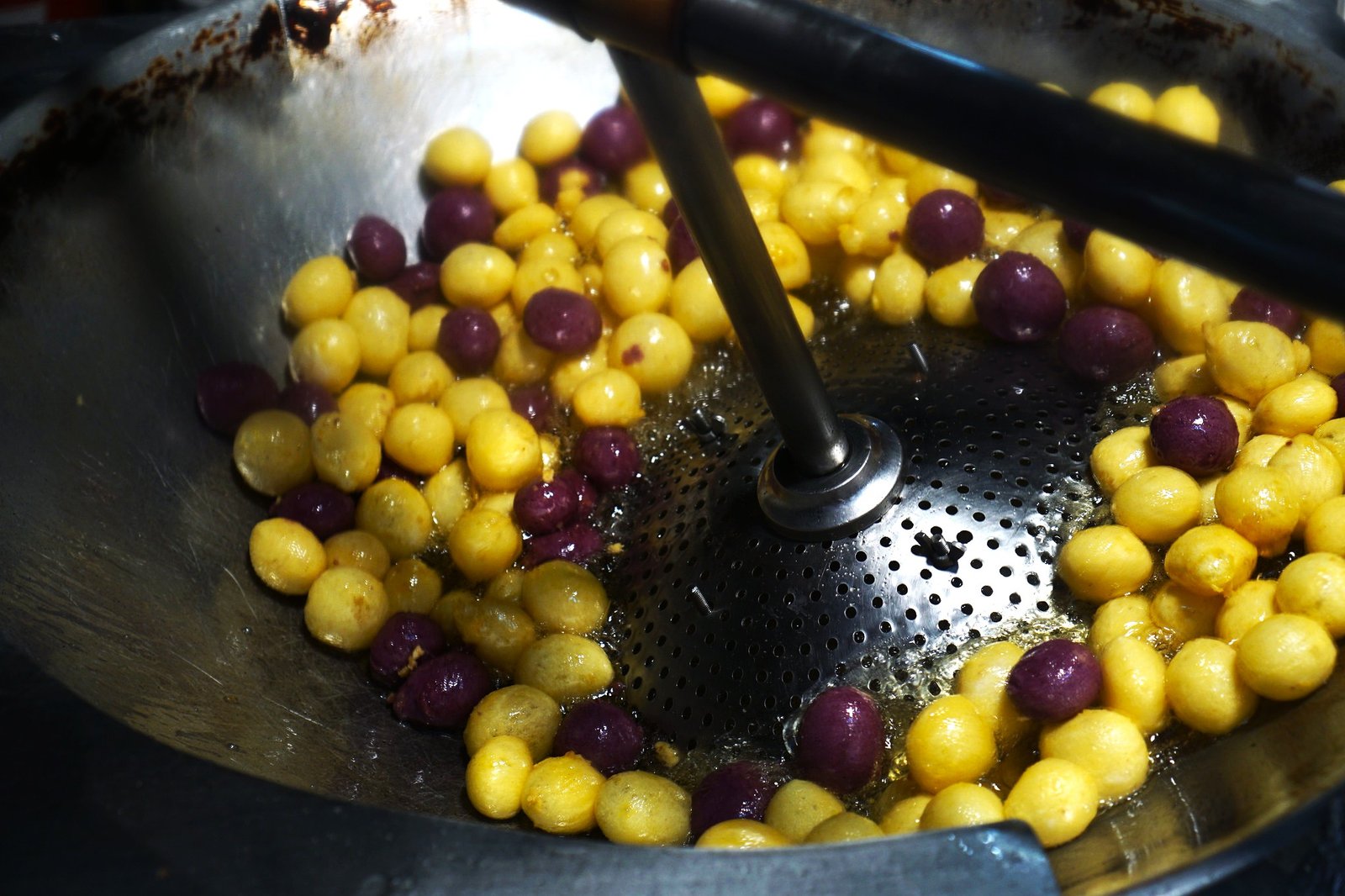
At a local night market, I was watching small roasted potatoes bounce around in a large wok of oil. They looked perfectly identical, small and round, some white, some purple, some red. I could not understand why there was such a long line of people queuing up just to eat some roasted potatoes.
“We are not eating potatoes in Taiwan!” said Victor and demonstratively turned away. This man has never walked away from a potato before. He was raised in Belarus, which is ranked as the world’s biggest consumer of potatoes, with an average Belarusian eating roughly half a kilogram every single day. So, this was a shocking turn of events. But I did understand where he was coming from – potatoes are not exactly a popular food in Asia, and we wanted to indulge in all the local delicacies.
“They are lining up because it’s a rare delicacy for them,” Victor said, “We didn’t come all the way here to eat potatoes.” He was right. Night market after night market, we ignored the stalls selling “Sweet Potato Balls” and the bouncing crispy balls being scooped out of bubbling oil.
On our last night in Taipei, something shifted. We were going to fly back to the States the next day and had one last chance to eat our way through old favorites and try something new.
“We should try the potatoes,” Victor said, sounding defeated, “They are selling them everywhere! Every night market, every city! We might as well see what this is all about.”
I had at least a dozen potato jokes and puns lined up but decided to hold my tongue. After all, I was intrigued by these potatoes as well. After twenty minutes in the queue, I was close enough to the stall to see the menu of toppings – pepper, salt, sesame, cheese, plum, chocolate, caramel… What was going on? Chocolate or caramel on a potato? Also, were these “sweet potatoes” as in yams, or regular potatoes that were made sweet? Confused, I asked for cheese sprinkles on ours and got a small cup filled with hot little potato balls. I plopped one into my mouth and understood immediately how wrong we had been. These were not roasted potatoes. These were donuts. Delicious, sweet, chewy donuts with a slight “potatoey” taste. Turns out these are made with steamed sweet potatoes, sugar, and tapioca flour and have a light and airy texture of donuts.
Had we tried them earlier, we would have been eating them every single night. So, it was Victor being stubborn that saved us from consuming half of our daily calories in sweet potato balls for the entirety of the Taiwan trip.