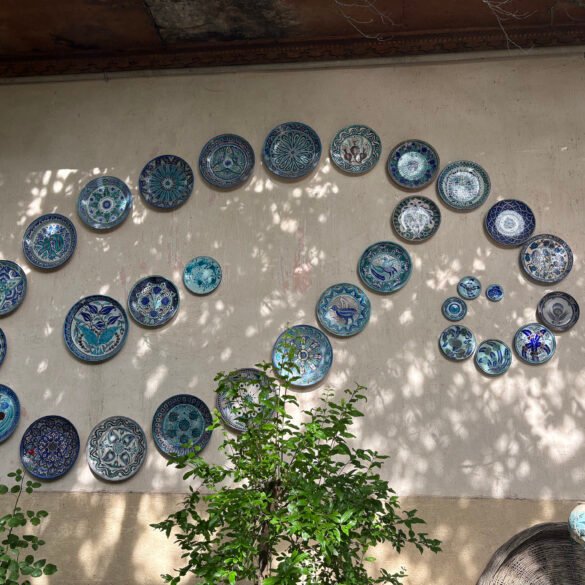

Khushnud and I were chatting at the pottery wheel, as always. For two people from different cultures, different generations, different religions, and opposite sexes, we found no shortage of things to talk about. At first, all we shared was a common language, Russian, and a love of pottery. Within a few days, though, we were discussing everything from soccer and travel to family drama and even romance.
“Everyone in Uzbekistan watches Turkish TV dramas, they are really popular here,” he lowered his voice and leaned in, “But you know, there is like... Romance there and stuff. Like kissing! We don’t have any of that stuff here! There is no dating in Uzbekistan! But everyone loves to watch it on TV!”
I had to turn away so he wouldn't see me struggling to keep a straight face.
Khushnud went on to explain arranged marriages, the traditional roles of women in Central Asian society, and how shocked he had been to see Kyrgyz women working abroad.
"They go to Russia for work," he said. "You would never see Uzbek or Tajik women doing that. Only men leave to support their families. When I saw Kyrgyz girls working in Moscow, I couldn't believe it."
I told him that one of my hopes for this trip was to see a traditional Uzbek wedding. I had no idea how to make this happen and asked if this was even possible.
“Oh, I am sure you’ll attend a wedding!” he said casually and switched subjects. I made a mental note to follow up. It’s not like a wedding invitation was going to fall into my lap.
The next morning, there was a new face at breakfast. Hamaum introduced the newcomer as his best friend, Davro, who stopped by to bring us delicious samsas from the restaurant where he worked as a cook. As we devoured the large pastries, hot juice running down our faces and hands, Davro said he came early to take Hamaum to the barbershop. While we made jokes that it would in fact take a full day to get Hamaum cleaned up, so an early morning appointment was necessary, Davro casually said, "Well, it's my wedding tomorrow, and I just asked Hamaum to be my best man."
I almost chocked on my samsa. I looked over at Khushnud, and he gave me a sly “told ya so” smile.
Davro enthusiastically told us about his bride, invited all of us to the wedding, which would be held just a few minutes' walk from the studio, and headed off with Hamaum for their haircuts.
Victor and I were completely flabbergasted, barely able to keep our excitement at indoor-voice levels. As the initial shock faded, we realized that I had nothing to wear. Victor could pull this off with a nice pair of slacks and a shirt that he brought with him, but didn’t pack any dresses and didn’t have anything remotely presentable for a wedding.
It was time to go shopping. Luckily, we already had a day trip to Margilan planned for that very day. Margilan just happens to be Uzbekistan’s silk capital, famous for the Yodgorlik Silk Factory, traditional ikat weaving, and the bustling Kumpera Bazaar. What better place to buy a dress?
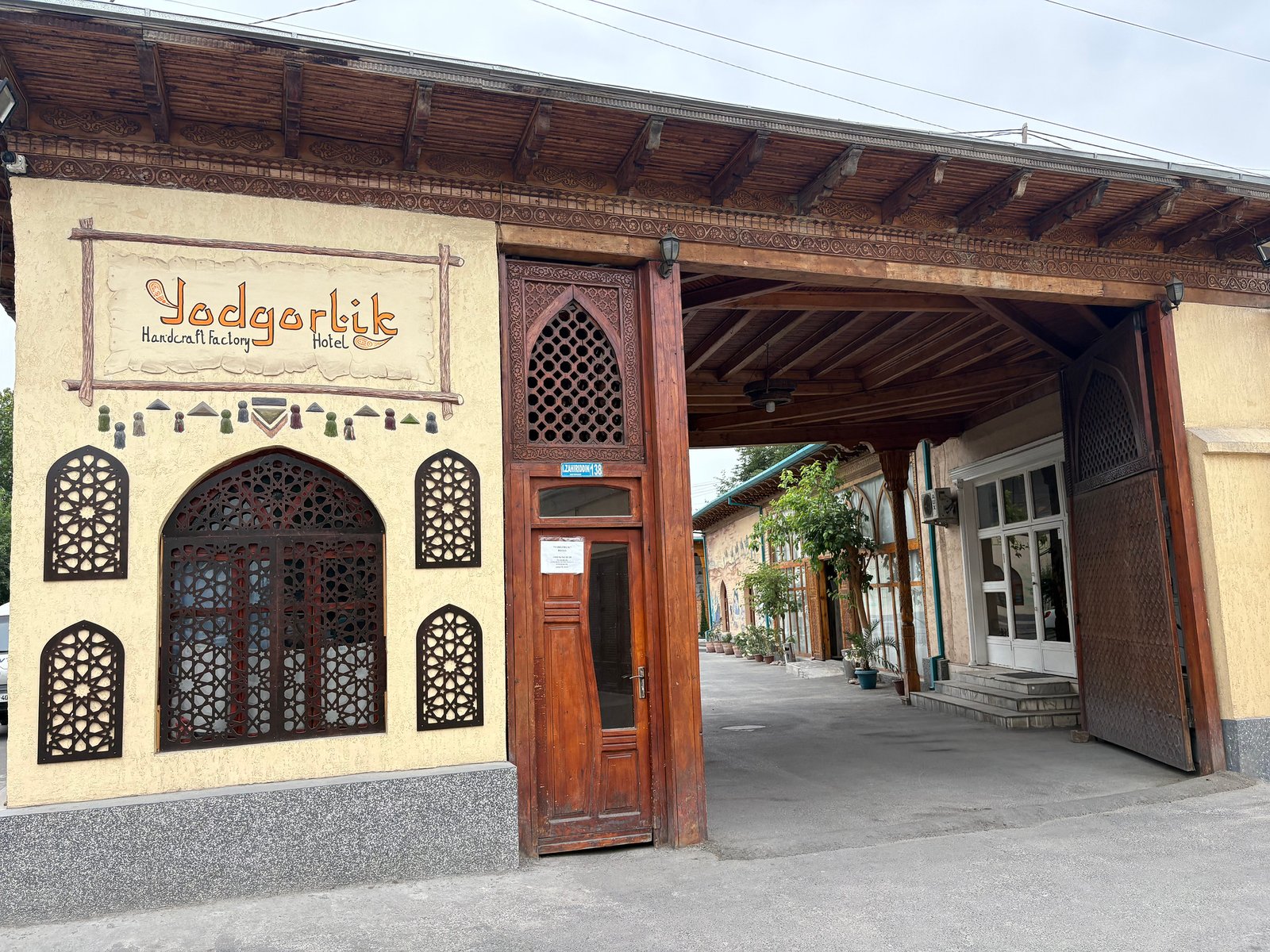
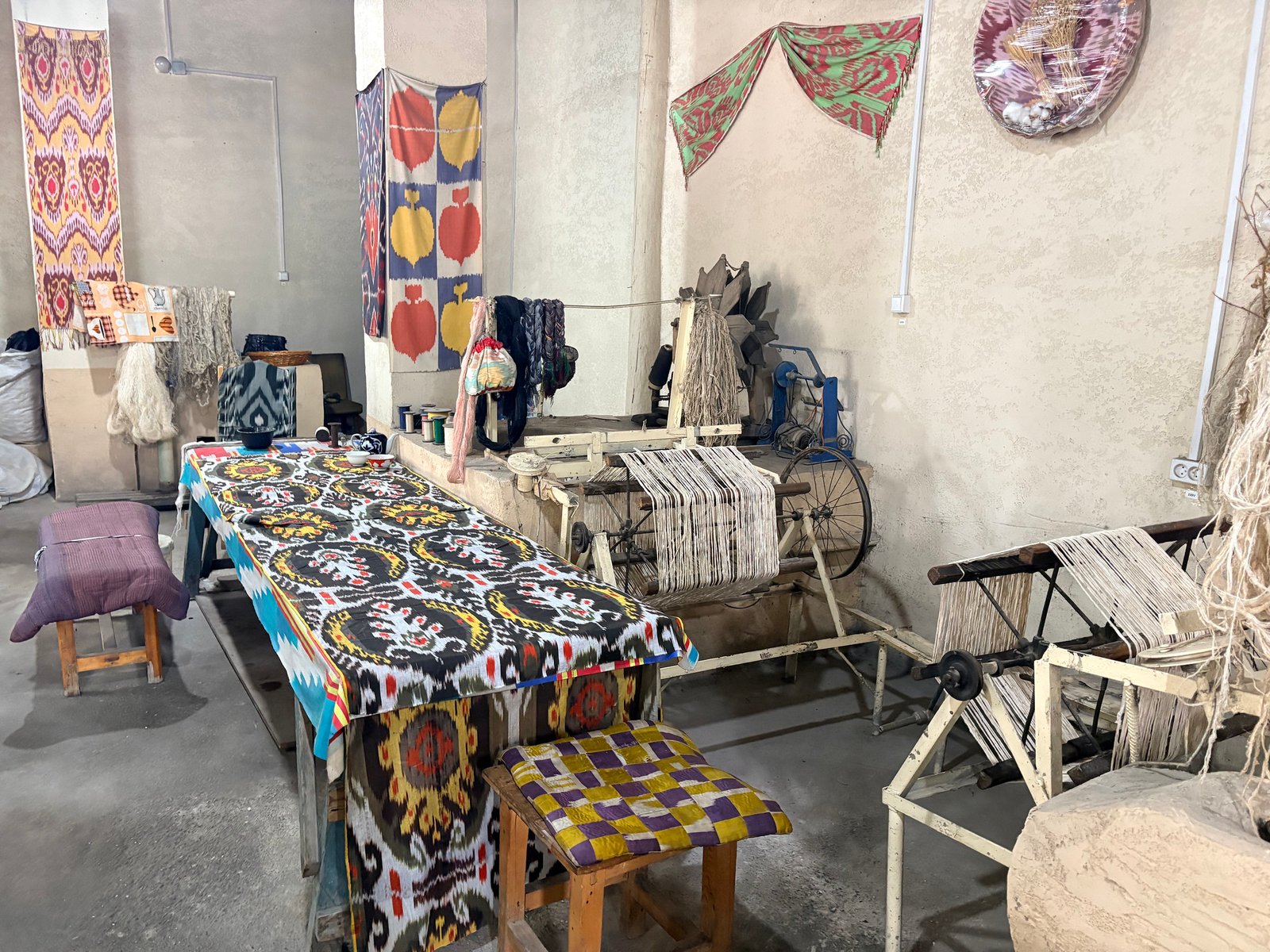
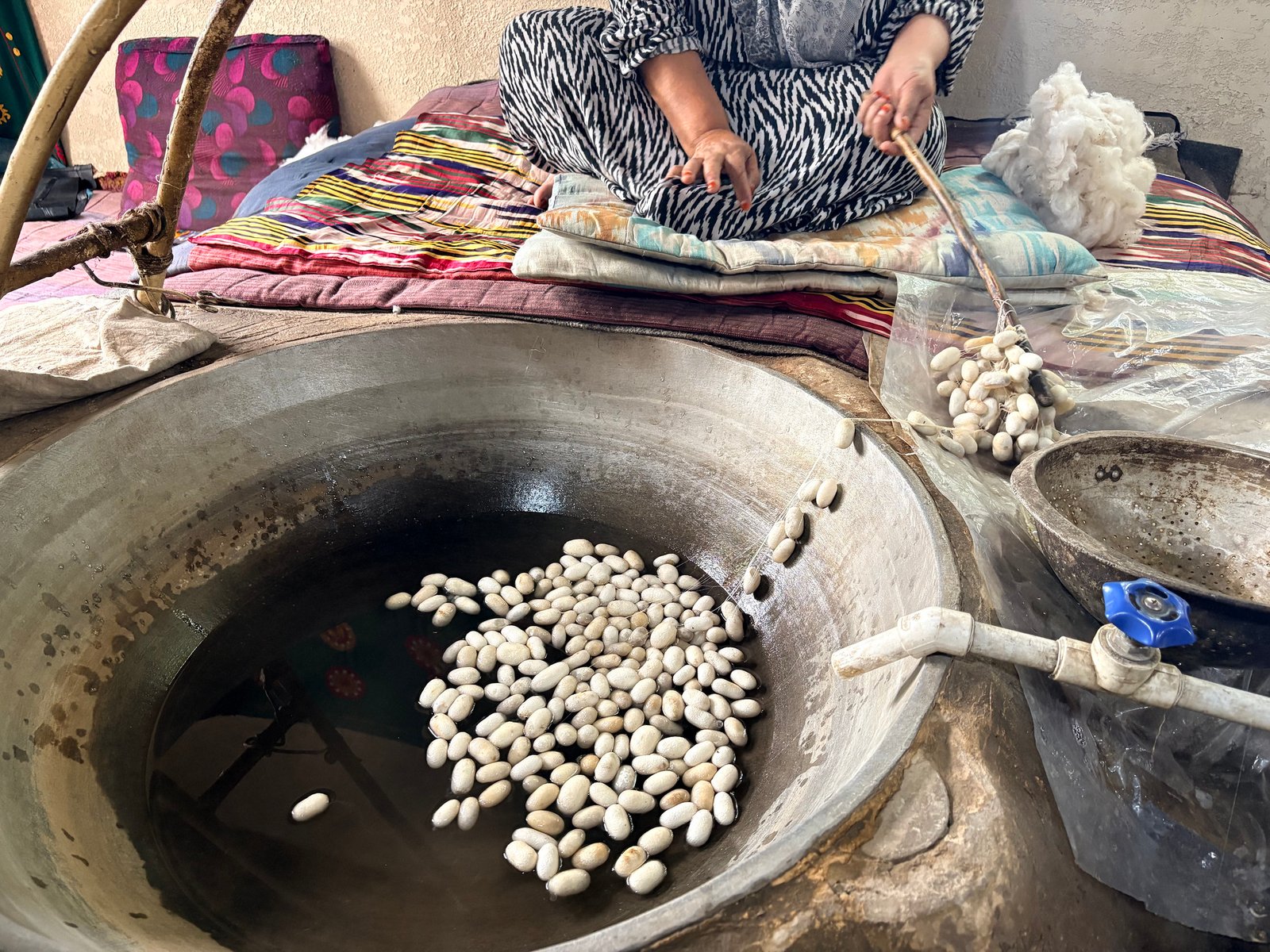
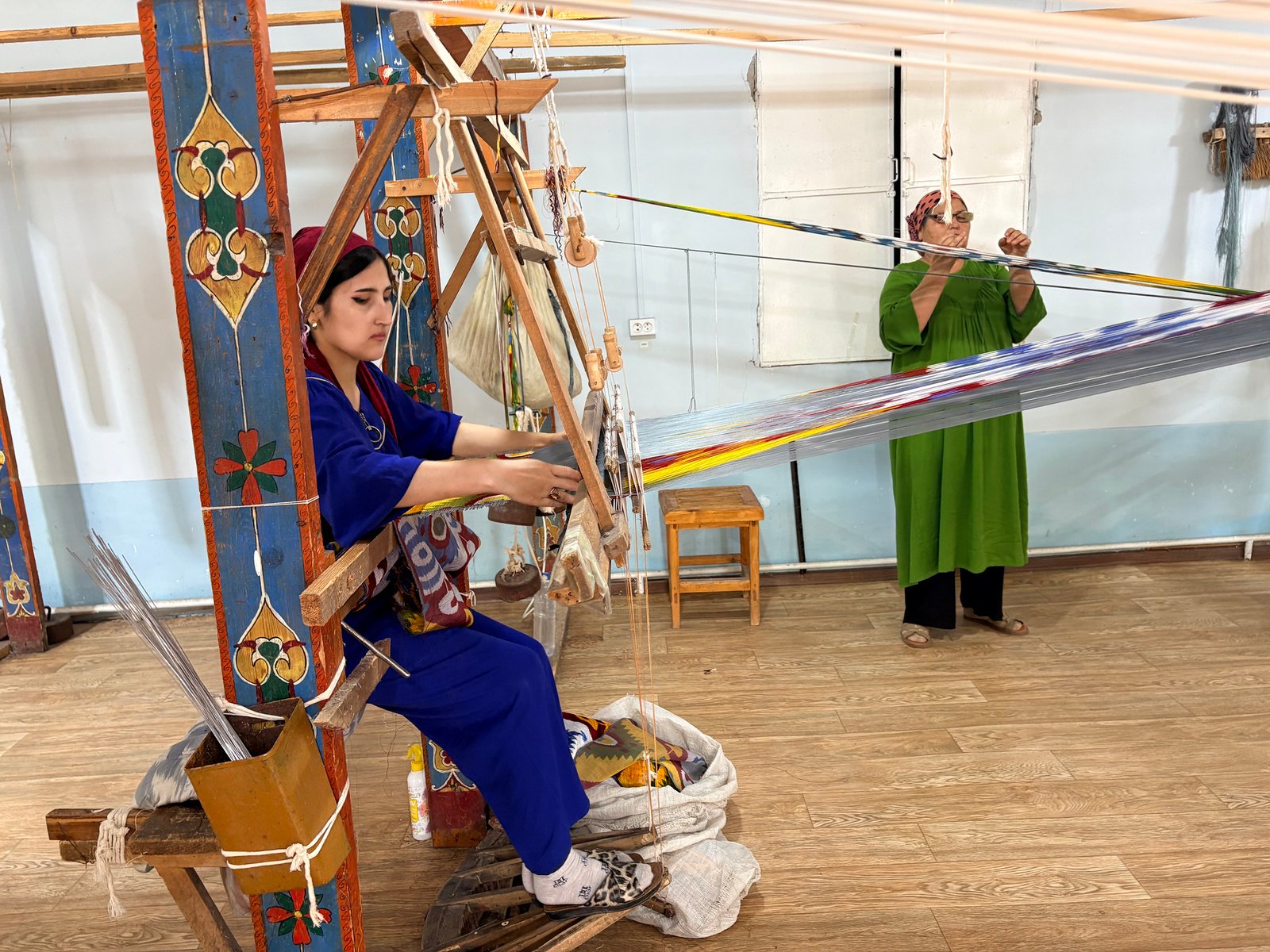
We started our day trip at the Yodgorlik Silk Factory, one of the last places in Uzbekistan where silk is still produced using traditional methods. For just a few dollars, we hired a guide, who walked us through every step of the process, from unwinding silk from cocoons and dyeing the threads with natural pigments to weaving colorful ikat fabric on wooden looms.
“You are very lucky to come in the spring,” she said, “We have live silkworms now. Would you like to see?”
Of course we would!
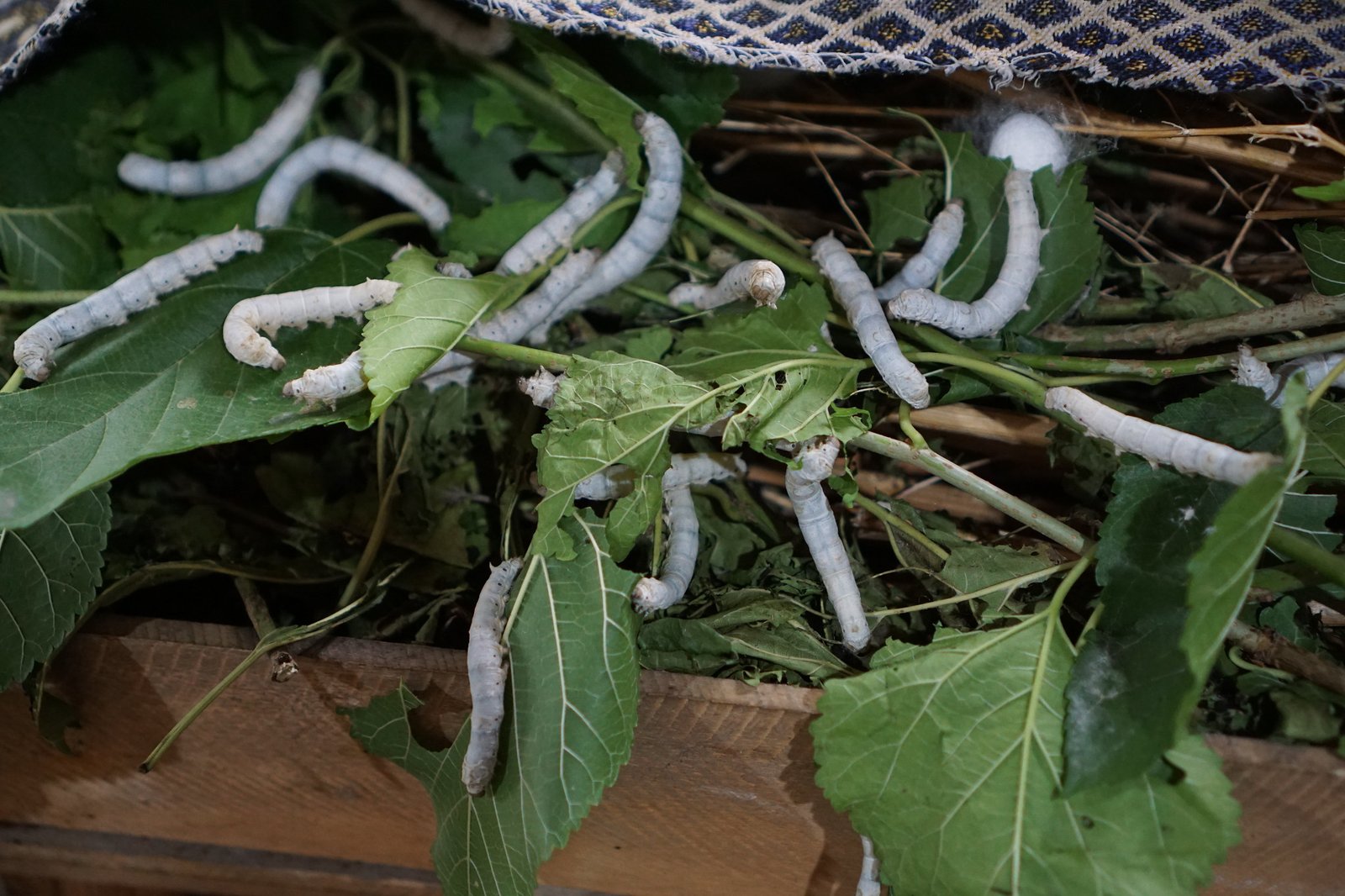
She walked us into a room with baskets of empty silkworm cocoons and pulled back a burlap cloth off one of the baskets full of mulberry tree branches and fresh leaves. There were dozens of fat silkworms lazily crawling around, munching on leaves. I bent down to take a closer look.
“There are so many!” I said.
“Less than there were a few days ago,” the guide sighed, “We had a group of Chinese tourists come through, and they ate some.”
I straighten up. I looked at Victor, and he looked at me. We both looked at our guide, unsure if we misheard or misunderstood.
“They ate some.” She repeated. “It’s a delicacy in the part of China they are from. By the time someone noticed and told them to stop, many were gone. So now, we keep this basket covered. And now we ask all guests... Please don’t touch... Please don’t eat the silkworms...”
This can’t be true, I thought. This must be an urban legend that older guides tell the young ones just to mess with them.
Then an older woman washing cocoons nearby pointed at the basket, mimed eating a silkworm, laughed, and shook her head, as if she saw this and couldn’t believe it either.
We just stood there, confused and freaked out. Was this real? We still don’t know and probably never will.
We left with a newfound appreciation for the incredible amount of work that goes into producing traditional silk, and an unexpected desire to protect Uzbekistan's remaining silkworms. Victor also picked up a doppa, the traditional square Uzbek skullcap, from the factory's gift shop.
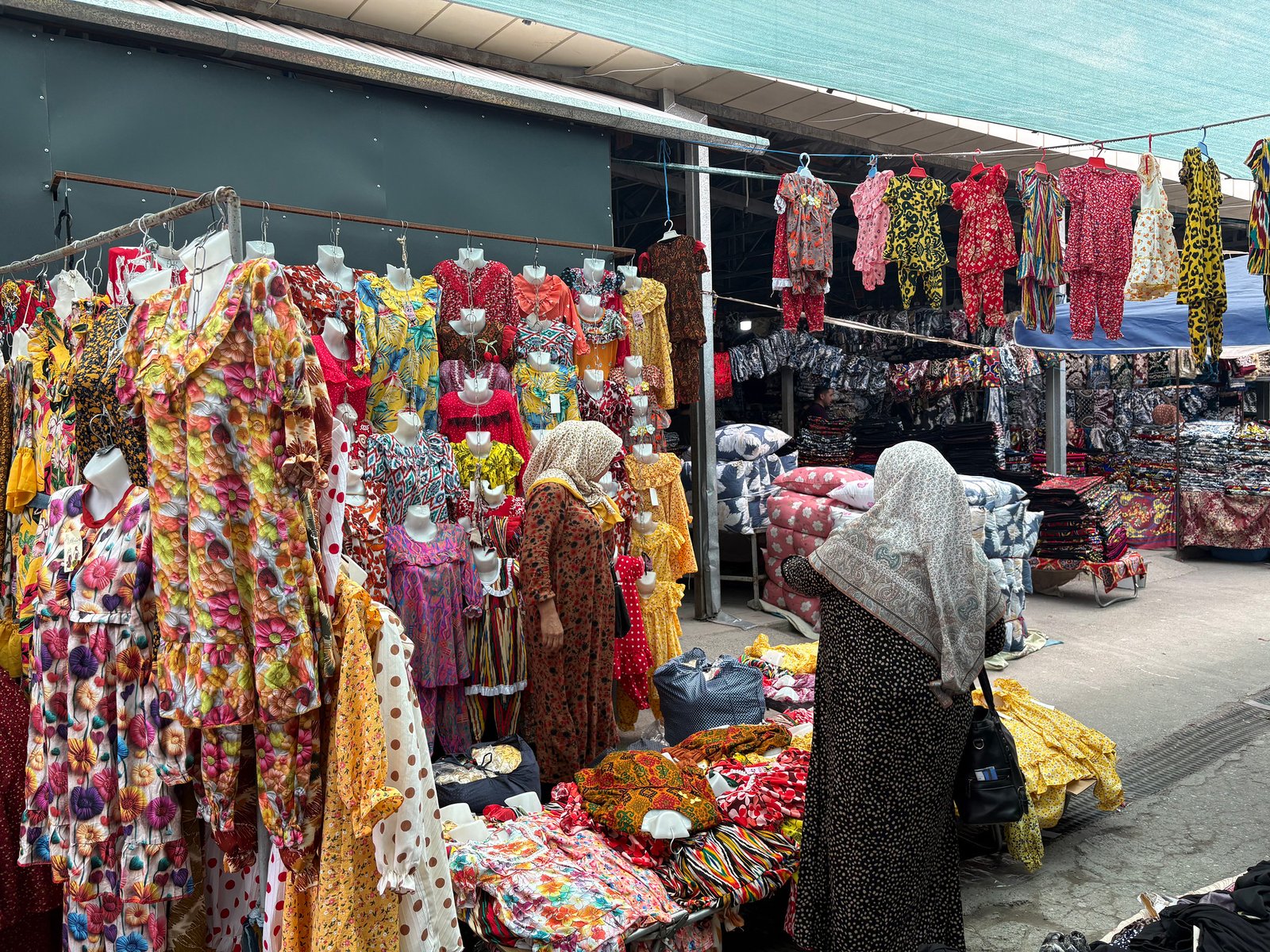
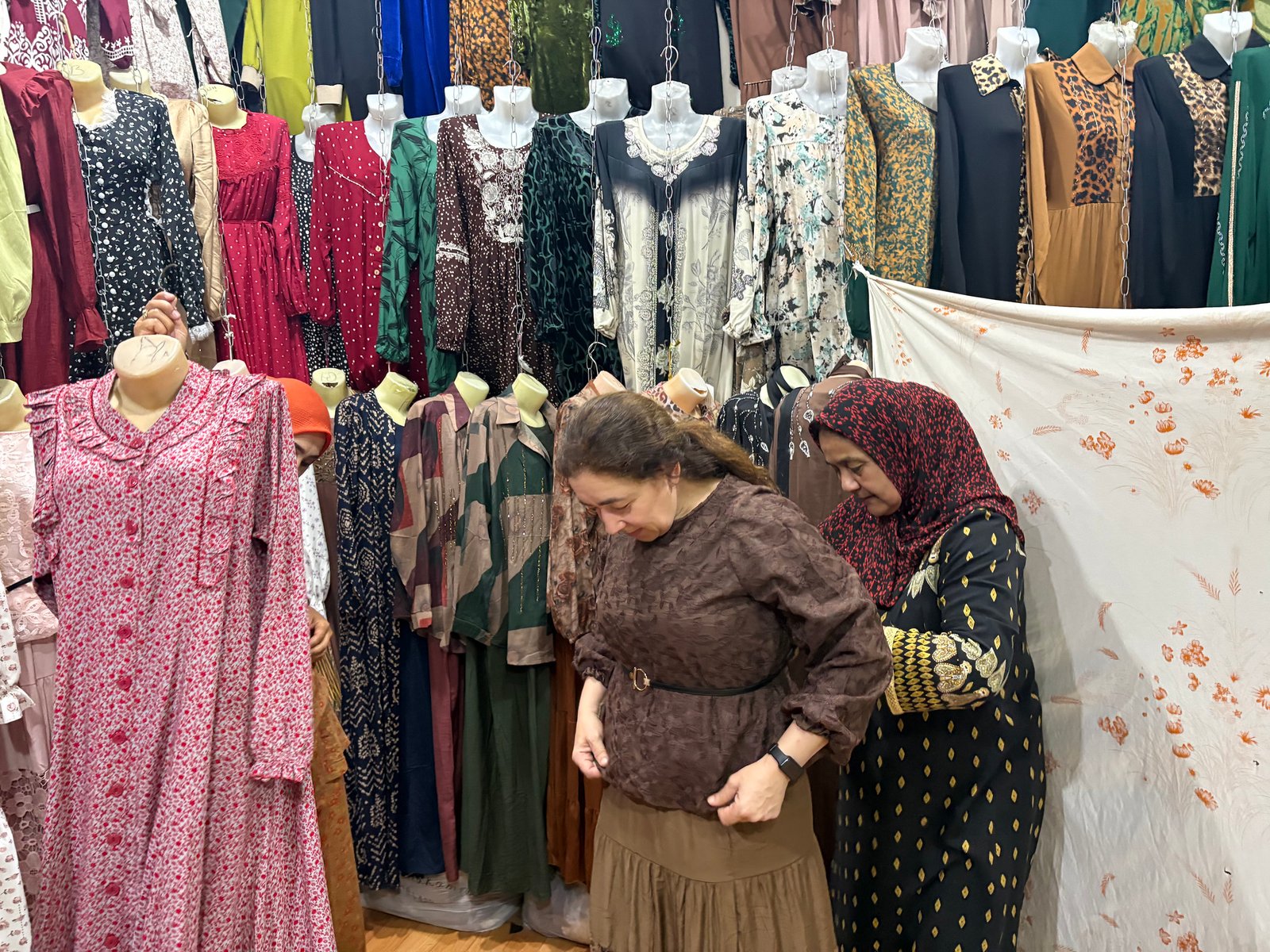
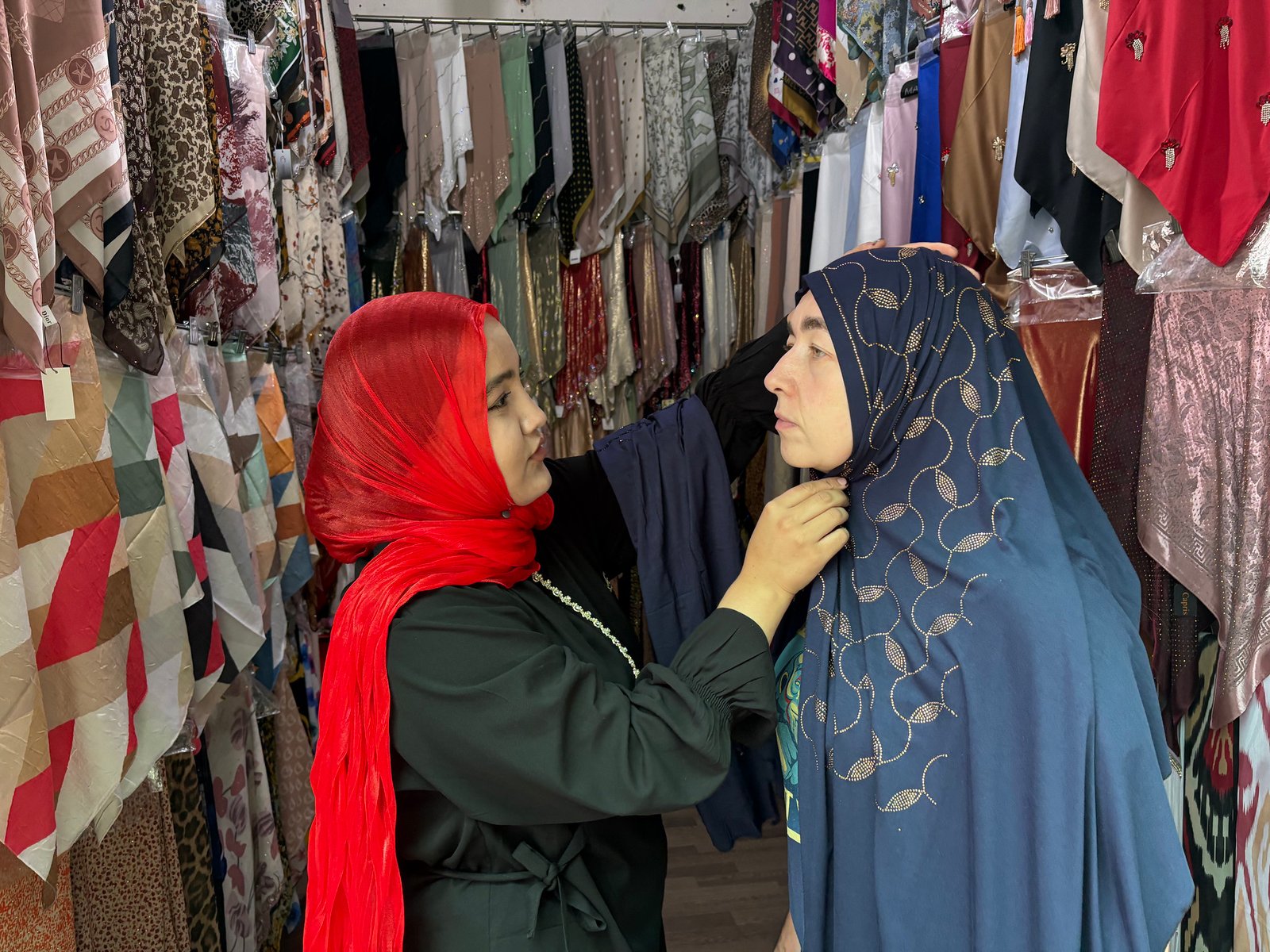
After a quick lunch at the Kumpera Bazaar, it was time to get me dressed for the wedding. We wandered through the enormous market, passing endless stalls of colorful fabrics before finally finding a clothing shop with Russian-speaking saleswomen.
"A dress for a wedding!" one of them exclaimed, immediately producing a long white gown.
“No!” I protested, “I am a guest at a wedding! It’s not MY wedding!”
“Yes!” they insisted enthusiastically. “Perfect dress for a guest!”
Apparently, the wedding traditions in Uzbekistan are very different from the West.
The white dress disappeared, only to be replaced by business dresses, summer dresses, sequined gowns, and traditional Uzbek outfits, each accompanied by another chorus of, "Perfect for a wedding!"
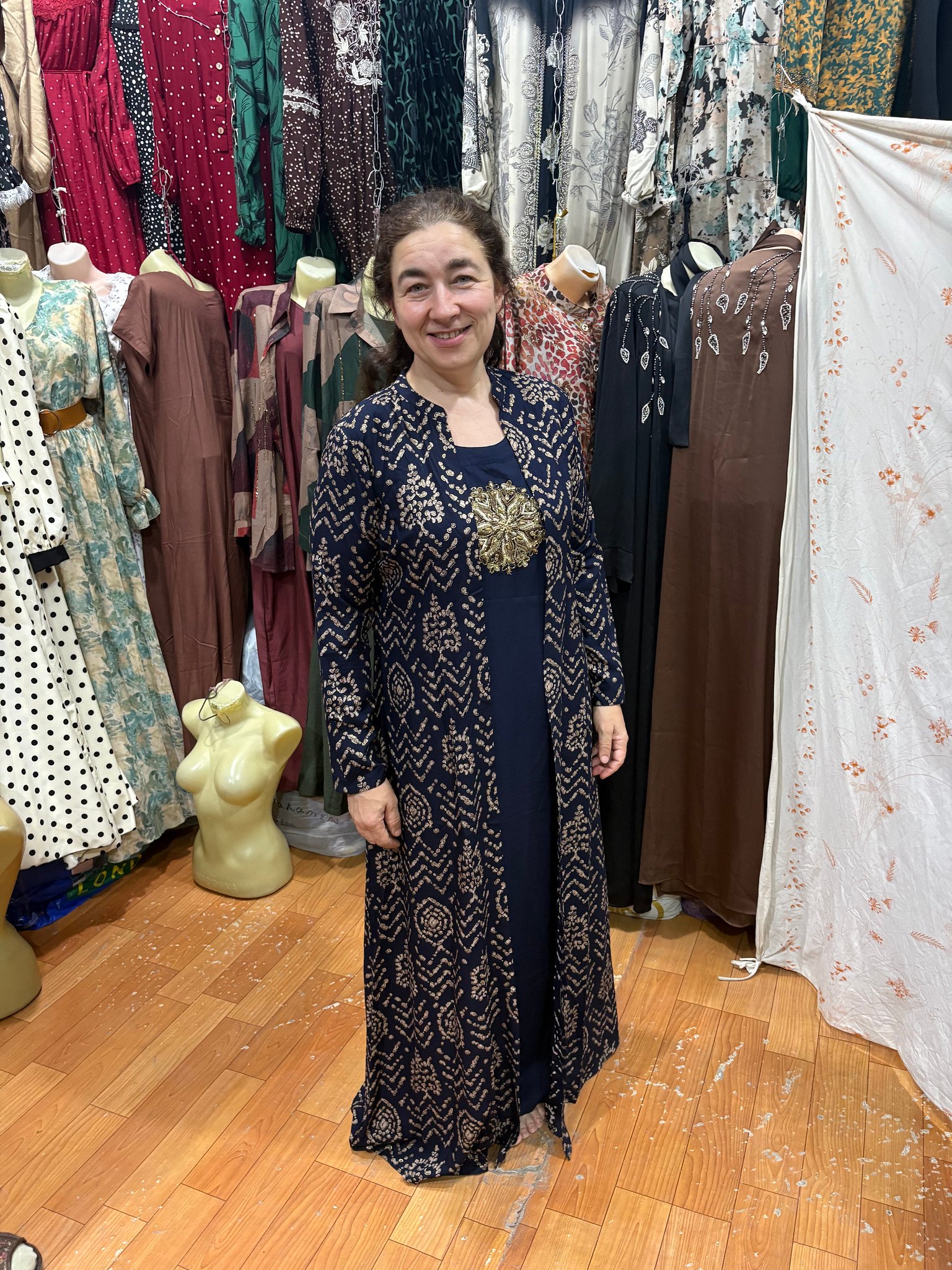
I was trying on dresses behind a makeshift curtain, relying on a narrow mirror that made me look twenty pounds slimmer and Victor's increasingly bewildered facial expressions to judge each option. Finally, I decided on a traditional Uzbek dress with a robe, as it was something I could see myself possibly wearing again, perhaps visiting another Muslim-majority country. It was made of cotton, cost only $20, and for once, I didn't even bother to bargain.
We took a taxi back to the studio to find that every apprentice has somehow found time to visit a barbershop and everyone was freshly shaved, washed, cut, combed, and buzzing with anticipation.
Tomorrow wasn't just another day in the studio. Tomorrow, we were going to an Uzbek wedding.
We took a taxi back to the studio to find that every apprentice has somehow found time to visit a barbershop and everyone was freshly shaved, washed, cut, combed, and buzzing with anticipation.
Tomorrow wasn't just another day in the studio. Tomorrow, we were going to an Uzbek wedding.