
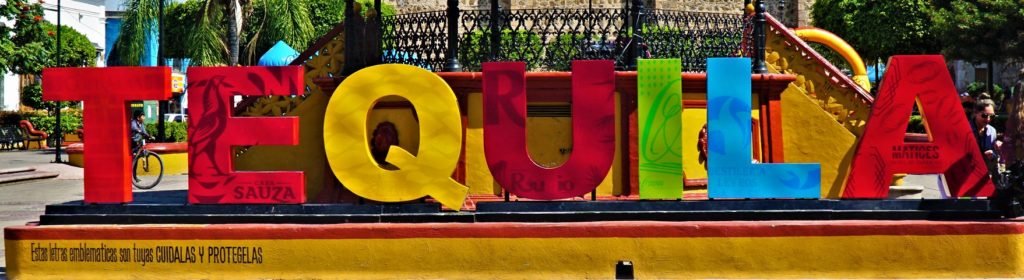
For many people, tequila is one of the most recognizable products of Mexico—the country's brand. And that's why when we visited the state of Jalisco, we couldn't pass up an opportunity to see the town of Tequila, known obviously, for tequila.
Located just 40 miles northwest of Guadalajara, Tequila was an easy day trip. Initially, we considered renting a car, but instead decided to take the Jose Cuervo Express. The company's website boasted a unique opportunity to visit the oldest tequila distillery, the colorful town center, and an unforgettable train ride through blue agave fields.
After spending a full day in Guadalajara, the next morning, we headed to the bus terminal. Our tour included a bus ride to Tequila and then a train back to the city at sunset. The trip could also be done in reverse: a train ride to Tequila in the morning and a bus ride back to Guadalajara in the evening. We decided to take the train at sunset, as it appeared to be a highlight for most people according to online reviews.
After a quick breakfast of street tacos, I put my Spanish skills to use, trying to find the bus station. We found the station fine, but confidence in my Spanish quickly grew into overconfidence and almost cost us the entire experience. As we approached the bus depot, we needed to pick up our tickets. There were two lines: one for Spanish speakers and the other for English speakers. The Spanish line was much longer, while the English line was almost non-existent.
“I want to practice my Spanish,” I informed Julia, lining up in a longer queue.
What I didn't realize was that the line wasn't just for Spanish-speaking people picking up tickets; it was for those who wanted to take a tour of Tequila in Spanish. Although my Spanish was good enough to communicate about tickets, it was nowhere near close to allowing me to comprehend the entire tour, including a specialized presentation of the tequila-making process. And not to mention that Julia speaks no Spanish at all. We narrowly avoided a mix-up that could’ve left us lost in translation all day.
The bus ride to Tequila was fun. Each of us received a plastic bottle with a tequila-based cocktail, and we were told that refills were unlimited. Julia, a devoted teetotaler but someone who loves free stuff, was initially torn about whether to drink or not, and then freaked me out when she asked for a refill while we were still within Guadalajara city limits.
“Please pace yourself. You have zero tolerance for alcohol. And we have a full day ahead of us.” I said with a hint of concern in my voice.
“Ooh… look at that guy… he looks pretty...”
“Oh no…”
The tour guide on the bus was a chirpy Mexican girl in her late 20s with perfect English. She described the program for the day, reminded everyone about limitless refills, and then invited everyone to participate in a popular game, “La loteria”, a Mexican version of bingo. Each passenger received a board with a grid of random, colorful pictures, and the guide then drew cards with images from a deck of cards. As the bus made its way through the Jalisco countryside, she would shout out the name of the card in Spanish and then repeat it in English, with people keeping track of their boards and checking off the images. The winner, the one who would get all the images checked off first, was promised a bottle of fine tequila.
“El gato!” “A cat!”
“El perro!” “A dog!”
“El Negrito! “A little black person!”
“Wait, what? What did she just say?” I asked Julia.
“El Negrito! A little black person! Who has a little black person?” The game host confidently repeated the last card.
“Apparently, I do,” said Julia, tipping her head back and pouring the rest of the margarita from the plastic bottle into her mouth.
Later, we learned that “El Negrito” was not a derogatory term but simply a reference to a black person, and wasn't meant as a slur. Or at least that’s what we were told.


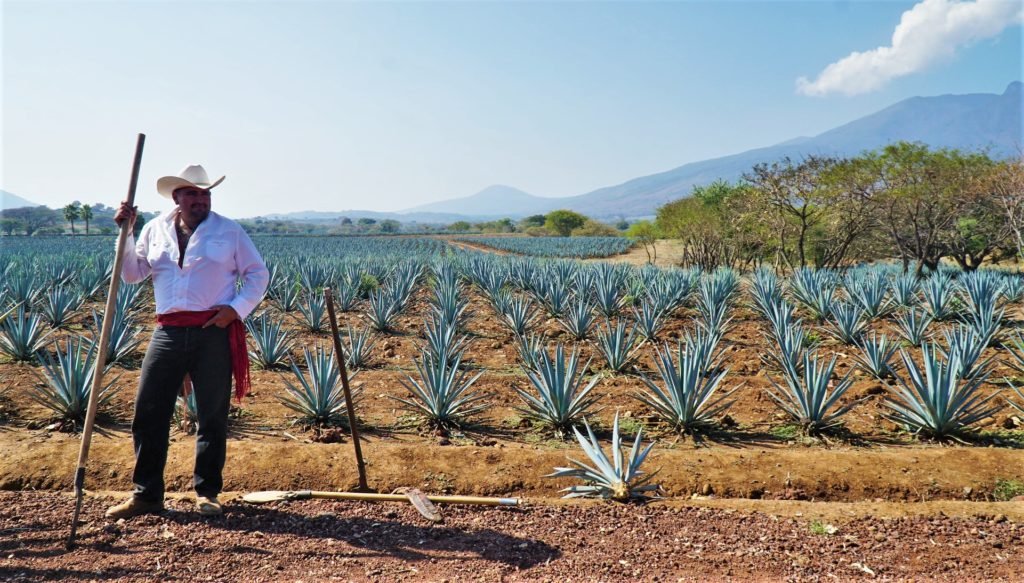
After about an hour on the bus, we finally arrived in Tequila. The first stop was outside of the town, in the fields of blue agave. The morning was hot and sunny. The landscape before our eyes was surreal: endless, neat rows of blue agave plants stretching beyond the horizon. Our group spilled out of the bus, and we were greeted by el jimador, a tall and muscular farmer holding a flat-bladed knife with a long handle (coa de jima). He wore sturdy boots and was dressed in pants, a white shirt with a red satchel, and a cowboy hat. Our jimador had a very charismatic appearance and could easily star in tequila TV commercials. As we formed a semi-circle in front of him, he stood tall with a giant blue agave plant at his feet. Speaking through our tour guide, he gave us a short presentation on agave plants and how they are cultivated and harvested. He explained that once a plant is ripe, jimadors cut all external leaves of the plant, producing what looks like an oversized pineapple (piña). He then skillfully demonstrated how it's done. Piñas are then transported to the distillery, where they are processed into tequila.
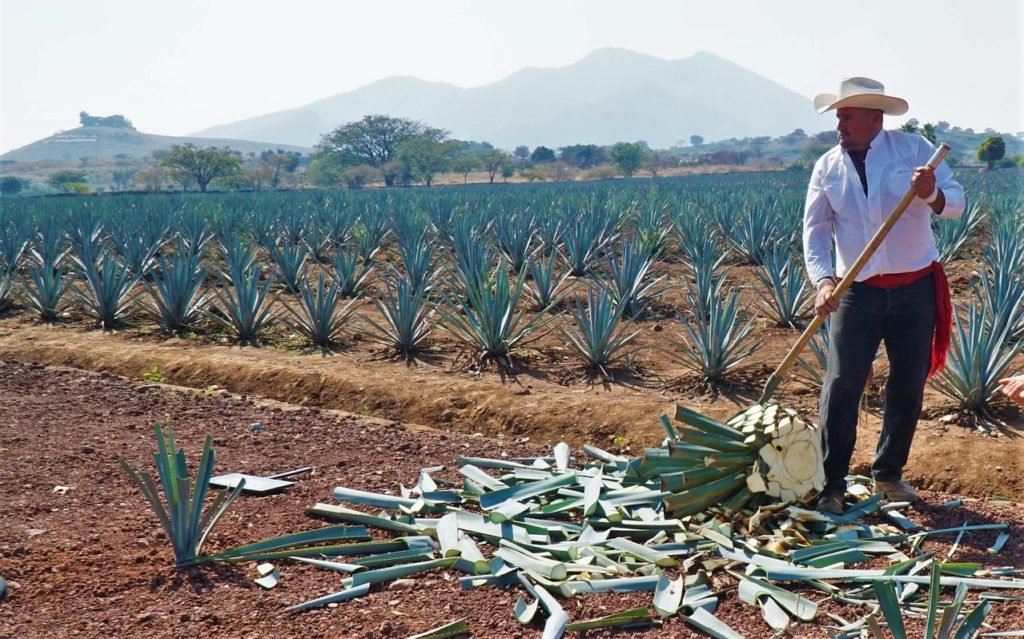
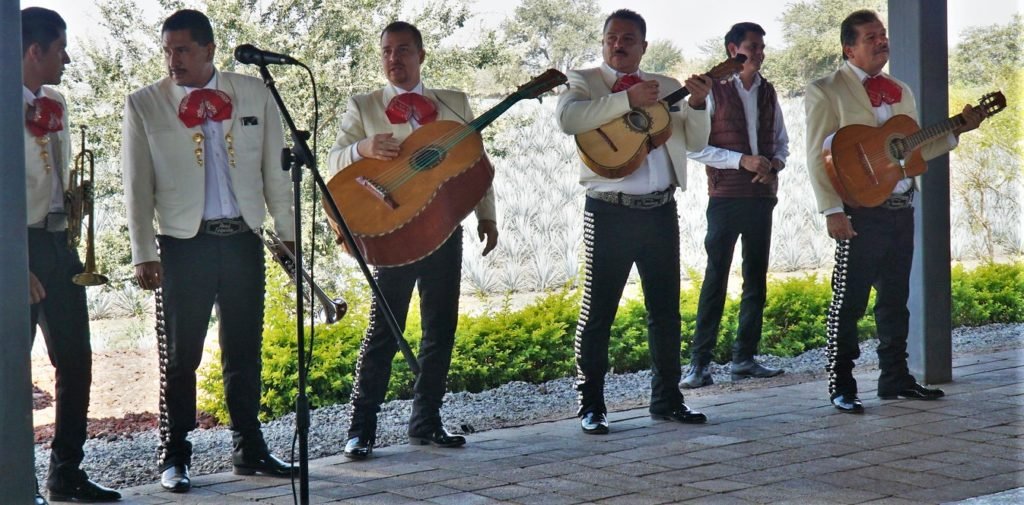
Before we were taken to the distillery, where the rest of the process was explained, we had an additional twenty minutes of free time to walk the fields, enjoy the views, and take pictures. A mariachi band played nearby to entertain visitors and create the perfect atmosphere.
At this point, we noticed that tourists who arrived on Spanish-speaking buses greatly outnumbered foreigners. This was a very comforting observation that locals do travel and can enjoy discovering their own country. Mexican tourists also added to the festive mood, joyously singing all the songs that the mariachi band played.
Next week, read about our exploration of the oldest distillery in Latin America, the town of Tequila, and an unforgettable train ride through blue agave fields.