
During the pandemic, our favorite show on Netflix was Jack Whitehall: Travels with My Father. In this series (filmed in pre-COVID times), the British comedian Jack Whitehall travels the world with his elderly, curmudgeonly father, Michael, who detests travel and the exotic destinations Jack takes him to. The show is funny, but on a deeper level, it’s not just about travel; it’s about the connection between father and son. Despite Michael’s grumpy demeanor, you can easily see how he actually enjoys spending time with his son on the road. Watching the show at the height of the pandemic, when global travel was suspended, and overall morale was quite low, gave us a much-needed dose of humor and comfort.
Although you will not find Travels with My Mother on Netflix, last month, I took a trip through Uzbekistan with my mom. Unlike Michael, my mom is younger, energetic, and is never negative about exploring the world. But like Jack and his father, my mom and I bonded while exploring a new destination.
Tashkent
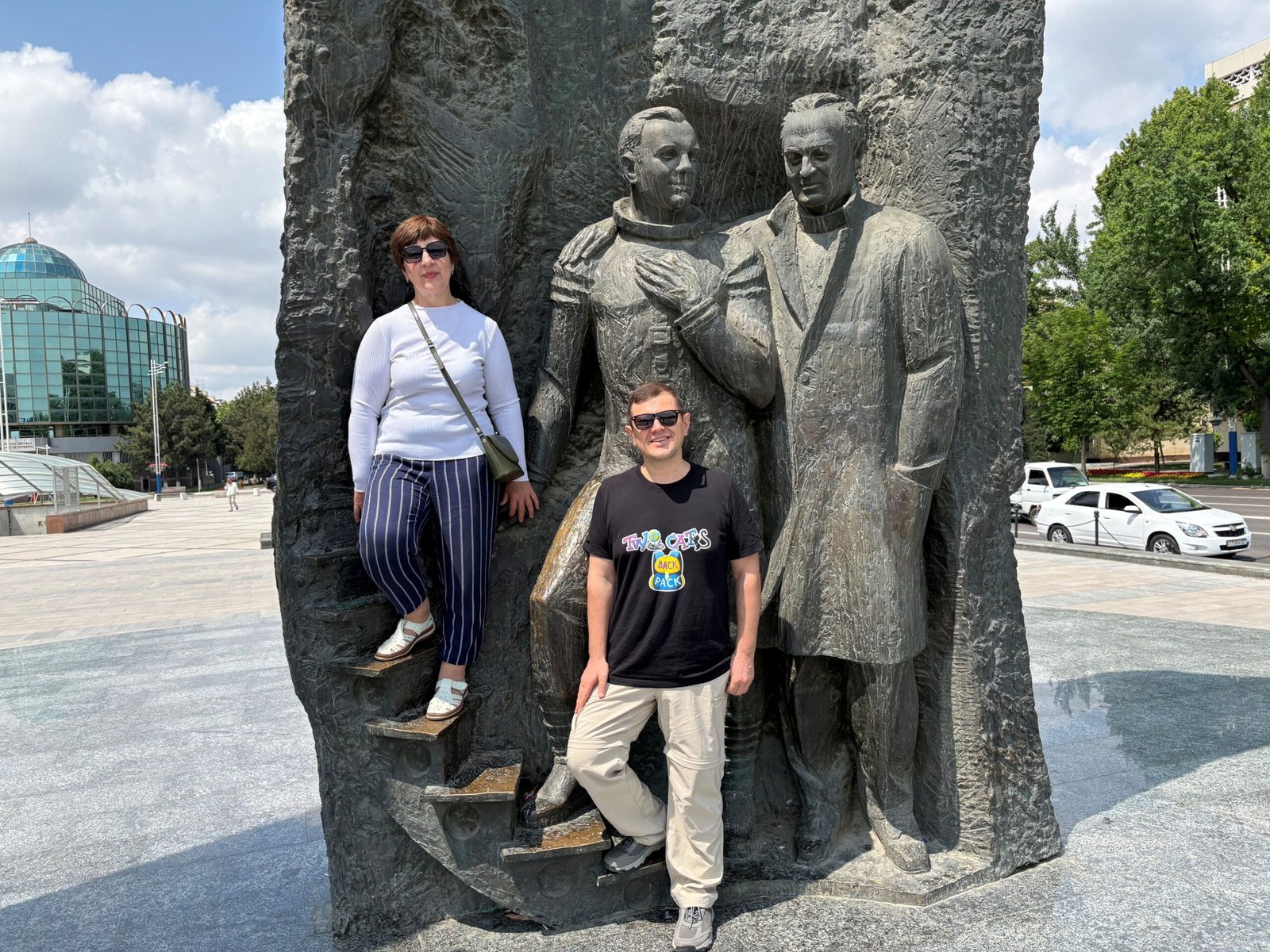
We started in Tashkent. Most visitors either skip this capital city or spend very little time there. We get it. If you’re short on time, you probably want to hit the ancient Silk Road cities right away, but we had nearly a week in Tashkent, and it rewarded us generously.
Tashkent may lack dazzling mosques, minarets, and madrasas of Bukhara, Samarkand, and Khiva, but that’s a great place to get acclimatized before venturing deeper into the country. Going to Uzbekistan for a month, we had questions. Will I be okay as a pescatarian in this carnivorous country? Will we get by solely relying on English and Russian and not speaking Uzbek? Will the heat get us? Tashkent was a little preview of what to come, and it gave us encouraging answers, hinting that we would be fine in the end.
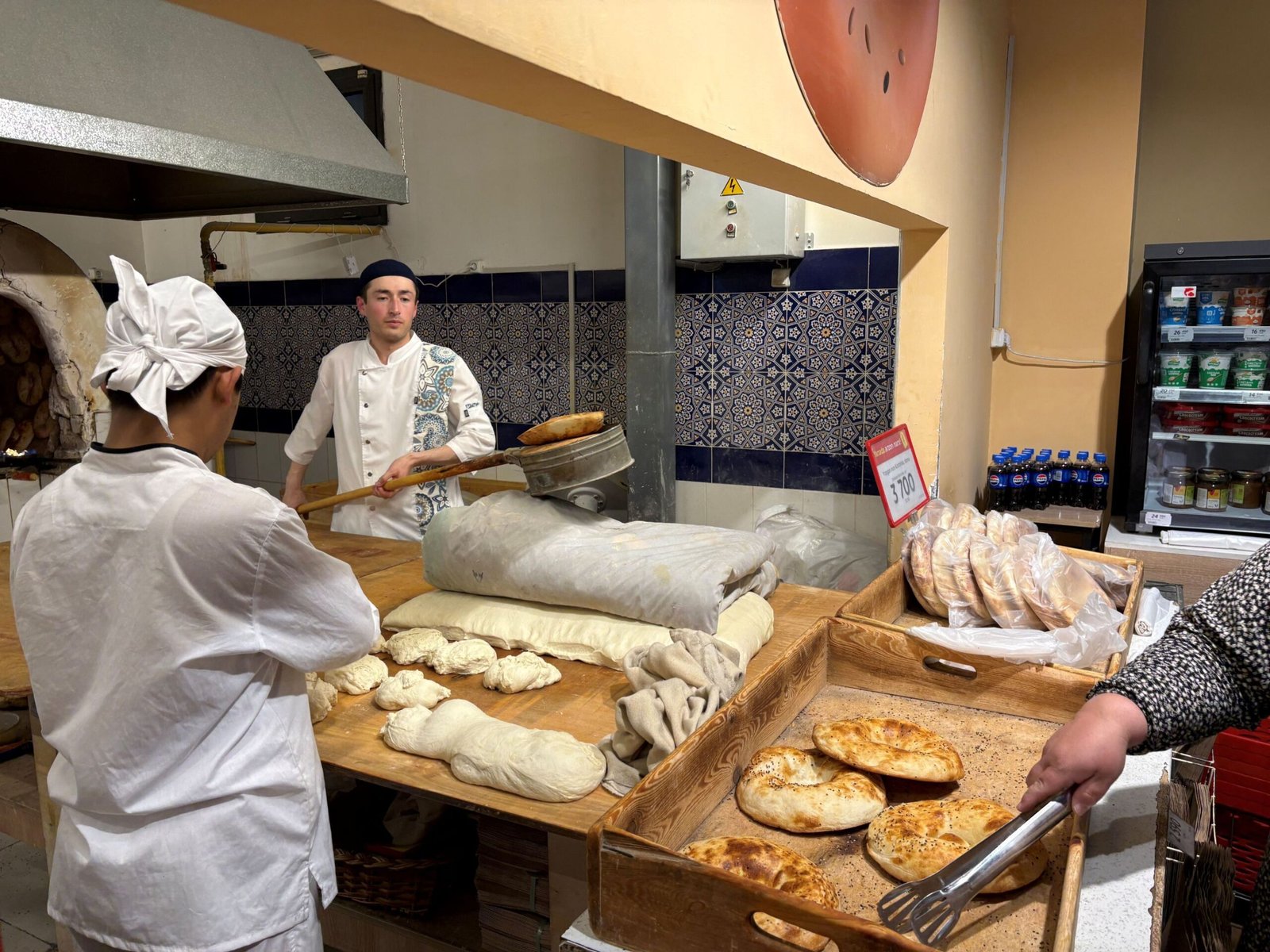
Tashkent was the first taste of Uzbekistan, both literally and figuratively. On our first day, we saw how Uzbek bread, non, was made. In the city center, a tandoor oven was right in the middle of a supermarket. It was operated by two people who worked in sync by stretching and shaping the dough, sticking it to the tandoor walls and then retrieving this hot, fresh Uzbek bread with beautifully imprinted patterns. Hot non was always delicious, and we couldn’t stop eating it for the entire duration of our stay.
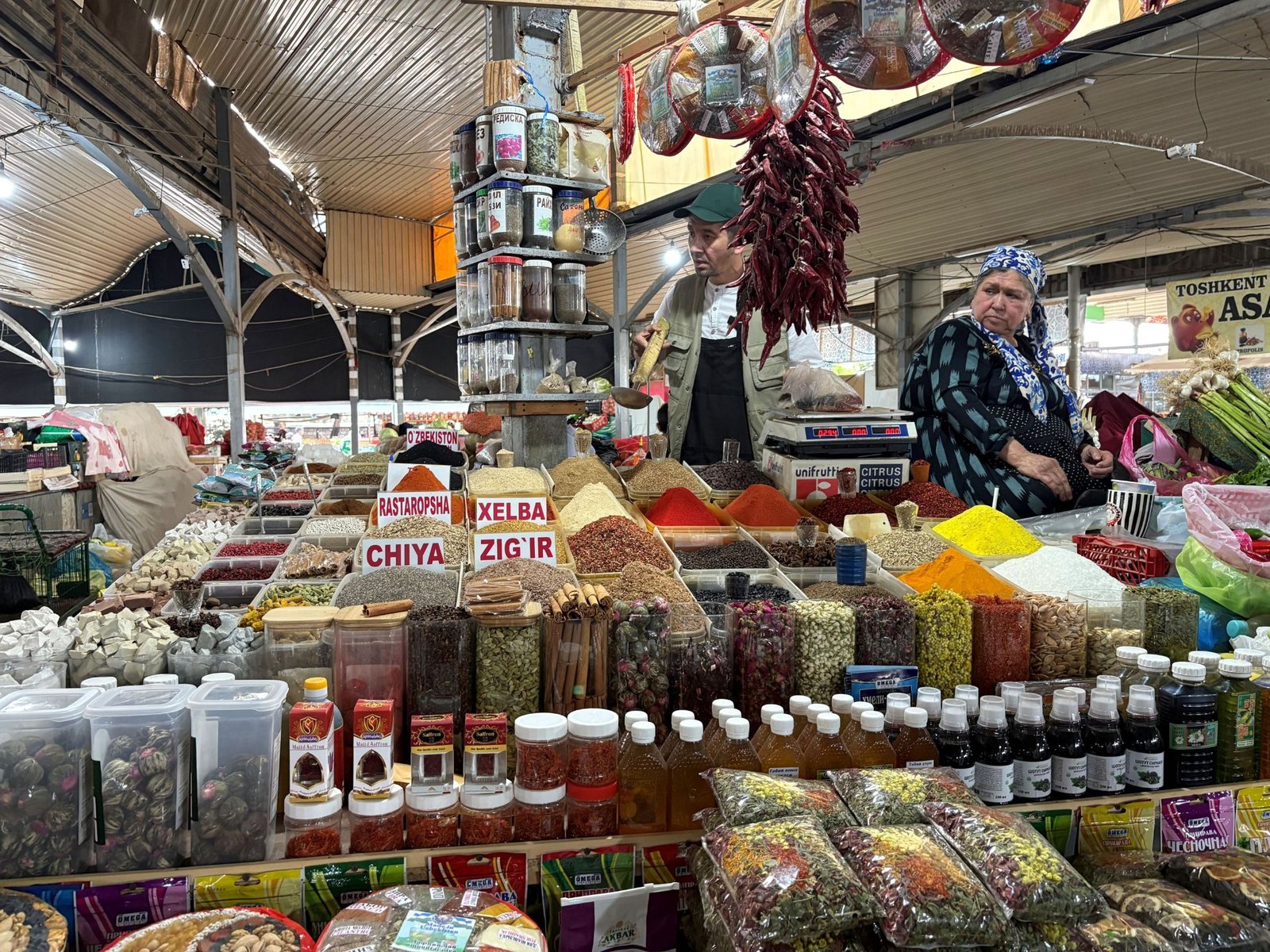
Chorsu Bazar offered even more tempting Uzbek foods to sample: Korean-style carrots, kurut (dried dairy chunks), spices, dried fruits, and nuts. Uzbek markets were chaotic and colorful with pungent smells and so many tasty offerings. In nearly every city, we tried to make it to a market, but Chorsu was the largest and with the most impressive selection.
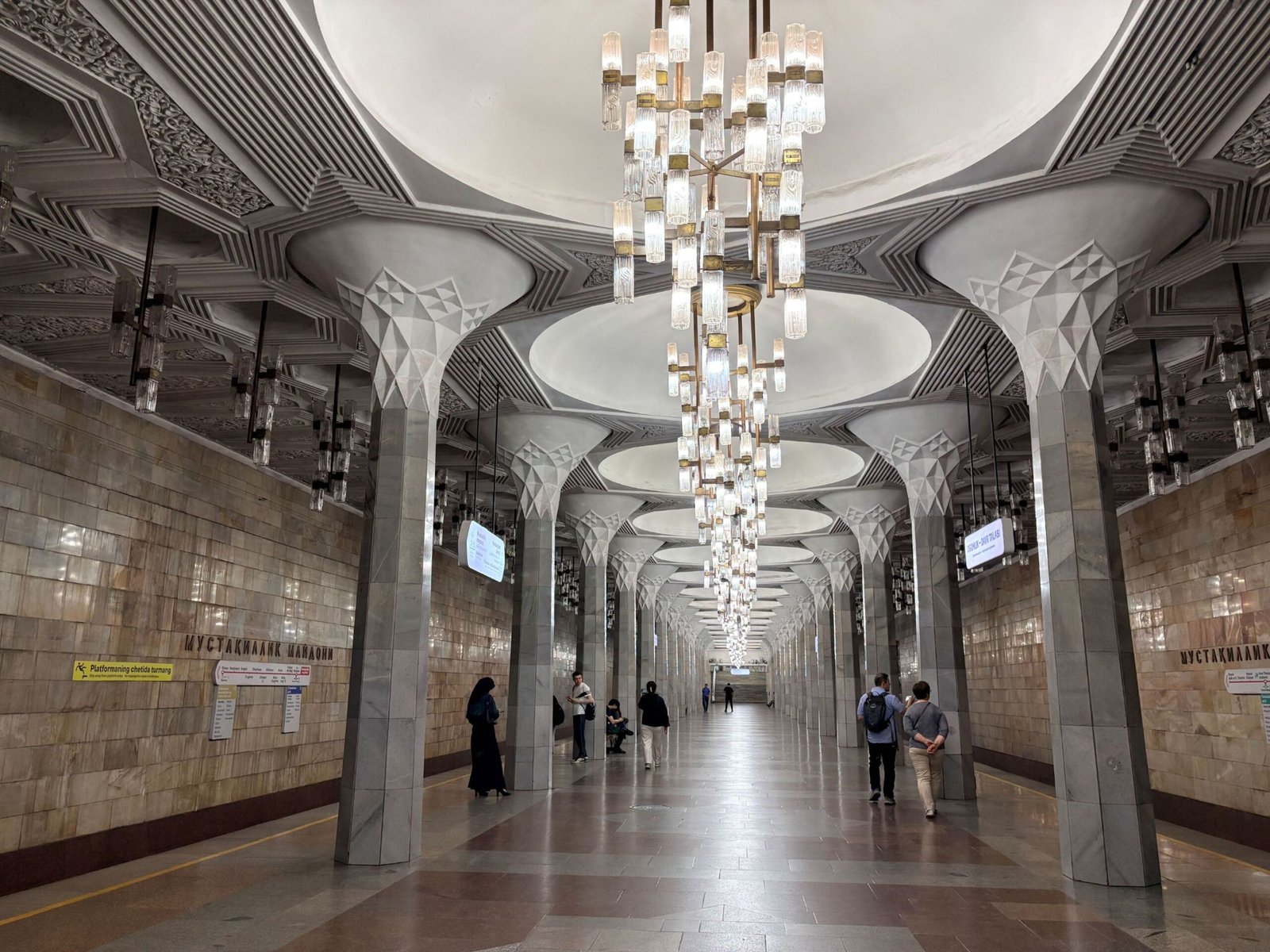
Tashkent came across as a modern metropolis. This is where we browsed contemporary Uzbek art in museums, attended theatre performances, and drank coffee at airy and spacious coffee shops. Yet, despite its share of new development projects and slick malls, Tashkent still retains a little bit of its Soviet identity. The Soviet era is primarily seen in the old residential blocks throughout the city. Following the devastating 1966 earthquake, the Soviets rebuilt the city, replacing the old Tashkent with broad streets, boulevards and parks. While strolling the city, we enjoyed the greenery and the generous space that Soviet city planners allocated to the reborn Uzbek capital. But it’s probably the subway system where the Soviet legacy is preserved the best. The subway stations, with their elaborately decorated exteriors, were built to showcase Uzbekistan’s achievements: cotton industry, space exploration, and literary output. These days, the stations look a little bit worn out but nevertheless charming, providing a look into the Soviet period of the country’s history.
Bukhara
From Tashkent, we took an overnight train to Bukhara. The city welcomed us with the desert heat and a temperature of nearly 100 degrees.
Bukhara’s old city, now a UNESCO World Heritage site, is a time capsule transporting visitors to the period when Bukhara was a bustling stop on the Silk Road and one of the most important centers of civilization in Central Asia. We spent four days there, exploring the city’s striking mosques, madrasas, and mausoleums.
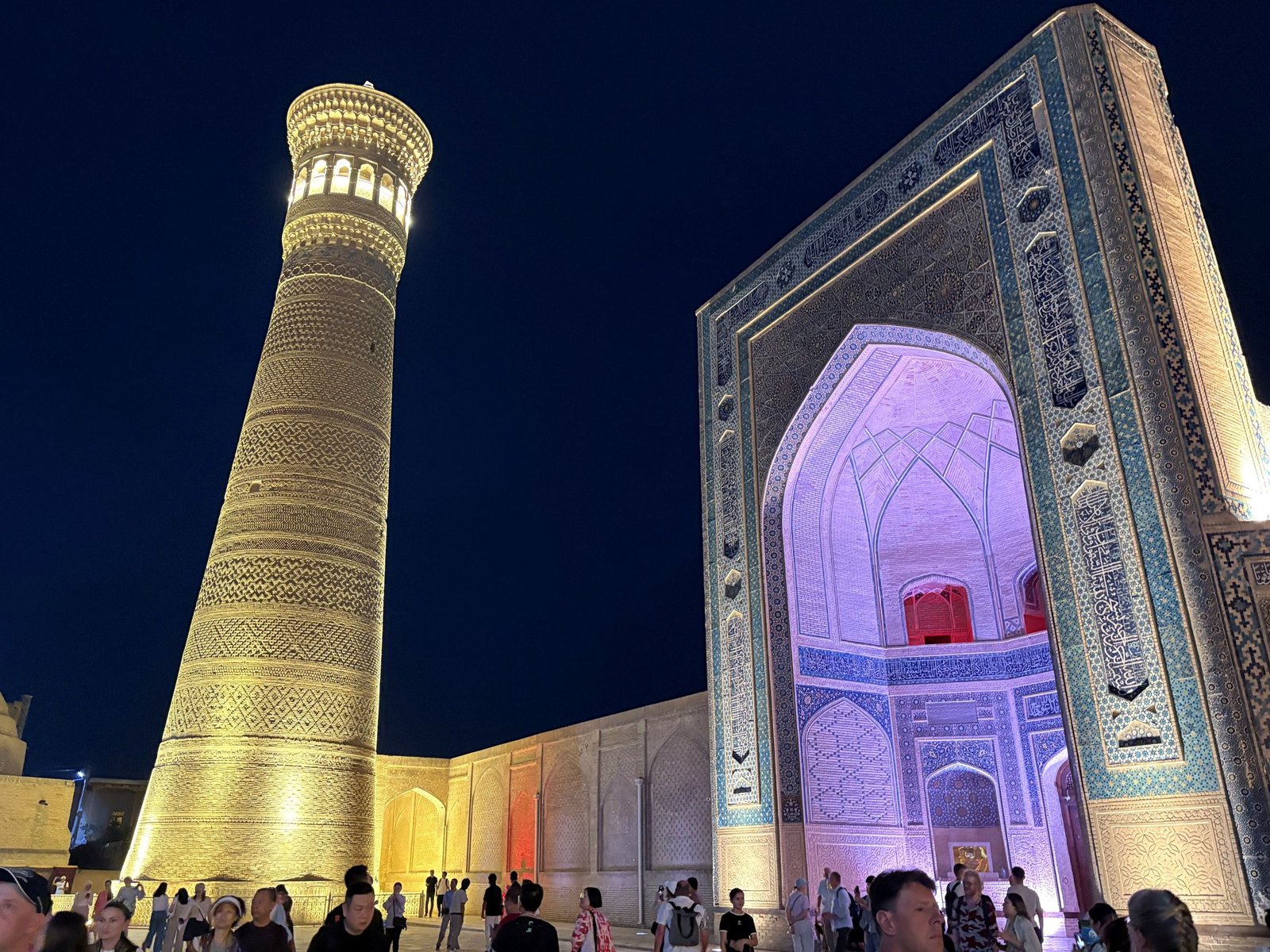
Bukhara’s most recognized landmark is Kalyan Minaret that dominates the skyline of the old city. This tall, imposing minaret withstood many invasions and sieges that Bukhara has witnessed in its long history. Other significant buildings include the city’s fortress, the old prison, and the Chor Minor monument, a mosque with four distinct minarets.
And of course, madrasas, madrasas, madrasas.
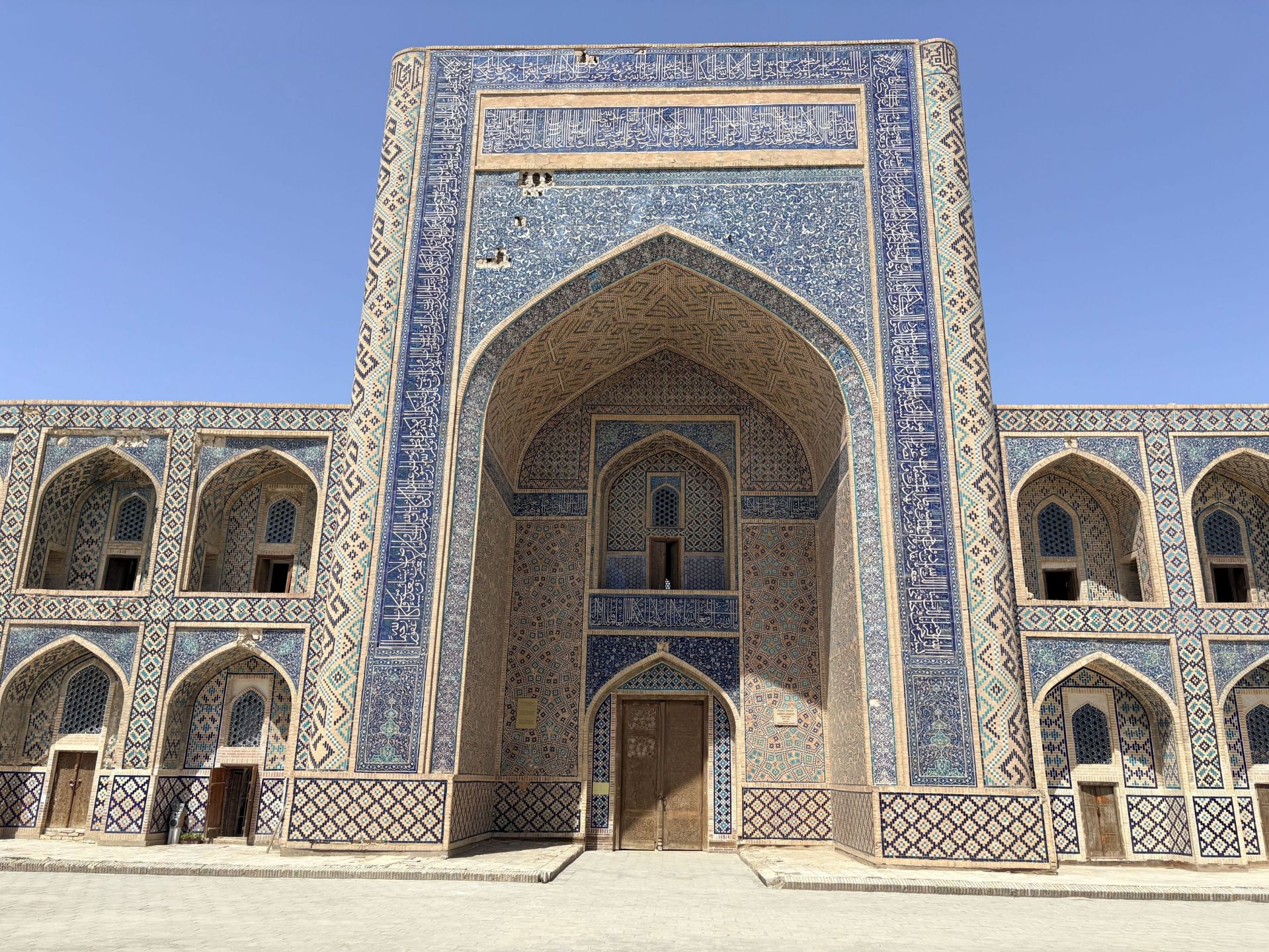
These educational Islamic institutions may not house students anymore, but they highlight the richness of Uzbekistan’s architectural traditions. Our personal favorites were Modari-khan Madrasah and Abdullah-khan Madrasah, facing each other and located a little bit outside of the tourist route. These paired “son-mother” madrasas built in the 16th century were named after the local ruler and his mother. Sitting in the shade of a mulberry tree with my mom, I took in the beauty of blue majolica tiles adorning the buildings’ walls and facades.
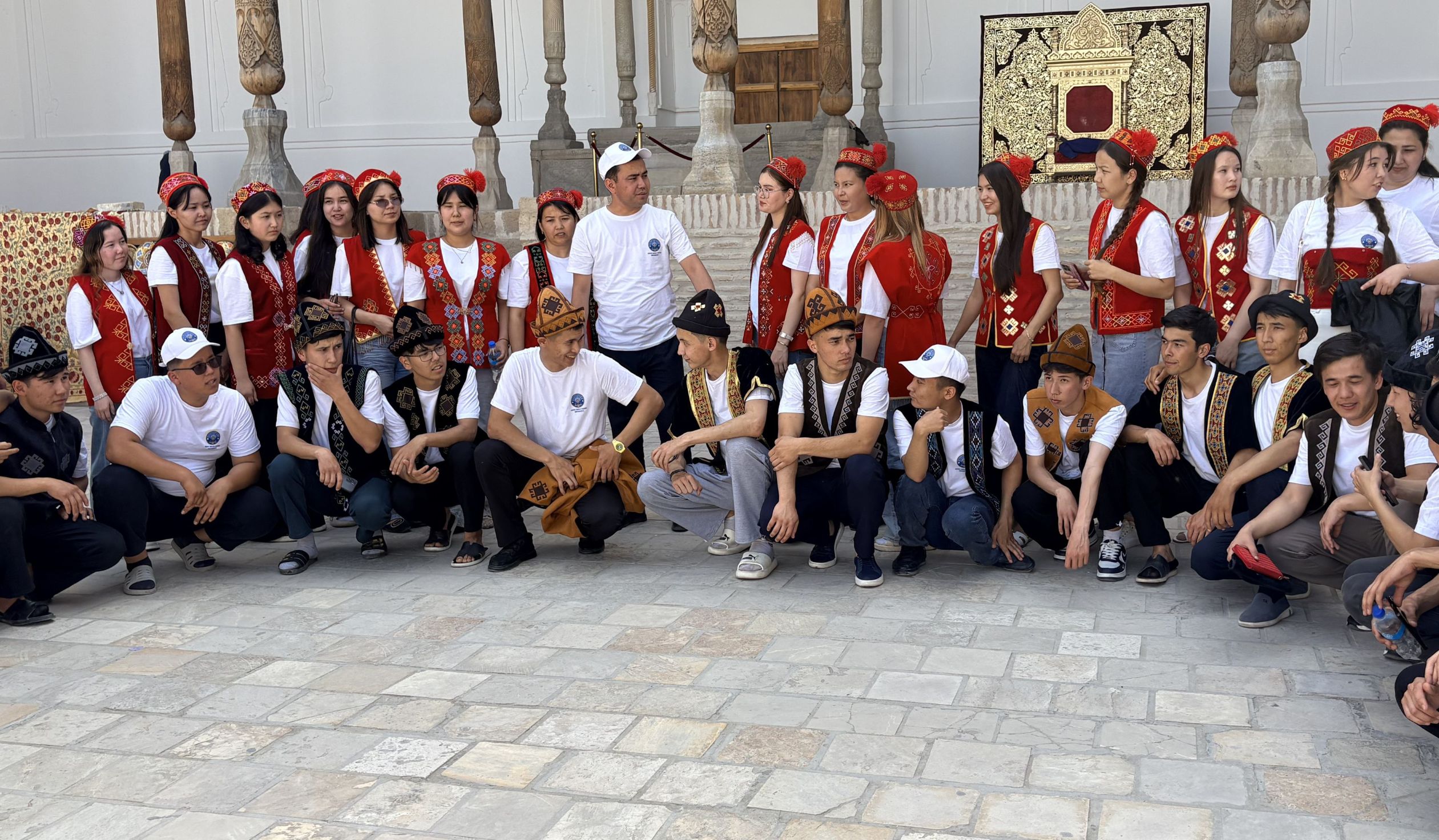
In Bukhara, we also realized that Uzbekistan is a very diverse country. It is not just Uzbek people who live there. It is also Tajiks, Kazakhs, Karakalpaks and many other ethnicities. Our YandexGo drivers, for example, often had Tajik names. Also, at the city’s fortress, we ran into a group of students from Karakalpakstan, Uzbekistan’s autonomous republic. They wore traditional Karakalpak clothes: girls had bright red dresses and hats with lovely geometric patterns; the guys’ clothes, with tall black hats, looked like traditional Kazakh or Kyrgyz outfits.
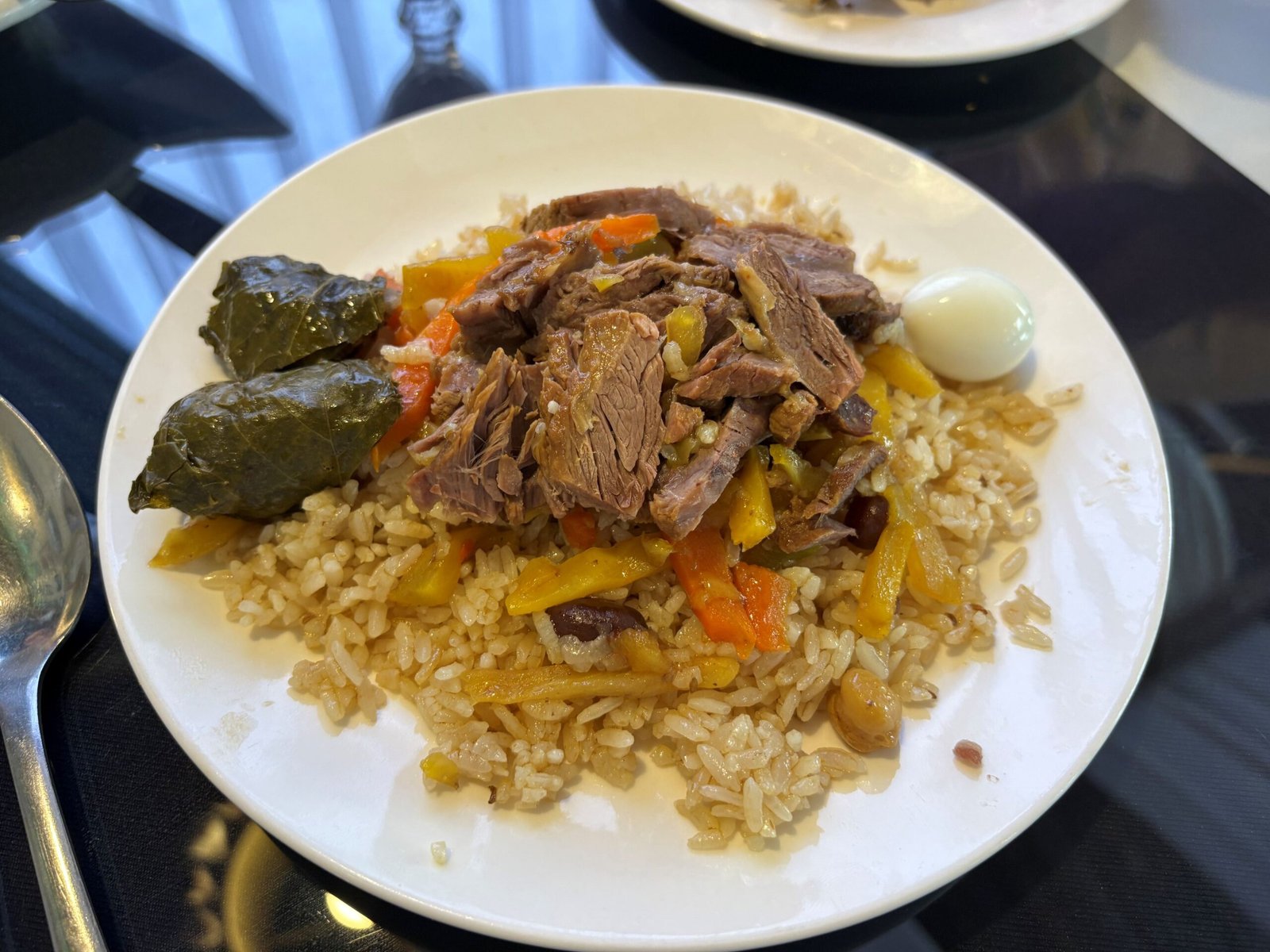
Uzbekistan’s diversity manifested not only in ethnic variety but also in its iconic dish – plov. Each region had its own version, and people in each place passionately proclaimed that their version was superior. Our taxi driver in Bukhara, while trying to find his way, cursed not the narrow and crooked streets of old Bukhara but plov from Samarkand.
“They don’t know how to cook it,” he hissed and then insisted that we try Bukharan plov before leaving the city.
We took his advice.
Samarkand
The grand finale of travels with mom was Samarkand. I will state the obvious, but it is the most thrilling city in Uzbekistan to visit. A must-see.
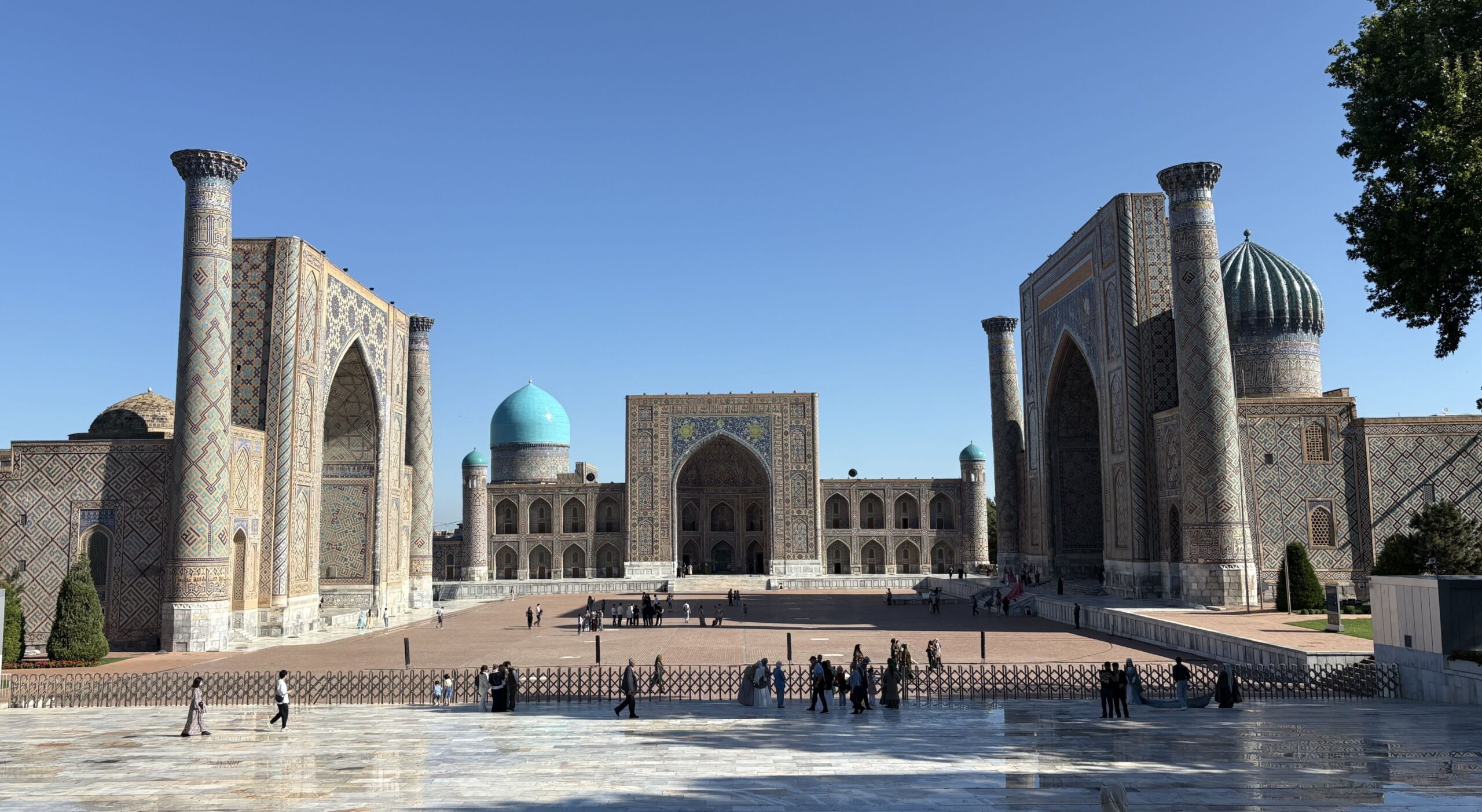
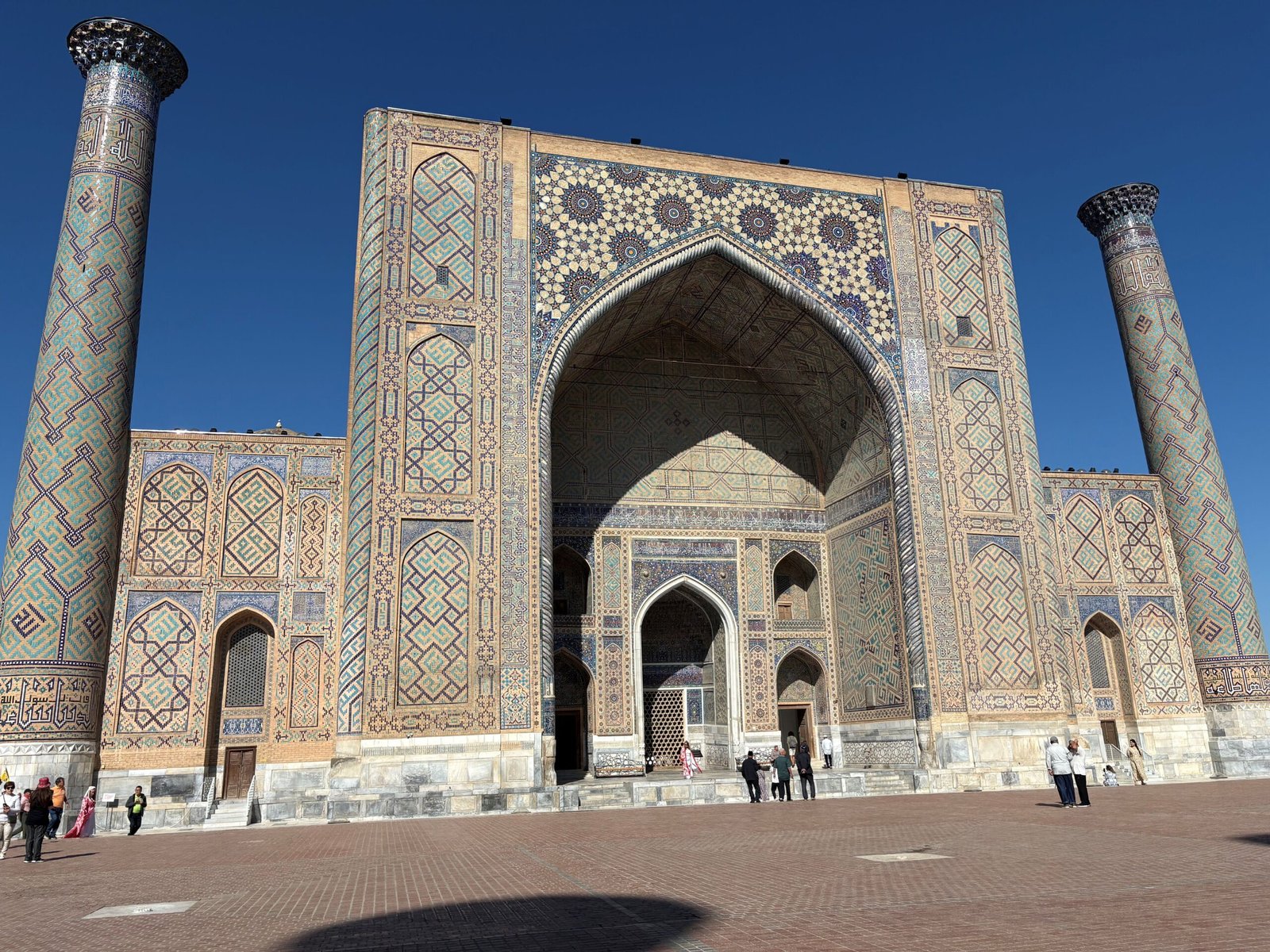
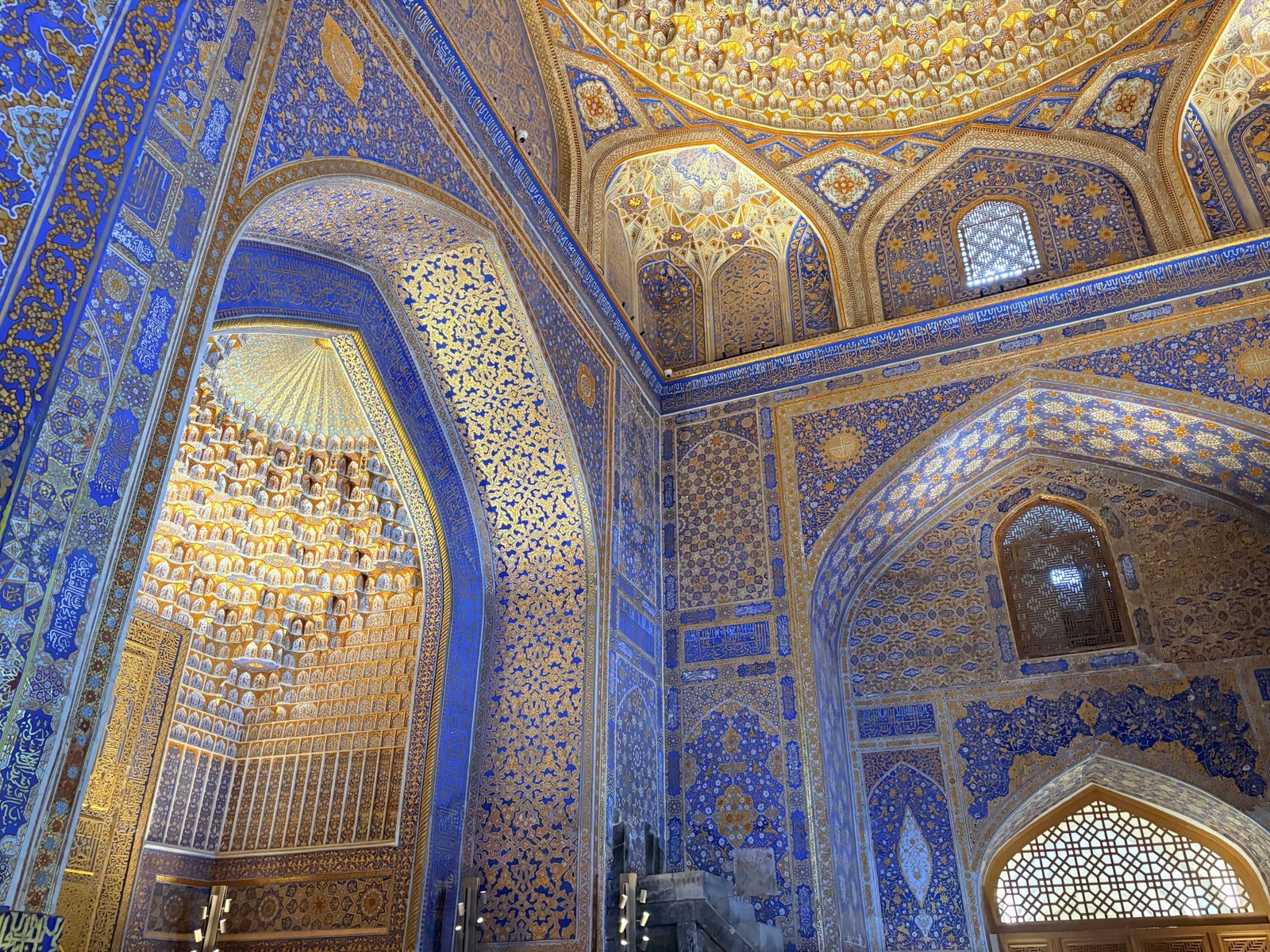
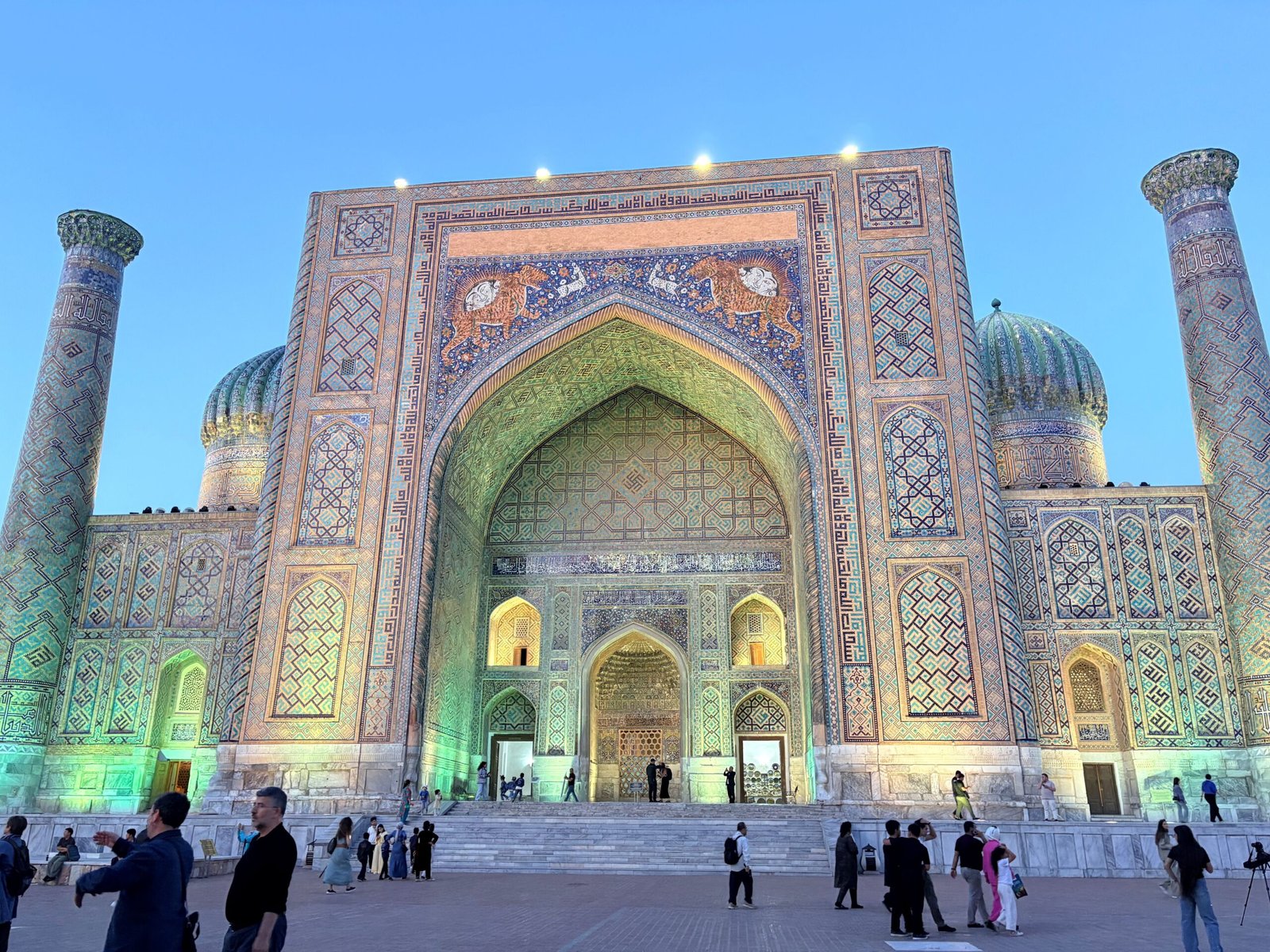
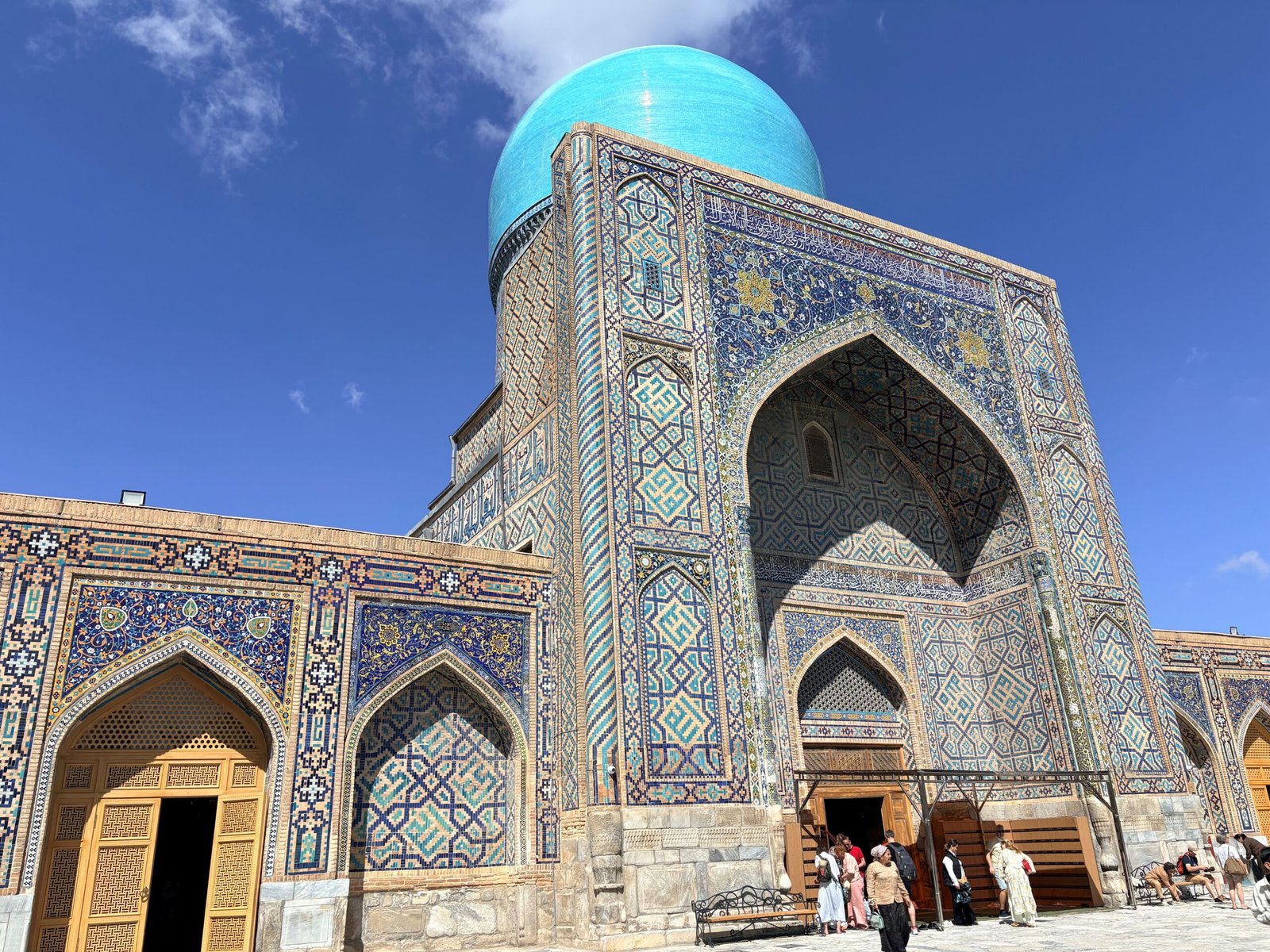
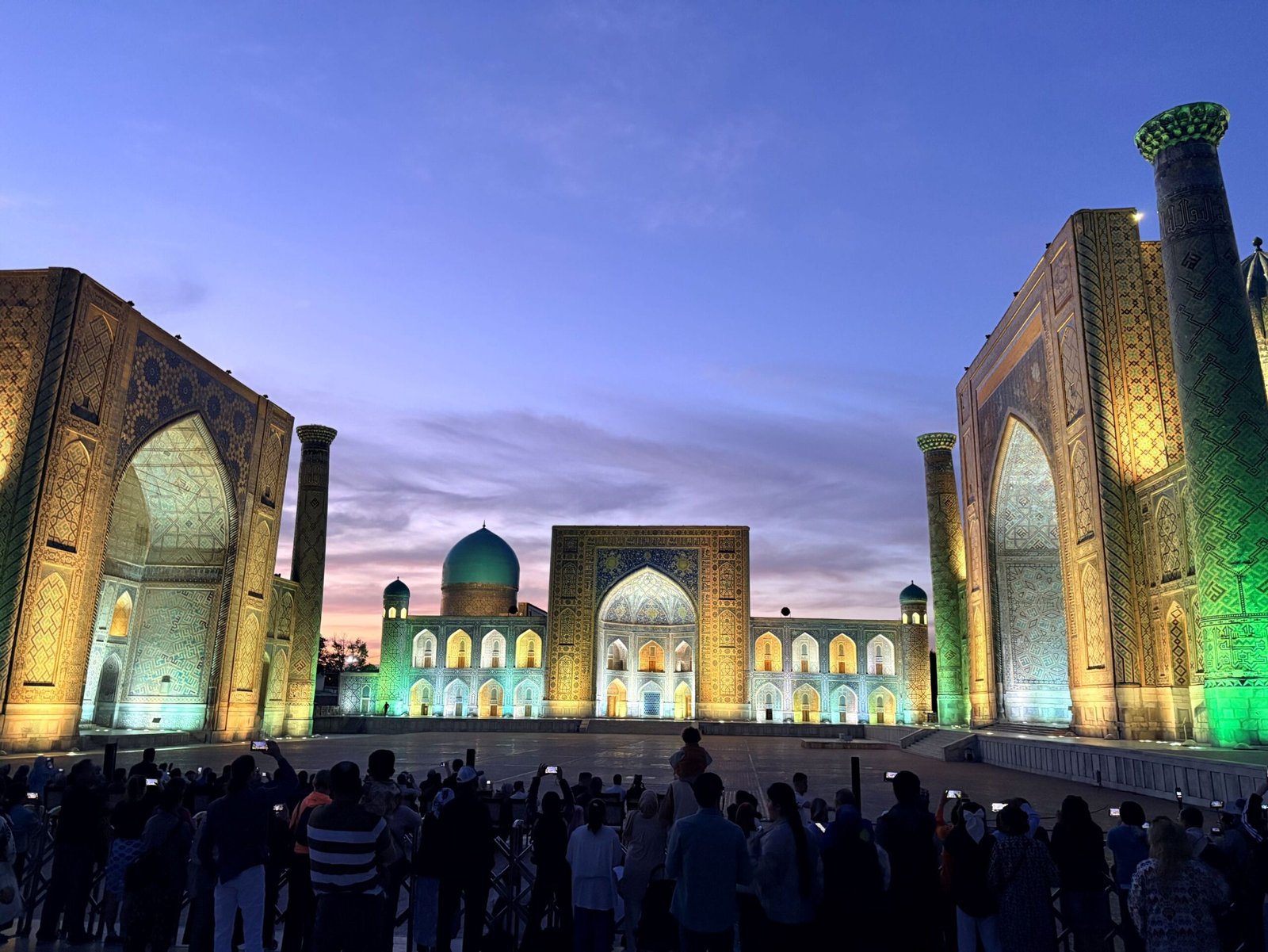
Standing in the middle of Registan Square, surrounded by the beauty of three madrasas with green, blue, and turquoise majolica tiles woven into intricate patterns, is a truly mesmerizing experience for any traveler. We visited the square in the morning and witnessed how the morning light reflected off the walls of madrasas and mosque domes, and in the late afternoon, watched golden hues of the setting sun bouncing off the buildings. In the evening, the square is magnificently illuminated, making you believe that you have gone back in time and that caravans from the Silk Road route rest in nearby caravansarais.
At its height, Samarkand was the capital of the Timurid Empire and one of the most important cities in Asia. This is the place from which Amir Timur (Tamerlane) conducted his military campaigns and conquests. His grandson, Ulugh Beg, was less bloodthirsty and spent more time building Samarkand’s beautiful madrasas, championing astronomy as a field of science, and turning the city into Asia’s leading educational center.
The historic heart of Samarkand is a preserved monument to the grandeur of the Timurid Empire. Everything is big here, and the city is unapologetic for the size of its attractions, be it Registan Square, Amir Timur’s mausoleum (Gur-e-Amir), or the nearby Bibi-Khanum Mosque.
Oh… and Samarkand’s plov was not as bad as our Bukhara taxi driver wanted us to believe.
We finished traveling with my mom, where we started—in Tashkent. On the last day, she packed her carry-on bag with delicious foods from Chorsu Bazar, and we even ordered a to-go container of tasty Uzbek plov for dad at our farewell dinner. Mom’s carry-on bag weighed more than twice the allowed limit, and she was allowed to board the plane only after a compassionate airline representative took pity on her and didn’t charge her for extra weight.
Traveling with mom in Uzbekistan was easy and so much fun. After she left, Julia and I stayed in the country for another two weeks, venturing into more remote and off-the-beaten-track places. Tune in the next few weeks when we describe our adventures and misadventures outside the Silk Road route.