

We were in Margilan, a medium-sized town in the Fergana Valley, on a quick day trip when we stopped at the street market for lunch. We found a tiny café serving hot tea and potato samsas, sat down, and ordered a pot of tea with three samsas to share.
As we ate, the owner struck up a conversation. Where were we from? How long had we been in Uzbekistan? What did we think of his country? We have had some version of this exchange hundreds of times around the world, but we never expected what happened next.
"Check, please," Victor said after we finished.
The owner waved his hand dismissively.
"You are guests. It's on the house."
We just sat there, dumbfounded.
To be clear, we were not guests in his home. We were customers in a busy café, surrounded by other diners.
Once we recovered from the surprise, I insisted on paying. The owner laughed, thought for a moment, and finally named a price. Victor handed over the cash while I converted the amount from Uzbek soms into U.S. dollars.
Eighty cents.
Was that the regular price, or did he give us a "guest" discount? I still have no idea.
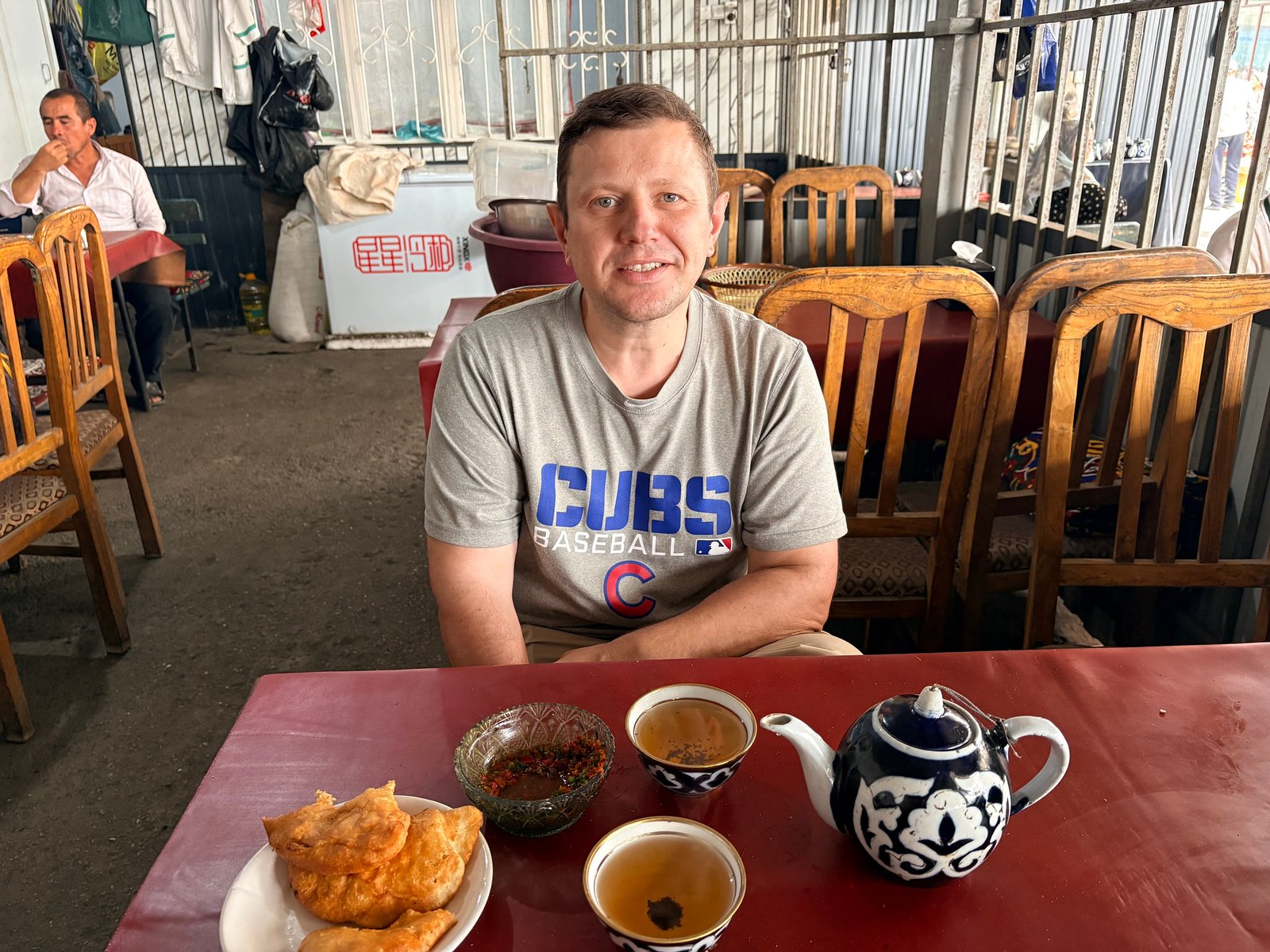
We have traveled extensively, but nowhere have we felt as warmly welcomed as we did in Uzbekistan. Everywhere we went, people were genuinely happy to see foreign visitors. Market vendors, taxi drivers, fellow train passengers, guesthouse owners, and even strangers on the street all wanted to chat. That suited us perfectly. One of our favorite parts of traveling is talking to locals.
Unfortunately, that is often easier said than done.
Sometimes the locals are simply inaccessible. We ran into this in Iceland and Oman. Both countries have relatively small native populations and rely heavily on migrant workers in the service industry. During our entire trip to Oman, we spent most of our conversations with Pakistanis working in hotels and restaurants. I can only remember one or two conversations with Omanis, mostly museum guides.
I am still not convinced we ever met a native Icelander. Every tall blond person we spoke to turned out to be Polish. Even the airport security guards were speaking Polish to each other.
More often, the obstacle is language. People genuinely want to talk, but neither side knows enough of a common language to get beyond a few sentences. That is what we usually encounter across much of Asia.
The opposite problem is just as common. In many parts of Europe, people speak excellent English, but their cities are so saturated with tourists that they have little interest in conversations beyond basic politeness.
Uzbekistan was different. People wanted to talk. Almost everyone spoke Russian fluently, and everyone we met, whether Uzbek, Tajik, Kazakh, or Karakalpak, was a local with deep roots in the country.
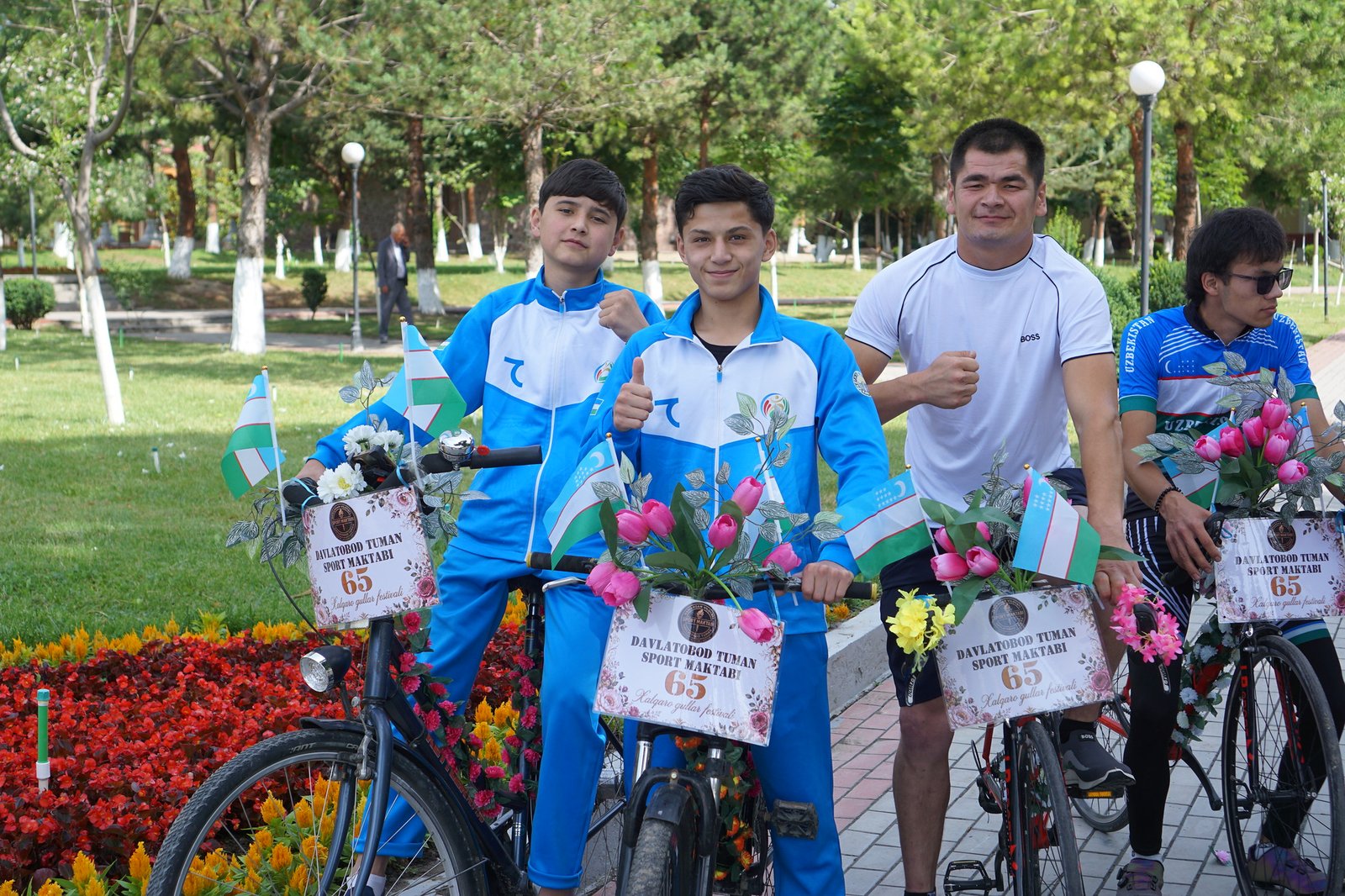
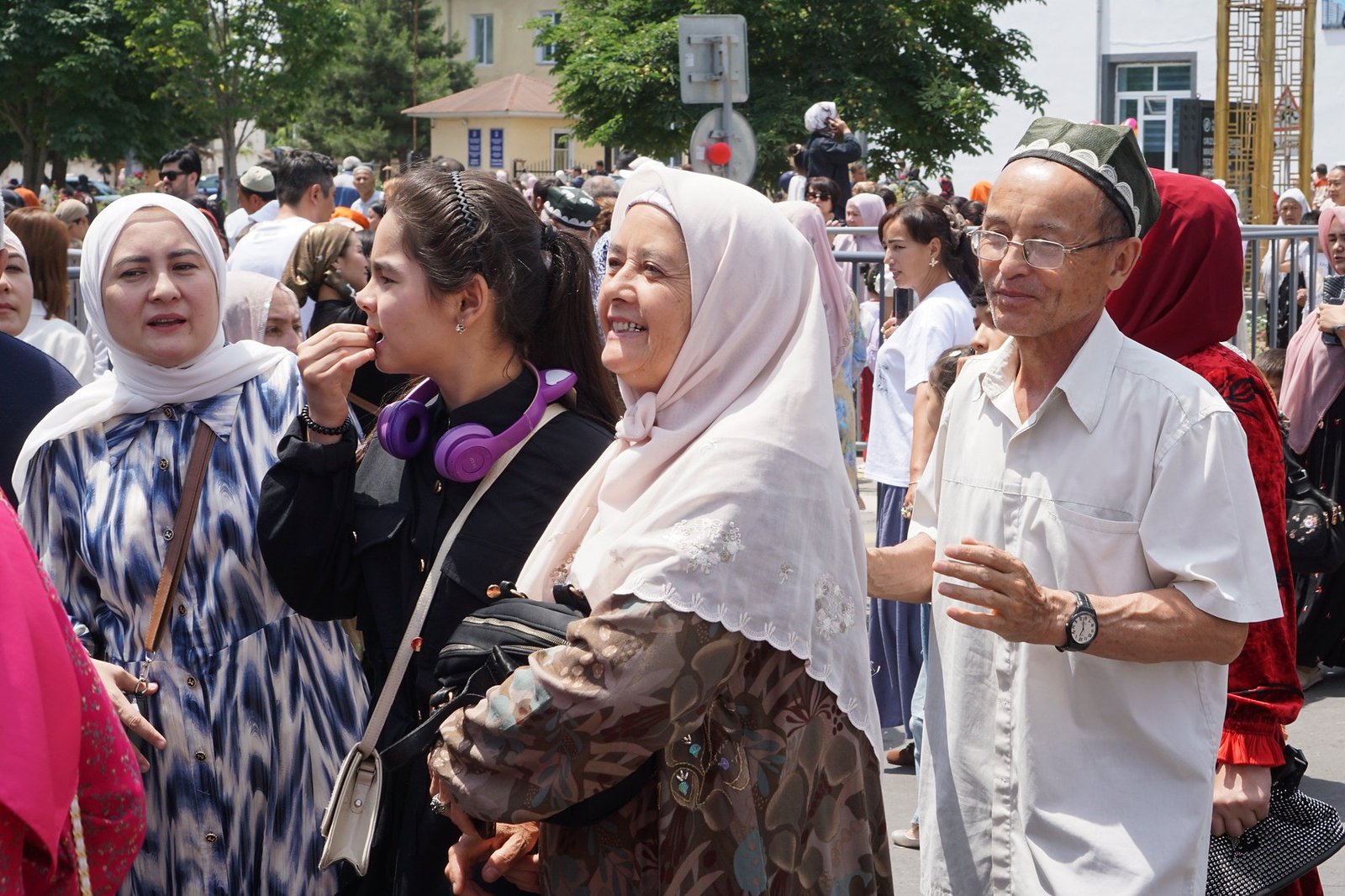
Before the trip, we had our usual discussion about avoiding tourist scams. We decided to use the Yandex Go app to prevent taxi drivers from overcharging us, and we agreed to tell people we were from Belarus instead of the United States, hoping to avoid the "rich American tourist" treatment.
The first strategy worked. Yandex Go kept our transportation costs low.
The second turned out to be completely unnecessary. Nobody tried to overcharge us. Foreign tourism in Uzbekistan is still limited, and we never encountered the kind of vendors who see tourists as easy money.
As a result, most of our conversations happened as "Belarusian tourists" rather than American ones. That unexpectedly gave us a fascinating glimpse into how Uzbeks see Belarus, Russia, and the former Soviet republics.
The first thing we learned was that many people had no idea where Minsk was. Quite a few assumed it was somewhere in Russia.
"Minsk?" our first taxi driver asked. "Is that in Minsk Region? Yes! I have been to Siberia too!"
Our second driver was just as confident.
"Minsk? I served in the army not far from there. In Saratov!"
For anyone struggling with Russian geography, Saratov is about 1,500 kilometers from Minsk.
Those who did know where Belarus was almost always asked the same question.
"Does Belarus have its own language?"
It is a question that reflects the legacy of the Soviet Union. Like Uzbekistan, Belarus spent decades under policies that promoted Russian while suppressing local languages and traditions.
One conversation remains my favorite.
"Does Belarus have its own language?" the driver asked.
"Yes," Victor replied. "Belarusian."
"How different is it from Russian?"
"They're related, but Russian tourists usually can't understand everything."
"But I understand every word you're saying!" the driver interrupted excitedly.
Victor looked at him, incredulously.
"But... I'm speaking Russian."
The driver burst out laughing.
"Oh! Can you speak Belarusian?"
Victor paused for a moment, then launched into a twenty-second monologue about how much he liked Tashkent and Uzbekistan.
"What the hell!" the driver shouted. "I can't understand a single word!"
He laughed boisterously for the rest of the ride.
Another driver also asked Victor to speak Belarusian, but he was much more confident in his abilities.
"I understood that," he declared. "You said, 'no problem,' right?"
He was only guessing. The Belarusian word Victor had used happened to sound similar to the Russian word for "problem," but it meant something entirely different.
The driver kept asking Victor to say more sentences, trying to guess their meanings with varying levels of success.
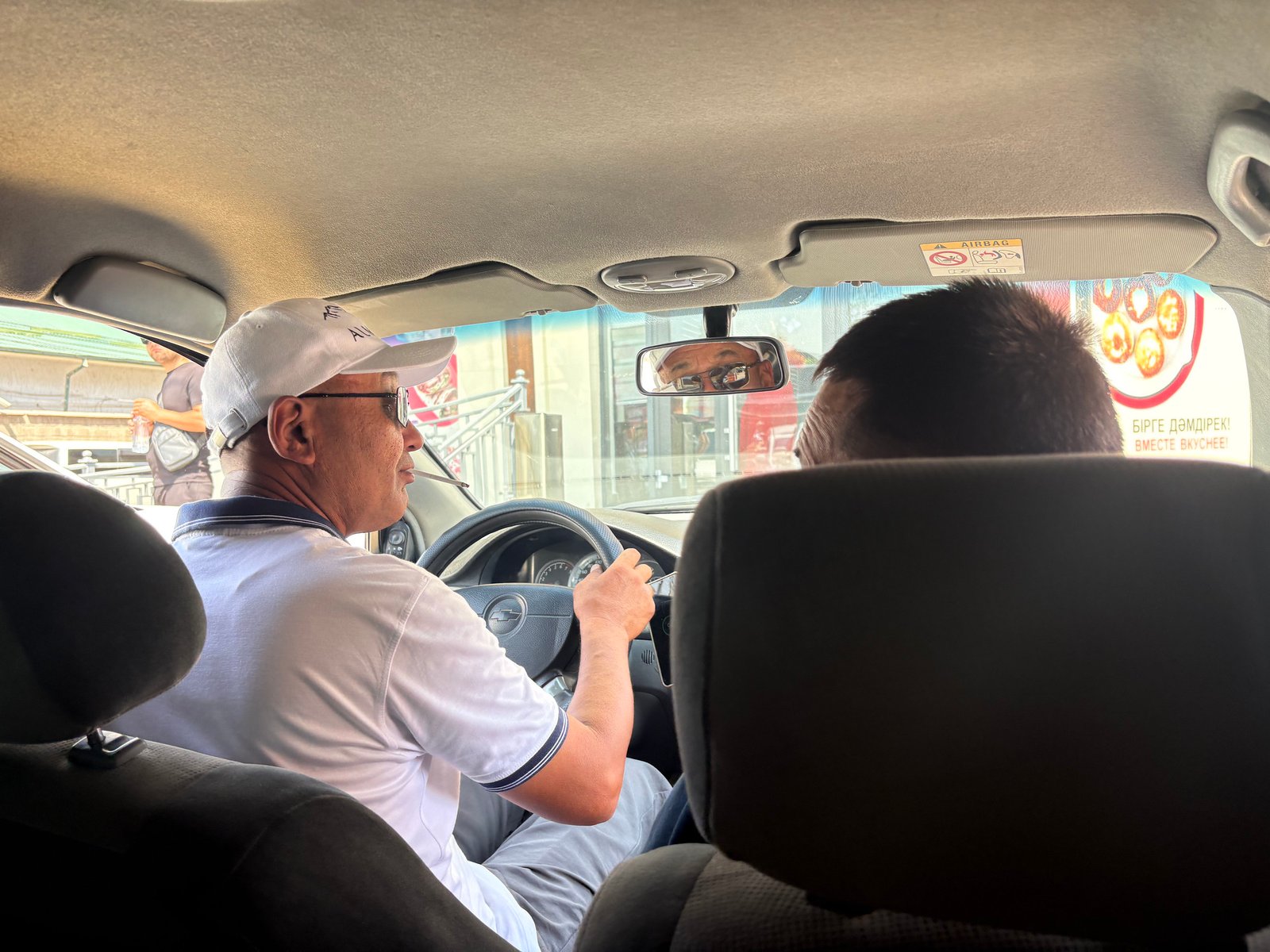
Another memorable conversation happened in Nukus.
We tried using Yandex Go, which gave us a fare but couldn't find a driver. So I flagged down a passing taxi instead.
The driver immediately quoted us double the app's price. As I argued with him, it suddenly dawned on me that I was bargaining over $1.50. By then, I had already negotiated him down by 50 cents. I gave up, and we climbed into the taxi.
The driver asked the usual questions. Where were we from? Did Belarus have its own language? How did we like Uzbekistan?
Then he paused for a moment before saying cautiously, "I like Belarusians. They're nice, quiet, and respectful. The Russians, on the other hand... well, they're Nazis."
The comment came completely out of left field. Victor, sitting in the front seat, had no idea how to respond.
"I support Ukraine," the driver continued. "The Russians have lost their goddamn minds."
"Why didn't you say that instead of bargaining with me?" I laughed. "Why were we arguing over 50 cents? You could have driven us anywhere for any price."
The driver laughed too.
"But I didn't know where you were from!"
He went on to describe Russian tourists as disrespectful of local customs and unwilling to accept that they were guests in someone else's country.
The overwhelming majority of our conversations left us with the impression that most Uzbeks support Ukraine and have not embraced Russian propaganda. In fact, we met only one person who expressed a different view.
A man at a street market asked where we were from.
"Minsk? We love Putin too!"
We just stood there, confused.
To this day, I have no idea whether he thought Minsk was part of Russia, assumed all Belarusians supported Putin, or meant something else entirely.
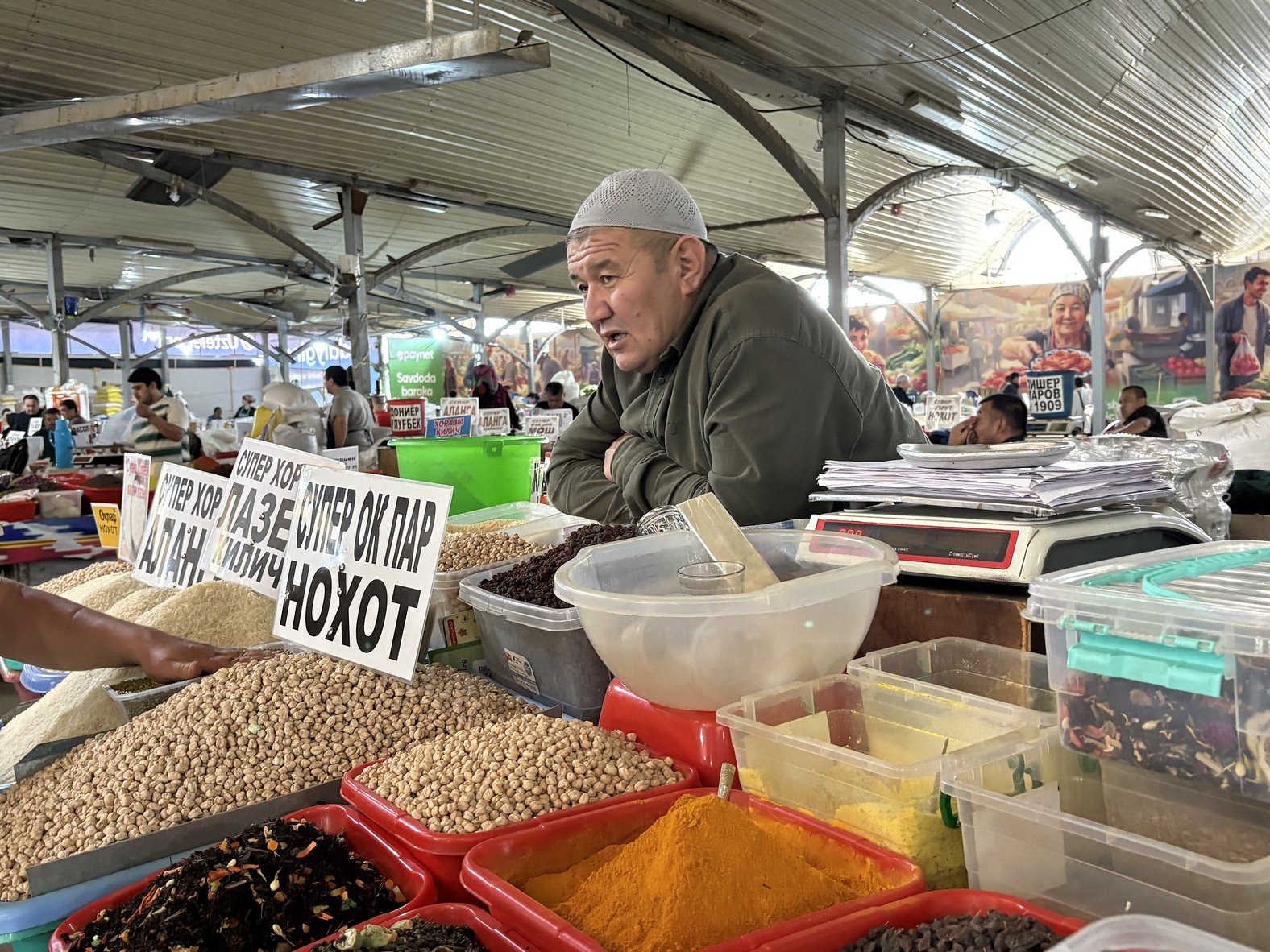
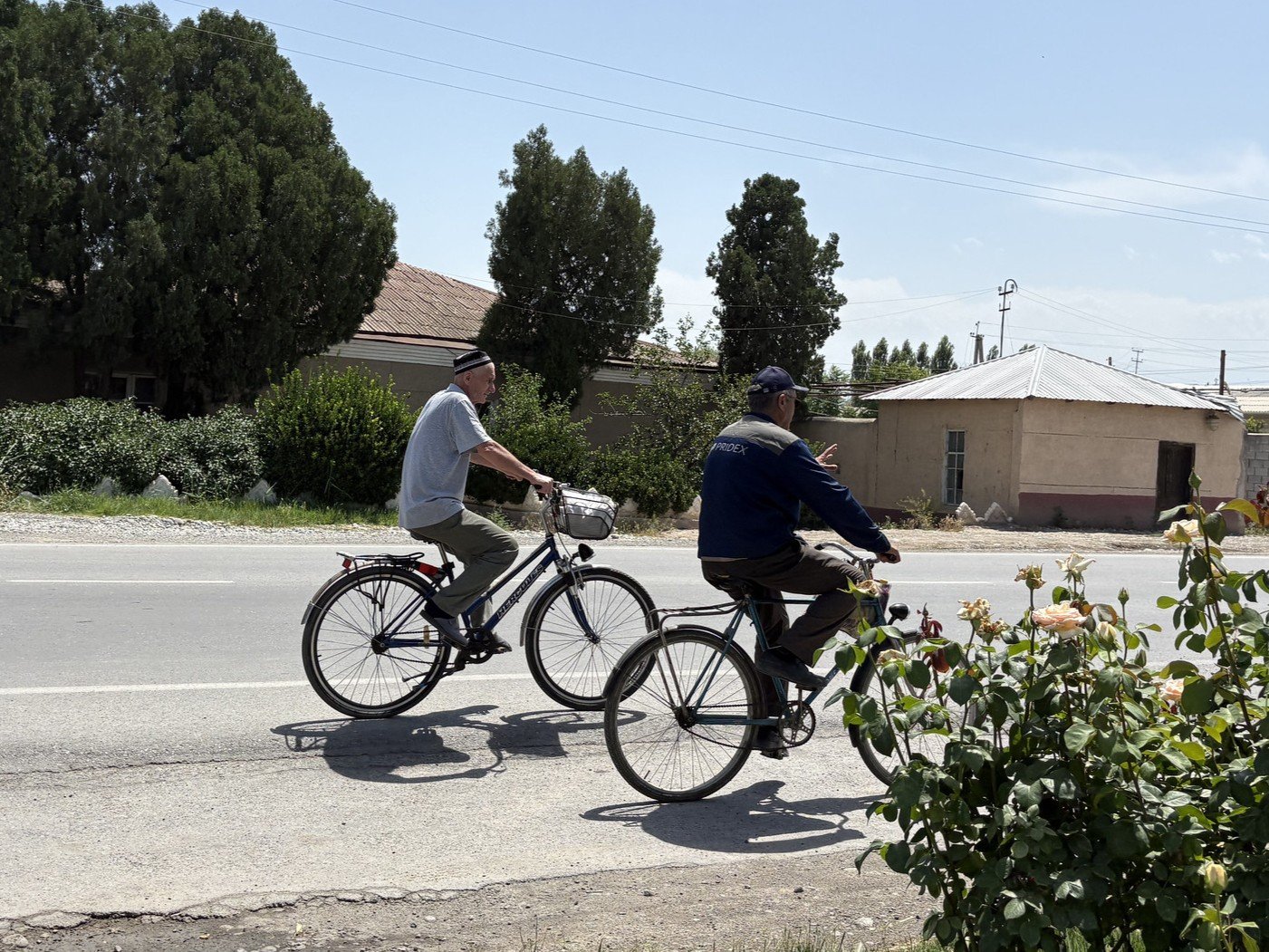
On a much more uplifting note, nearly everyone we spoke with was excited about Uzbekistan's future and proud of the country's progress.
Under its first president, Islam Karimov, Uzbekistan was largely closed to foreign tourism and investment. The country was marked by widespread human rights abuses and political repression. Since taking office in 2016, President Shavkat Mirziyoyev has transformed Uzbekistan from an isolated, heavily state-controlled region into an increasingly open and rapidly modernizing country.
People were genuinely optimistic.
"Look how much Bukhara has changed!" our guesthouse host said as he drove us from the train station.
Even as first-time visitors, we could see it. Construction cranes dotted the skyline, and new buildings seemed to be going up on nearly every major street.
"I own three properties now," he told us. "I never could have imagined that before."
Victor asked about any downsides to the rapid changes within the country and the man complained of rampant corruption.
“Oh, yeah, we get an occasional corruption scandal in Chicago as well,” Victor commented.
“Scandals?” the driver asked, “No, we don’t have any scandals here. Just corruption. Our corruption is completely scandal-free.
We didn’t know whether to laugh or cry.
"Nowadays, if you work hard, you can have a good life," an elderly man on a train told us. He had spent his entire life in Urgench and had witnessed Uzbekistan's transformation firsthand. He chatted with us for quite a bit and even invited us to visit his home, but unfortunately, we didn't have enough time.
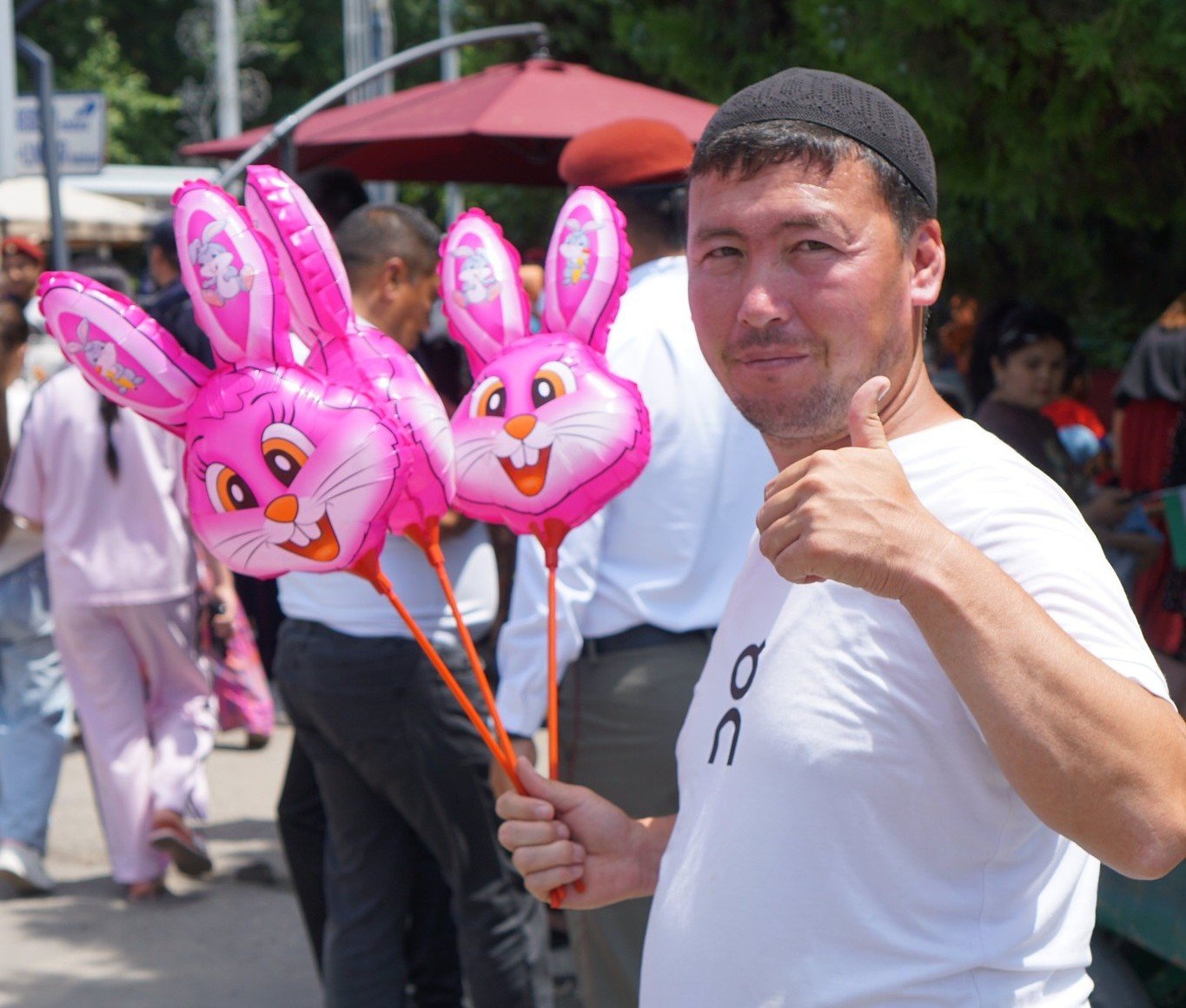
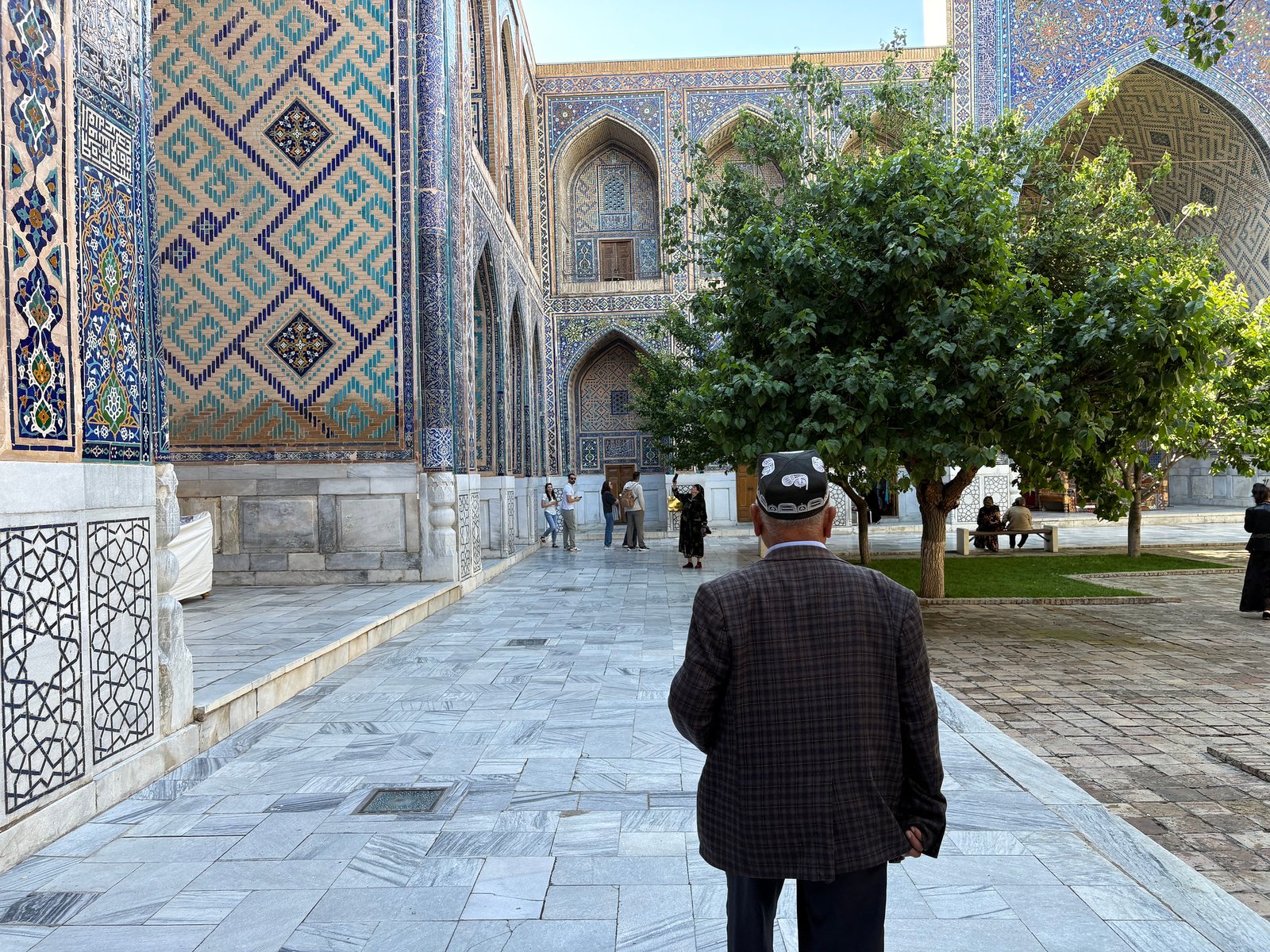
It was these kinds of interactions that made us feel like we were able to get to know Uzbekistan at a deeper level than just touristy sightseeing. It also made me realize what we are missing out on when traveling through countries with a language gap. Years from now, Uzbekistan won’t just be pretty photographs of mosques and minarets, most of our memories will be of the people we met and the memorable conversations we had.

Thank you! A wonderful post about traveling through Uzbekistan, about the people who remain just as hospitable, about the food, where you can still stop at a cafe and eat a delicious national samsa, not a burger or kebab. The Uzbeks’ geographical knowledge of Minsk reminded me of how 30 years ago in Samarkand I was called a Muscovite. When I protested that I was from Belarus, from Vitebsk, they only responded: from Vitebsk to Moscow it’s just one night by train.
That’s so funny! That’s exactly the kind of attitudes we encountered!