
Like Alishan, we considered cutting the East Coast out of our itinerary entirely. The region was remote, and it was a logistical puzzle to plan. Also, it was the only place in Taiwan where we needed to rent a car and potentially drive through what looked on the map like isolated, rugged terrain. On top of that, eastern Taiwan’s star attraction–Taroko Gorge–was still inaccessible due to damage from a prior earthquake. With only four days to spare, we mulled over whether we should spend the precious time elsewhere. But as with Alishan, we were glad that we went through the trouble of making it work.
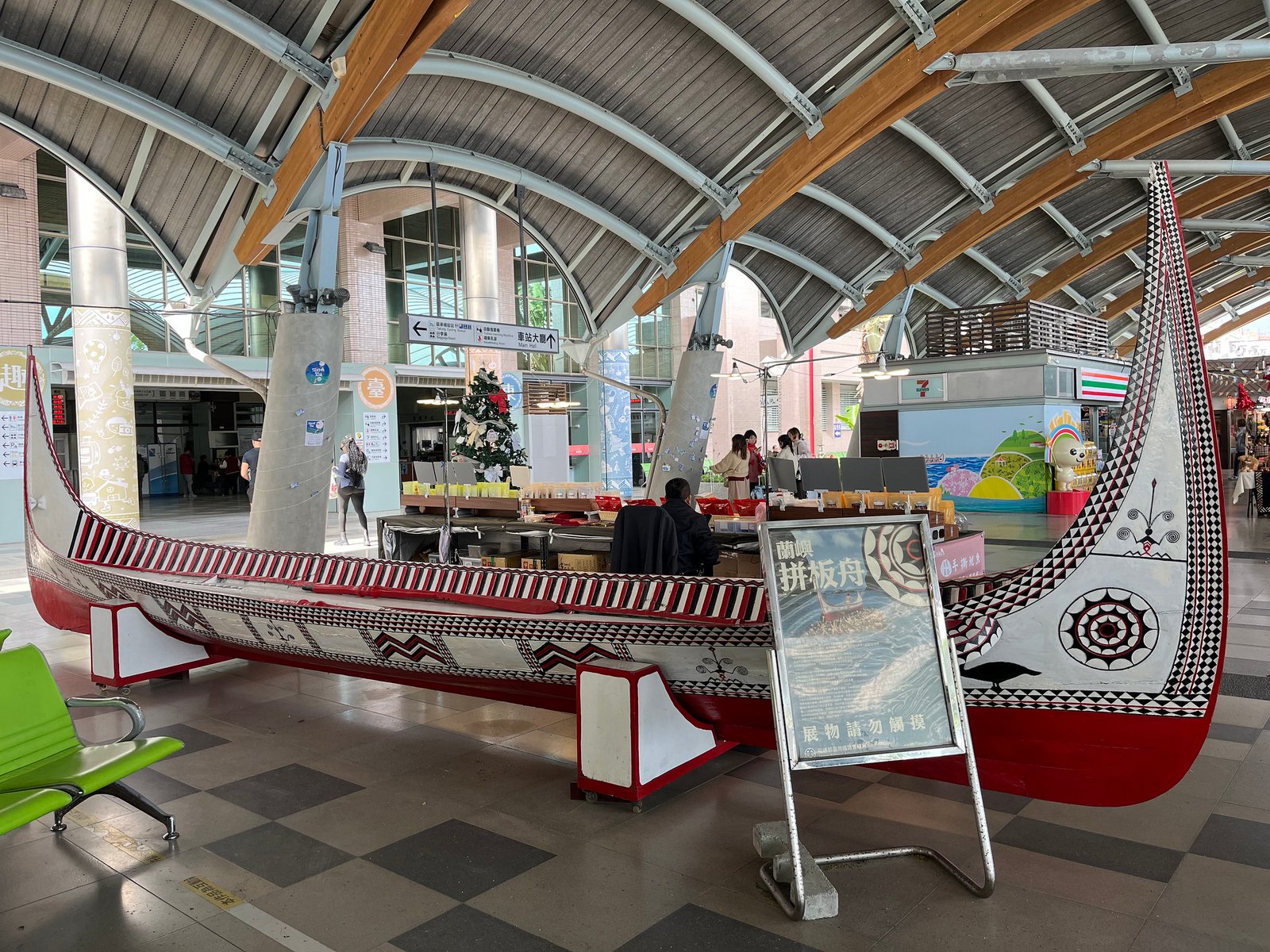
Getting off at Taitung’s train station, we immediately sensed that the East would be much different than the rest of the country. The weather was much cooler, and it drizzled a bit. Stormy clouds and gusty winds had a clear message for us: welcome to the island’s far-flung corner with unpredictable weather. At the station, indigenous folks were selling colorful handicrafts, while a life-sized replica of an aboriginal boat beckoned that we were now entering tribal lands.
The east coast is bookended by two mid-sized cities: Taitung in the south and Hualien in the north, with the coastal road connecting the two. Although it takes about three hours to drive from Taitung to Hualien, we spent three days thoroughly exploring the coast and another day driving through the East Rift Valley and hiking in Yushan National Park.
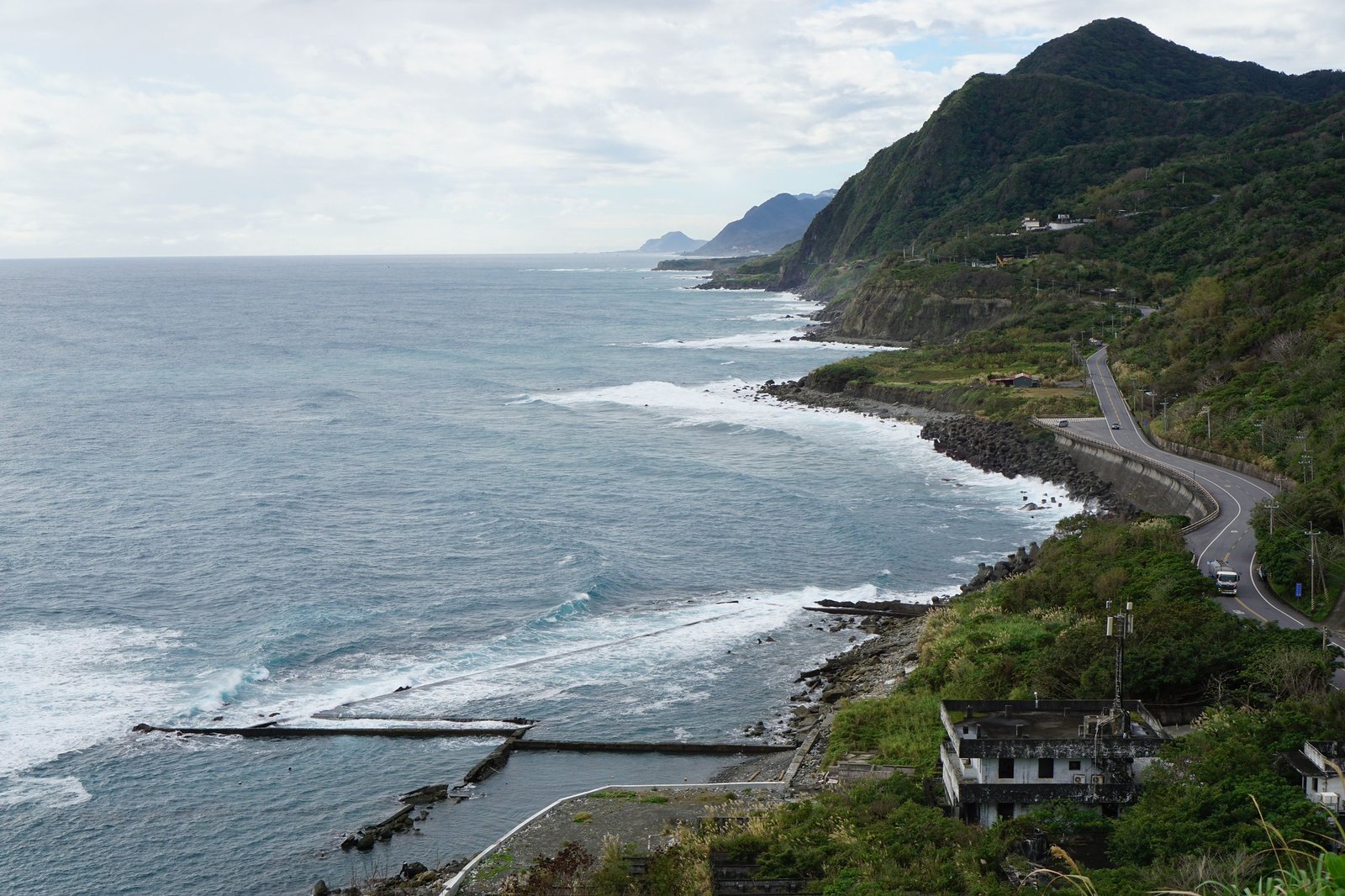
As we were leaving the Taitung city limits, and I was still getting comfortable in the driver’s seat of our rental car, out of nowhere, a road sign appeared, indicating an approaching tourist attraction on the coast. Neither Julia nor I expected this. In fact, filling out paperwork at the car rental office took longer than getting to the first scenic spot. The sign appeared so suddenly that I panicked and missed the exit. But as we learned over the next three days, the entire coastal road was just one continuous traveler’s highlight.
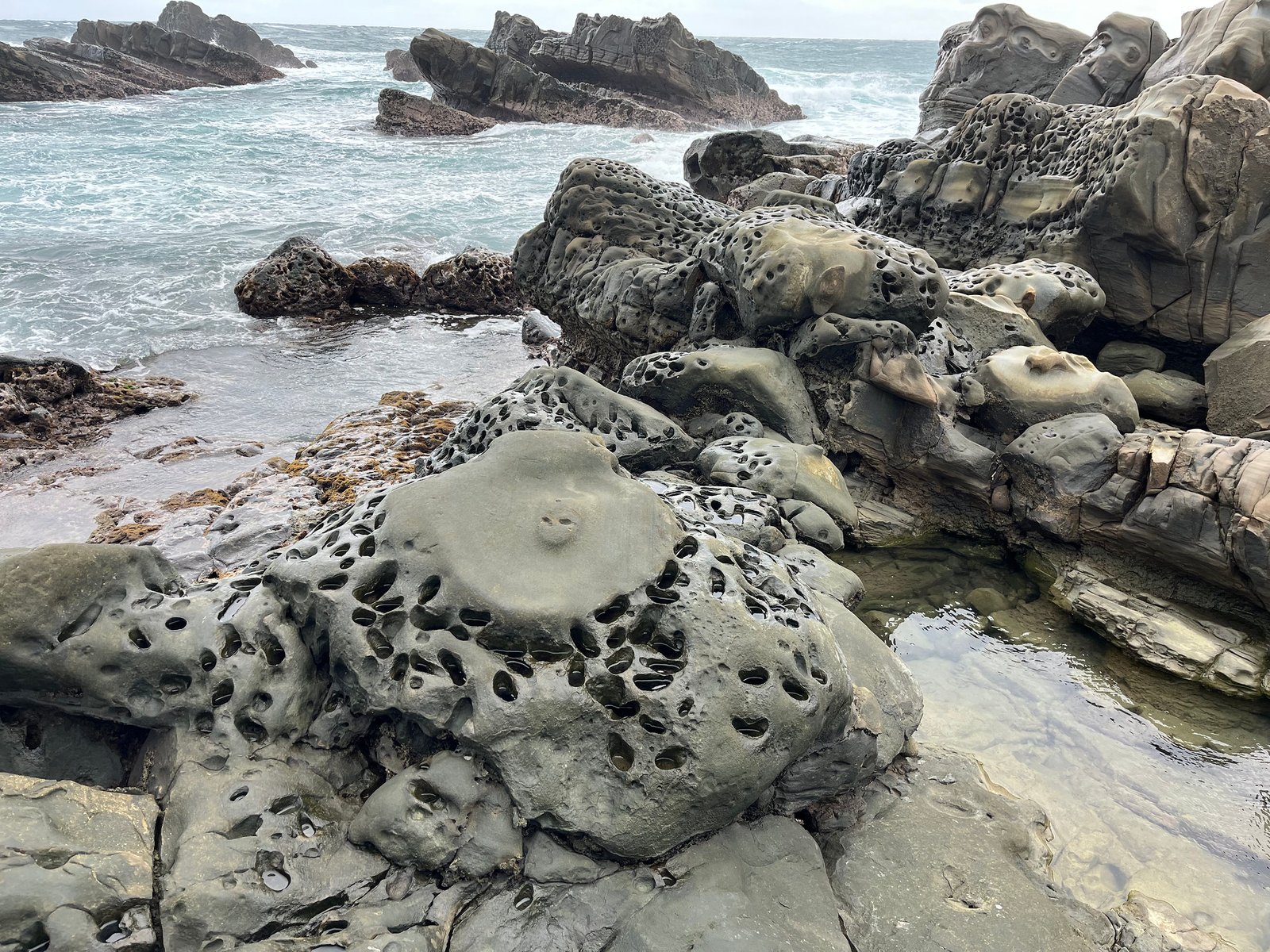
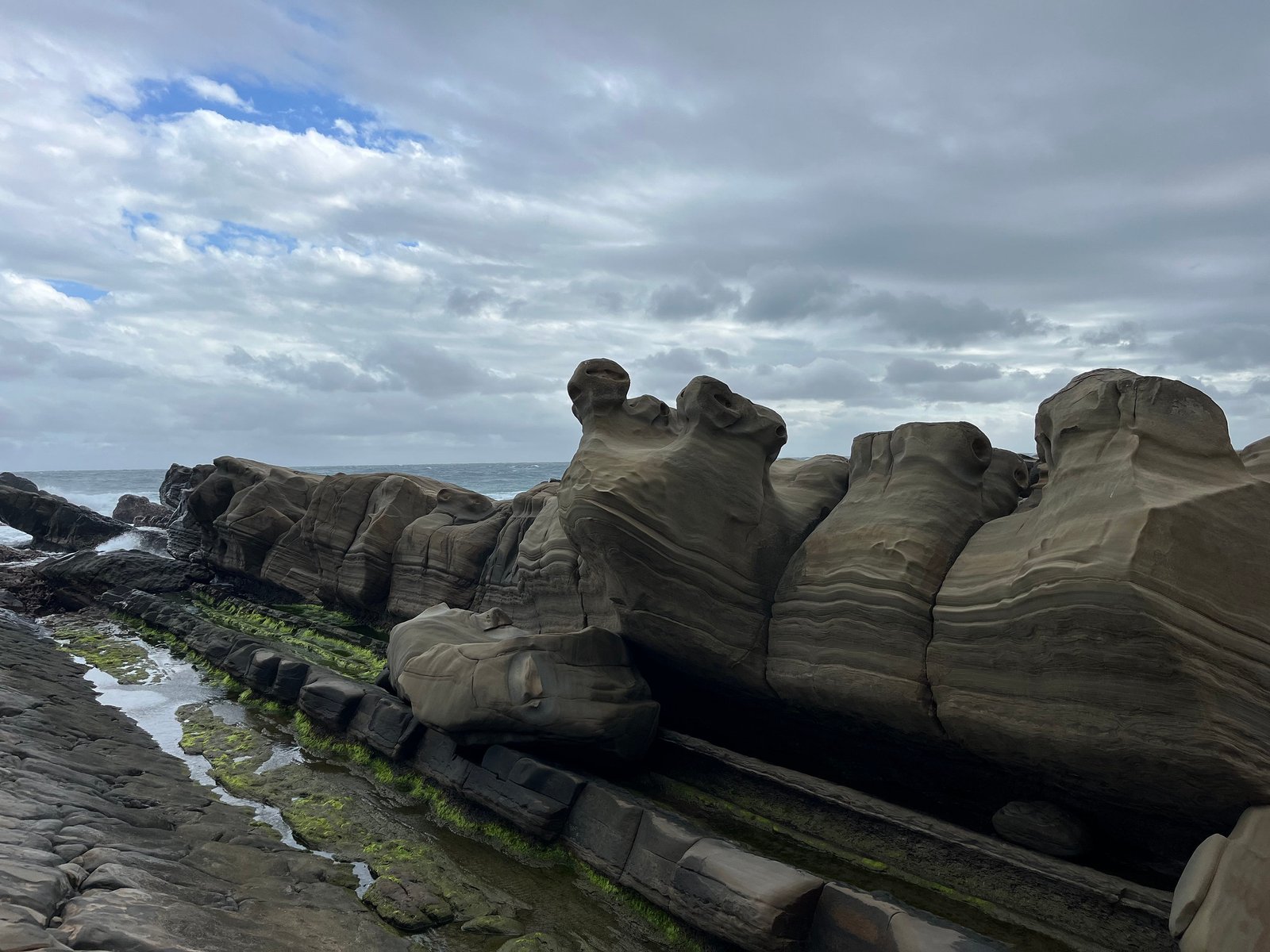
We didn’t have to wait long for the next exit. Fugang Geo Park (Xiaoyeliu) was just a few kilometers down the road. We parked and took the stairs to the shore to get our first glimpse of the Pacific Ocean. The sky was still overcast, and the mighty oceanic waves were violently pounding against the shore. The landscape was a canvas for imagination. The rocks of various shapes were scattered along the coast. We ran around like kids, pointing to rock formations: frogs, mushrooms, pieces of tofu. Some rocks were smooth, others resembled solidified molten lava. Some had perfect geometric designs and patterns and looked as if they were crafted by skilled artisans. The entire place was like Gaudí architecture meets Cappadocia’s rock formations. Xiaoyeliu was easily one of our favorite spots in all of Taiwan.
The rest of the afternoon, we stopped at a few other viewpoints to admire the rugged coastline. We spent the night in Dulan, a village catering mostly to surfers. Ironically, here, we saw more European and Australian tourists than we had met in the rest of the country.
The next morning, we continued down the coast, passing A’tolan, Torik, Pirisian, and other indigenous villages. Taiwan is home to more than a dozen aboriginal tribes, with most living in this part of the island. As we wrote before, Hualien’s night market had an impressive native food section featuring dishes made with locally sourced ingredients, such as wild vegetables, mushrooms, and seafood. At Amis Folk Center by the coastal highway, where we stopped for lunch, we learned about traditions, clothing, and way of life of Amis -- one of the largest tribes in Taiwan.
One thing we noticed in the East was the abundance of Christian churches and cemeteries. Unlike the rest of the country, where Taoist and Buddhist temples dominate, in this part of the island, we saw church after church and cemeteries with crosses as we drove by villages and hamlets along the coast.
“Those are not dead surfers who are buried there, right?” jokingly asked Julia as we passed another Christian cemetery.
The explanation for this phenomenon is the region’s location. Due to its isolation, local tribes were not well connected to the rest of the island, and early Christian missionaries took advantage of the situation, converting many to Christianity.
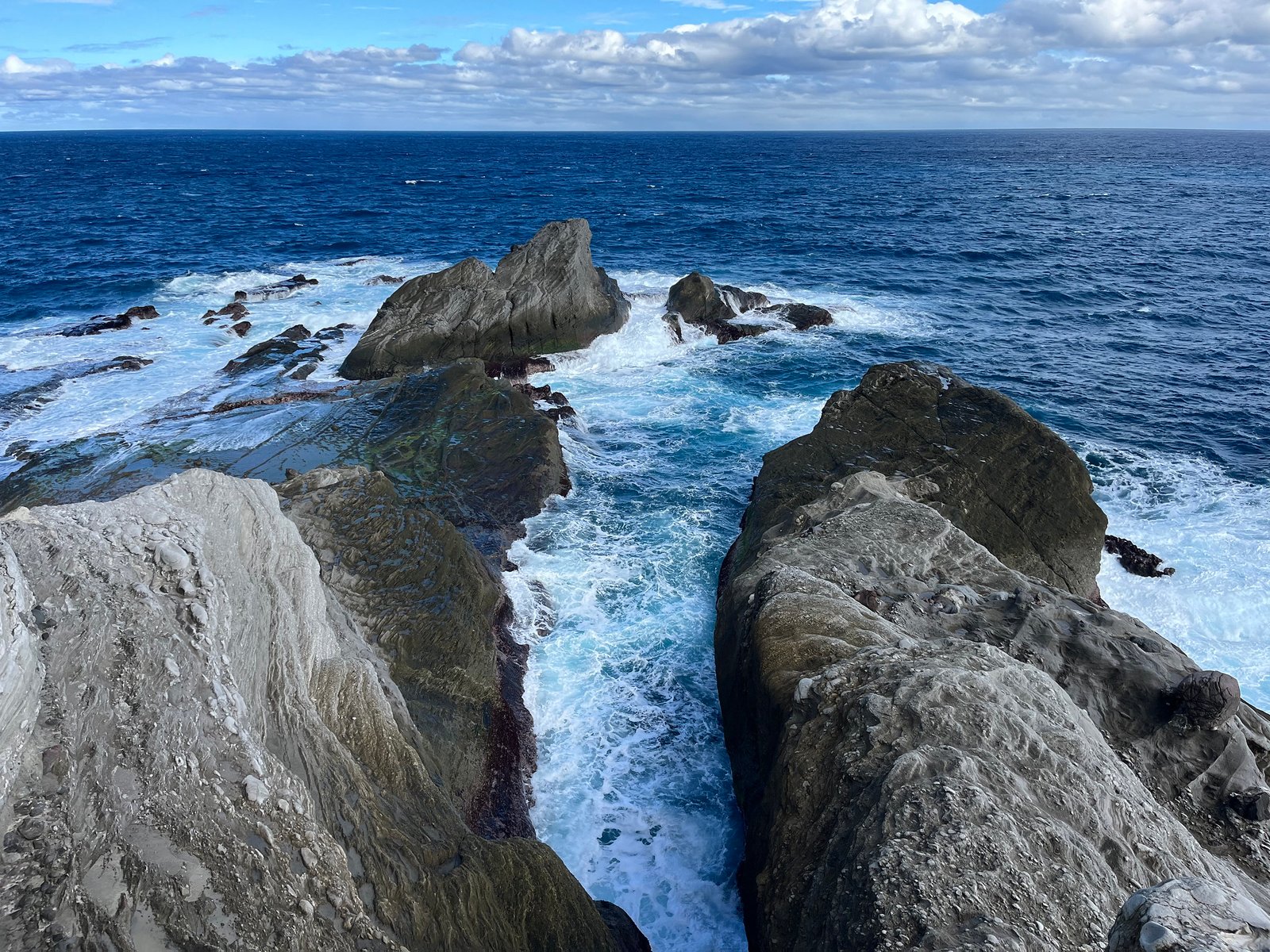
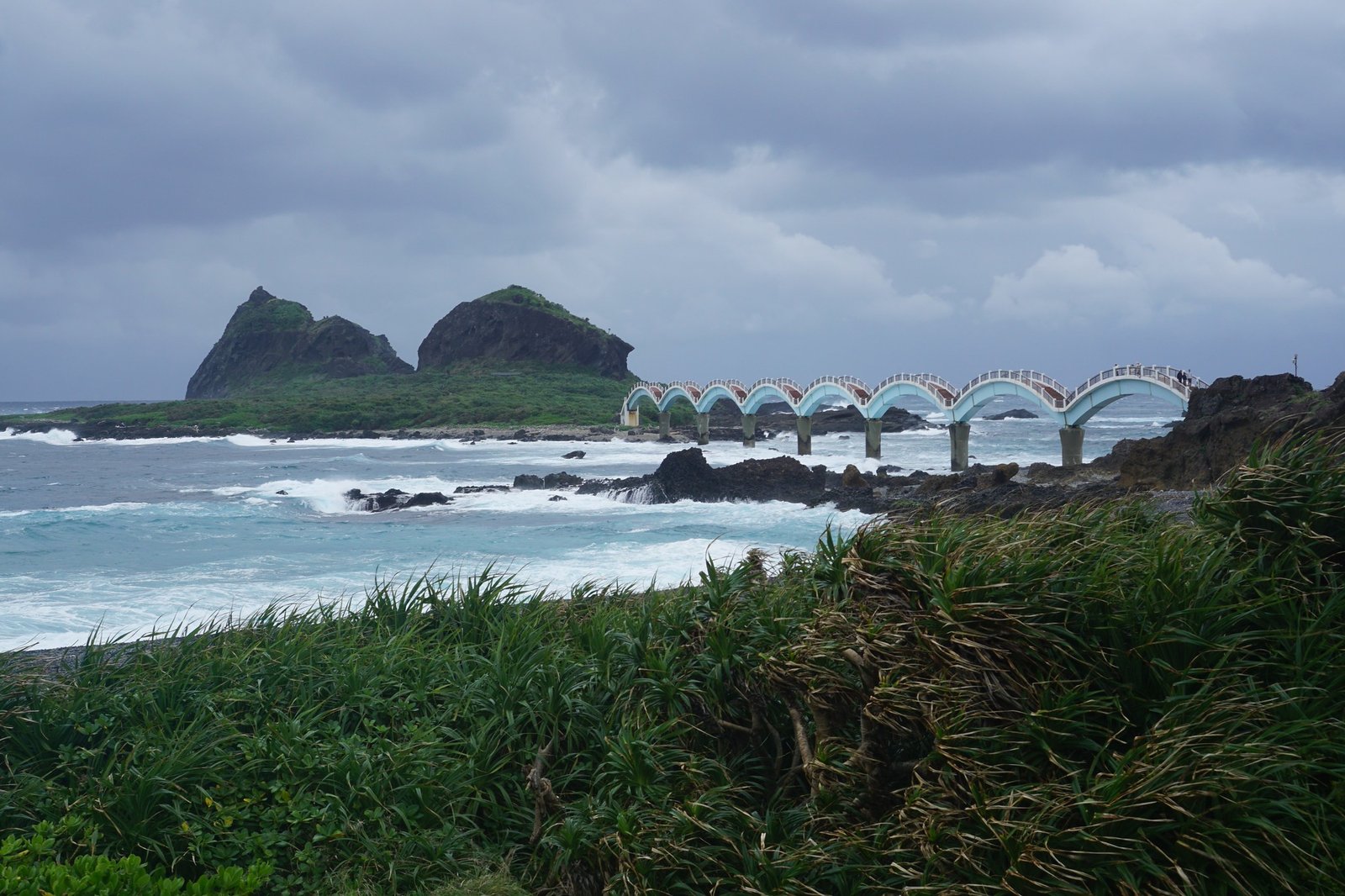
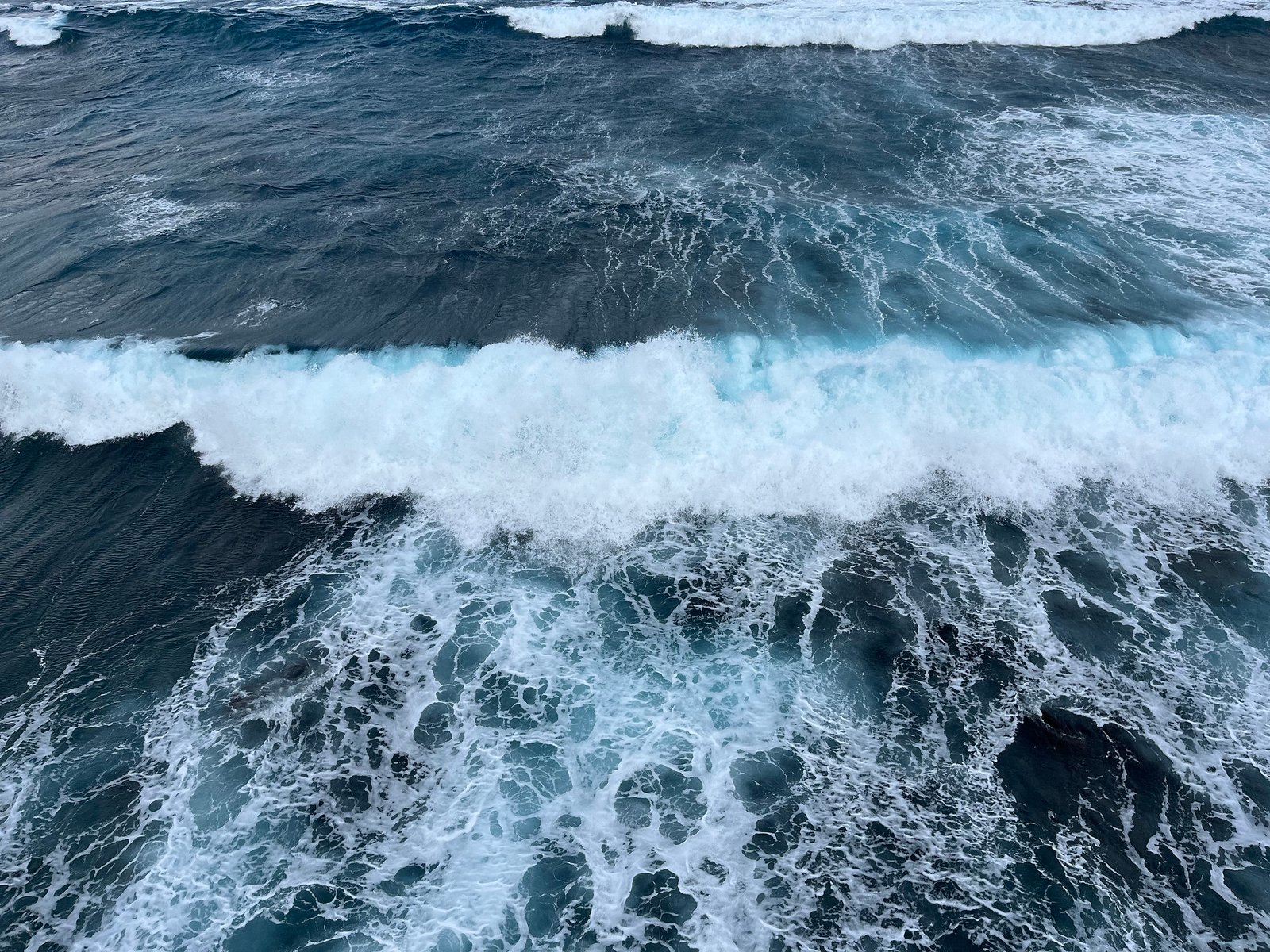
Not far from the Amis Folk Center was another amazing location - Sanxiantai. This offshore islet with two rocky outcrops was formed as a result of sea erosion and is subject to local legends. The eight-arch bridge that connects the islet with the shore from a distance looked like a dragon’s tail. Crossing the bridge, we couldn’t take our eyes off the ocean. It was unstoppable and ferocious. The foamy water had different shades of blue and aquamarine. The waves were coming from different directions, colliding and hitting the shore. Despite gusty winds, we were not in any hurry to cross the bridge. We lingered and couldn’t take our eyes off this spectacle. Once off the bridge, we followed a trail around a rocky boulder and then climbed a precarious path for a view from another craggy outcrop. The place reminded us of Ireland’s Dingle peninsula, but the landscape was wilder and more isolated.
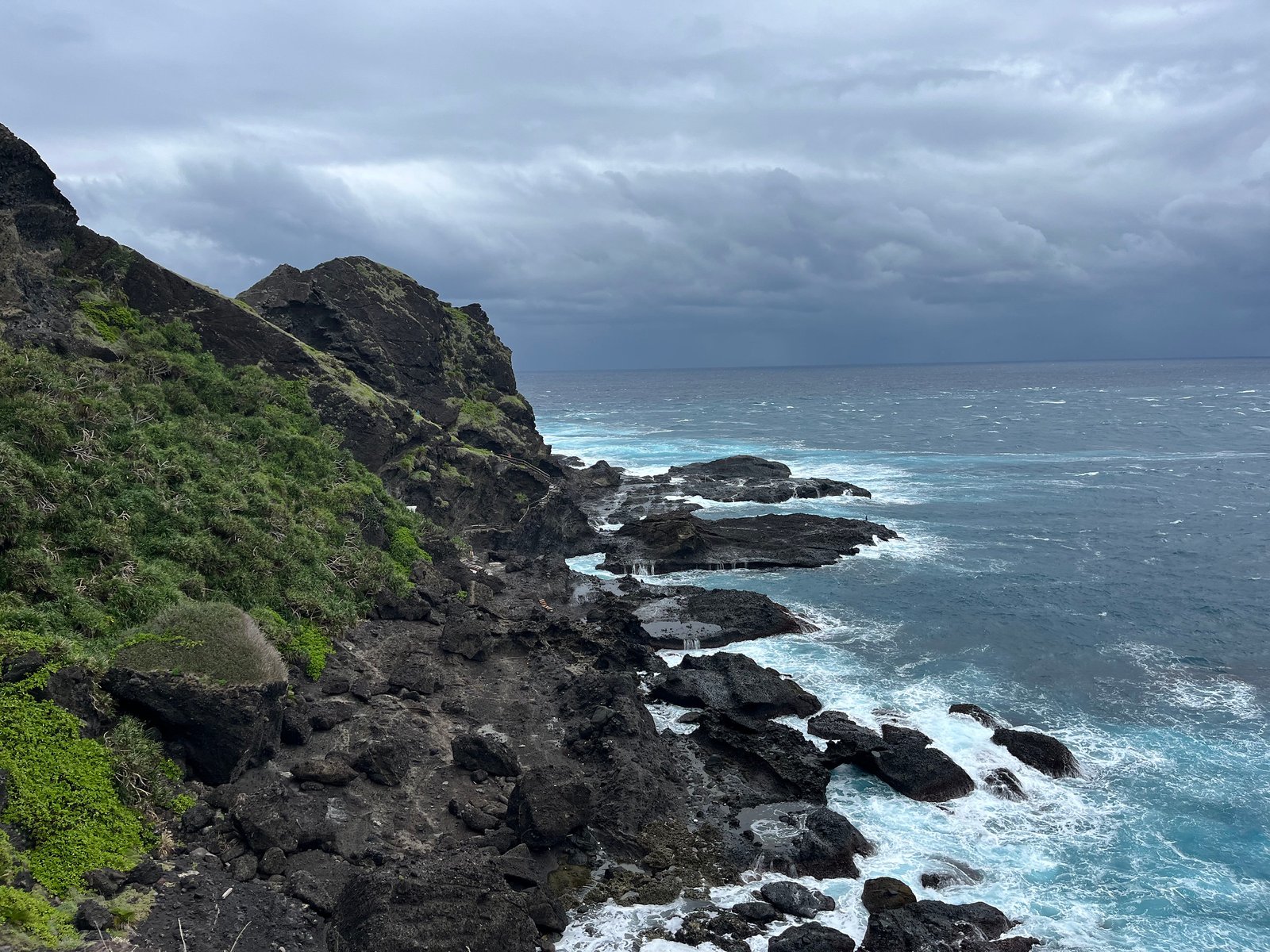
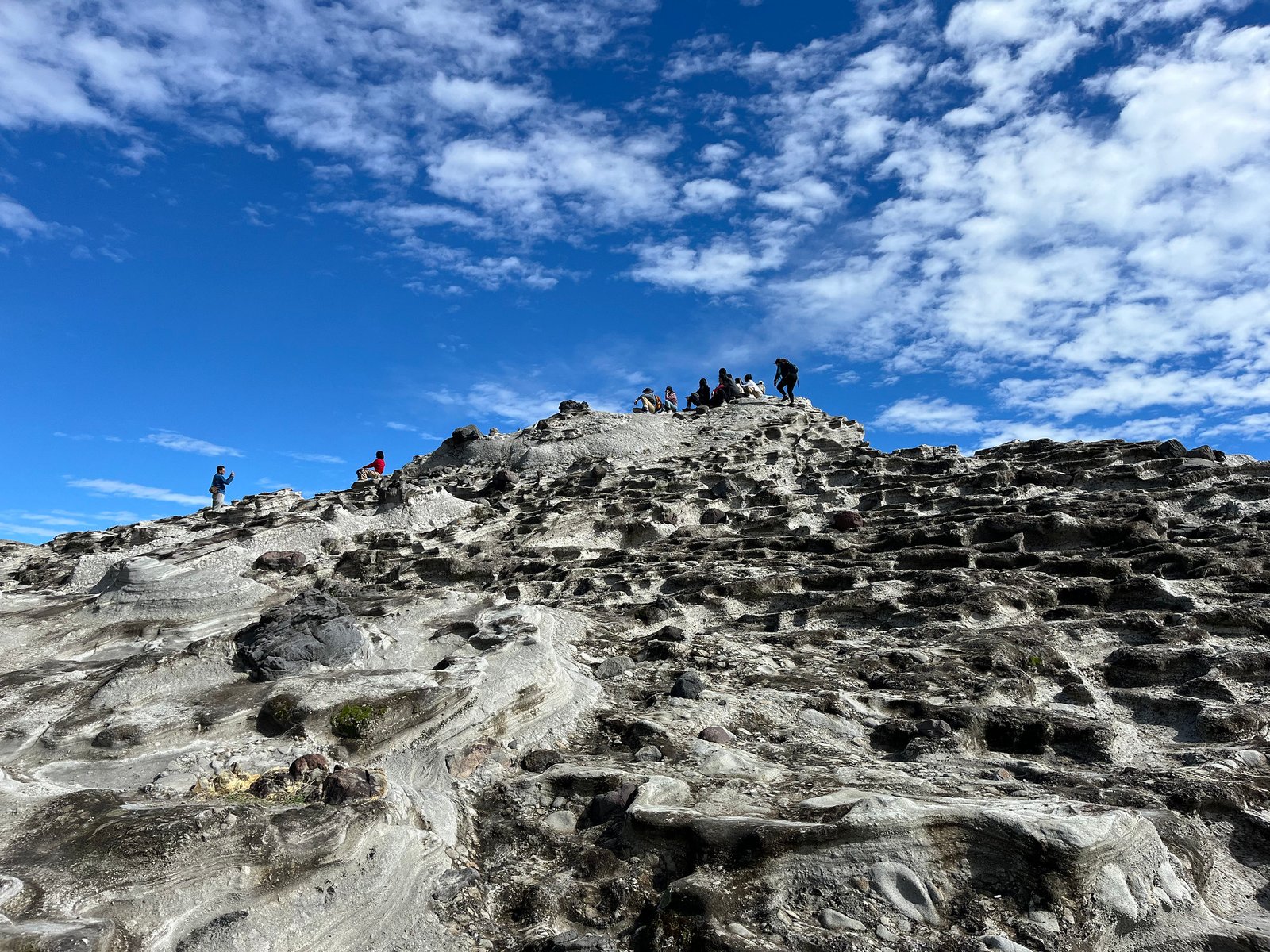
Further north, we reached another absolute highlight of the eastern coast - Shihtiping Geopark. Resembling the rock-hewn architecture of Turkey’s Lycia or Georgia’s Uplistsikhe, a natural staircase of eroded stone dramatically towered over the ocean. We climbed to the top of the cliffs and meditated, sitting on the edge of the world. The sun came out, and the water sparkled with many different shades of blue. The view was mesmerizing. From the spot that we climbed, it appeared as if there were no coastal highway or villages by the road, only green mountains rolling into the ocean. Gaping at this rugged, magnificent landscape, it was easy to see why the Portuguese named Taiwan Ilha Formosa (“Beautiful Island”) when they discovered it.
Xiaoyeliu, Sanxiantai, Shihtiping. Years from now, we may not remember these tongue-twisting Chinese names and other impressive sites between Taitung and Hualien, but the raw beauty of Taiwan’s east coast will certainly stay with us forever.
I’m just glad we didn’t skip it.