

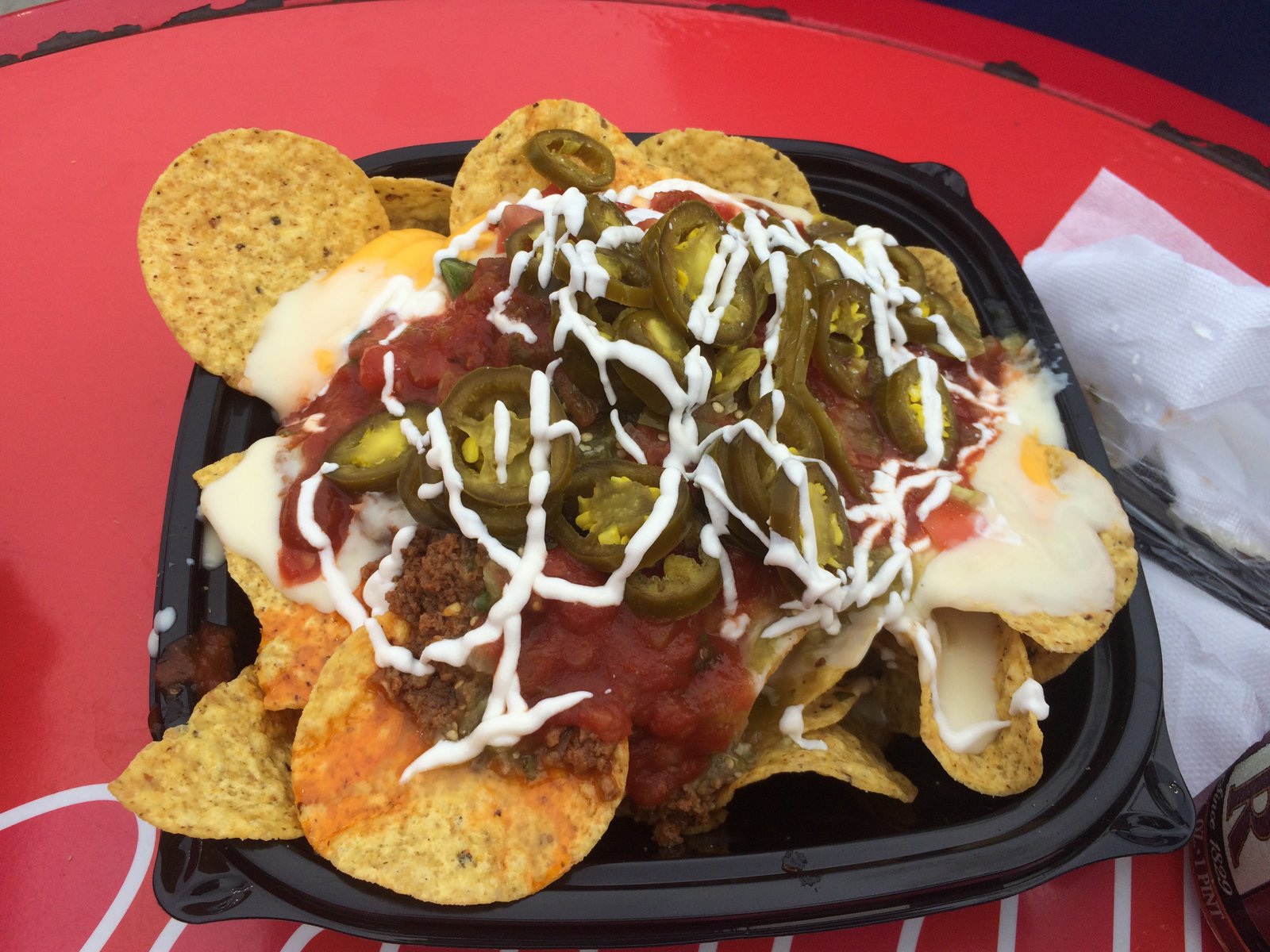
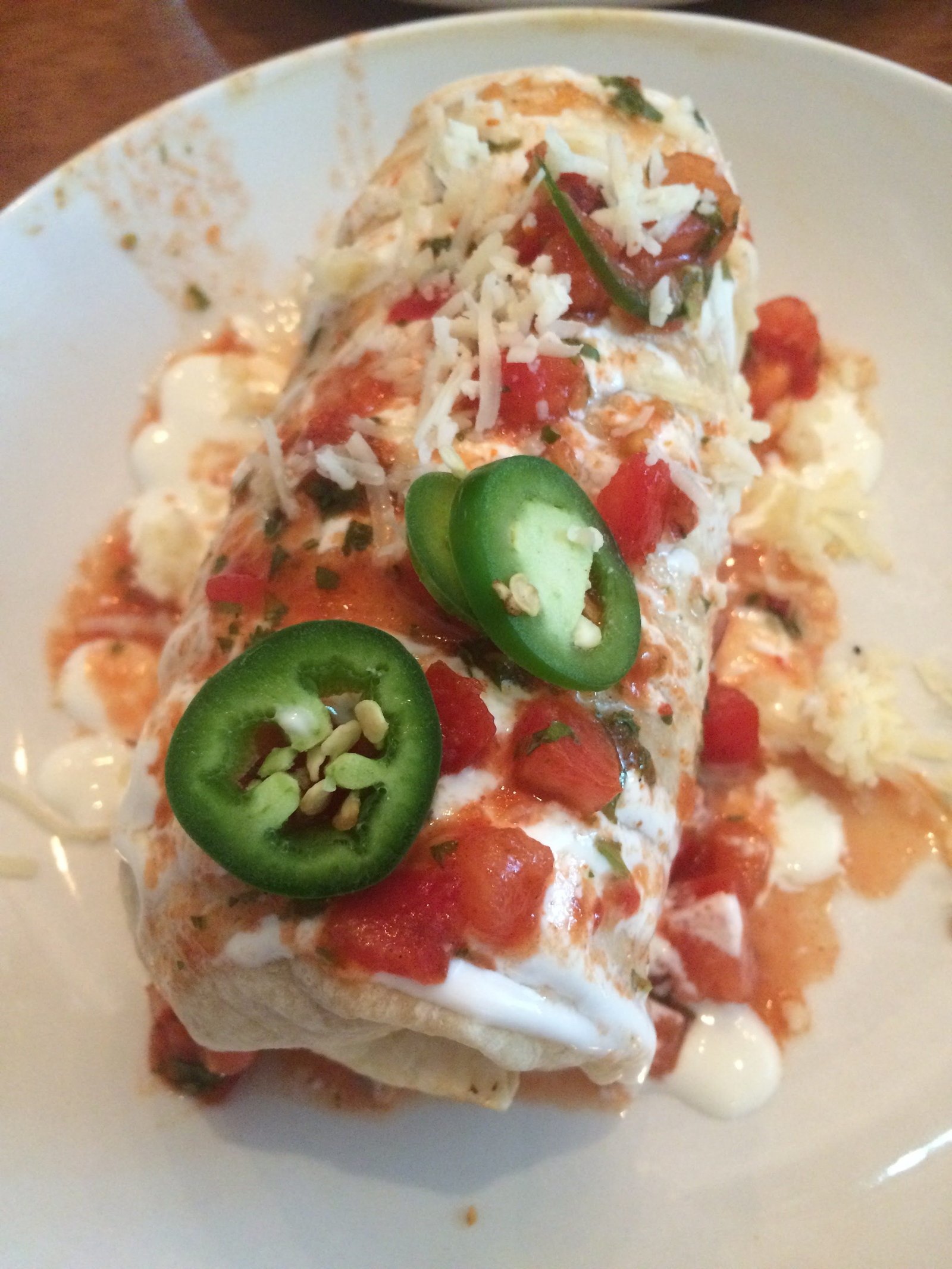
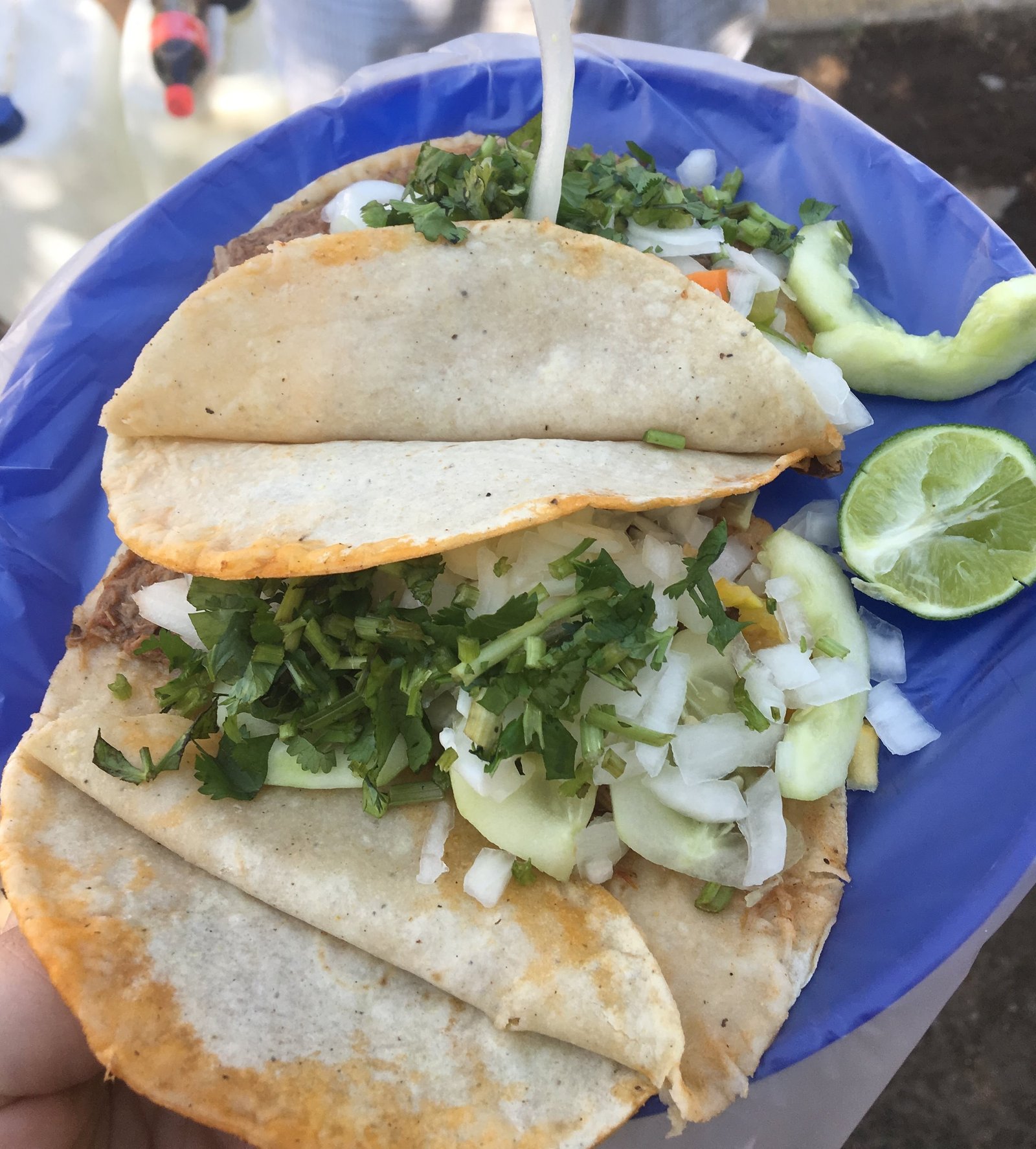
Before we ever visited Mexico, one thing we thought we understood well about it was the food. Fajitas, nachos, and tacos are our go-to comfort foods. Imagine our surprise when we found very different menu offerings south of the border, with most of our favorites conspicuously missing. It turned out that fajitas originated in the U.S., and nachos were created in Mexico, but were custom-made for American palates and are not a very popular dish anywhere in Mexico. While we did find tacos, they were not stuffed with cheese and lettuce but were topped with cilantro and onions. Fortunately, what we did find more than made up for our favorites.

Mexican cuisine is the country’s calling card, and not long ago, UNESCO recognized it as an Intangible Cultural Heritage of Humanity. Puebla, east of Mexico City, is one of the regions renowned for its significant contributions to the nation's cuisine. For three days, as we ate our way through this state, we wondered if we truly knew Mexican cuisine.
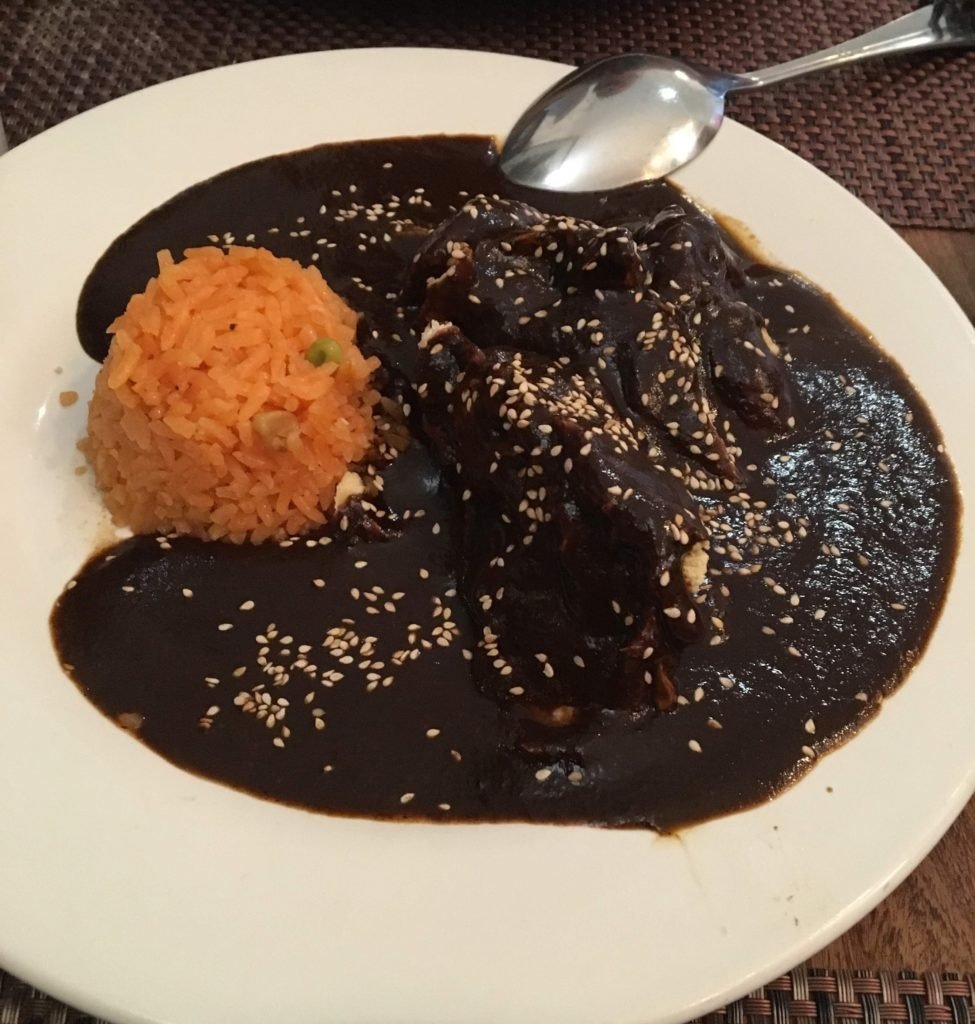
Mole poblano is probably the most famous dish from Puebla. It even refers to Puebla in its name (poblano means “from Puebla”). I tried it for the first time in Chicago years ago and didn't like it. I recall getting a plate where rice and chicken occupied one-third of the plate, and thick brown sauce filled up the rest of the plate. I remember being confused as to why the main ingredients were so heavily underrepresented, giving space to... a sauce? As I later learned, the sauce—mole—was the dish with rice and chicken playing only the supporting role. I didn't quite get the meal as I wasn't accustomed to the chocolaty taste of the wild mix of chilies, pepper, almonds, nutmeg, and other spices and ingredients. But visiting Mexico and trying it there made the dish grow on me.
There is no uniform recipe for mole poblano, as it varies from abuela to abuela. Oaxaca has its own mole, and of course, people from that state claim that mole oaxaqueño is much better. But that’s just a sign of popularity when several places claim that their version is the best. Ask, for example, Colombians and Venezuelans who came up with arepas first or who have the best arepas, and you may provoke a military conflict between these two neighboring countries.
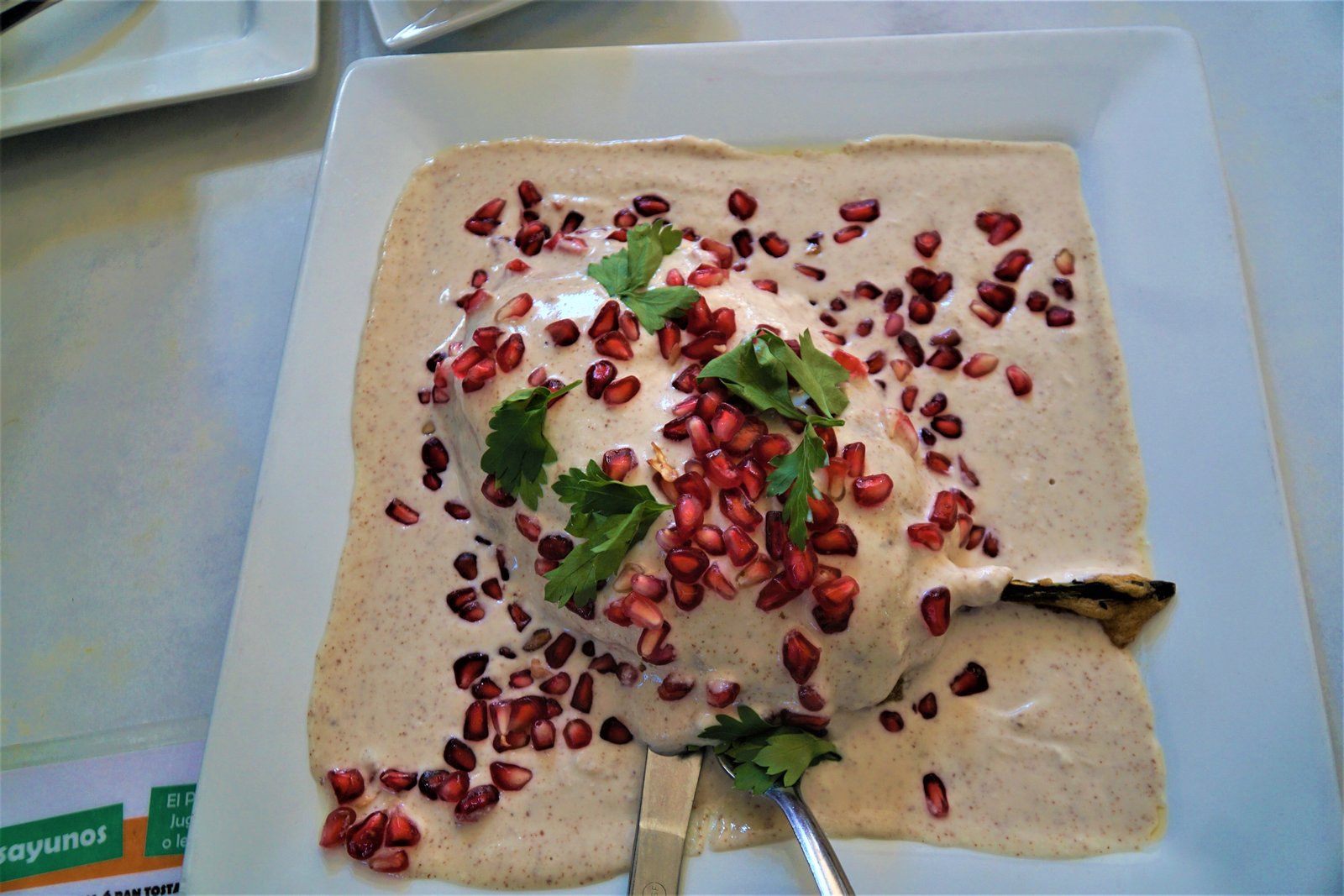
Another quintessential poblano meal is chiles en nogada. It's a poblano pepper stuffed with a mix of shredded meat, fruits, and spices (picadillo) and topped with a walnut-based cream sauce (nogada) and pomegranate seeds. The dish has the coloration of the Mexican flag: green pepper, white sauce, and red pomegranate seeds. In Puebla, it's quite popular in September when pomegranates are in season and patriotic feelings run high as the country celebrates its independence on September 16.
If chiles en nogada requires sitting down, the classic poblano street food—the taco arabe or Arab-style taco—can be eaten on the go. We had it as a quick snack in the central square while taking a break from sightseeing. This fast food item is a good example of how immigrants can influence a local cuisine. Taco arabe was created by Lebanese immigrants in the 1930s, who combined Mexican and Middle Eastern cuisines. The name is misleading as it's not really a taco: the filling—marinated pork or lamb—is wrapped in pita bread. The more appropriate name probably would be shawarma poblano.
Trying to explore things in the truest sense, we decided not to look up what cemitas were and just ordered two of these Mexican sandwiches. What arrived at our table truly shocked us. Cemitas are enormous sandwiches. Even half of it was enough to feed us both; yet, we had a full cemita for each of us. Initially, I thought this was a joke, a prank by a local eatery, with the restaurant staff looking at us from the kitchen and laughing their asses off seeing how these two gringos would handle these oversized sandwiches. We quickly accepted our fate and began working on them. Although neither of us could finish our cemitas, we stuffed ourselves so much that we couldn’t eat for the rest of the day.

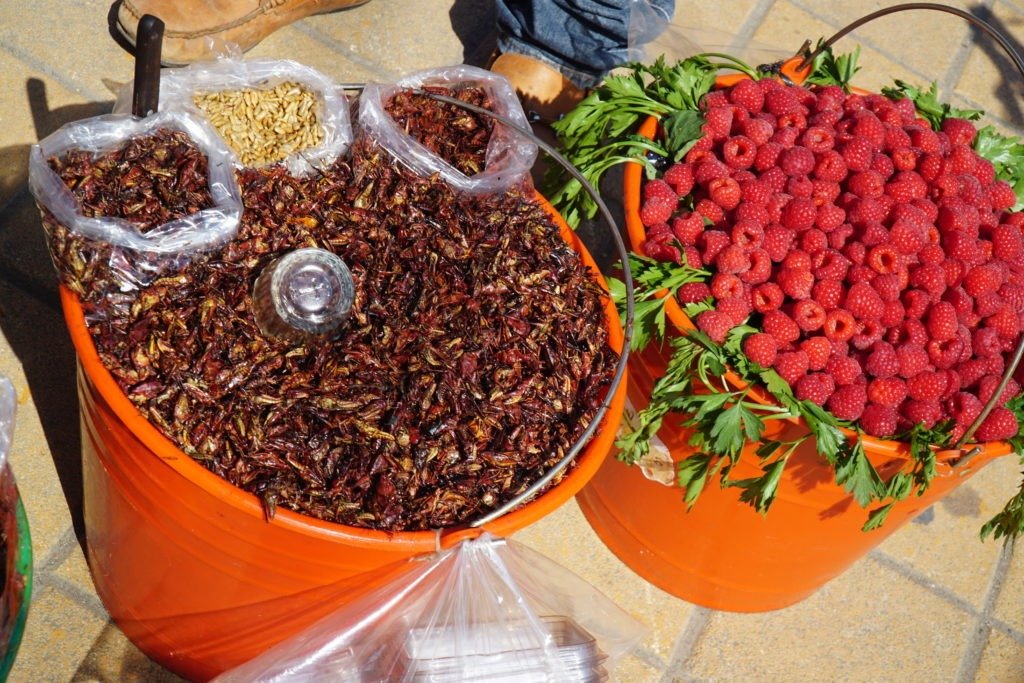
The next morning brought us another culinary discovery. As we strolled the streets of Cholula, we saw a woman carrying two full buckets of something.
“Chapulines! Chapulines!” the woman announced loudly her presence.
We looked inside the buckets, and they were full of … toasted grasshoppers? In our limited Spanish, we asked the woman what exactly she was selling. Apparently, chapulines are a Central Mexico delicacy, and we were fortunate to visit when this local snack was in season. Once grasshoppers are collected during summer when they hatch, they are toasted in lime, chili, and salt, and then sold as a street food item. To some travelers, eating chapulines is like being on Fear Factor. But we had no problem trying them and loved this crunchy local snack.
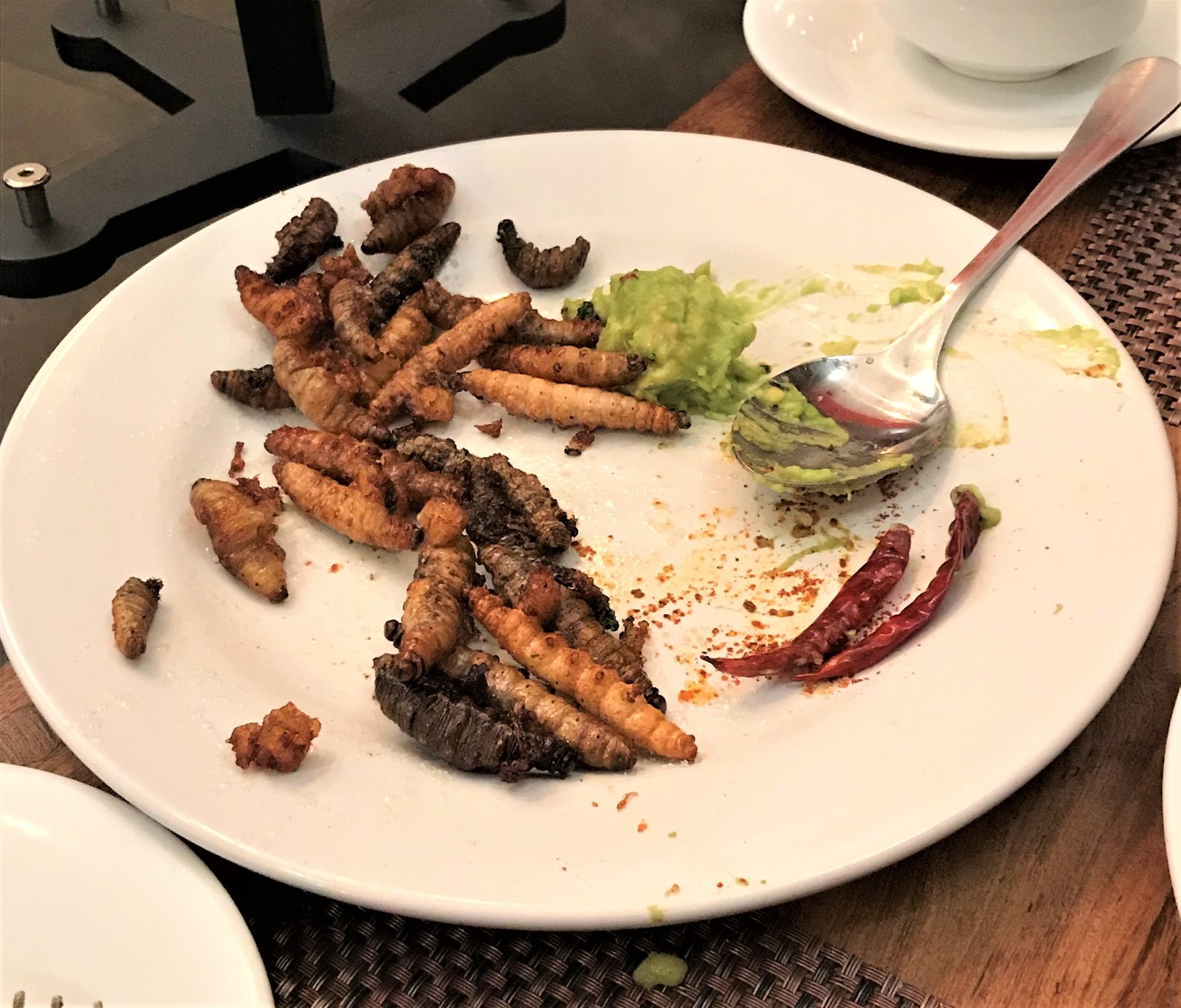
What came closer to a Fear Factor challenge were “maguey gusanos”, the grubs that we ate on the last day in Puebla. Collected from an agave plant and cooked according to local recipes, these grubs were the most expensive item on the menu. Until recently, I was very conservative in my culinary travel escapades and often declined to try such “local delicacies.” However, in Mexico, I felt ready to step outside my comfort zone. As I was placing the order, Julia was looking at me with suspicion, fearing that I wouldn't follow through and mentally preparing that she would have to eat the entire plate of grubs by herself. But I didn't let her down, and ate the entire portion. I can attest that fried grubs taste like French fries, with crunchy shells and creamy filling.
In Puebla, we discovered that there is no such thing as one unified Mexican cuisine. Mexican specialties vary from state to state as much as they do between different countries. What really inspires me is that with our plans to continue visiting different parts of Mexico, we expect to discover new dishes and tastes. And we will keep you posted about our food discoveries south of the border.