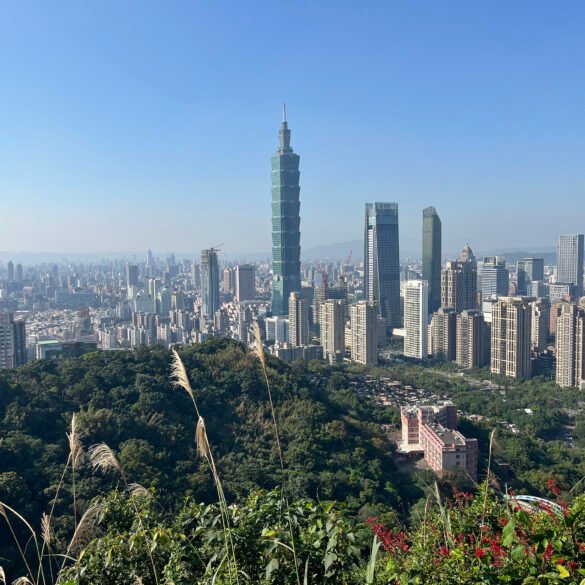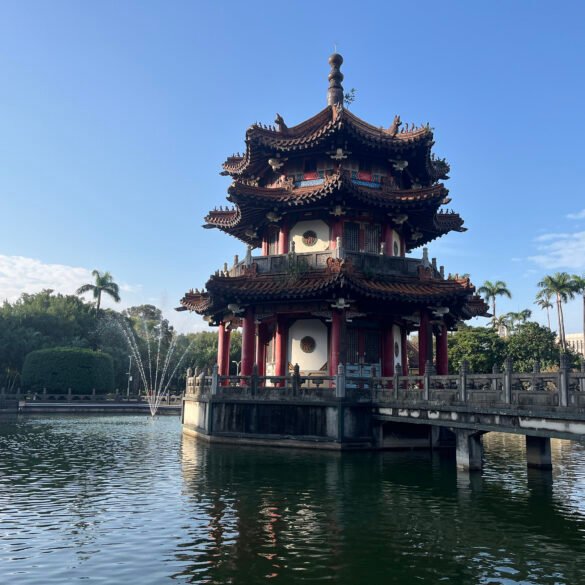

A few days before our trip, I was talking to someone who had previously visited Taiwan and their only piece of advice was straightforward and without mincing words: "Do not eat street food there."
This was completely unexpected. If they'd said, "Don't go there under any circumstances," that would have been easier to process. After all, plenty of tourists nowadays worry about the China-Taiwan situation escalating unexpectedly and avoid that region entirely. But going to Taiwan and not eating street food? I couldn't wrap my brain around that.
When I finally managed to stutter out, "But why?" they explained that they got the worst food poisoning of their life from eating meat from a street vendor in Taipei and only managed to recover by the time they flew to their next destination, Japan.
That sounded terrible. But we've eaten street food throughout Thailand, Cambodia, Vietnam, China, and India and only got sick in India, because everyone gets sick in India. That's just part of visiting. And honestly, I'd still go back and eat anything put in front of me without hesitation.
I rationalized my immediate dismissal of this advice by deciding we'd be safe since we wouldn't be eating much meat in Taiwan anyway. Victor is a pescatarian and I'm too lazy to cook meat just for myself at home. I hardly ever order it when we go out because I like eating family-style, sharing everything we order.
And what is Taiwan without street food? It would be insane to visit a country known for its night markets and not walk from booth to booth, shoveling various delicacies into my mouth. I was so sure of my decision, I didn't even pack dress-up clothes for upscale restaurants. It was street food or bust.
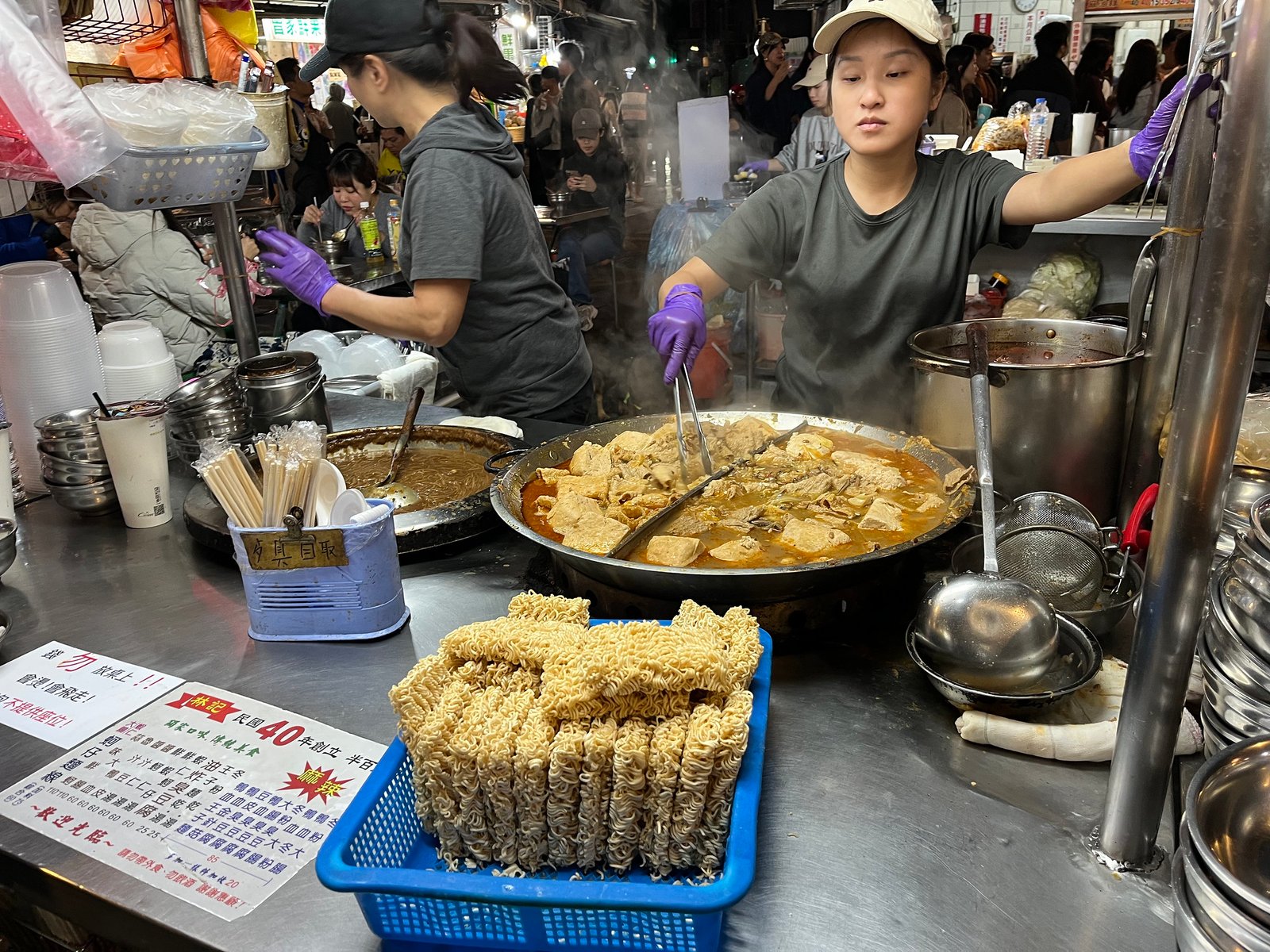
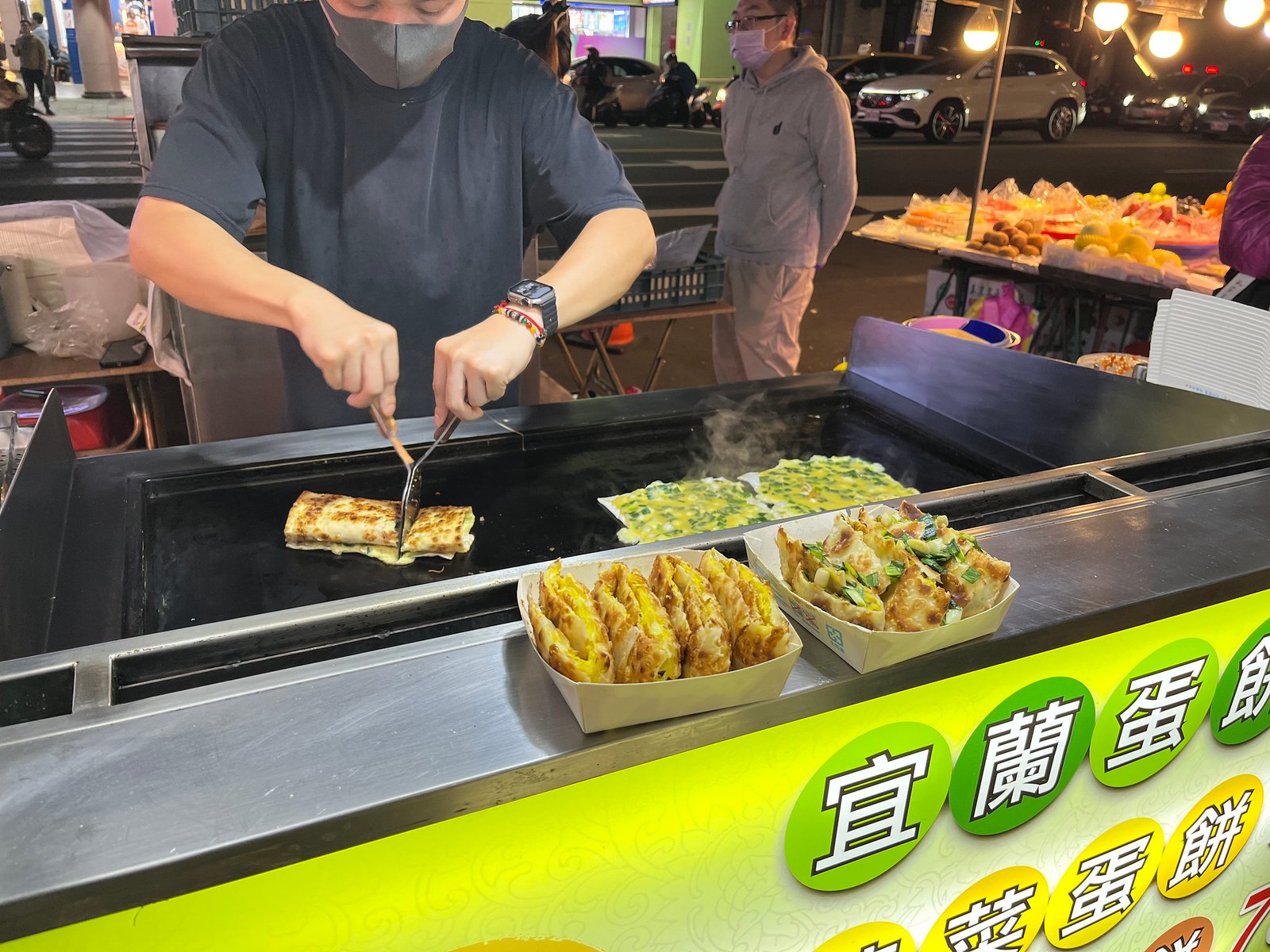
Of the 17 days we spent in Taiwan, we ate dinner at night markets for at least 14 of those days. I'm happy to report there were no unwanted side effects, except the occasional "I need to stop eating before I burst at the seams" moment. We've been to plenty of night markets before all over Asia, but we'd never seen anything like Taiwanese night market culture.
There was at least one night market in every city we visited, large or small. Most cities had more than one, and it was common to find at least one in every neighborhood. Some are permanent, built into old market halls or dedicated lots. Others appear every evening like pop-up cities, with vendors rolling in, unfolding metal tables, stringing lights, and temporarily taking over entire streets.
But it's not just how common they are. Night markets are deeply ingrained in the daily lives of locals. These aren't tourist traps, but gathering places for families with children, couples on dates, and occasional hordes of hungry teenagers on the hunt for food and entertainment. We saw people leaving the markets carrying multiple containers, heading home to bring dinner for the family. Night markets are perfect for buying a variety of food for larger groups or if you feel like eating a dozen different things for dinner.
And this isn't always a grab-and-eat situation. Many vendors put out small plastic tables and chairs where you can sit and slurp your bowl of soup or share a giant grilled fish with your entire family. Some markets have giant halls with tables where anyone can sit and enjoy their dinner.
Beyond food, many markets have arcades for both adults and children, clothes, souvenirs, all kinds of games, and stages with live entertainment. We’ve even found vendors selling live fish, turtles, and hamsters. Overall, a night market stroll is a lovely way to spend an evening, even if you are not very hungry. But be warned – you will never walk away without eating something, no matter how full you are!
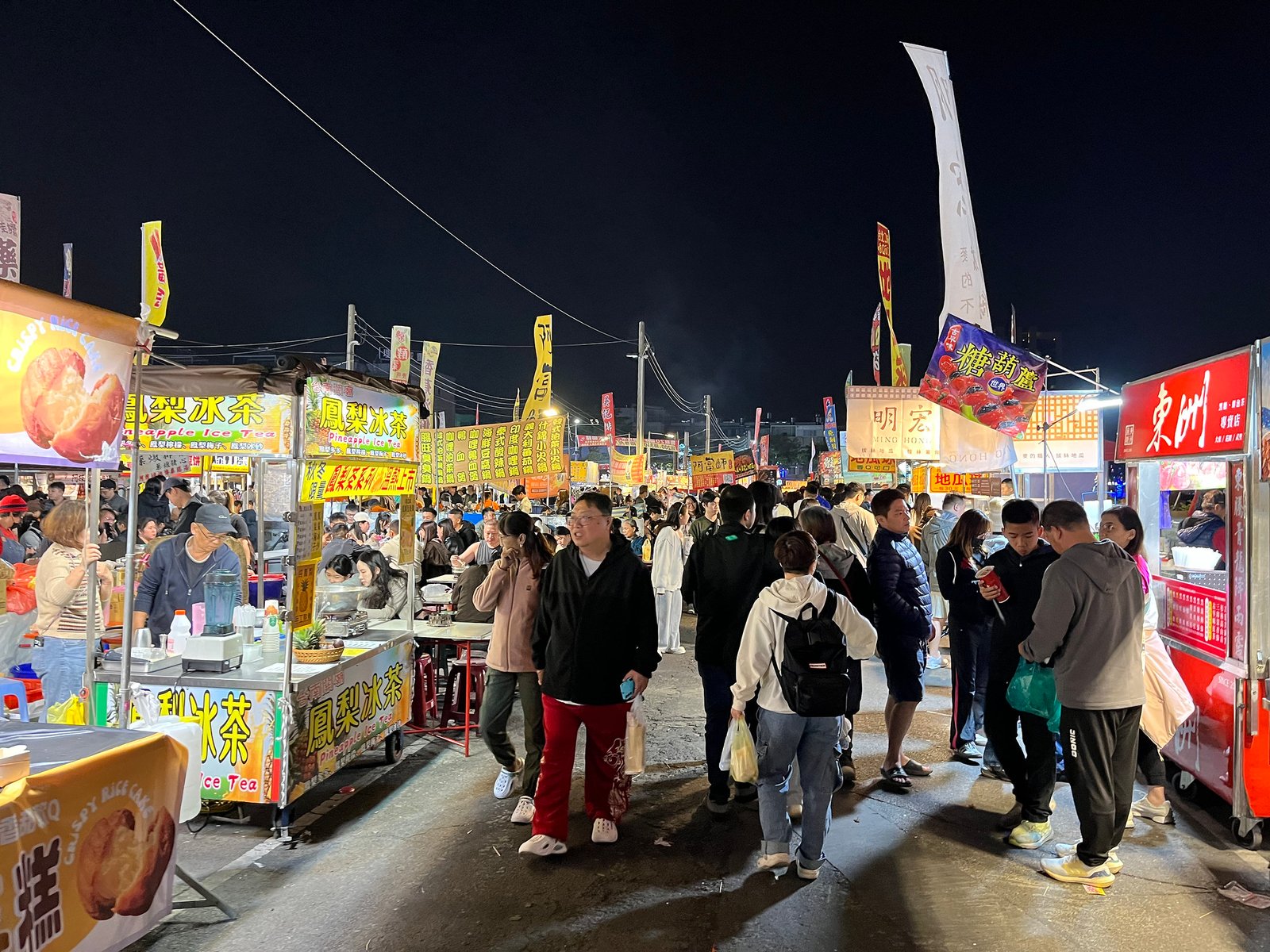
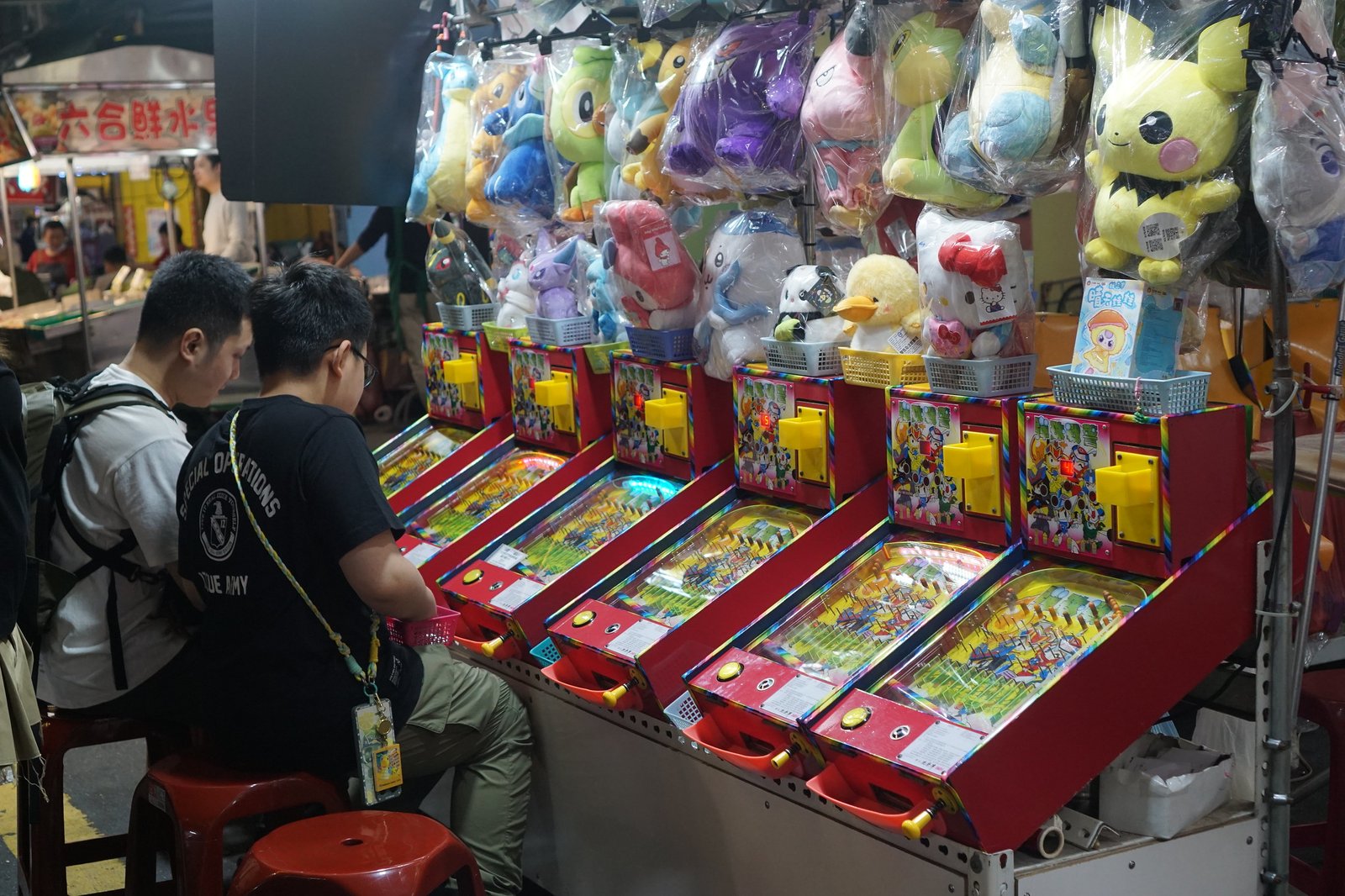
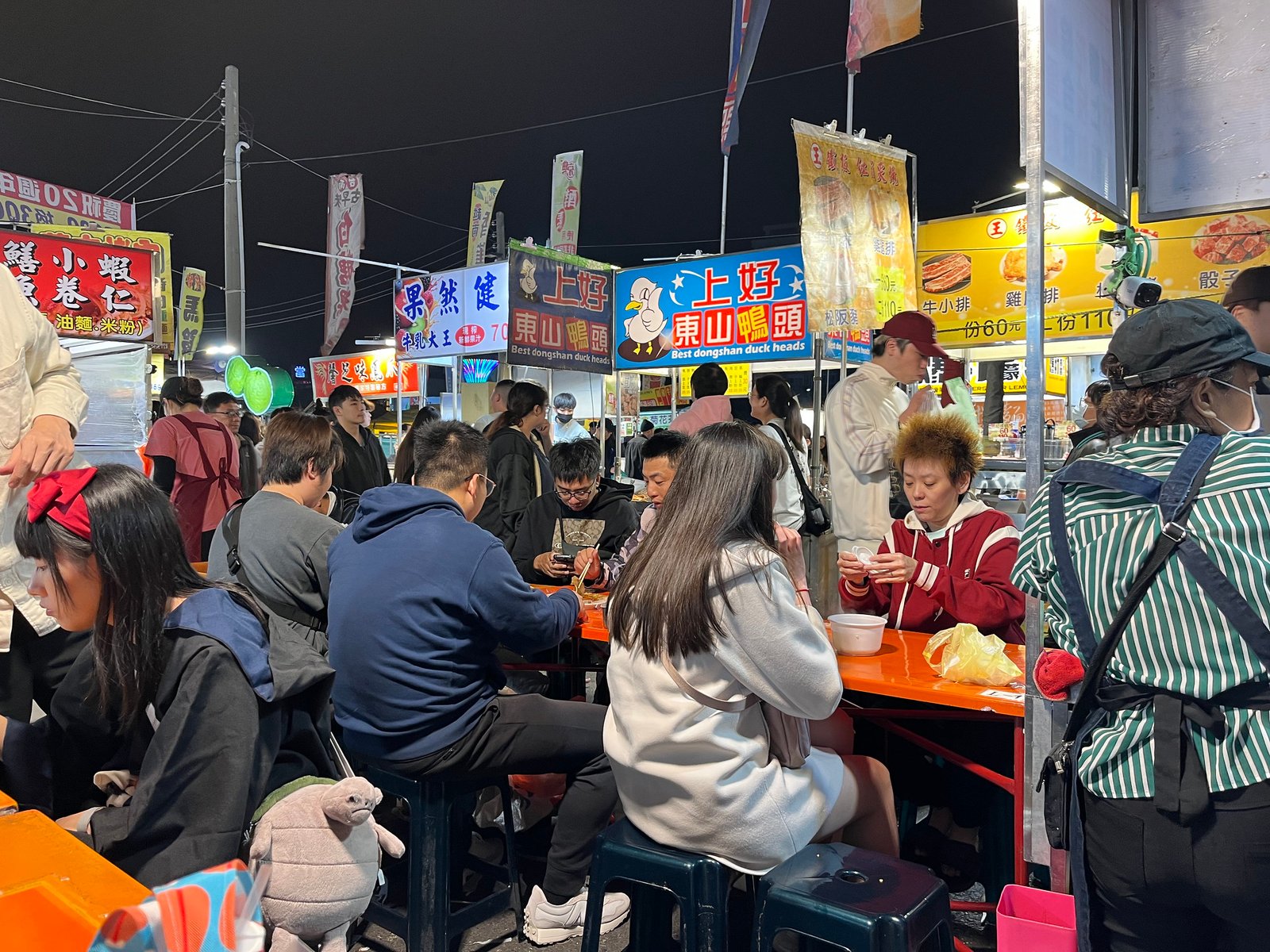
Most markets officially open around 6 pm and run late into the night, but the buildup starts earlier. By 4 pm, stalls are already firing up burners and prepping ingredients as students drift in after school and office workers arrive hungry. In Hualien, Dongdamen market even operated partial daytime stalls. In Tainan, markets rotated by day of the week, which turned dinner into a nightly strategy session of which market was open and where we were going next.
Taipei takes the concept of night markets to an extreme. The city has more than a dozen major ones, with Shilin, Ningxia, and Linjiang among the busiest. Shilin feels almost overwhelming in scale, set up in the old market building and spilling into surrounding alleys packed with food, arcades, and souvenir stands. Ningxia and Linjiang are more street-level experiences, where vendors line the roadway and scooters weave carefully through gaps in the crowd.
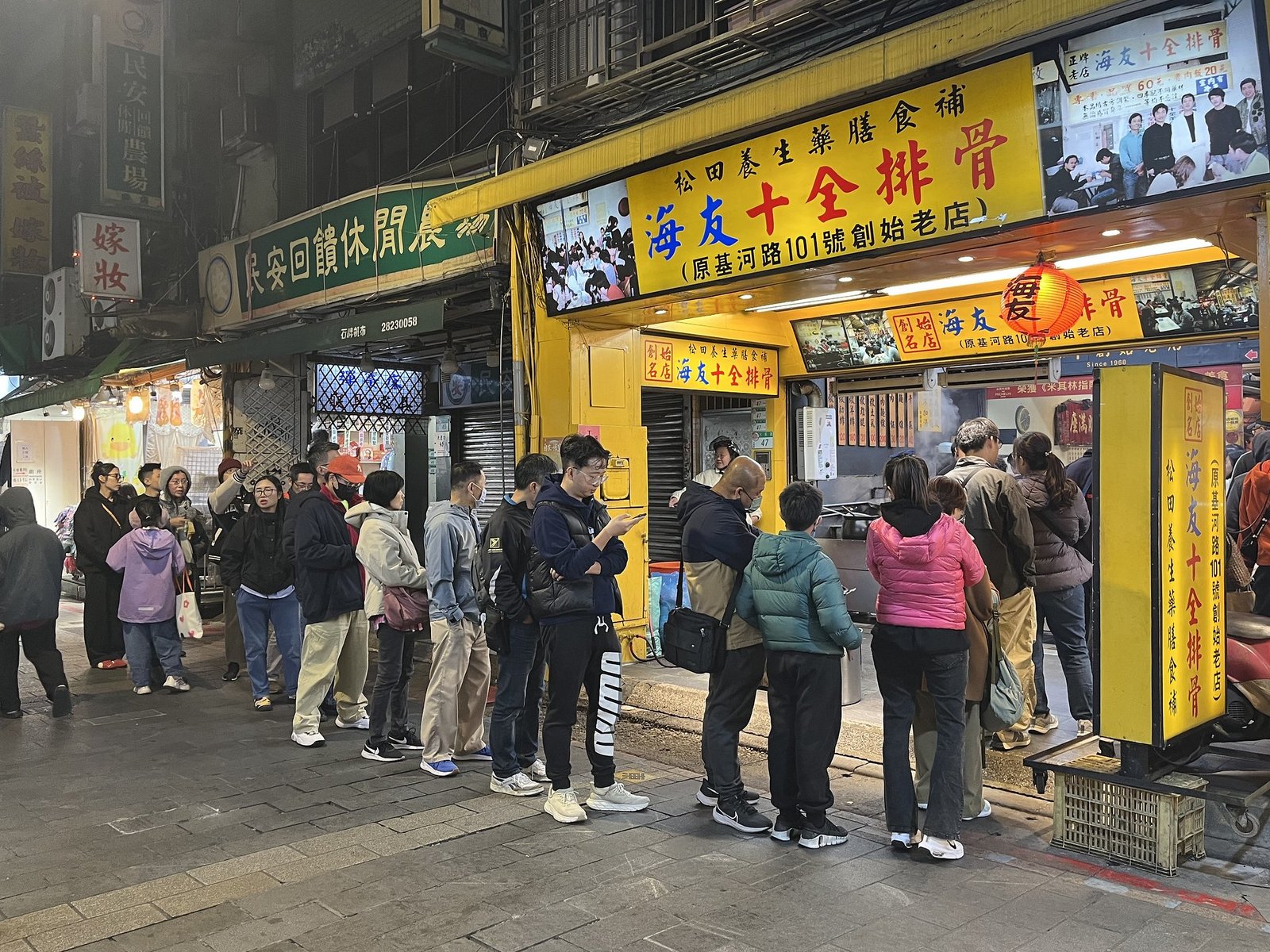
One thing we noticed about Taipei is how many lines there were for certain restaurants or stalls. Most vendors would be somewhat busy and then suddenly a long winding line would form next to a certain stall, with people waiting over half an hour to sample whatever treat was going viral on social media that week. We did end up waiting over 40 minutes just to buy one donut, so I'm not going to judge. It was crispy and pillowy soft and chewy all at the same time. As delicious as it was, I wouldn't do that again. We also waited in slightly shorter lines for grilled octopus and sweet potato balls, and honestly, if I lived next to a night market, you'd find me in those lines every single night.
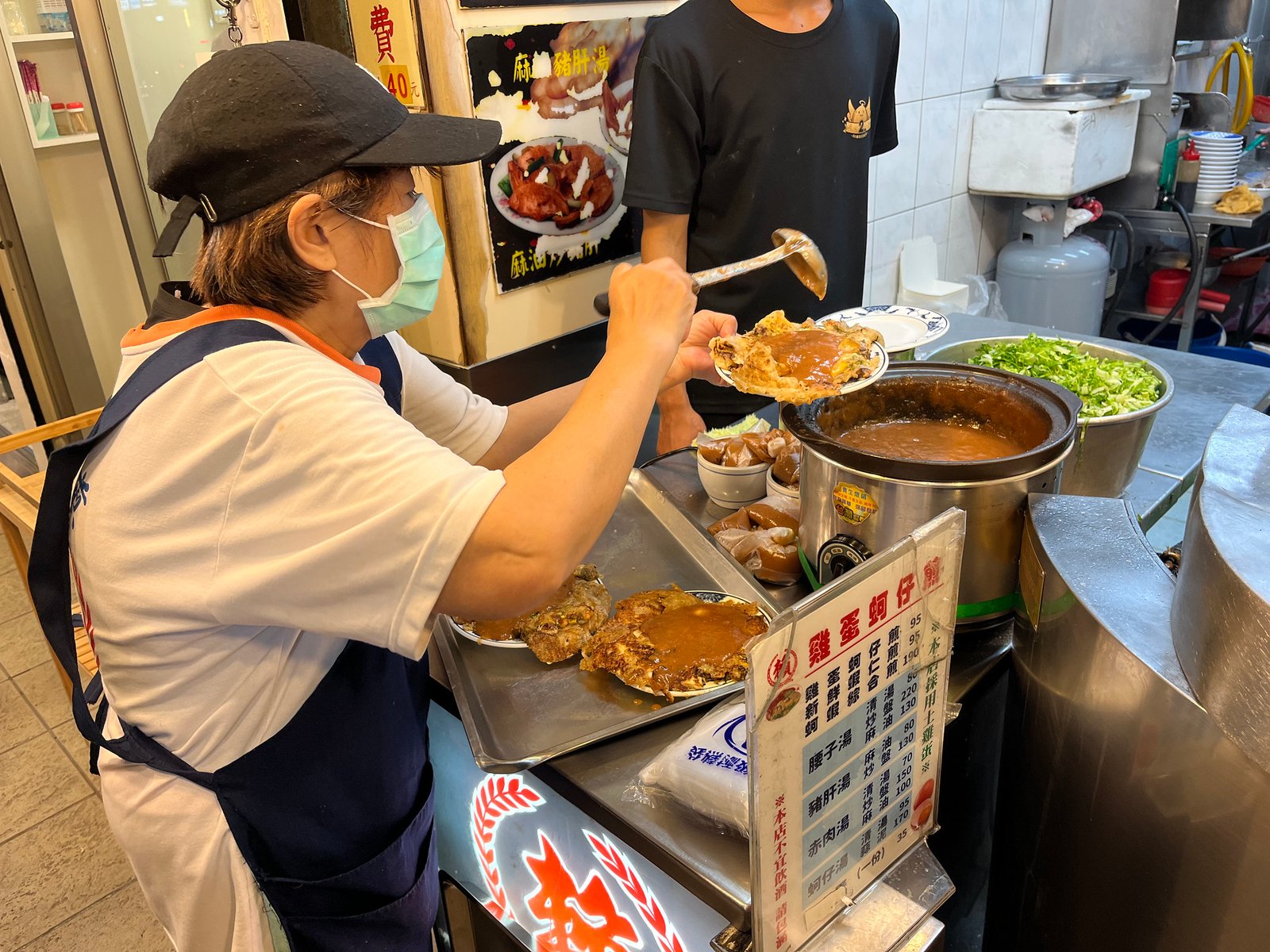
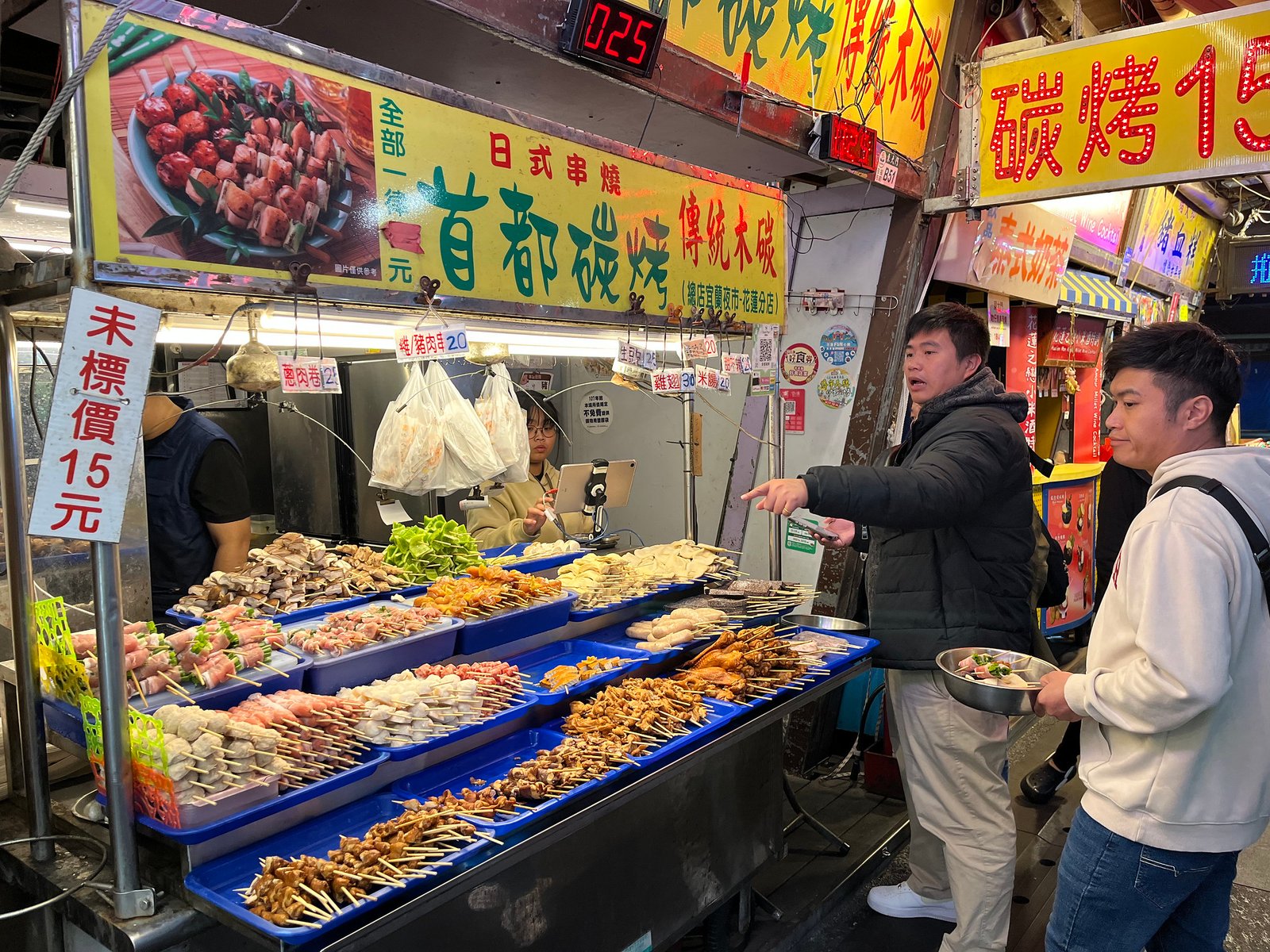
As we left Taipei and traveled through the country, we noticed certain staple foods sold at almost every night market: grilled meat skewers, Taiwanese fried chicken, pot stickers, sausages, beef noodle soup, stinky tofu, oyster omelettes, sweet potato balls, boba tea, and more. But often, markets also had their own local delicacies.
In Tainan, we visited Wusheng Night Market and Garden Night Market, both set up on the outskirts of the city in giant parking lots filled with market stalls. Both looked like carnivals from a street away, with bright lights, music, entertainment stages, and rows of vendors. The local delicacies in Tainan were coffin bread, prawn crackers, and milkfish soup, all of which we made sure to try.
In Kaohsiung, Liuhe Night Market, which took over an entire city block every evening, was probably the most tourist-friendly night market. We saw far more tourists than anywhere else. There we sampled a custard apple, a fruit we'd never seen before. It was delicious, creamy, and sweet, barely fruit, more like custard grown directly on a tree.
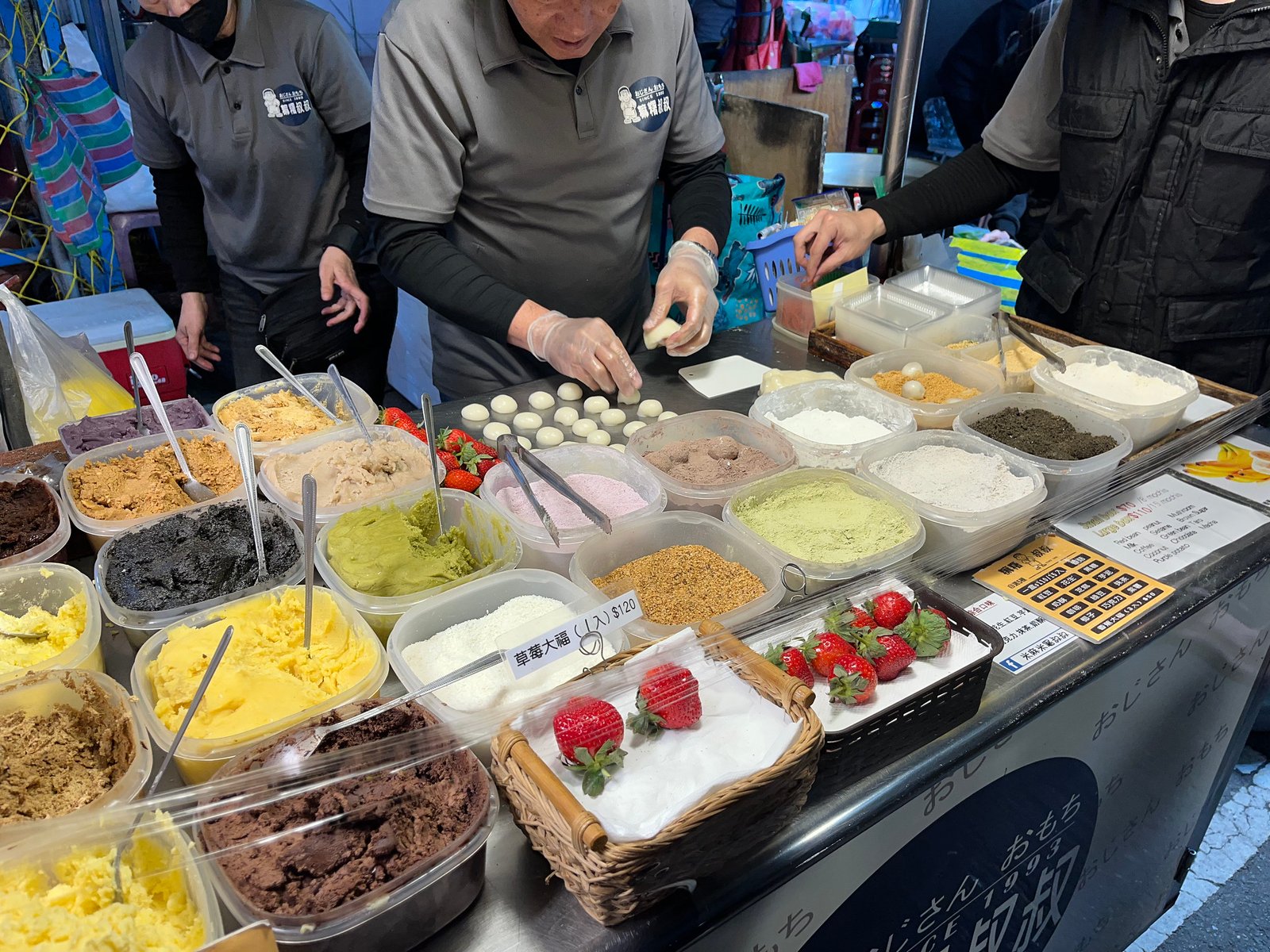
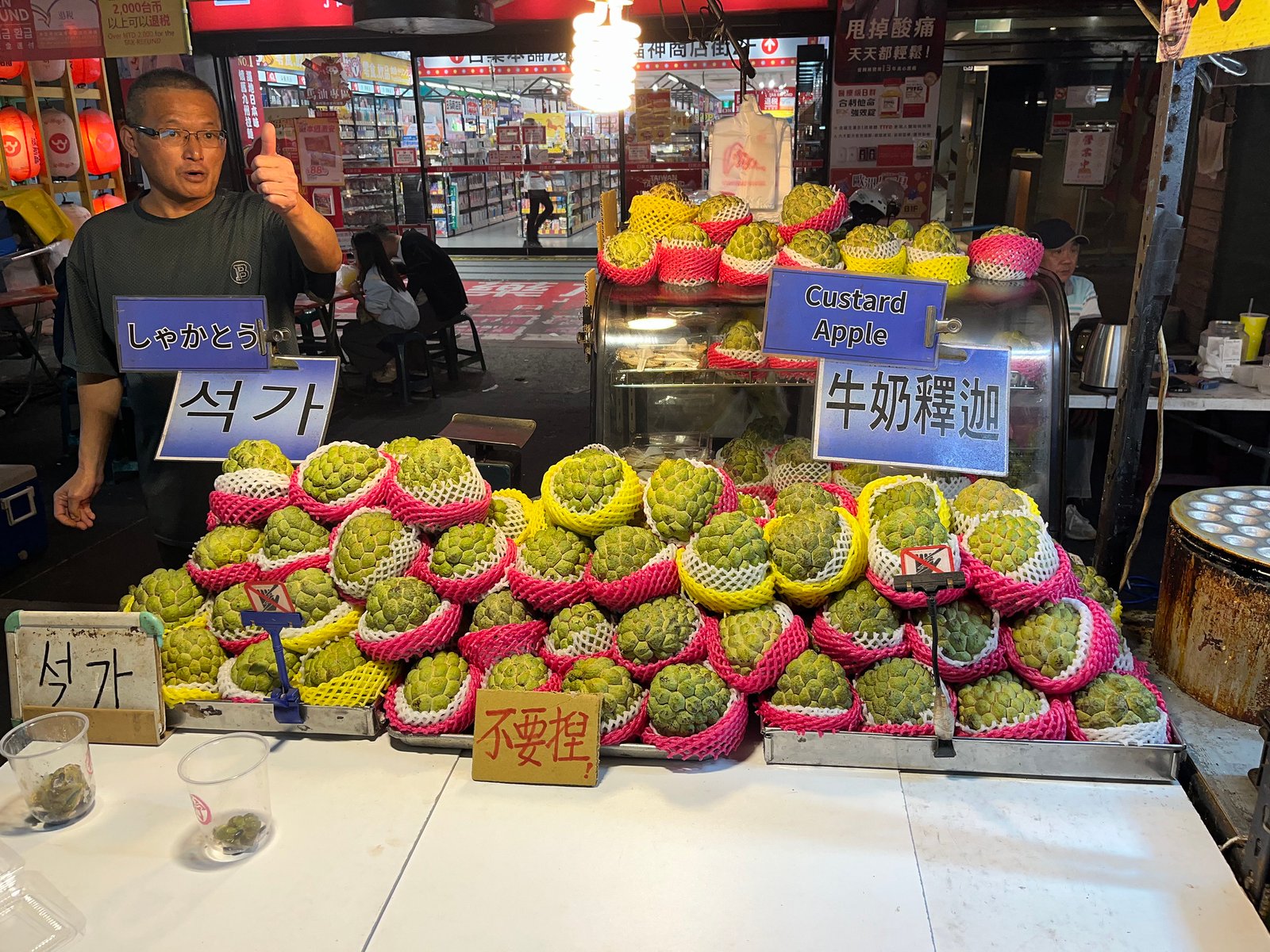
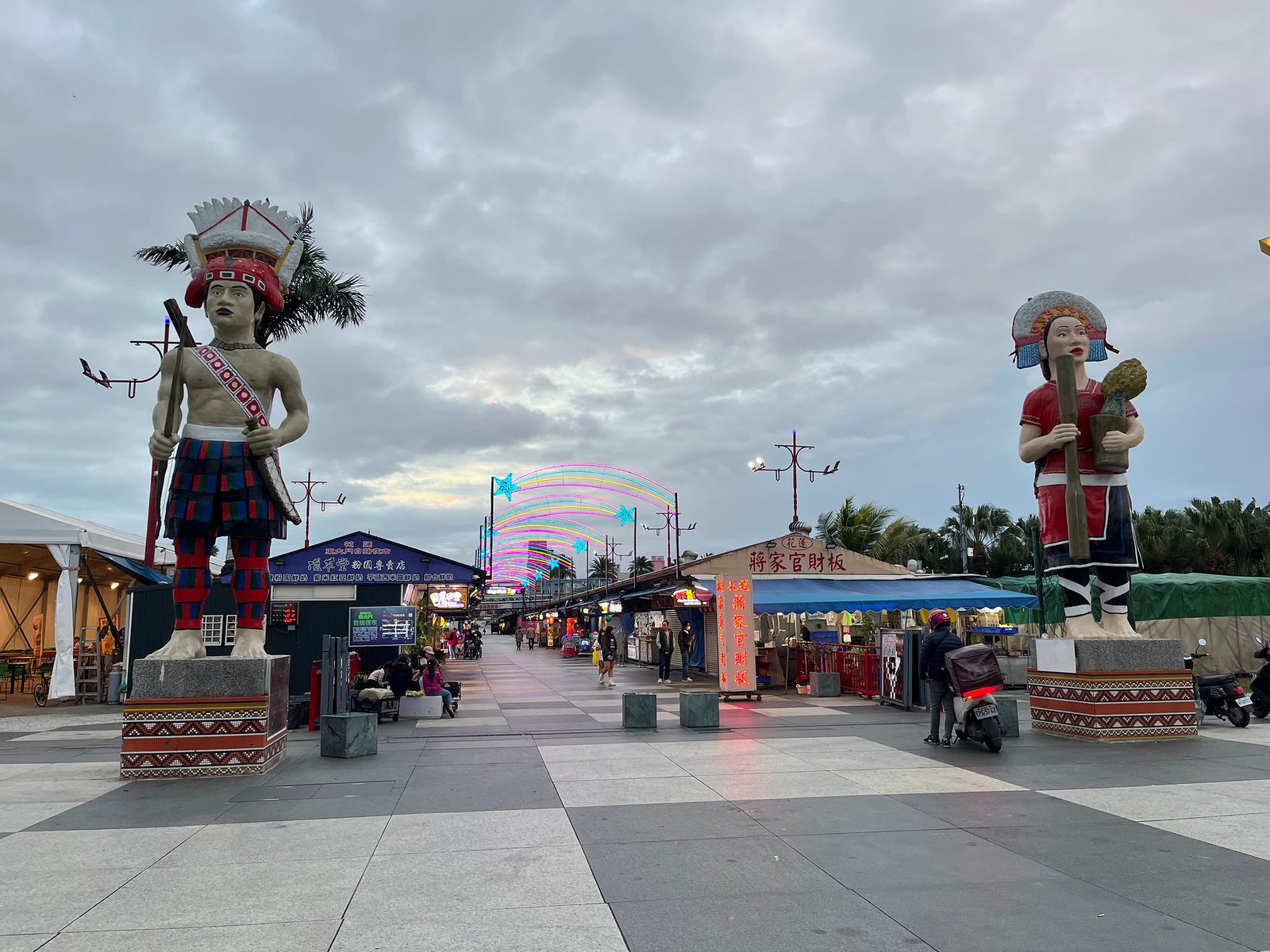
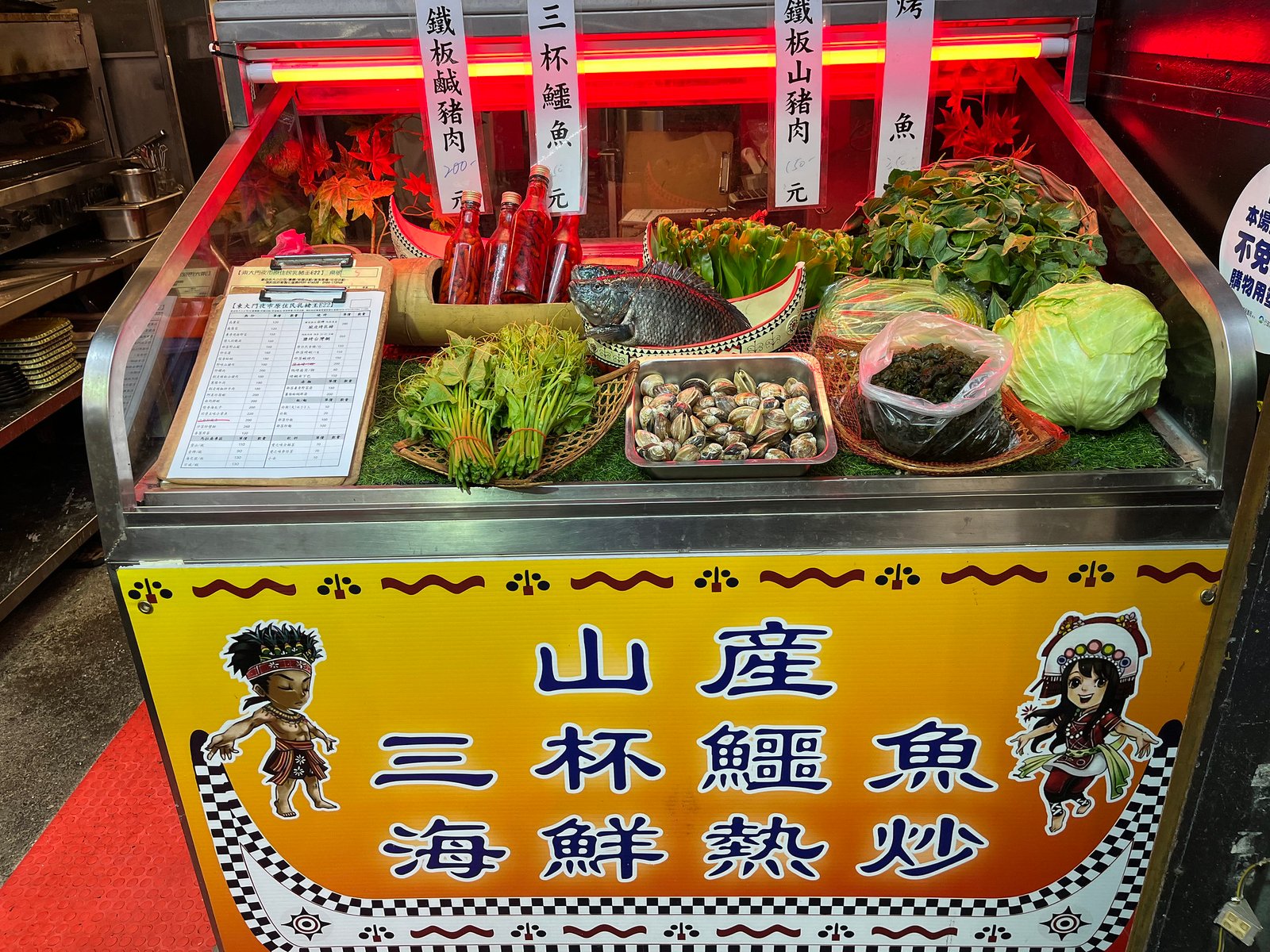
Dongdamen market in Hualien had a wide variety of seafood due to being a coastal town and an entire indigenous/tribal food section. Each stall displayed local vegetables and seafood for stir fries, and something we haven’t seen anywhere else – touts for each restaurant dressed in tribal clothes with microphones, calling customers to come and try their food.
There used to be multiple markets in Hualien and then they were all consolidated into one permanent location, which luckily enough was just a few blocks walk from our Airbnb. It’s the largest market in the country with a grid layout, spacious streets, located in the area that used to be the old train station. We spent all three nights at that market, wandering around and eating everything from indigenous dishes to caramelized corn on the cob.
I'm going to do a separate post on all the food we enjoyed in Taiwan, as it certainly won't fit here. So if you're confused about what coffin bread or an oyster omelette is, stay tuned.