
Alishan was giving me a headache.
Trying to fit this mountainous forest into our itinerary was a challenging task.
No direct trains from Taipei.
No direct buses.
Renting a car and driving up there? Maybe. But that wasn’t ideal.
The most reasonable option was to get to the city of Chiayi and then make a connection from there. People online raved about a scenic 3.5-hour train ride through the mountains on the historic Alishan Forest Railway. Yet, buying Chiayi-Alishan train tickets was more difficult than trying to solve a Chinese riddle. Tickets needed to be purchased well in advance, and the process of reserving them was quite confusing. The only way for this to work was to take a shuttle bus up into the mountains from Chiayi. But …
Will we find the shuttle?
Will it be sold out?
Will the connection be reasonable or will we get stuck in Chiayi for hours, or worse?
These questions swirled in my mind, making me doubt if this remote forest was even worth the hassle. After many hours of research and discussing our options, we reckoned that trying to pre-plan everything from a couch in Chicago was probably more difficult than just getting there and figuring out the logistics on the ground.
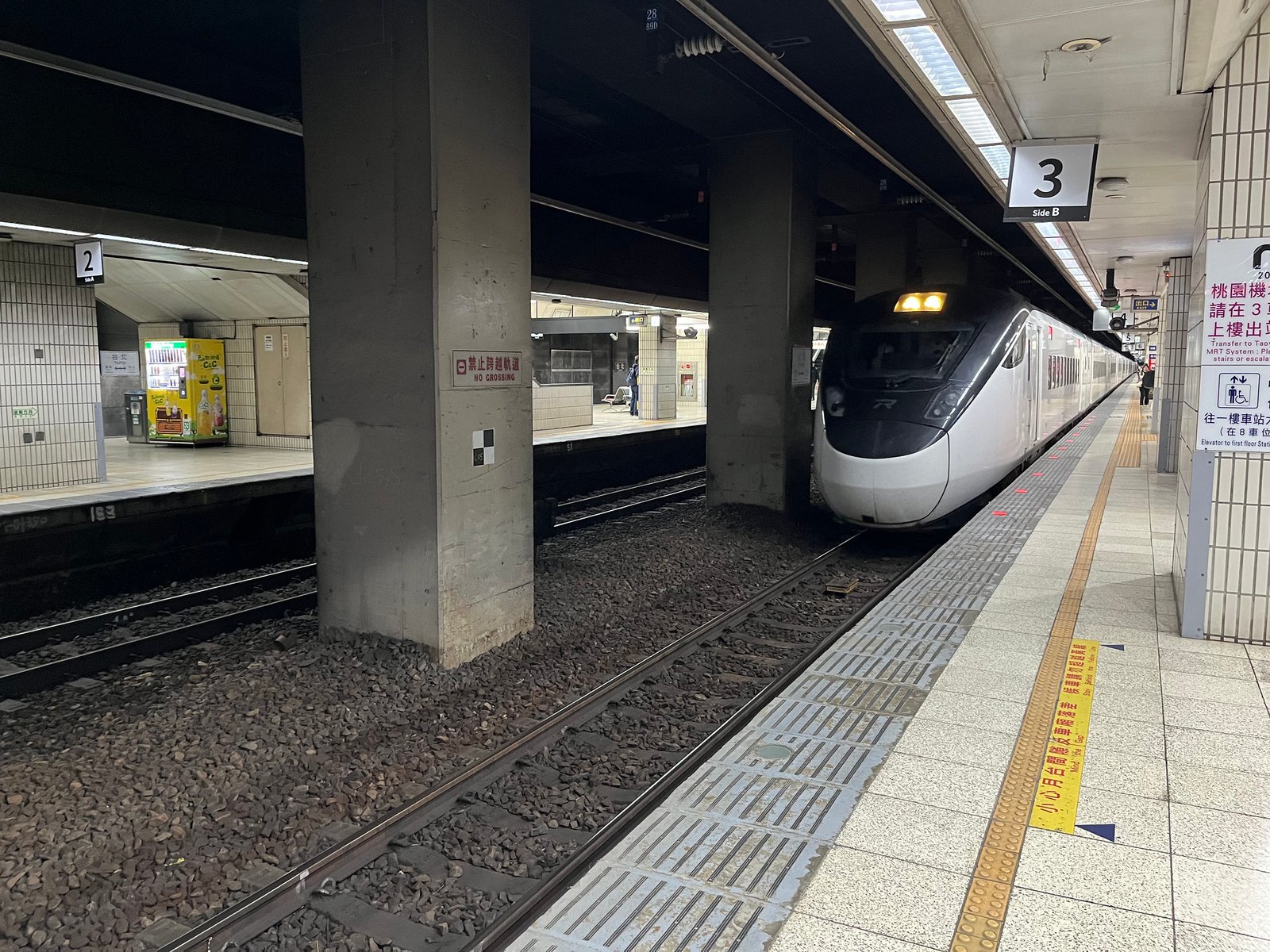
So, after a few days in the capital, we headed to Taipei Main Station. Although you can take a high-speed rail to Chiayi, we went on a limited express that got us to Chiayi in about 2.5 hours.
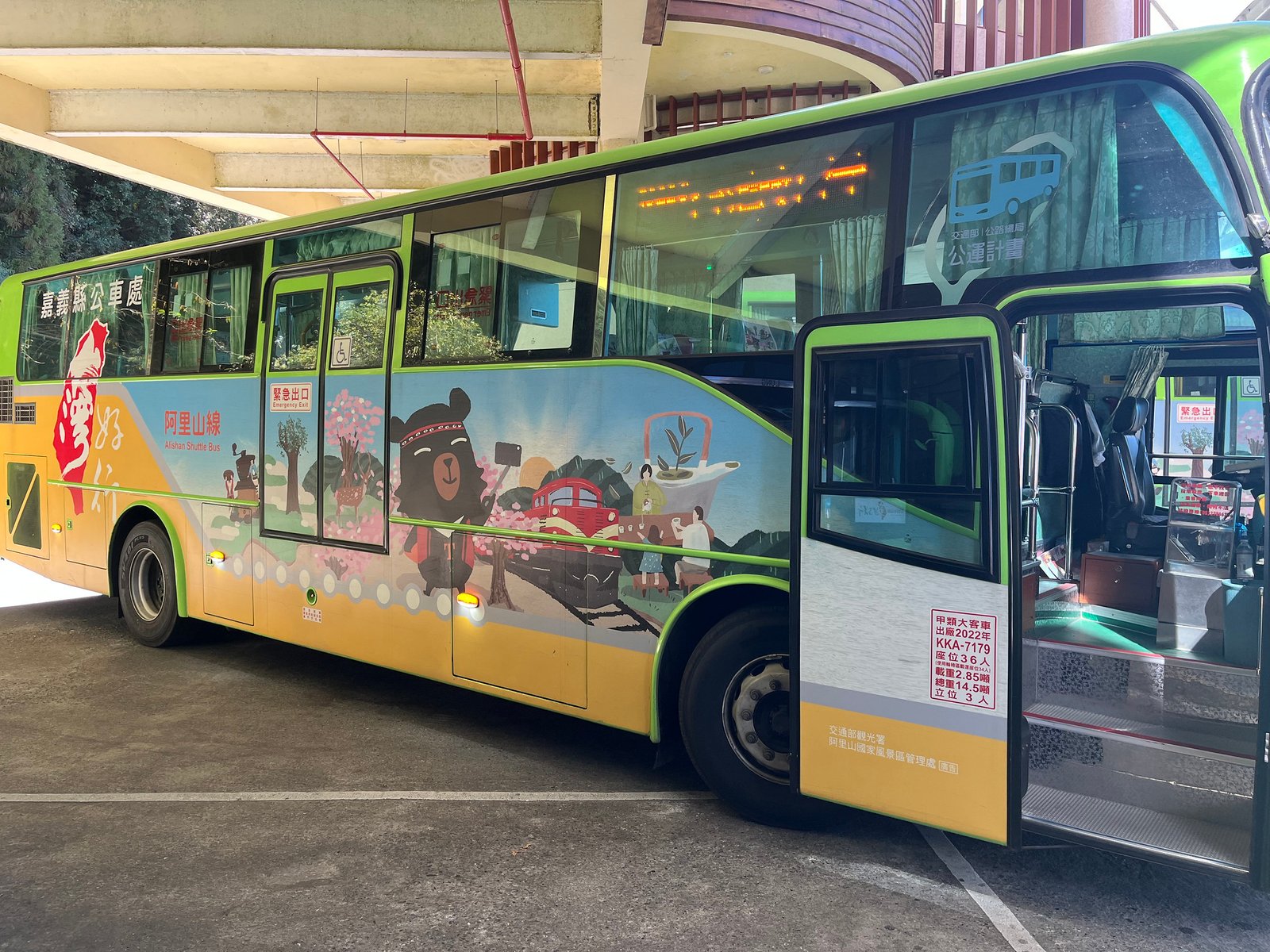
As it turned out, the most difficult part of figuring out the logistics – the one that gave me a headache in Chicago – was a non-issue. We arrived at the Chiayi train station and followed other travelers with backpacks, who soon congregated at the bus stop in front of the train station. A bus to Alishan arrived 20 minutes later and had space for everyone. We bought tickets from the driver, popped Dramamine to prevent motion sickness on winding roads, and settled in our seats.
The ride was very scenic. After leaving the city limits, the bus started to crawl up the steep mountainous road. The road dramatically twisted and turned, and we soon began seeing betel nut palms, also known as bamboo or butterfly palms, growing along the slopes. These tall and skinny trees looked innocent, but as we later learned, they are harvested for betel nuts that, when chewed, produce stimulant and narcotic effects. As we got higher – not due to chewing betel nuts, but because the bus was reaching higher altitudes – we passed mountainous villages set among tea-growing plantations and terraces. We would return to stay in one of these villages after our visit to Alishan.
After about a two-hour stomach-turning ride, the bus finally arrived at the entrance to the Alishan National Scenic Area. Although we had accommodation booked inside the park, we still had to pay an entrance fee, but the price came with a discount due to our arrival on a shuttle bus. We dropped our backpacks in the hotel lobby and ran to explore the area to take advantage of a few daylight hours left.
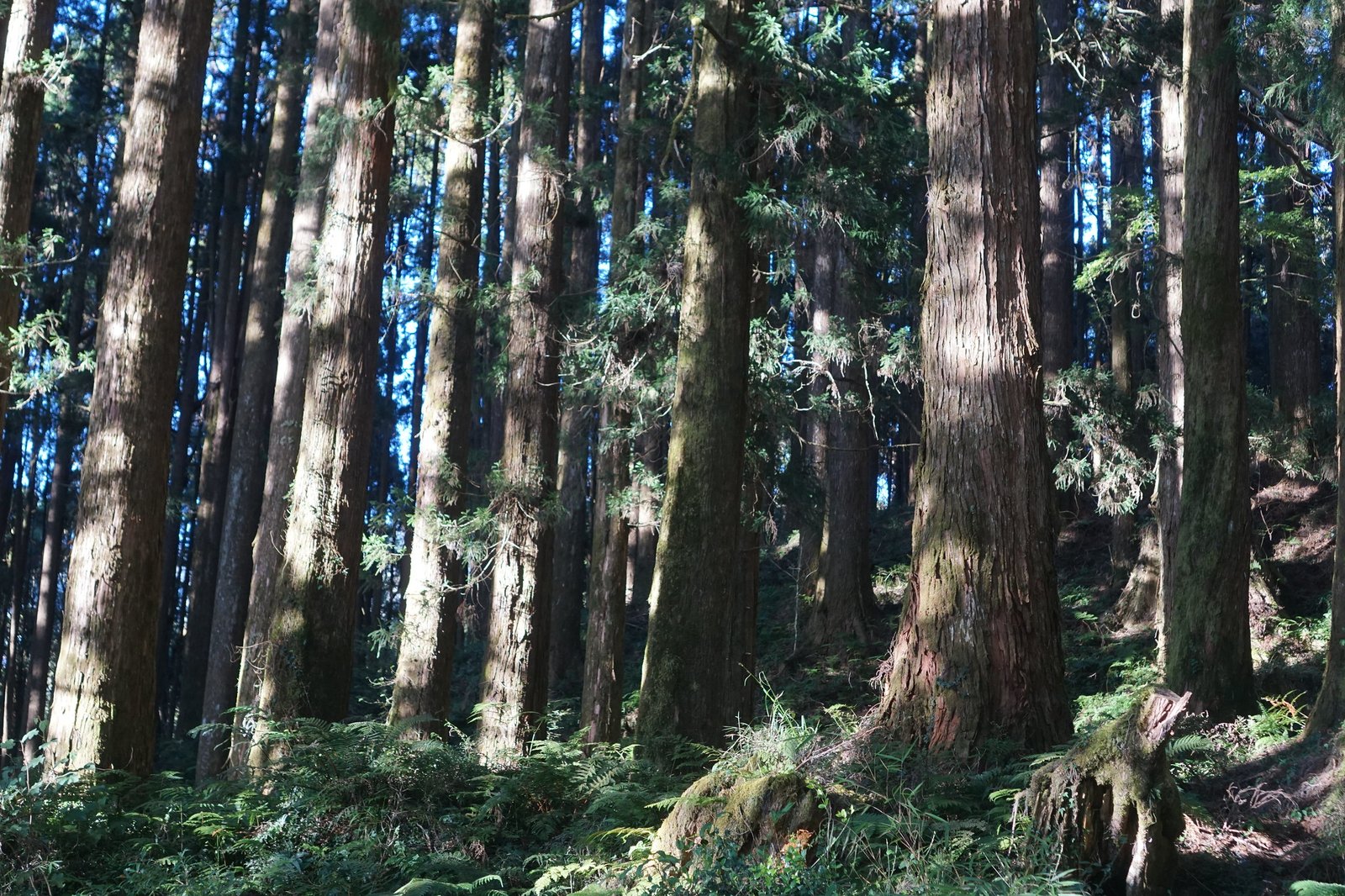
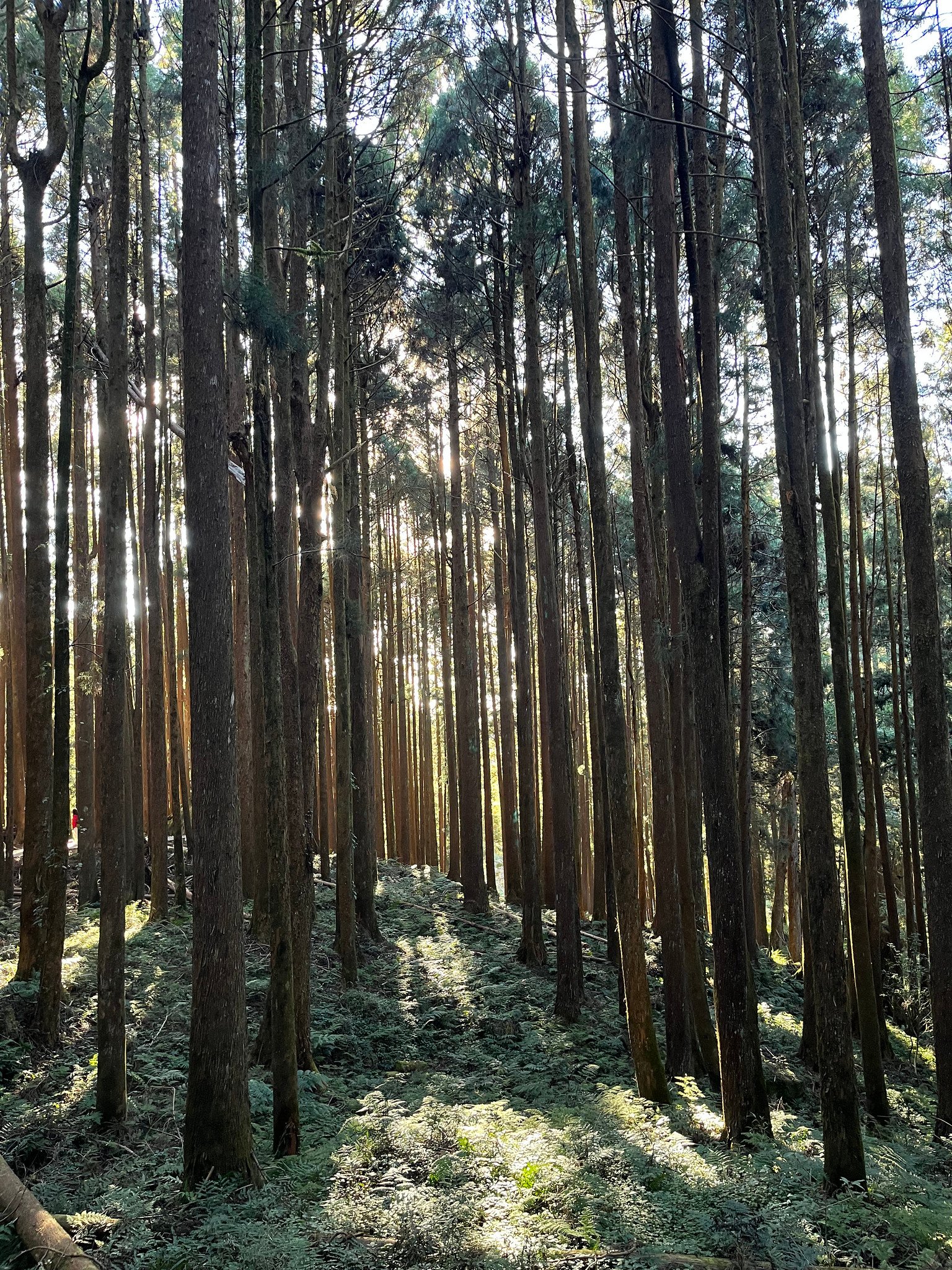
Alishan is a unique place. The nature reserve is home to probably the most Taiwanese tree – the red cypress, also known as the Formosan cypress. These trees are tall, massive, and simply beautiful. Many of them are primeval, with some being between one and three thousand years old. Due to their size and age, they reminded us of giant sequoias and redwood trees from California’s national parks.
In the first half of the 20th century, when Taiwan was under Japanese rule, the colonial powers were less concerned with the beauty of red cypresses than with the economic potential. As a result, widespread logging ensued. To transport timber out of Alishan, the Japanese built an extensive rail network. Post-war, and following the Japanese exit, the deforestation continued, eventually seriously threatening the habitat. Luckily, before it was too late, the Taiwanese government reversed course and banned red cypress logging. From a logging center, Alishan transformed into a tourist destination. The old locomotives that had previously moved lumber got repurposed and now transport visitors.
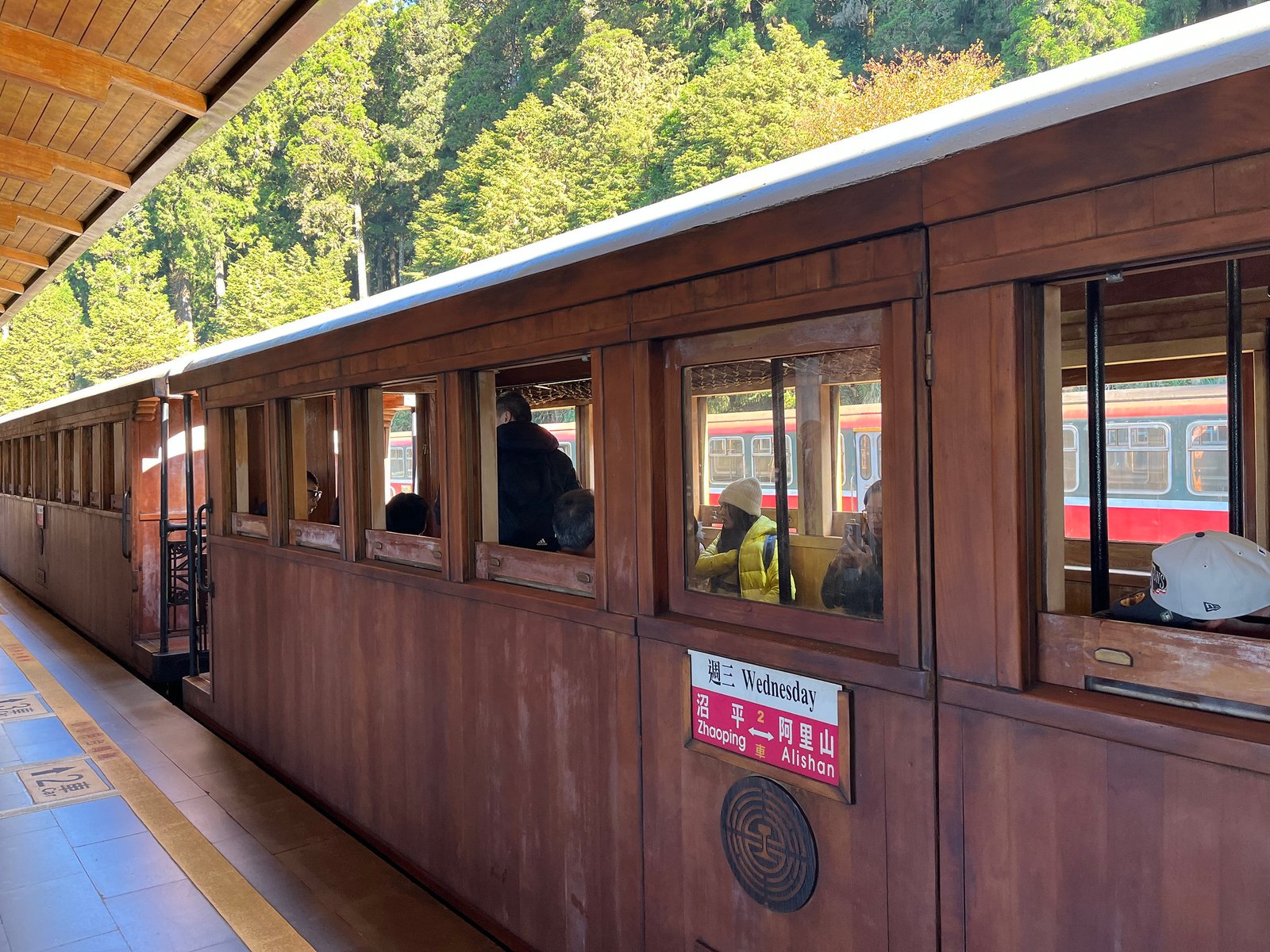
Though we didn’t plan for it, we were in the park on the best possible day - a Wednesday. The number of tourists was significantly lower than on the weekend and allowed for more peaceful exploration. But even more importantly, on Wednesdays, you can ride the Alishan Forest Railway in old, vintage wooden train cars.
We hopped on the train at Alishan station and went to Zhaoping station. The ride was brief - about 6 minutes - but it was so much fun. The benches in the old wooden cars were rustic and creaky and smelled pleasantly of timber. The train chugged on the narrow-gauge railway passing bridges and tunnels and through dream-like mountainous landscapes. After the ride, we bought tickets for the next morning’s sunrise ride and went for a scenic hike through the forest.
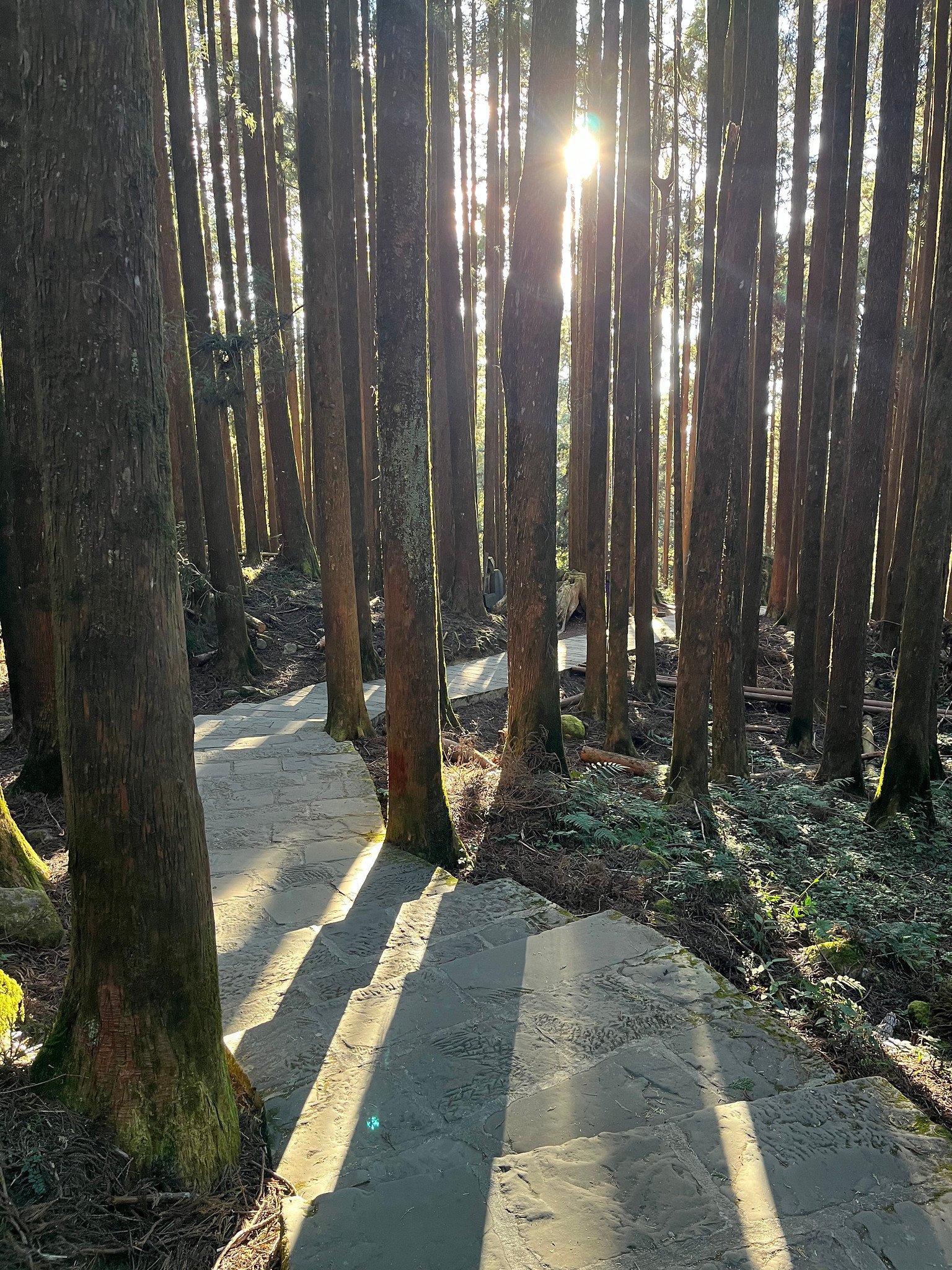
The park has a well-maintained network of trails, and walking them was a truly meditative experience. Red cypresses extended their exposed roots and branches and looked like mystical creatures. The light seeped through the canopies and reflected on well-trodden trails. The air was fresh and crisp. It felt nearly intoxicating, making my head buzz pleasantly.
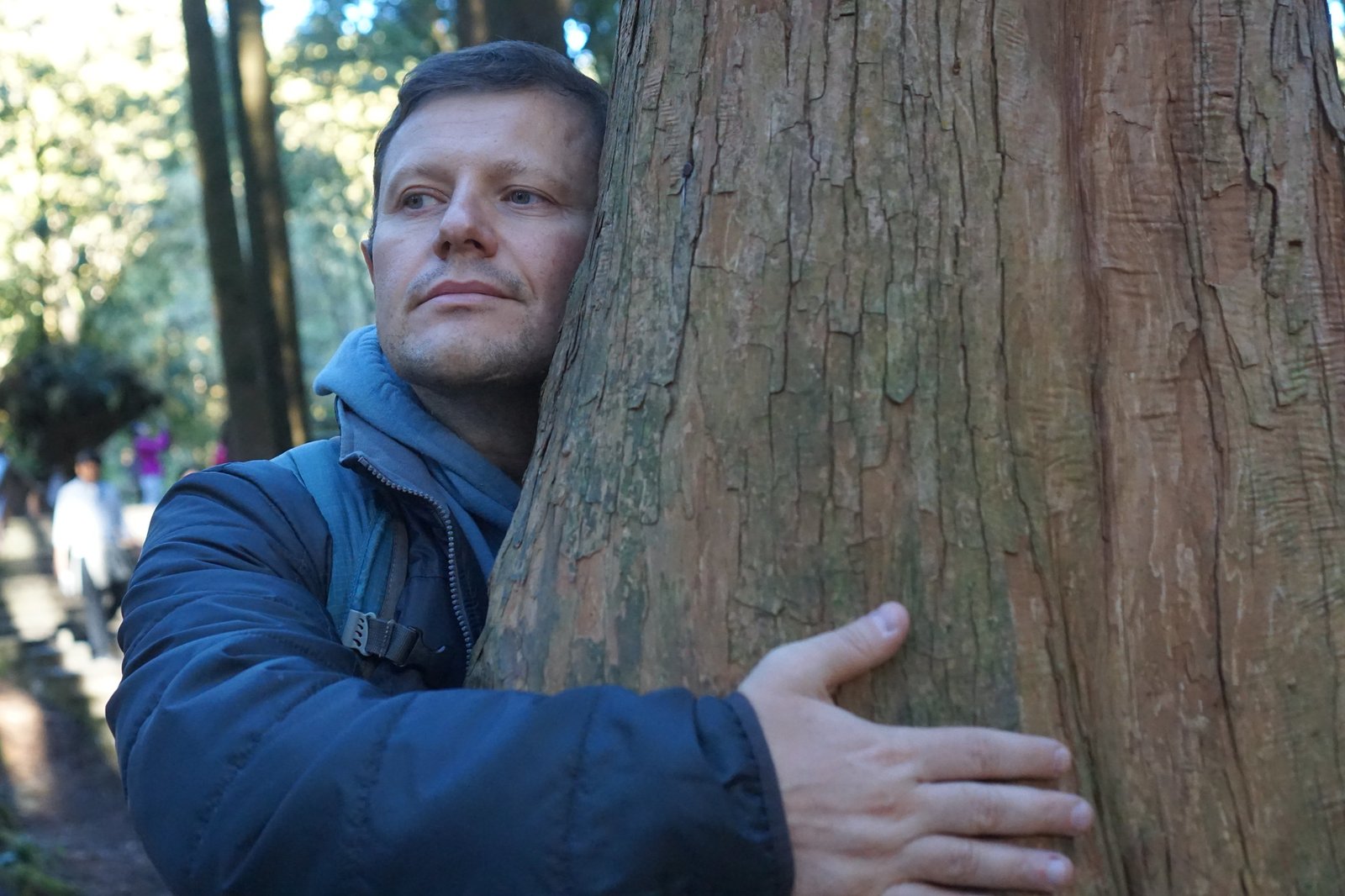
As we strolled through this enchanted forest, I had a sudden urge to... hug a tree. A red cypress trunk is soft with no sticky tree resin. It’s very huggable. Just lean in, wrap your hands around it, and feel the warmth and calmness radiating through your body. People in the park were giving me looks, but I didn’t care. I hugged the tree, closed my eyes, and had a near-transcendental experience. Later, I learned that my desire to hug a tree was not an unusual reaction, and many people come to Alishan to engage in such forest therapy.
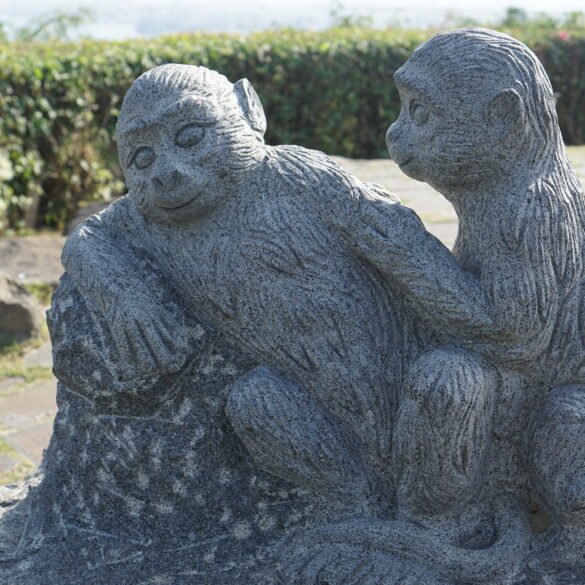
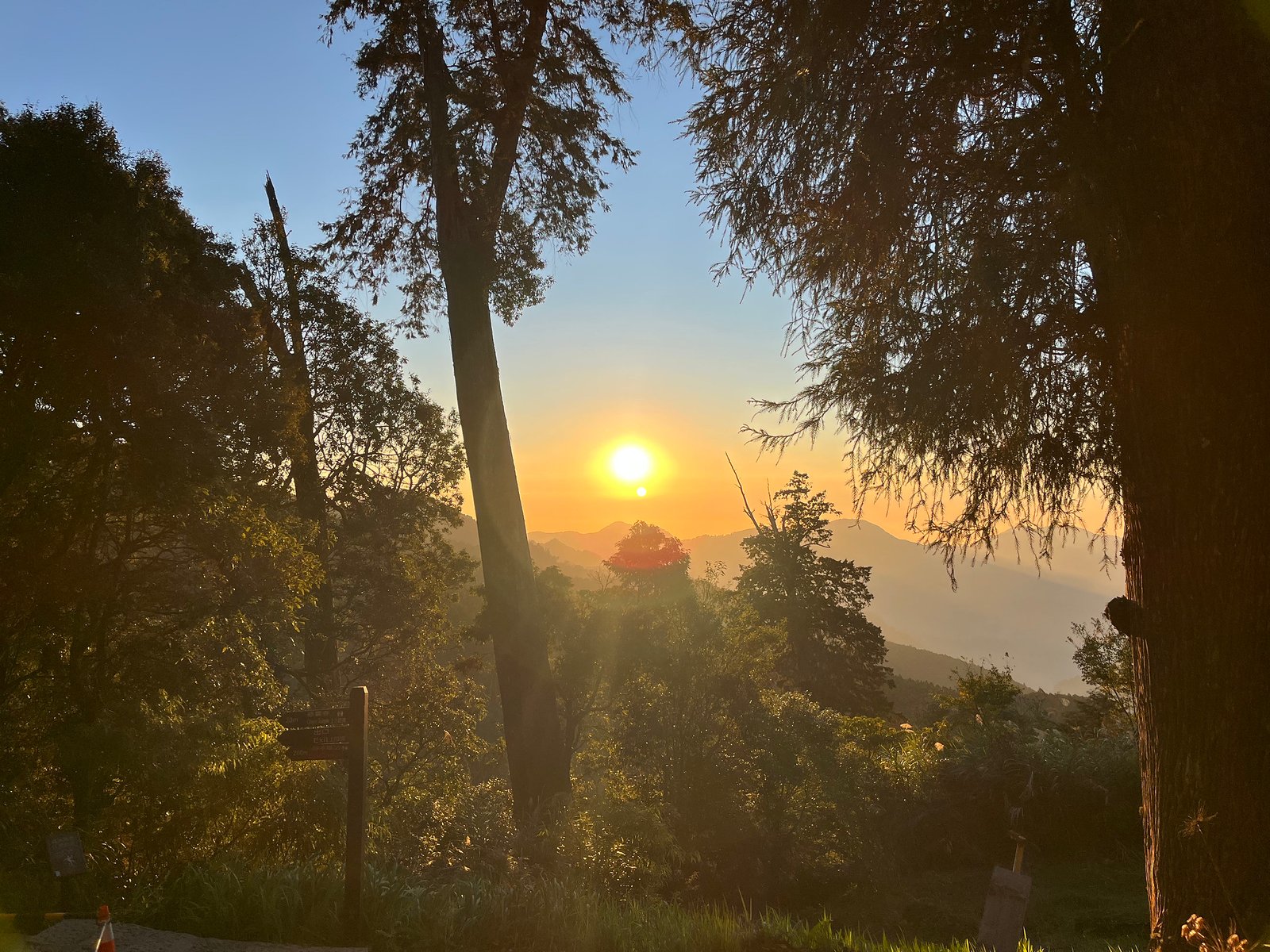
For two hours, we wandered around the park and saw countless birds, monkeys, and plants, like calla lilies and magnolia trees. We finished the day by watching the sunset from a viewpoint by an old Japanese temple and near the 3,000-year-old sacred red cypress tree. After the sun gloriously dipped behind the horizon, we headed back to the hotel. The darkness fell quickly in the mountains, but the path was well-marked and well-lit.
We grabbed dinner from the local “night” market and went to bed early. The next morning was the reason why so many people make an arduous trek to this far-flung corner of Taiwan. And we were not going to miss the show.
Next week: We find ourselves in the sea of clouds.