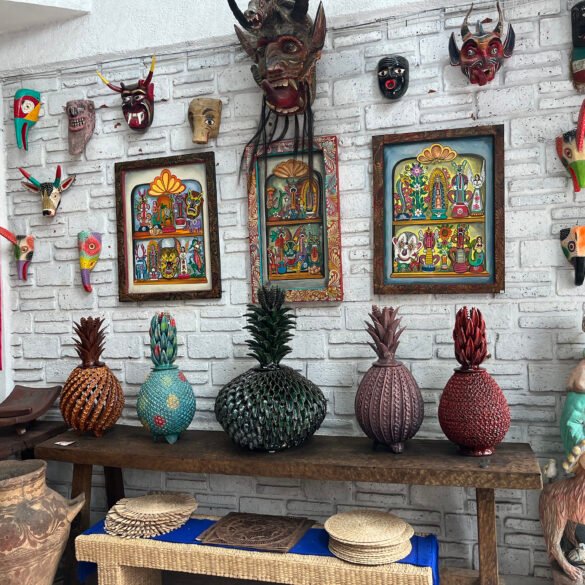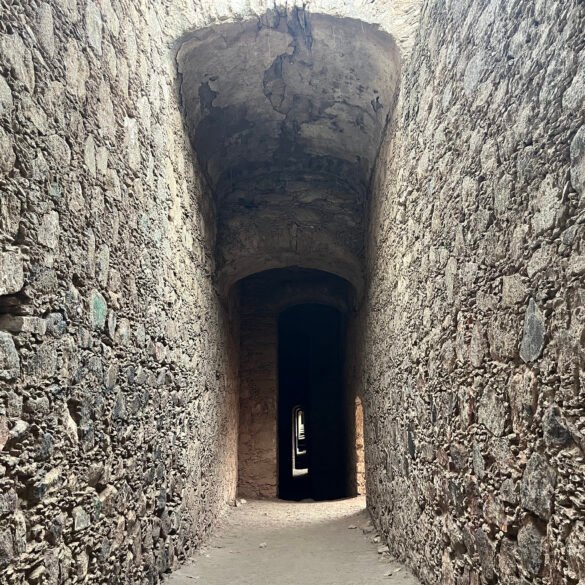

We were in San Miguel de Allende, enjoying all the classic traits of a pretty Mexican town - a gorgeous church dominating the skyline on the main plaza, colonial architecture with carved wooden doors and wrought-iron balconies, winding cobblestone streets, and quaint local markets where indigenous women sold traditional crafts.
It was a perfect evening. We were admiring the neo-Gothic spires of La Parroquia church, bathed in the rays of the setting sun and listening to cheerful mariachi music drifting across the plaza.
"Tomorrow, we're going to a ghost town," Victor said casually.
I sighed. Of course, we were. I didn't even bother to question it.
The next morning, while driving for an hour to our destination, I finally decided to question it.
"So, a ghost town because there are ghosts or..."
Victor sighed. And then came the history lesson. Mineral de Pozos used to be a booming mining town well into the 20th century, but fell into decline and disrepair as soon as the silver mines closed. There are many abandoned buildings and fewer than two thousand residents left in a town that once housed over fifty thousand people. So, an actual ghost town. Minus the ghosts.
"It's unlikely we're going to see anyone," Victor said. "The town is said to be mostly empty. But it's also a pueblo mágico, so we'll walk around a bit before we visit the abandoned silver mines."
It sounded like a good plan. Except there was a cop car blocking the road at the entrance to the town, and the police officer waved for us to take a detour down a dirt road.
"That's weird," Victor said. "I wonder what's going on. It's fine, we'll enter the town from the back."
We bounced down the dirt road until we arrived at a field behind the town. The field was full of parked cars. Dozens of families were walking toward the town, sounds of music floated from the main square, and the faint aroma of something delicious being grilled hung in the air.
This was anything but a ghost town.
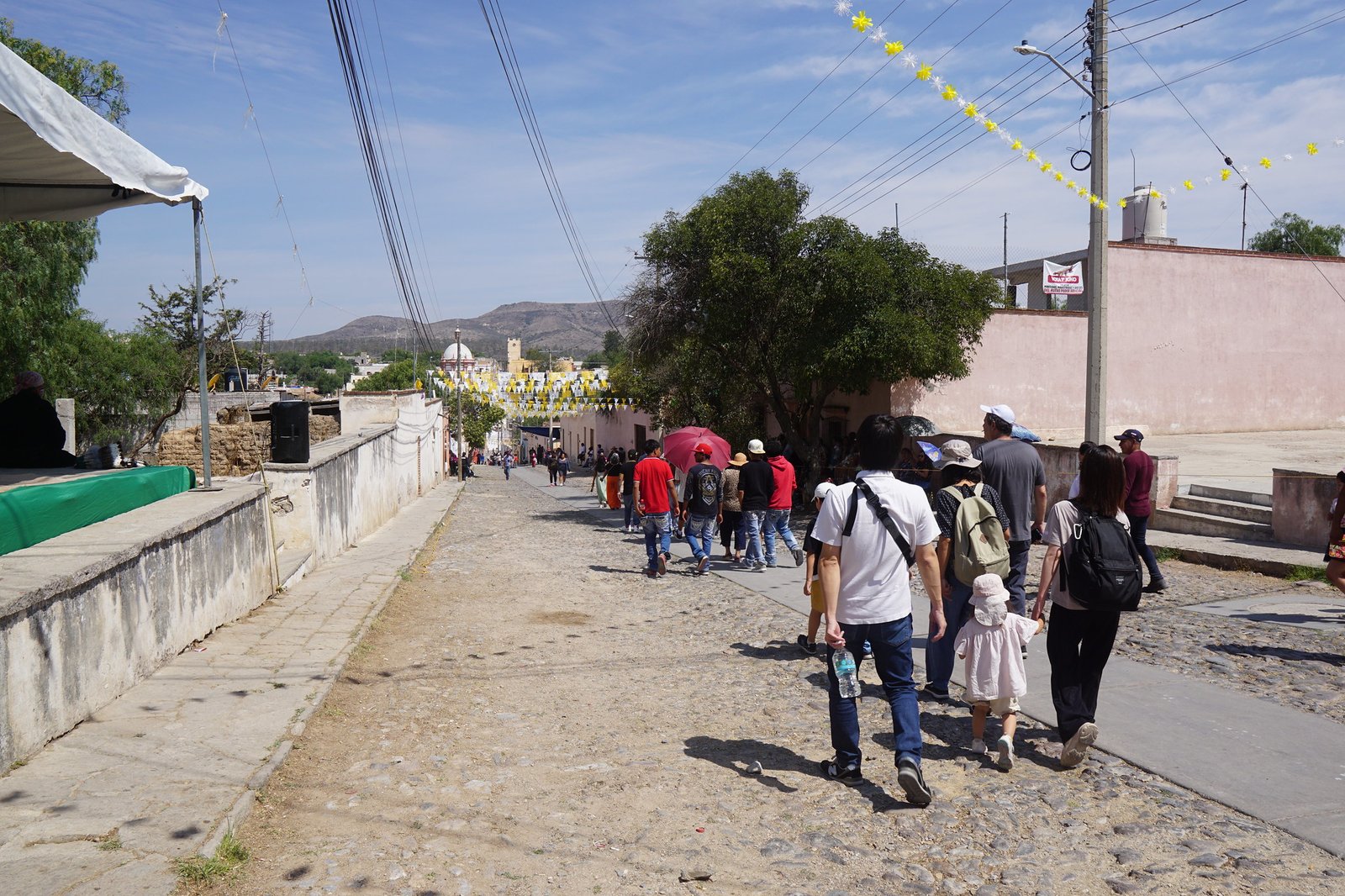
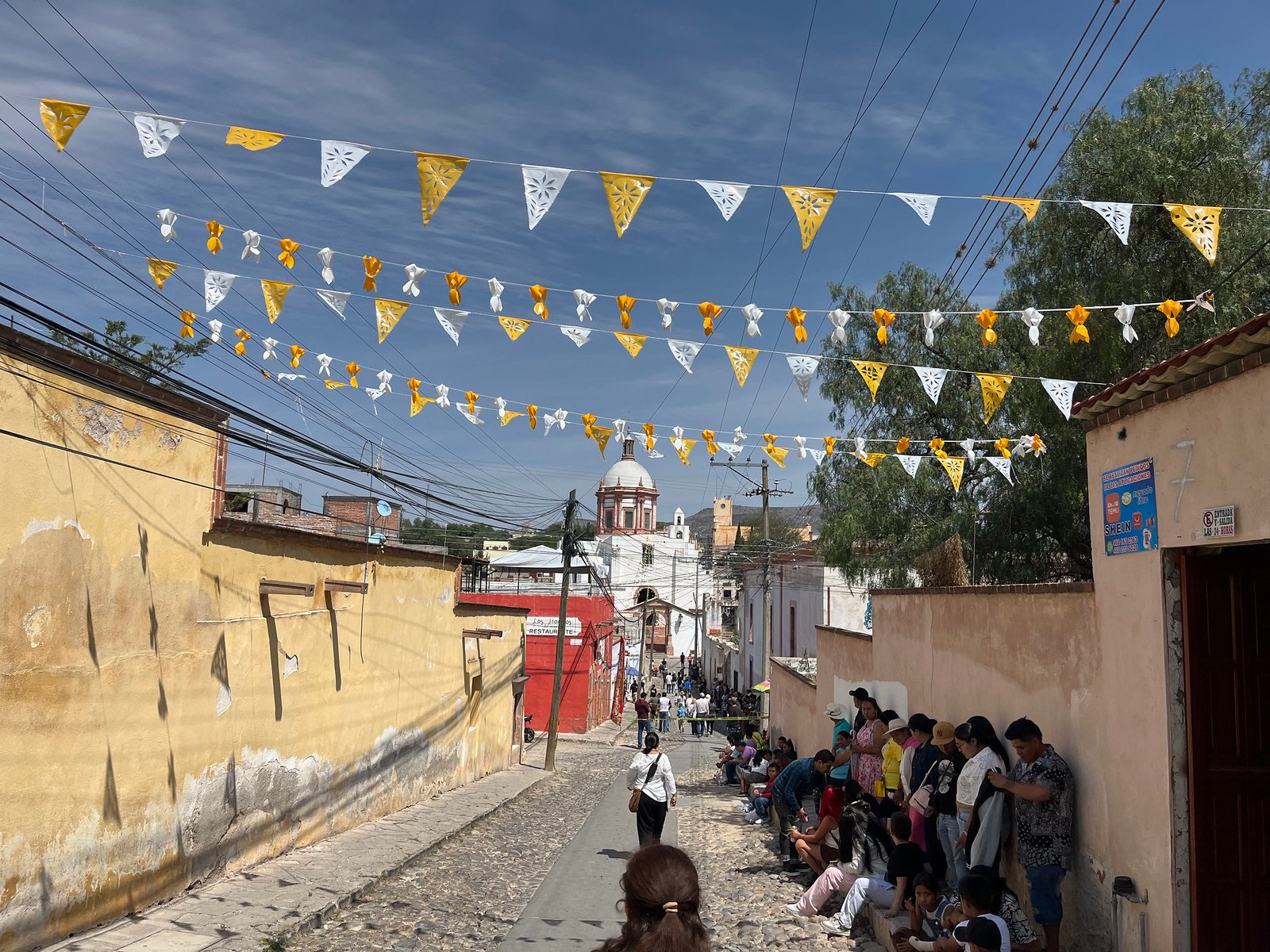
As we walked toward the main square, the sidewalks were lined with hundreds of people sitting on the ground or in plastic chairs. It was as if all two thousand local residents had come out to greet us, the tourists who came to see an abandoned ghost town.
Finally, Victor stopped by an elderly couple sitting on the ground and asked them in Spanish what was going on.
"A parade!" he translated for me. "An event, a celebration, and a dance. In honor of El Señor de los Trabajos."
"Who is that? This Señor sounds important."
Victor shrugged. "It translates as 'the Lord of Work.' Maybe a patron saint?"
Turns out, we had arrived during the one week out of the entire year when Mineral de Pozos celebrates its patron saint, El Señor de los Trabajos (who just happens to be none other than Jesus). And during this week, this otherwise empty town transforms into the most happening place in all of Mexico. Local tourists come from neighboring cities and towns, and indigenous people travel from Mexico City and other states for a fiesta with processions, drumming, dancing competitions, marching bands, music, and markets.
And we had no idea that any of this was happening. We just strolled in, completely unaware. But here's the thing about Mexico - if there's a party, everyone is welcome. We found a nice spot in the shade and joined the crowds waiting for the celebrations to start. Soon enough, the sounds of music from the main plaza were replaced with drumming, and the parade began.
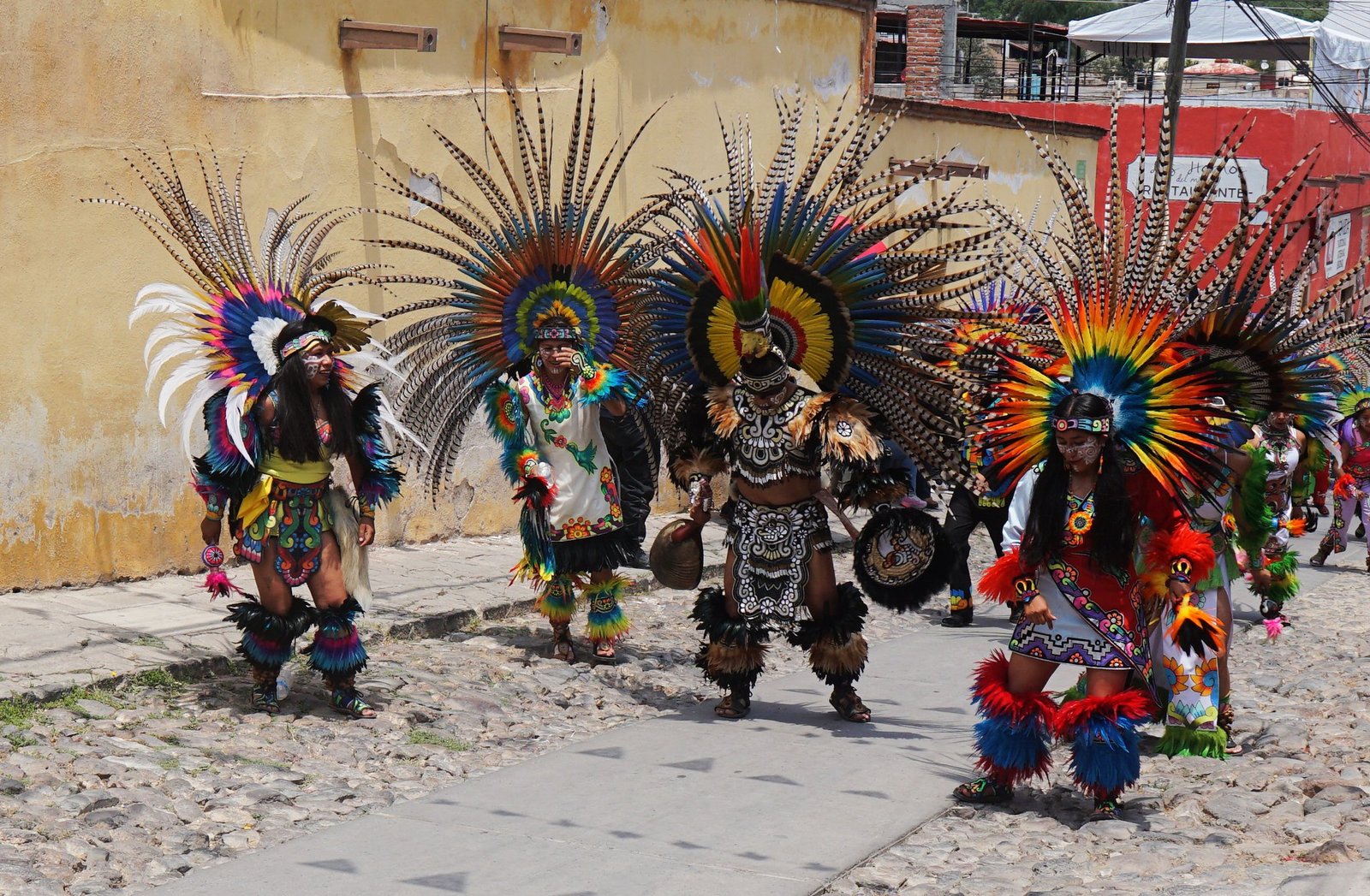
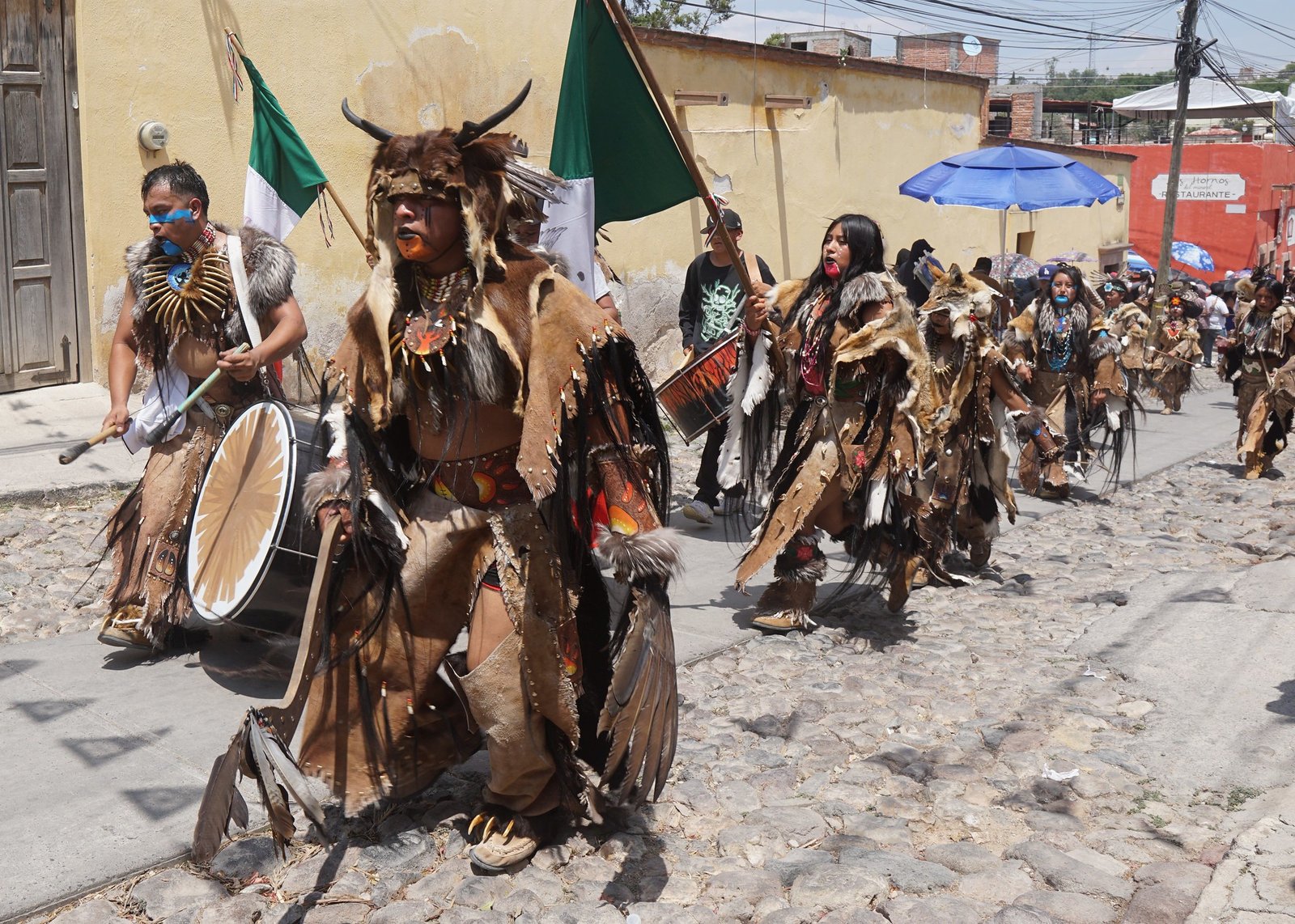
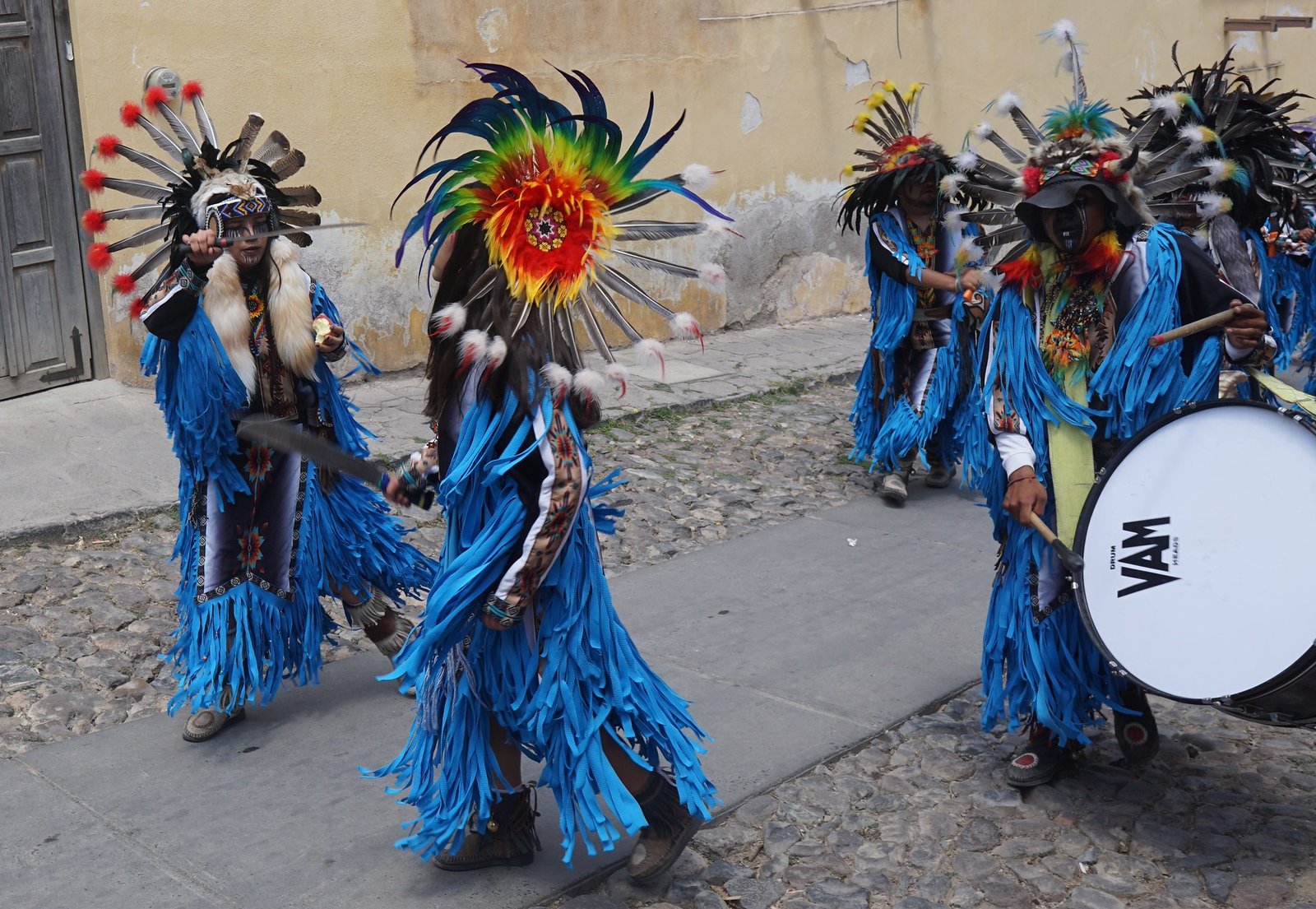
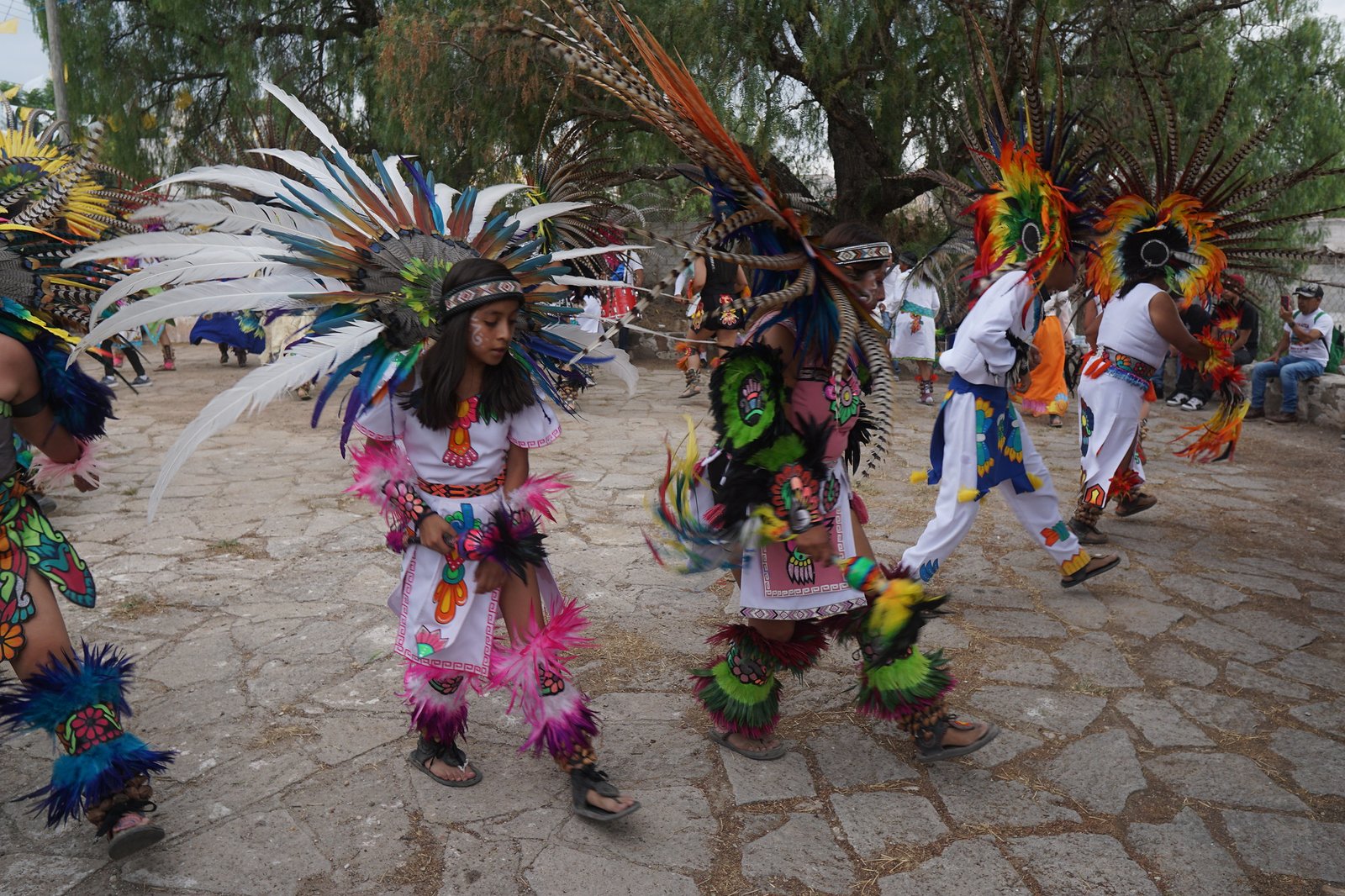
The first group arrived in elaborate feathered headdresses—towering constructions that swayed with each precise step to the rhythm of the drums. They were performing an entire dance routine down the street, spinning and stomping while the crowd pressed in from both sides, cheering and filming on their phones.
Then came another group, completely different. These dancers wore shells strapped to their ankles that rattled with every movement, their costumes heavy with beadwork and mirrors that caught the afternoon sun. They performed what looked like an ancient ritual dance, spinning tirelessly in the heat.
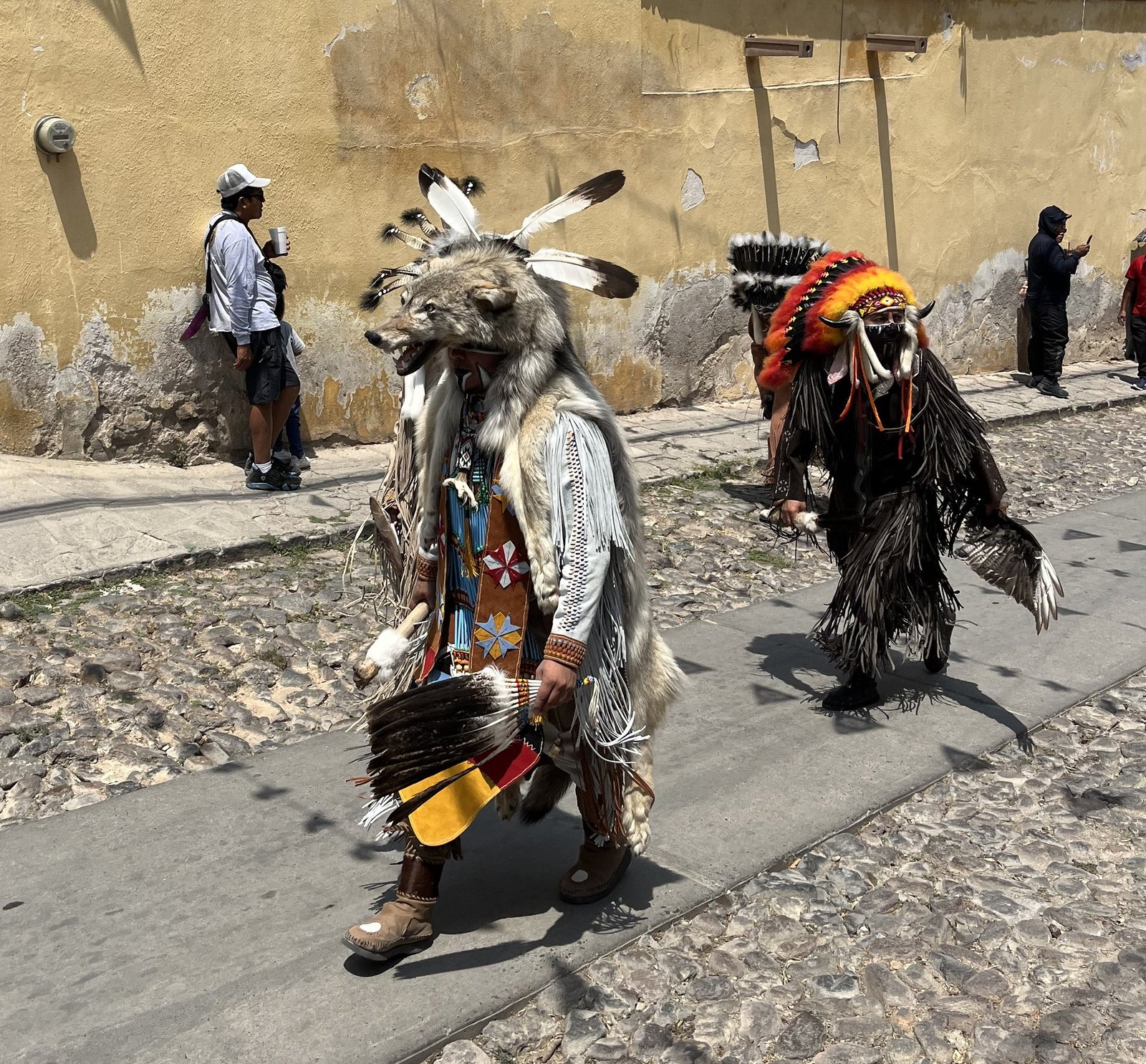
Behind them, a brass band played so loudly it drowned out everything else, while elderly women in traditional dress danced to their own beat. A group dressed in animal skins with animal skulls mounted on their headpieces danced by, crouching low and leaping up, as if imitating their spirit animals.
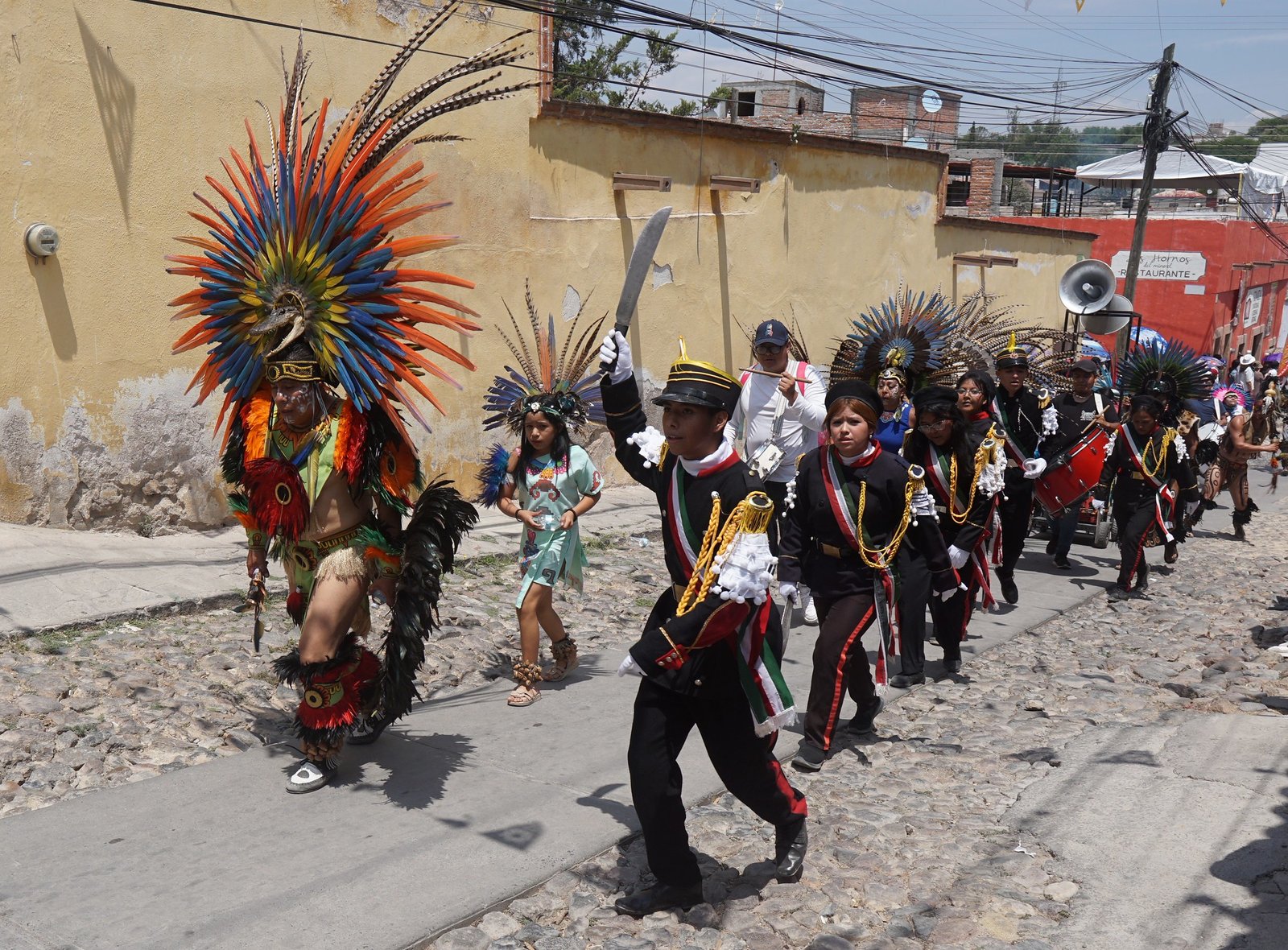
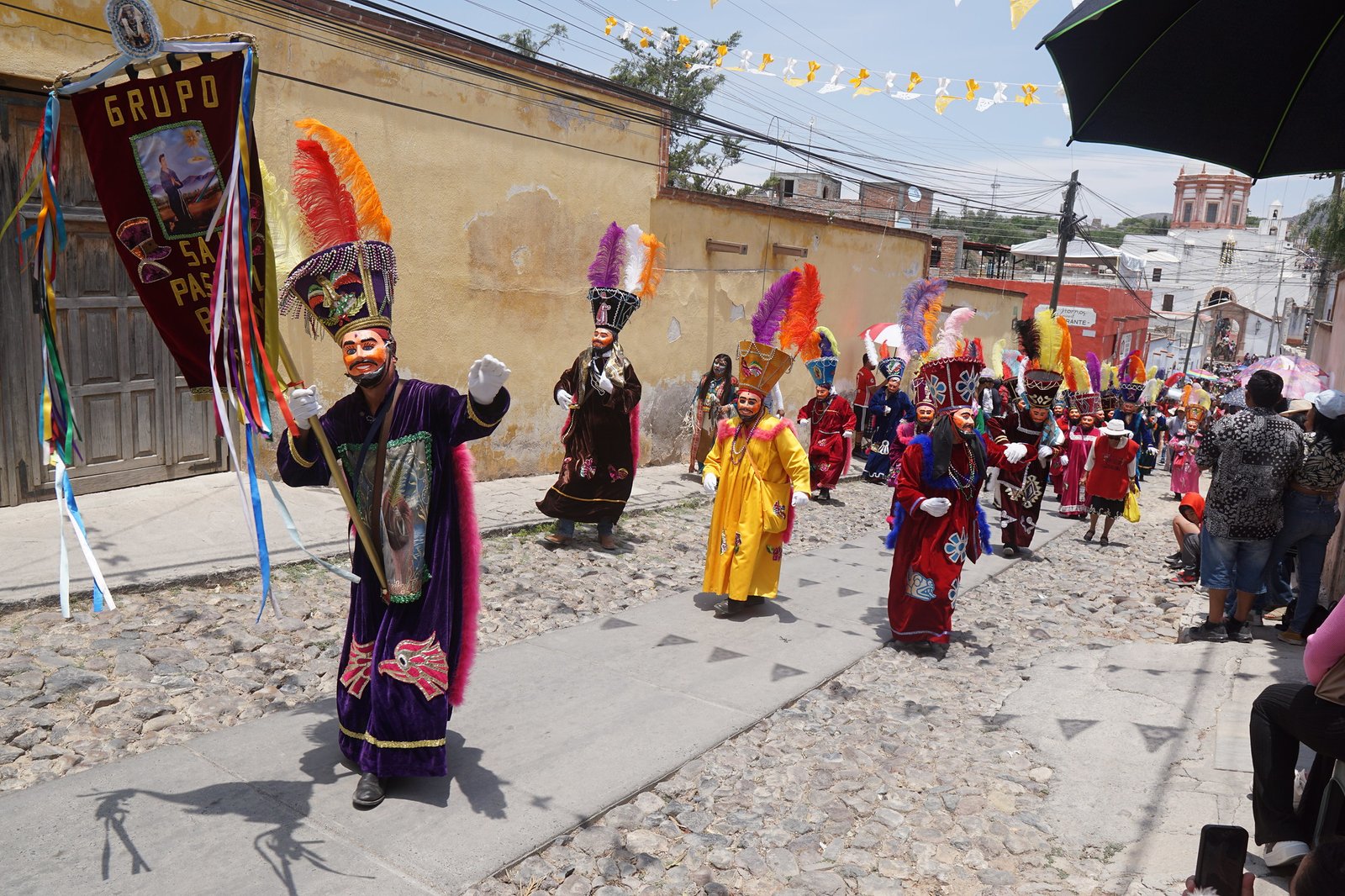
We watched all the groups dance by - some cheerful, others intimidating, all stomping and swirling to the drumbeat. Multiple groups performed dance reenactments of Spanish soldiers and indigenous people engaged in ritualized battle, some armed with real machetes. We were especially happy to watch chinelos dance by, the elaborately masked dancers we'd already seen in other towns.

As the parade ended, we made our way toward two dancing platforms where the groups took turns performing in front of judges. As we watched one group dressed in colorful feathers spin, stomp, and howl in a circle, I turned to Victor and said, "You know what this reminds me of? The Native American rain dances I saw in old movies."
It was, as of that moment, a beautifully sunny and even hot day. Not a single cloud in sight. In fact, earlier during the parade, I'd commented on how hot and sweaty the dancers looked and how incredibly hard it must be to dance under the burning sun. We sat watching the dance, transfixed by the rhythmic pounding of the drums, the spinning of the colorful costumes, the jingling of the bells on their ankles and wrists, for what felt like an eternity.
Until a single raindrop fell on my head. I looked up, confused. The sky was completely covered in clouds. I turned to Victor, silently gesturing upward, too stunned to articulate my thoughts.
"I guess this is a rain dance after all!" he laughed.

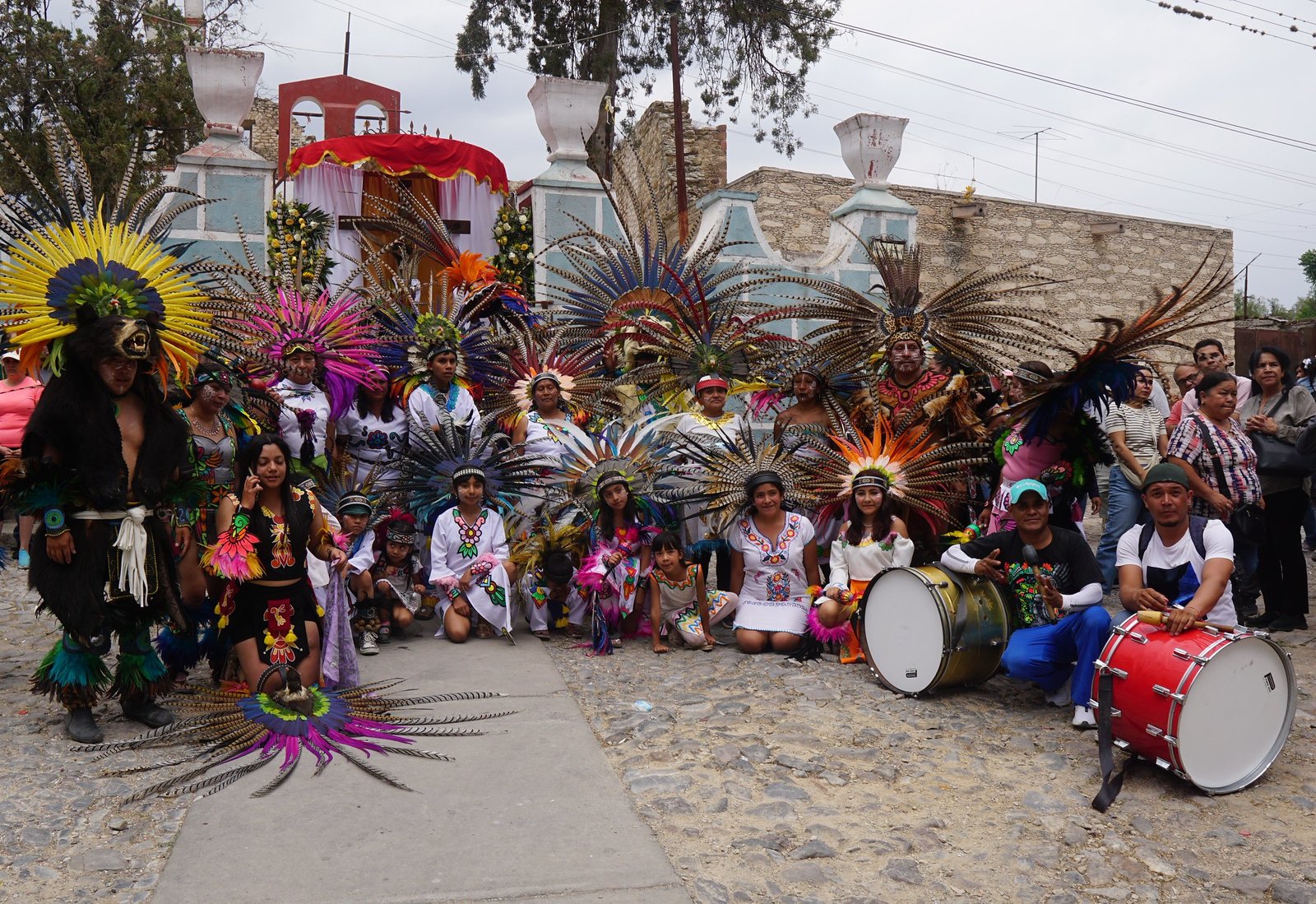
We spent most of the day immersed in the El Señor de los Trabajos festivities in Mineral de Pozos and barely had any time left to visit the abandoned silver mines. In fact, we had to visit only one mine and shorten our stay, partly because it was getting late and partly because it rained on and off for the rest of the day. The silver mine was a fascinating visit as well, and we'll describe it in a following post.
I later found out that tour groups bring tourists to Mineral de Pozos specifically for this festival, and that people plan their trips months in advance to be here at this time. And here we were - two clueless travelers just hoping to visit a ghost town, stumbling into an annual celebration completely by accident. That's the thing about travel that guidebooks and itineraries can never capture. Sometimes the best experiences aren't the ones you research and plan for, but just happen, right after you are forced to take an unexpected detour.