
Read "Part I: Buenos Aires – Travel Like a Local, Travel with a Local"
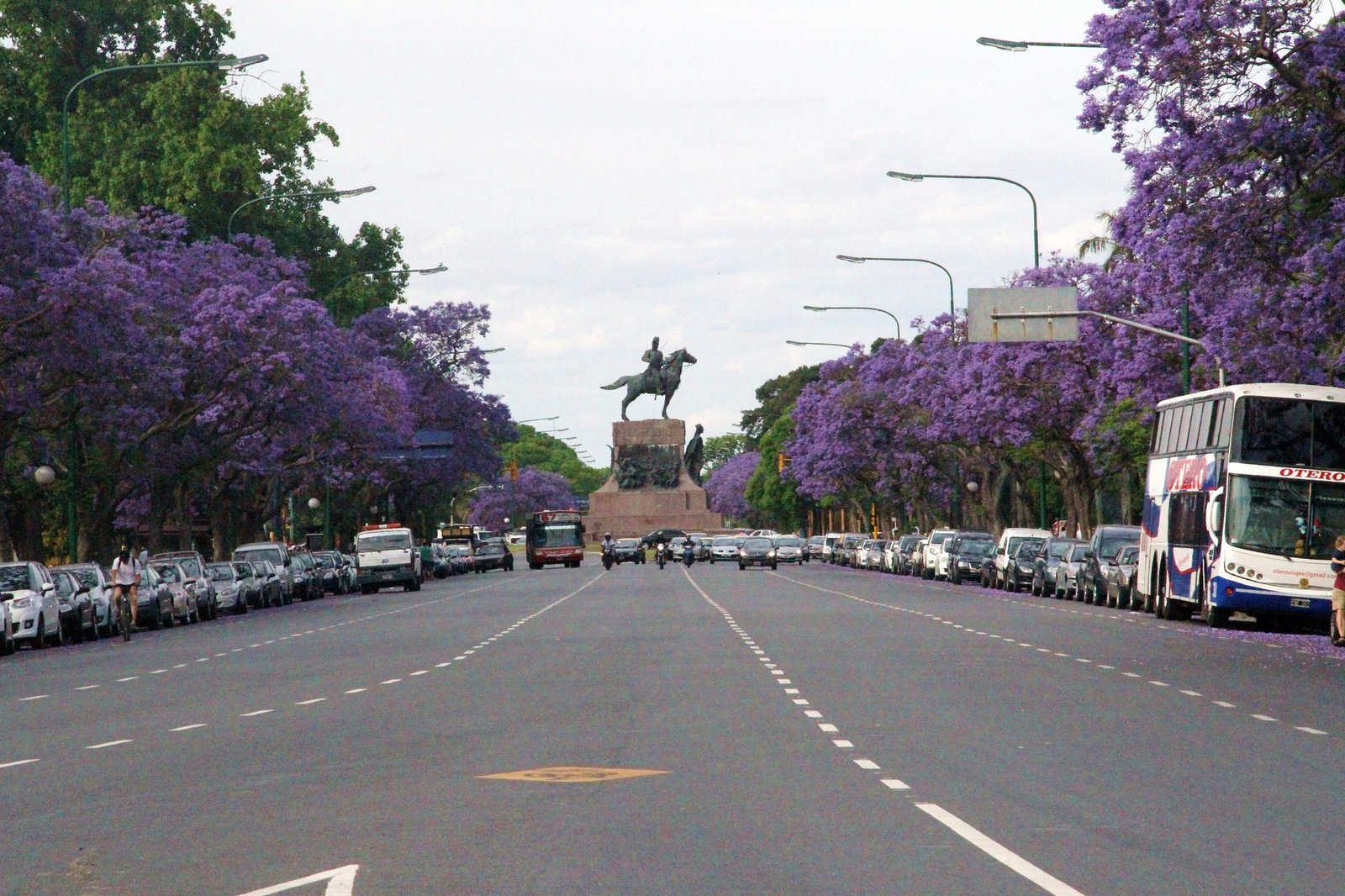
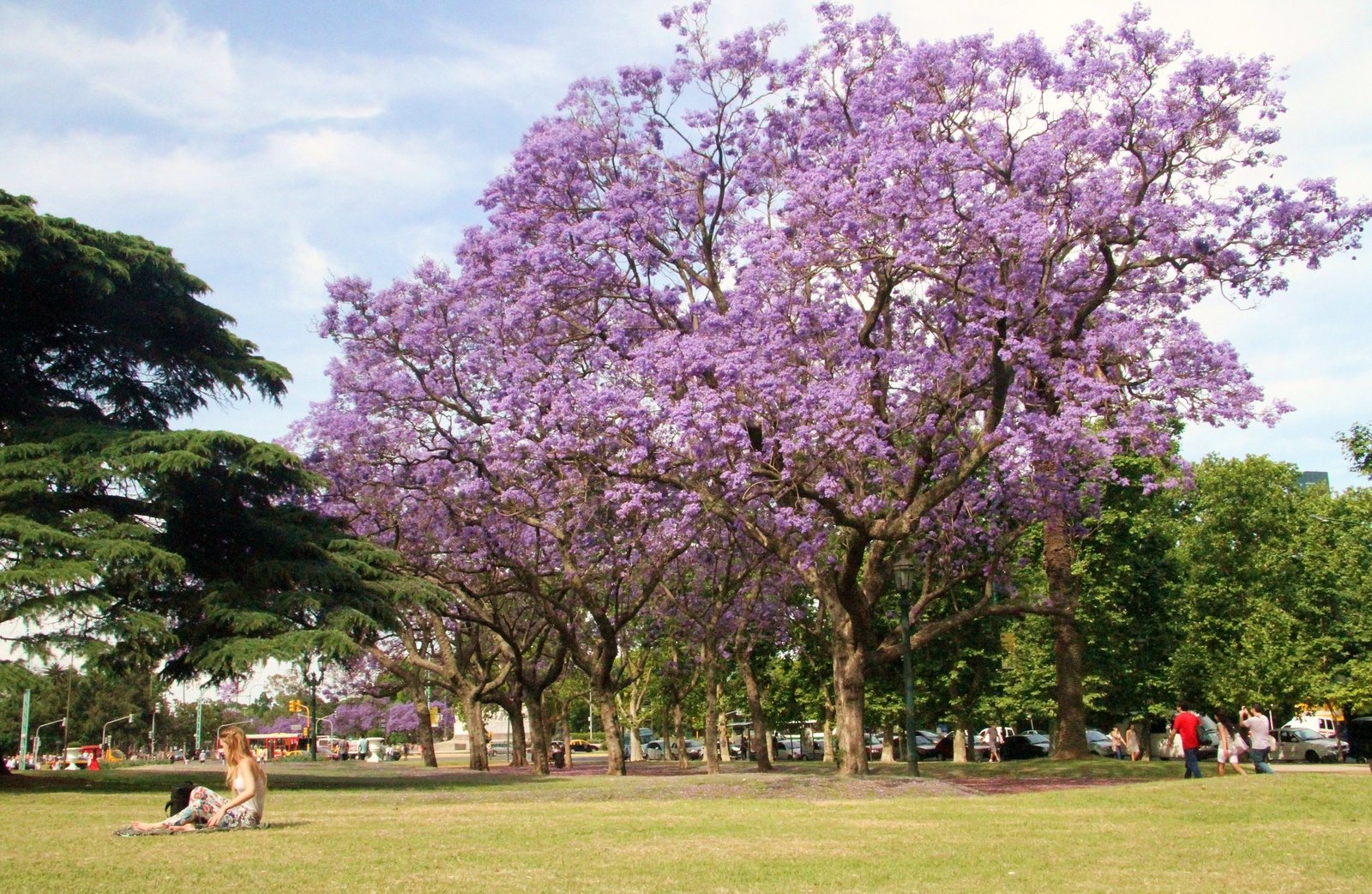
Buenos Aires met us with blooming jacaranda trees, their beautiful violet flowers carpeting sidewalks and lawns. It was a warm spring morning, as is traditional in the southern hemisphere in November, as we started exploring this unexpectedly European city in the heart of South America.
On the second day in the city, Ayala’s cousin Daiana took us to the most vibrant barrio—La Boca. This colorful neighborhood had a lot of character and was made for a fun morning exploration.
La Boca is the place where earlier immigrants from Italy (primarily from Genoa) settled. At the end of the 19th century, amid political unrest, it even briefly seceded from Argentina with rebels raising the Genoese flag.
As we strolled the main pedestrian street, Caminito, plastic statues of Carlos Gardel, the golden voice of Argentinian tango, greeted us from balconies, while tango dancers twirled around each other on the street. These days, tango in La Boca caters mostly to tourists, and Ayala told us that her aunt would later take us to the real thing.

Personally, the most Italian (and Argentinian) place in La Boca was La Bombonera, an iconic soccer stadium. “The Chocolate Box”, home of one of the most beloved Argentinian soccer teams, Boca Juniors, reminded me of Chicago’s Wrigley Field—tucked right into the neighborhood, its walls nearly brushing against adjacent buildings. The stadium's nickname comes from its shape, as steep top tiers allow the overall size of the stadium to look deceptively compact while fitting in almost 50,000 people.
As Ayala, Julia, and I walked through La Boca, admiring colorful houses, long alleys, and an abundance of fascinating graffiti, Daiana was a bit tense. As a local, she knew something that we didn't: the area wasn't particularly safe. And although tourists who stick to Caminito don’t get in trouble, once you venture a little bit outside, you can become an easy target for mugging or robbery. So, when I suddenly darted into an alley chasing Diego Maradona's mural, Daiana pleaded with me to immediately return. Her anxious voice startled me, but she knew better, so I turned around and didn't push my luck.


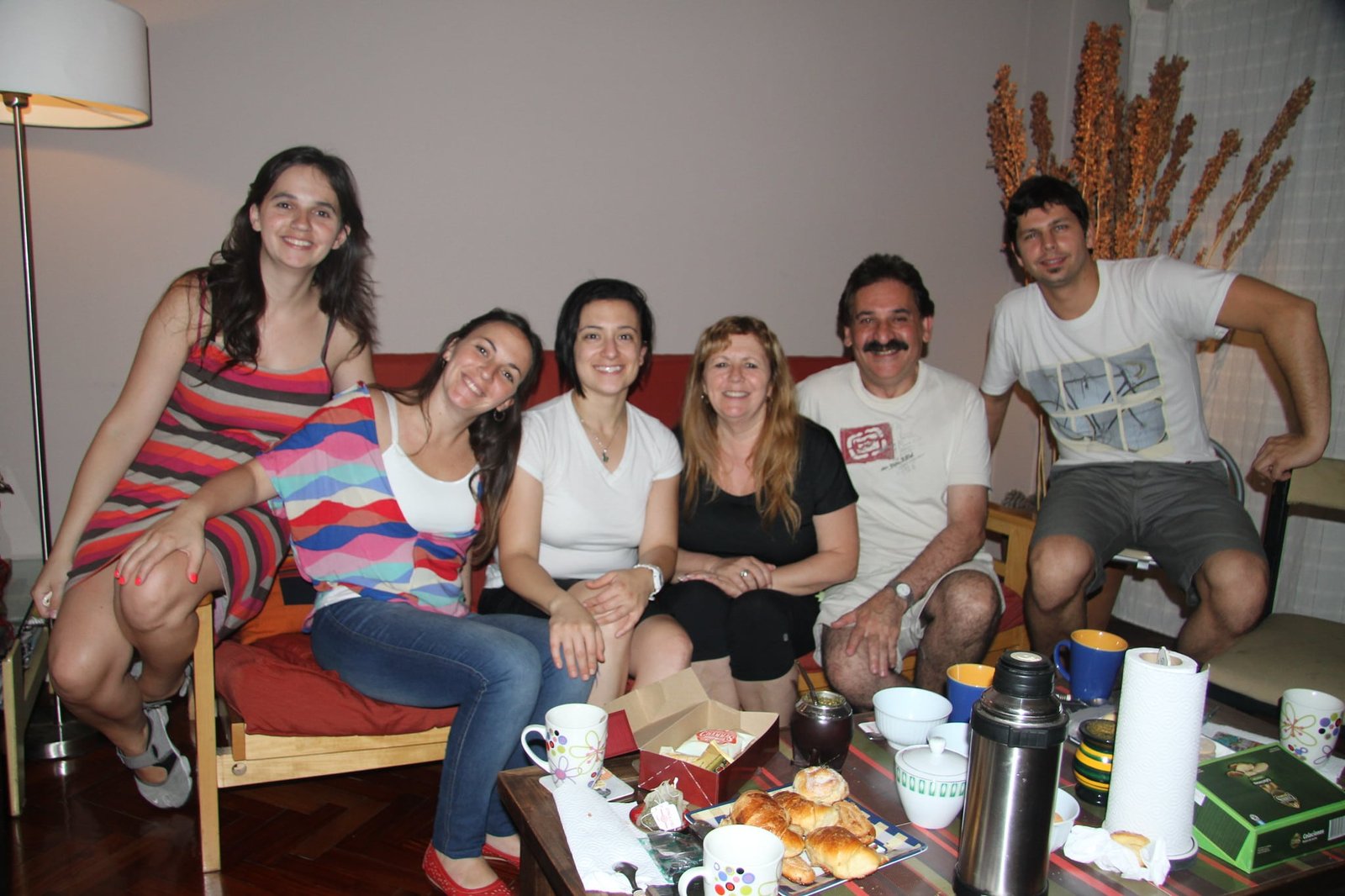
After we left La Boca and explored the city’s port area, we headed to Daiana’s apartment, where Ayala’s other relatives were waiting for us. Visiting an Argentinian family meant that we had an opportunity to participate in a quintessential Argentinian experience: drinking mate.
Anyone who comes to Argentina immediately notices one thing—mate is a national drink. On the first day in Buenos Aires, we saw people from all walks of life drinking mate: construction workers and lawyers, bus drivers and bankers. We saw people drinking it in parks and cafes, on bus stop benches, and while briskly walking down the street. Everywhere we looked, porteños (residents of Buenos Aires) carried thermoses of different sizes and colors, from which they would pour hot water into a gourd (calabaza) and then sip a bitter caffeine-rich herbal drink with a curved metal straw (bombilla). But despite first appearances, mate is actually traditionally consumed in a group. Everyone drinks from the same gourd using the same metal straw, in a ritual now being threatened by COVID-19.

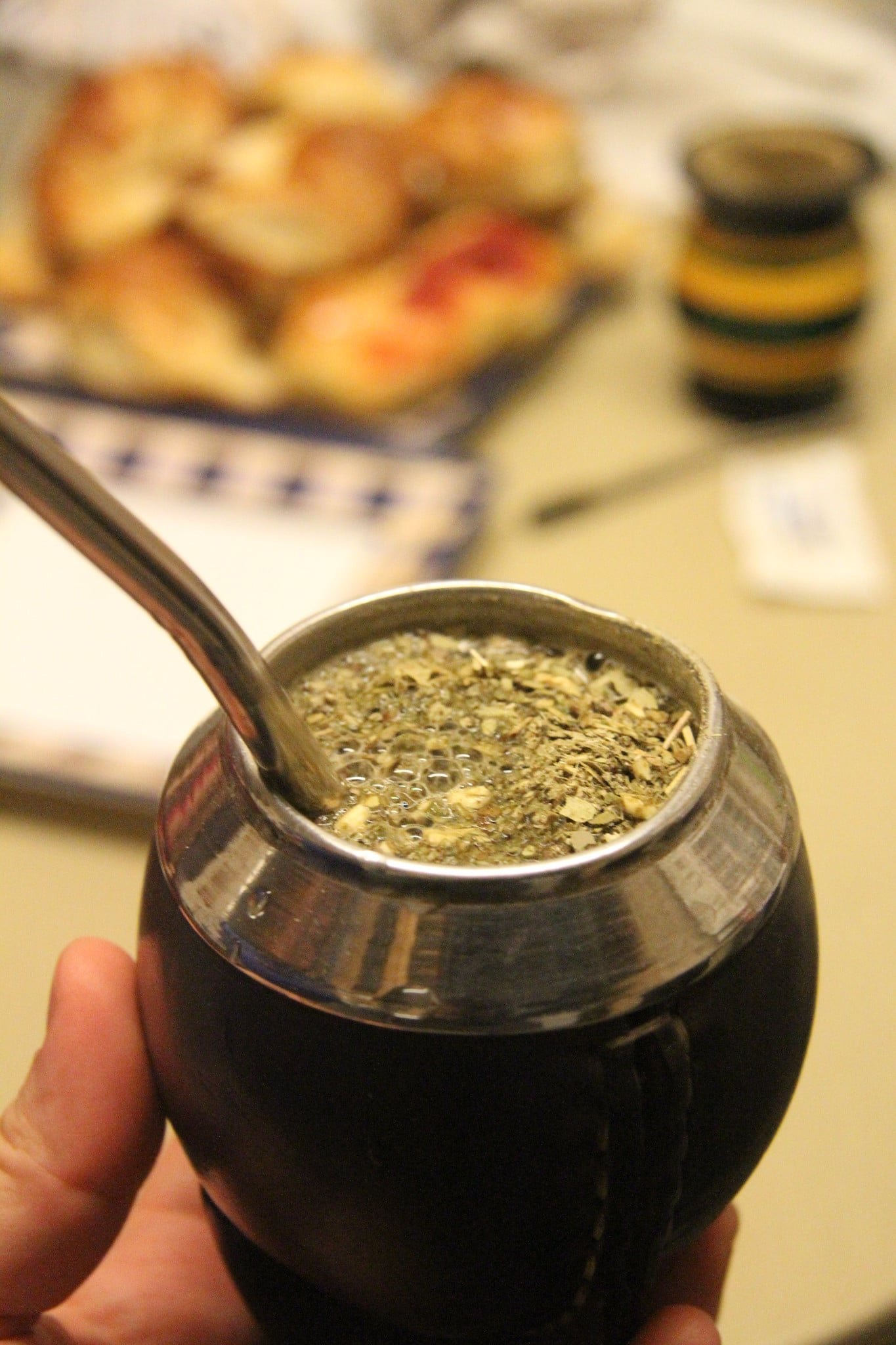
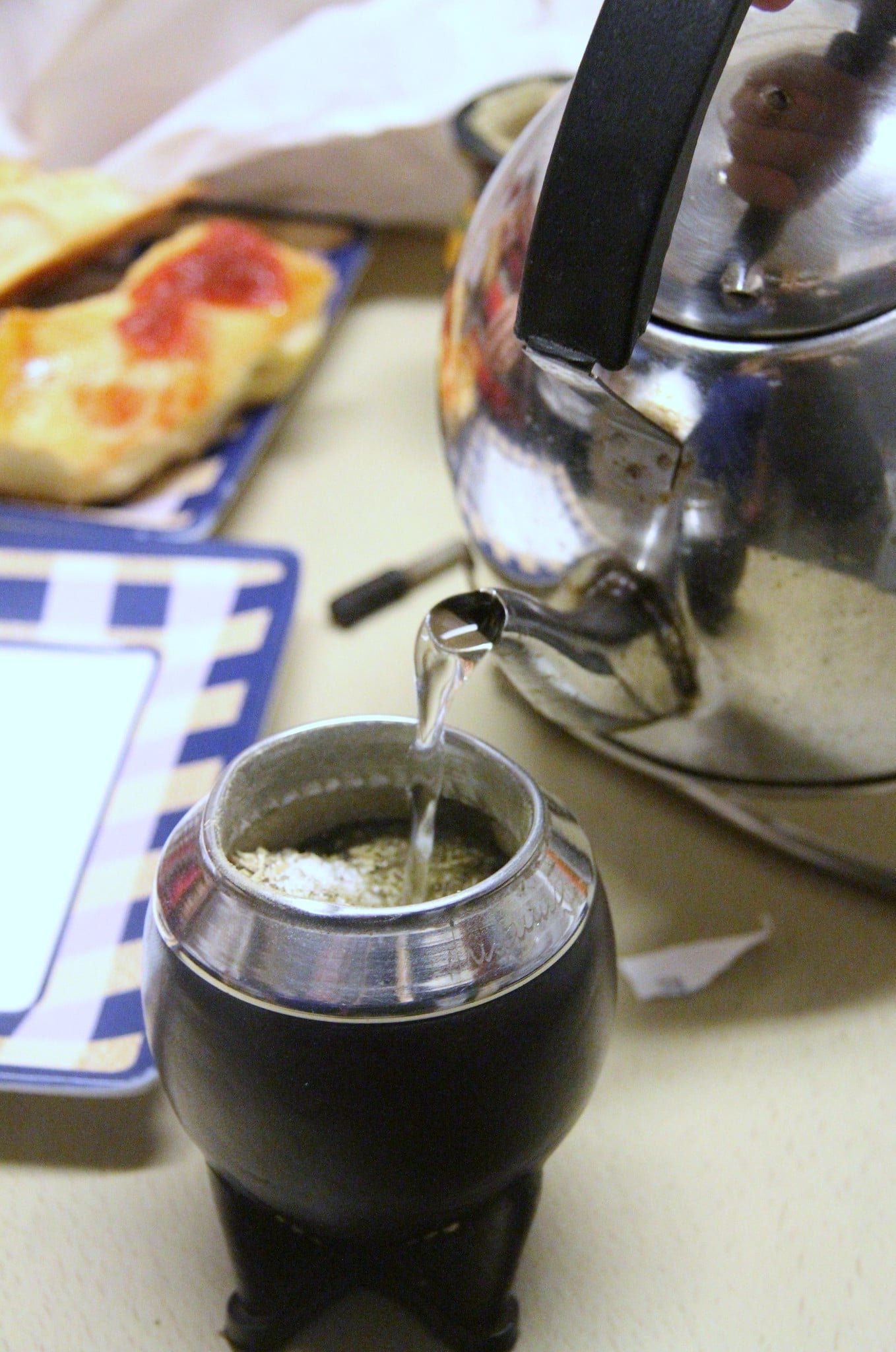

As Ayala was catching up on family news, one of her cousins gave us a detailed presentation on how to properly brew mate by placing greenish, broken dry leaves of yerba mate into a gourd and then adding hot water at 80 degrees Celsius. The kitchen, like almost every kitchen in Argentina, was equipped with an electric kettle with a special setting for boiling water specifically for mate at 80 degrees. Sitting in a cramped living room with no fewer than ten people, we were passing a gourd around, periodically adding more hot water. Sharing the bitter taste of mate—and the same straw with Ayala’s relatives we’d just met—felt somehow totally appropriate. Something was welcoming and uniting in sharing a mate cup with all of them. At the time, long before the COVID-19 pandemic, I made a mental note that in the germophobic U.S. society, where you can get crucified for just double-dipping your food, such a communal ritual would be unlikely to catch on.
Another “too close for comfort” tradition was the warm greeting accompanied by double-cheek kisses from friends and acquaintances. Ayala, who was raised in Israel and visited Argentina only a few times in her life, was just as uneasy with this as we were.
“A doorman!” she whispered as we approached one of her relatives’ buildings. “Am I supposed to kiss the doorman? I don’t know what to do!”
Two minutes later, all three of us were kissing the doorman.
Now, eight years later, with COVID-19 raging around the world, I looked up to see how Argentinian society is dealing with forced social distancing. Here’s a quote from one of the first search results:
"Avoid the kiss on the cheek or the handshake, or reduce the socialization of mate," said Eduardo Lopez, a member of the panel of experts created by the Argentine government to formulate a response to the COVID-19 coronavirus pandemic.
I wonder how this terrible plague is going to affect Argentina going forward. Although health, of course, takes precedence, it would be sad to lose these communal rituals at the heart of Argentinian society.
After the mate ritual, the next stop on our tour of Ayala’s relatives was upscale Palermo to visit her aunt Miriam and her Hemingway-looking husband, Eduardo. When they opened the door to greet us, my jaw just dropped.
The apartment was breathtaking: a modern, multi-level, open-concept condo with floor-to-ceiling glass windows and unobstructed views of the city. An impressive library of art books in Spanish and English was the centerpiece of the place. Planning Argentina, Ayala somehow completely forgot to mention that Eduardo was not only a successful psychiatrist with patients in Argentina and the U.S., but also an accomplished artist, living in a stunning apartment above his art studio. Having spent his young adult years in New York City, Eduardo was fluent in English, and we spent the evening drinking Malbec and discussing art, Argentina's history, and current events. When I planned the trip, I envisioned barren landscapes of Patagonia with reserved gauchos, and here I was in a posh Buenos Aires district discussing Picasso and Fauvism with a real artist.
Around midnight, Eduardo slowly got up and said, “Do you want to see my works?” Five minutes later, we were standing in front of canvases in his downstairs studio. The best part of being in an art studio with the artist present was being able to ask him questions about his art. Every time I visit an art museum, I imagine what I would've asked van Gogh or Cezanne about their paintings had I met them. When I asked Eduardo about his works, his response was very simple: “I just take a paintbrush and see where it takes me.”
That evening in Palermo was unlike any other evening during our two weeks in Argentina and stood out as the highlight of my trip. As we were saying goodbye to our hosts, Miriam reminded us that we were going to see her the next day, as she would take us to a milonga for a night out. This was our chance to experience real tango, not a touristy gimmick.

The next evening, after a long day of sightseeing, we headed to a nondescript two-story building and walked up to the second floor. Miriam met us at the entrance and ushered us into a large room filled with dancing couples. This was her milonga, where she and her friends came to tango. That evening, she wasn't there to dance but to introduce us to the culture and navigate us through milonga intricacies and informal rules.
The room was flanked by two rows of chairs and tables on each side. Women and men sat on opposite sides of the room, with men crossing the room to invite women for a dance. Each couple would dance to a few songs, and then the music would take a short break, allowing people to switch partners. The dancers, old and young, moved gracefully to the nostalgic tango sounds. As we watched locals dance, Miriam whispered to us various unwritten rules that the dancers followed in choosing their partners and moving around the floor. All of this was absolutely fascinating.


Several months before our trip, Julia and I met a couple who had just visited Argentina. Their advice was: “Skip Buenos Aires, nothing to see there, go straight to Patagonia and Iguazu Falls.” Even though it's possible that for some travelers Buenos Aires may not be as exciting as the rest of Argentina, Ayala and her family certainly colored our visit and made it that much more interesting and personal.