
Most people who visit Jamaica go to one of the BIG 3—Negril, Montego Bay, or Ocho Rios. However, we decided to skip them and only took a quick dip in the sea in Montego Bay on our last day before heading to the airport. Although Negril boasts one of the most beautiful beaches in the world—the famous seven-mile beach—and Montego Bay and Ocho Rios are two other top beach destinations, we realized pretty early into our planning for Jamaica that these places were too touristy and not our cup of tea.
We wanted something authentic. Raw, real, and off the beaten path.
And that's why we went to Kingston.
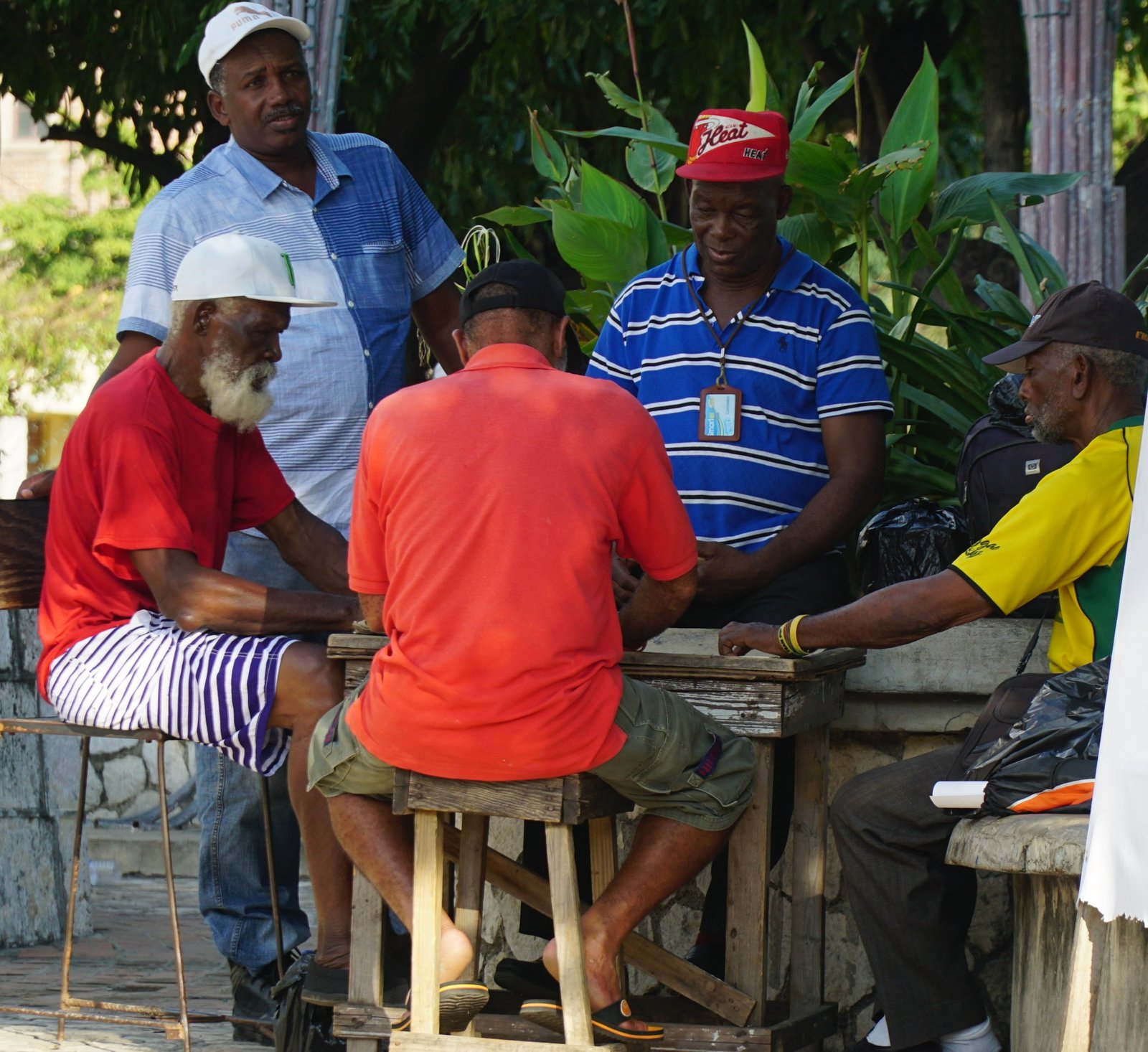
A lot is written about how unsafe Kingston is. We're not here to persuade you otherwise. There are definitely some rough parts in this city. And even in safe neighborhoods, locals take precautions, including security guards, tall fences with barbed wire, and bars on windows. But we figured that skipping it solely for safety concerns would be a mistake. The advice we received was that Down Town (yes, two words) wasn't safe and best avoided at night, while New Kingston was relatively safe with some precautionary measures. We visited both.
The main attraction in New Kingston is Bob Marley’s house. We joined a one-hour tour led by a young Jamaican guide who proudly described the life of the famous Jamaican son. There were some hardcore Marley fans in our group, for whom the experience was like visiting a holy place for a devout religious believer. They knew all songs, album names, and some obscure biography facts, sometimes better than the guide himself. We, on the other hand, listened to every bit of trivia with wide-eyed curiosity, since neither of us knew much about his life. Visiting the house was also a humbling experience because, despite Marley's stardom, his home was quite modest.
The guide kept the tour light and peppered his presentation with well-rehearsed corny jokes. For example, he confused everyone when he pointed to a photograph of Bob Marley playing soccer with little kids.
“Do you know who that is?” He pointed to a little kid in the picture.
“Who?” asked one of the tourists in our group.
“Me!” Everyone gasped. It took us a moment to realize that this was a joke. Bob Marley died in 1981, and our guide was barely 20 years old.
We left Marley’s house with a new appreciation for his life and music, humming: “One love, one heart, let’s get together and feel all right.”


As an art lover, I couldn't visit the Jamaican capital and skip the city's main art museum. The problem was that the National Gallery of Jamaica was in the “bad” Down Town area. To minimize risk, we took a taxi to and from the museum.
The museum left a strange impression. In Jamaica, more than 70% of the population is black, and we thought that we would see many paintings depicting black people. Yet most of the works depicted plantation houses owned by English colonists and lush Jamaican landscapes. Black people were conspicuously absent, and we found the paintings with them only in the modern section of the museum.


Not ready to leave Down Town after the museum visit, we decided to stick around. This was a busy Christmas Eve afternoon, and people were doing last-minute shopping. We walked around bustling streets, sometimes stepping over various wares and trinkets the vendors had displayed right on the sidewalk. Everyone seemed friendly, children ran around, and our nervousness about this “dangerous” area slowly faded. As we browsed through the trinkets to bring home to our friends, Julia realized that we were short on cash. She pulled up Google Maps on her phone and found an ATM just three blocks from where we stood.
We walked one block down the busy street, turned left, strolled half a block, and suddenly realized that we were alone on an empty street lined with crumbling buildings. We could still hear the cheerful rumbling of the central street behind us, and so we pressed on. One block later, with buildings around us growing more and more decrepit, we came across a man sprawled out on a sidewalk. As we stepped off the sidewalk to walk around him, he picked up his head, looked us over with bleary eyes, and exclaimed, “Merry Christmas!”
We smiled and mumbled something as an answer.
“Santa Claus must have brought you here as gifts for me!” he yelled, just as cheerfully.
We immediately quickened our step and hurried away, glancing back to make sure he wasn’t following us to collect his “gifts”.
A block later, we stood where the ATM should have been. It was another empty street; on our left was a mostly crumbled building, in the last stages of demolition. On our right, a beautiful white building and a cheerful sign: “Shaare Shalom Synagogue”.
Julia stared at Google Maps. “Hey! It’s the only synagogue in Jamaica!” she announced. “It’s also known as the Holy Congregation of the Gates of Peace… Now, let’s get out of here before something happens.”
Finally, we made it back to a busy central street and immediately caught a taxi to take us to Emancipation Park. The taxi driver examined us quizzically.
“You've been to Jamaica before?” he asked.
“It’s our first time,” I said. “Second day in Jamaica.”
“Second day in Jamaica and you are here?!” The driver roared with laughter. “You must be crazy!”
We didn’t try to argue. This man clearly knew what he was talking about. He dropped us off at the park and drove away, still laughing at us.


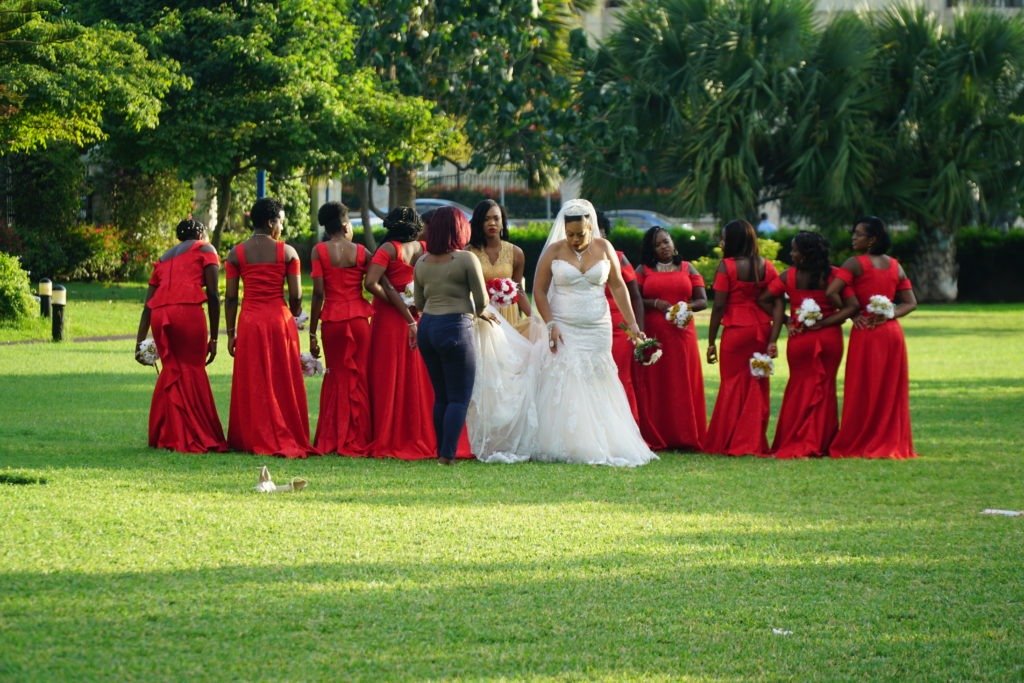
Emancipation Park was our last stop for the day. This was a popular place for newlyweds, and we saw five or six weddings that evening. The park's main attraction is located by its entrance—a large statue called Redemption Song. Named after Bob Marley’s hit song, the sculpture consists of a giant naked black man and woman gazing up into the sky, symbolizing their rise over the atrocities and horrors of slavery. The sculpture was heavily criticized when it was installed in 2003 for the couple’s nudity. Local newspapers were bombarded with readers’ letters expressing outrage at the couple’s indecency. The statue also had its defenders. As one commentator wrote: “Just because Europe's classical statues had small penises, that doesn't mean Jamaica must follow suit.”
And that was a fitting end to our strange and exhilarating day—a bit of Jamaican humor shining through an uncomfortable subject, whether it be the horror of past slavery or today’s existence of violent crime. We started our trip knowing that we didn’t want to see touristy and over-commercialized Jamaica, and we ended up learning the history of oppression through music and art, experiencing the reality of poverty and policing in our walks through dangerous and safe neighborhoods. There were a few times when it felt like we got more than we bargained for, but in the end, all of that makes for great stories to remember.